Kirjailija
Thomas Miller
Kirjat ja teokset yhdessä paikassa: 91 kirjaa, julkaisuja vuosilta 1896–2026, suosituimpiin kuuluu Seeking God. Vertaile teosten hintoja ja tarkista saatavuus suomalaisista kirjakaupoista.
91 kirjaa
Kirjojen julkaisuvuodet: 1896–2026.
![Songs of the Seasons for My Children. Illustrated [By Birket Foster and Sir J. Gilbert].](/covers/9781241110215.jpg)
Songs of the Seasons for My Children. Illustrated [By Birket Foster and Sir J. Gilbert].
Thomas Miller; Birket Foster
British Library, Historical Print Editions
2011
pokkari

Thomas P. Miller defines college English studies as literacy studies and examines how it has evolved in tandem with broader developments in literacy and the literate. He maps out \u201cfour corners\u201d of English departments: literature, language studies, teacher education, and writing studies. Miller identifies their development with broader changes in the technologies and economies of literacy that have redefined what students write and read, which careers they enter, and how literature represents their experiences and aspirations. Miller locates the origins of college English studies in the colonial transition from a religious to an oratorical conception of literature. A belletristic model of literature emerged in the nineteenth century in response to the spread of the \u201cpenny\u201d press and state-mandated schooling. Since literary studies became a common school subject, professors of literature have distanced themselves from teachers of literacy. In the Progressive era, that distinction came to structure scholarly organizations such as the MLA, while NCTE was established to develop more broadly based teacher coalitions. In the twentieth century New Criticism came to provide the operating assumptions for the rise of English departments, until those assumptions became critically overloaded with the crash of majors and jobs that began in 1970s and continues today. For models that will help the discipline respond to such challenges, Miller looks to comprehensive departments of English that value studies of teaching, writing, and language as well as literature. According to Miller, departments in more broadly based institutions have the potential to redress the historical alienation of English departments from their institutional base in work with literacy. Such departments have a potentially quite expansive articulation apparatus. Many are engaged with writing at work in public life, with schools and public agencies, with access issues, and with media, ethnic, and cultural studies. With the privatization of higher education, such pragmatic engagements become vital to sustaining a civic vision of English studies and the humanities generally.


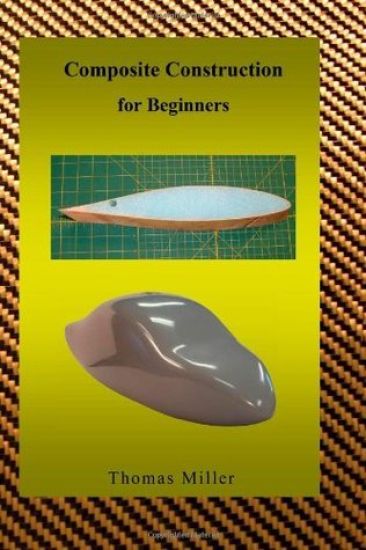
Composite Construction for Beginners: A Practical Application of Lessons Learned Studying and Working with High Performance Composites
Thomas Miller
Createspace Independent Publishing Platform
2009
nidottu
This book discusses various topics of composites including specific techniques and processes for the use of several approaches to composite construction. Several case studies illustrating practical application of specific processes and techniques are also provided. Chapter 2; State of the Art of Composites, describes many of the common materials and tools used during the construction of composite parts and tools. Chapter 3; Project Planning, is provided to help prepare the reader for setting up their project for success by planning for all the needed tool, materials, and support requirements. Chapter 4; Procuring Materials, provides a table of materials and tools, including some common sources and prices for the items listed. Some safety precautions and warnings for working with composites are provided in Chapter 5. The foundation for general composite techniques, terminology, and processes are discussed in Chapter 6. Beginning in Chapter 7, a step-by-step case study walks the reader through one way of building a 1/5th scale composite wing. The process selected for this example is a molded composite wing using a plug to mold process before creating the desired wing panels. The process for building a moldless design is nearly the same as the plug portion of these instructions with the exception of the level of detail to the plug. For a moldless wing project, much more attention to weight and initial dimensional correctness of the core is required.



The Poacher And Other Pictures Of Country Life (1858)
Thomas Miller
KESSINGER PUBLISHING, LLC
2009
pokkari