Kirjojen hintavertailu – 12 859 818 kirjaa ja 27 kauppaa

Kirjailija

Thomas Molnar

Kirjat ja teokset yhdessä paikassa: 15 kirjaa, julkaisuja vuosilta 1981–2021, suosituimpiin kuuluu Utopia, The Perennial Heresy. Vertaile teosten hintoja ja tarkista saatavuus suomalaisista kirjakaupoista.

15 kirjaa

Kirjojen julkaisuvuodet: 1981–2021.

The Decline of the Intellectual

The Decline of the Intellectual

Thomas Molnar

Hassell Street Press
2021
nidottu
This work has been selected by scholars as being culturally important and is part of the knowledge base of civilization as we know it. This work is in the public domain in the United States of America, and possibly other nations. Within the United States, you may freely copy and distribute this work, as no entity (individual or corporate) has a copyright on the body of the work. Scholars believe, and we concur, that this work is important enough to be preserved, reproduced, and made generally available to the public. To ensure a quality reading experience, this work has been proofread and republished using a format that seamlessly blends the original graphical elements with text in an easy-to-read typeface. We appreciate your support of the preservation process, and thank you for being an important part of keeping this knowledge alive and relevant.
The Decline of the Intellectual

The Decline of the Intellectual

Thomas Molnar

Hassell Street Press
2021
sidottu
This work has been selected by scholars as being culturally important and is part of the knowledge base of civilization as we know it. This work is in the public domain in the United States of America, and possibly other nations. Within the United States, you may freely copy and distribute this work, as no entity (individual or corporate) has a copyright on the body of the work. Scholars believe, and we concur, that this work is important enough to be preserved, reproduced, and made generally available to the public. To ensure a quality reading experience, this work has been proofread and republished using a format that seamlessly blends the original graphical elements with text in an easy-to-read typeface. We appreciate your support of the preservation process, and thank you for being an important part of keeping this knowledge alive and relevant.
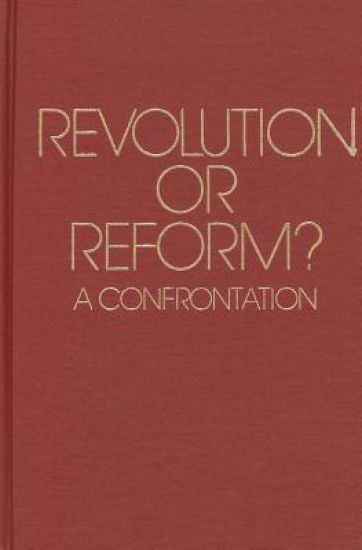
Revolution or Reform?

Revolution or Reform?

Thomas Molnar; Herbert Marcuse

Routledge
2020
nidottu
This series provides a forum for the critical review of enduring issues concerning ethics and society. The text of the debate between Herbert Marcuse and Sir Karl Popper which follows in this volume raises many important issues. The crucial issues between the two participants are (1) their anthropological-axiological positions with respect to the “nature” of man, society, and the practical functions of democracy as a mode of self-government; (2) the conceptions of science and of philosophy which lie behind each thinker’s claims with respect to these; and (3) their respective conceptions of the means required and feasible for attaining their respective social goals. The remarks which follow will attempt to focus upon, and deal critically with, the problems implicit in these three areas.
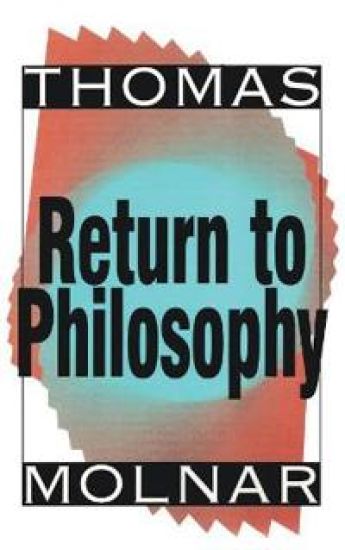
Return to Philosophy

Return to Philosophy

Thomas Molnar

Routledge
2018
nidottu
From its earliest beginnings and through much of its history, the philosophical enterprise has rooted its intellectual procedures in common sense. Ordinary discourse is what the pre-Socratic thinkers did at the dawn of speculation. The same approach was characteristic of the medieval mystics, Pascal in the seventeenth century, and Gaston Bachelard in the twentieth century. However with the ascendency of the physical sciences, mathematics, and depth psychology as influences in contemporary thought, philosophical language and forms of expression became increasingly distant from ordinary language. This created estrangement and confusion in the learner's mind. In Return to Philosophy Thomas Molnar diagnoses the verbal derailment of philosophy and shows how it might be reconnected to the realities of human life. While granting that philosophy must use a somewhat specialized language, Molnar attacks jargon-laden thought by tracing certain root assumptions that go deeper than the issue of language itself. He locates these assumptions in the work of philosophers who, espousing modernity, no longer trust the "reality of the real," and are convinced that the world and our perception of it are elusive, offering no foundation except in the human mind which, however, is also the result of a "social contract," a temporary consensus or transient network of meanings readily discardable. According to changing ideologies and social structures we use "signs" linguistic, psychological, hermeneutical, structuralist, existentialist not to express reality but to establish communication with others. Philosophy, then, shifts from the task of knowing reality to the task of communicating here and now. Return to Philosophy is a unique endeavor. Molnar's book unmasks the modern derailment and shows that many leading philosophers do not so much philosophize, but merely elaborate verbal-technical instruments in what may be little more than trivial language games. This volume will be of interest to philosophers, cultural historians, and sociologists.
Archetypes of Thought

Archetypes of Thought

Thomas Molnar

Routledge
2018
sidottu
In Archetypes of Thought, originally published in 1991 with the title Philosophical Grounds, Thomas Molnar follows seven basic themes of Western philosophical speculation from their development in the earliest times of systematic thought through their evolution through the centuries and civilizations to the present. Some of the themes are origin and its reflection, guilt of being, one and the multiple, the temptation of mechanization, and nocturnal man. The book is neither a chronological treatment of issues nor a list of philosophical schools and movements. Rather, it reaches for the archetypes of philosophical reasoning. Molnar shows the presence of modern themes in the entire history of thinking, traces technology to the first stirrings of rationalism, and evinces modern man's feeling of culpability. Throughout, the soul is perceived as the keeper of God's and man's secret, one which reflects reality and also tries to organize it according to an ontologically implanted rhythm. In his new introduction, Molnar explains and re-examines his reasons for writing the book. While the themes he covers have been widely dealt with in contemporary thought, they are brought together to form an original combination of philosophical concepts. Archetypes of Thought is an intriguing study of the evolution of philosophical thinking. It is essential reading for both students and professionals of philosophy, history, and sociology.
Bernanos

Bernanos

Thomas Molnar

Routledge
2018
sidottu
Thomas Molnar's Bernanos is an illuminating study of the personal evolution of the French Catholic novelist Georges Bernanos from a reactionary royalist to a religiously principled anti-fascist. It also provides a detailed account of the intellectual divisions within the French Catholic Right and suggests a number of parallels with intellectual and literary figures on the secular and religious left including Zola, Peguy, and Simone Weil. But, as Molnar points out, the significance of Bernanos is not exhausted by his writings. Bernanos the man is as deserving of attention as is Bernanos the novelist, essayist, and social critic. Molnar shows Bernanos against the troubled political-religious background of modern France: the Dreyfus case, the disillusionment following World War I, the Franco regime, Vichy, and the beginnings of the cold war. Whatever touched France touched Bernanos, and he flung himself into each crisis, not armed with a political system nor an academically sanctioned philosophy, but with a peasant's respect for what is and a Christian's sense of what might be. The portrait that Molnar draws is that of a passionately concerned Christian who knows that truth is hard to come by, but who is ready to follow it wherever it leads, regardless of the consequences. A crucial theme covered by Molnar is Bernanos' long and conflicted relations with Charles Maurras and the Action Francaise. He makes clear the extent to which Bernanos' fervent Catholicism set him apart from Maurras whose positivistic inspiration and passion for order helped lay the groundwork for the political collapse that led to the Vichy regime. Thomas Molnar's book is a fascinating account of Georges Bernanos' stature as both a political thinker and an important novelist. Bernanos will be enjoyed by historians, political scientists, philosophers, theologians, and scholars of literature.
The Decline of the Intellectual

The Decline of the Intellectual

Thomas Molnar

Routledge
2017
sidottu
In perhaps his most famous book, The Decline of the Intellectual, Thomas Molnar launches into a fundamental critique of the intellectual class. He sees it as a group that had lost its way, collapsing a sense of vision into political activism, social engineering, and culture manipulation, and abandoning the writing, philosophizing, and scholarship that had occupied their predecessors. Universities began to produce factory-like, faceless citizens, as the job market became the arbiter of education and culture. Today's professors are recruited from this group of job seekers, and hence, have a shared indifference toward learning. Molnar likens present-day intellectuals to the earlier Marxists who elaborated their Utopian model in the Communist party. The campus intellectuals' objective is to transform the university into a replica and a laboratory of the ideal society. Colleges and universities thus become sources of propaganda of various political, financial, cultural, and ideological trends, not only among students, but professors as well. The thirty years separating editions have done nothing to weaken such a critical appraisal. In his new introduction, Molnar writes that the decline of intellectuals has extended outside of the campus to the arts, the public discourse, and the robotization caused by technology. On the initial publication of this work, Frank S. Meyer wrote in Modern Age, "Thomas Molnar's book is not only true; it is intellectually exciting and it will remain a necessary handbook for anyone interested in the decisive problem of the 20th century." The Decline of the Intellectual is essential reading for sociologists, political scientists, educators, and university officials. It is the basis of present-day critiques of the academic world.

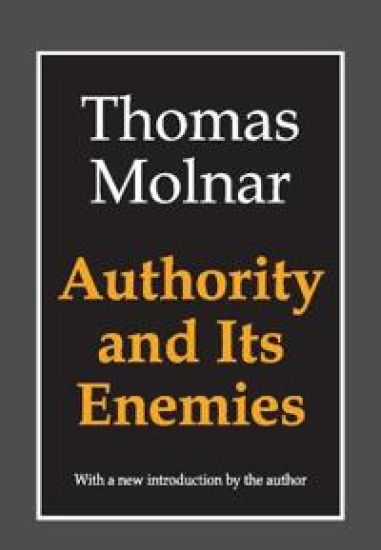
Authority and Its Enemies

Authority and Its Enemies

Thomas Molnar

Routledge
2017
sidottu
Ideological warfare against authority, especially in the world of higher education, broke out in the 1960s, and continues into the 1990s. No source or symbol of authority escaped untouched neither parents nor teachers nor the cop on the beat. While the hippies have gone underground or disappeared entirely, the assault on legitimate authority continues unabated. As familiar institutions crumble before our eyes, befuddled liberals and conservatives alike throw up their hands in despair. In Authority and Its Enemies, Thomas Molnar asserts that the Western world is reeling from an overdose of freedom without order or authority.
Bernanos

Bernanos

Thomas Molnar

Transaction Publishers
1996
nidottu
Thomas Molnar's Bernanos is an illuminating study of the personal evolution of the French Catholic novelist Georges Bernanos from a reactionary royalist to a religiously principled anti-fascist. It also provides a detailed account of the intellectual divisions within the French Catholic Right and suggests a number of parallels with intellectual and literary figures on the secular and religious left including Zola, Peguy, and Simone Weil. But, as Molnar points out, the significance of Bernanos is not exhausted by his writings. Bernanos the man is as deserving of attention as is Bernanos the novelist, essayist, and social critic. Molnar shows Bernanos against the troubled political-religious background of modern France: the Dreyfus case, the disillusionment following World War I, the Franco regime, Vichy, and the beginnings of the cold war. Whatever touched France touched Bernanos, and he flung himself into each crisis, not armed with a political system nor an academically sanctioned philosophy, but with a peasant's respect for what is and a Christian's sense of what might be. The portrait that Molnar draws is that of a passionately concerned Christian who knows that truth is hard to come by, but who is ready to follow it wherever it leads, regardless of the consequences. A crucial theme covered by Molnar is Bernanos' long and conflicted relations with Charles Maurras and the Action Francaise. He makes clear the extent to which Bernanos' fervent Catholicism set him apart from Maurras whose positivistic inspiration and passion for order helped lay the groundwork for the political collapse that led to the Vichy regime. Thomas Molnar's book is a fascinating account of Georges Bernanos' stature as both a political thinker and an important novelist. Bernanos will be enjoyed by historians, political scientists, philosophers, theologians, and scholars of literature.
Return to Philosophy

Return to Philosophy

Thomas Molnar

Transaction Publishers
1996
sidottu
From its earliest beginnings and through much of its history, the philosophical enterprise has rooted its intellectual procedures in common sense. Ordinary discourse is what the pre-Socratic thinkers did at the dawn of speculation. The same approach was characteristic of the medieval mystics, Pascal in the seventeenth century, and Gaston Bachelard in the twentieth century. However with the ascendency of the physical sciences, mathematics, and depth psychology as influences in contemporary thought, philosophical language and forms of expression became increasingly distant from ordinary language. This created estrangement and confusion in the learner's mind. In Return to Philosophy Thomas Molnar diagnoses the verbal derailment of philosophy and shows how it might be reconnected to the realities of human life. While granting that philosophy must use a somewhat specialized language, Molnar attacks jargon-laden thought by tracing certain root assumptions that go deeper than the issue of language itself. He locates these assumptions in the work of philosophers who, espousing modernity, no longer trust the "reality of the real," and are convinced that the world and our perception of it are elusive, offering no foundation except in the human mind which, however, is also the result of a "social contract," a temporary consensus or transient network of meanings readily discardable. According to changing ideologies and social structures we use "signs" linguistic, psychological, hermeneutical, structuralist, existentialist not to express reality but to establish communication with others. Philosophy, then, shifts from the task of knowing reality to the task of communicating here and now. Return to Philosophy is a unique endeavor. Molnar's book unmasks the modern derailment and shows that many leading philosophers do not so much philosophize, but merely elaborate verbal-technical instruments in what may be little more than trivial language games. This volume will be of interest to philosophers, cultural historians, and sociologists.
Archetypes of Thought

Archetypes of Thought

Thomas Molnar

Transaction Publishers
1995
nidottu
In Archetypes of Thought, originally published in 1991 with the title Philosophical Grounds, Thomas Molnar follows seven basic themes of Western philosophical speculation from their development in the earliest times of systematic thought through their evolution through the centuries and civilizations to the present. Some of the themes are origin and its reflection, guilt of being, one and the multiple, the temptation of mechanization, and nocturnal man. The book is neither a chronological treatment of issues nor a list of philosophical schools and movements. Rather, it reaches for the archetypes of philosophical reasoning. Molnar shows the presence of modern themes in the entire history of thinking, traces technology to the first stirrings of rationalism, and evinces modern man's feeling of culpability. Throughout, the soul is perceived as the keeper of God's and man's secret, one which reflects reality and also tries to organize it according to an ontologically implanted rhythm. In his new introduction, Molnar explains and re-examines his reasons for writing the book. While the themes he covers have been widely dealt with in contemporary thought, they are brought together to form an original combination of philosophical concepts. Archetypes of Thought is an intriguing study of the evolution of philosophical thinking. It is essential reading for both students and professionals of philosophy, history, and sociology.
Authority and Its Enemies

Authority and Its Enemies

Thomas Molnar

Transaction Publishers
1995
nidottu
Ideological warfare against authority, especially in the world of higher education, broke out in the 1960s, and continues into the 1990s. No source or symbol of authority escaped untouched—neither parents nor teachers nor the cop on the beat. While the hippies have gone underground or disappeared entirely, the assault on legitimate authority continues unabated. As familiar institutions crumble before our eyes, befuddled liberals and conservatives alike throw up their hands in despair. In Authority and Its Enemies, Thomas Molnar asserts that the Western world is reeling from an overdose of freedom without order or authority.
God and the Knowledge of Reality

God and the Knowledge of Reality

Thomas Molnar

Transaction Publishers
1993
nidottu
Written simply yet comprehensively, Molnar's anlaysis of the history of philosophy and false mysticism leads him to conclude that a return to a moderate realism will save the philosophical enterprise from a series of epistemological and societal absolutes that are embodied in contemporary rationalism and mysticism alike. Issues that have been systematically excluded from discourse will have to be reintroduced into the discussion of person and providence. Molnar divided the philosophical systems into two groups according to their vision of God, and consequently of reality. One group removes God from the human scope, therefore rendering the world unreal, unknowable, and meaningless. The second group holds that God is immanent in the human soul, thereby emphasizing the human attainment of divine status, and reducing the extra-mental world to a condition of utter imperfection. Either way, the result is a pseudo-mysticism, a denial of the creaturely status of human beings. What is most needed, Molnar claims, is a theory of knowledge whose ideal is not fusion but distinction—between God and Man, subject and object, the self and the society. By thus raising the question of philosophy over against magic Molnar seeks to awaken the reader from neo-dogmatic assumptions and restore speculative thought to its traditional place. Upon publication, Dale Vree in The Review of Politic^, said that "this book will go a long way in establishing Professor Molnar as one of the distinguished conservative philosophers of our time."
Utopia, The Perennial Heresy

Utopia, The Perennial Heresy

Thomas Molnar

University Press of America
1990
sidottu
The utopian is generally regarded as a harmless visionary, of course, whose system of thought suffers largely from a naivete about things as they really are. In this work, Thomas Molnar disputes this view and shows that the utopian thinker can be (and often has been) extremely dangerous. Thus it may surprise many that Molnar sees Teilhard de Chardin and Karl Marx sharing the same ideological umbrella, despite the theological differences between them. Going further, the author argues strongly that utopianism is a persistent historical phenomenon seriously at odds with that Christian realism which remains as one of the supports of Western civilization. For the utopianóreligious or atheisticóaims, despite all disclaimers, at the deification of man. Further, in Thomas Molnar's cogent thesis, utopian doctrines implicitly deny the central Christian understanding of original sin. The perfection which they seek and the abstract Man of whom they speak alike conflict with the Christian understanding of the free human will and a personal, transcendent God. Co-published with The Intercollegiate Studies Institute.
Revolution or Reform?

Revolution or Reform?

Thomas Molnar; Herbert Marcuse

Transaction Publishers
1981
sidottu
This series provides a forum for the critical review of enduring issues concerning ethics and society. The text of the debate between Herbert Marcuse and Sir Karl Popper which follows in this volume raises many important issues. The crucial issues between the two participants are (1) their anthropological-axiological positions with respect to the “nature” of man, society, and the practical functions of democracy as a mode of self-government; (2) the conceptions of science and of philosophy which lie behind each thinker’s claims with respect to these; and (3) their respective conceptions of the means required and feasible for attaining their respective social goals. The remarks which follow will attempt to focus upon, and deal critically with, the problems implicit in these three areas.