Kirjojen hintavertailu – 12 903 725 kirjaa ja 27 kauppaa
Kirjailija
Thomas Neville Bonner
Kirjat ja teokset yhdessä paikassa: 5 kirjaa, julkaisuja vuosilta 1995–2012, suosituimpiin kuuluu Becoming a Physician. Vertaile teosten hintoja ja tarkista saatavuus suomalaisista kirjakaupoista.
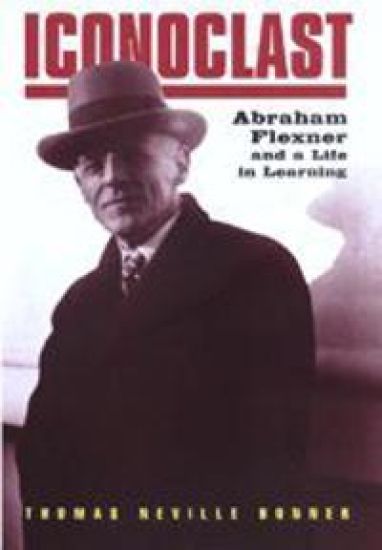
In this, the first biography of Abraham Flexner (1866-1959), distinguished scholar Thomas N. Bonner offers an engaging and insightful view of one of the most influential figures in twentieth-century American education. From his early, pathbreaking work in experimental primary schools to the founding of the prestigious Institute for Advanced Study at Princeton, Abraham Flexner's influence on American education was deep, pervasive, and enduring. In Thomas N. Bonner, Flexner has at long last found the biographer that his critical role in American education deserves. The son of poor Jewish immigrants in Louisville, Kentucky, Flexner was raised in the Reconstruction South and educated at the Johns Hopkins University in the first decade of that institution's existence. Upon earning his degree in 1886, he returned to Louisville to found-four years before John Dewey's Chicago "laboratory school"-an experimental school based on progressive ideas that soon won the close attention of Harvard President Charles Eliot. After a successful nineteen-year career as a teacher and principal, he turned his attention to medical education. His 1910 survey-known today as the Flexner Report-stimulated much-needed, radical changes in the field and, with its emphasis on full-time clinical teaching, remains to this day the most widely cited document on how doctors best learn their profession. Flexner's subsequent projects-a book on medical education in Europe and a comparative study of medical education in Europe and America-remain unsurpassed in range and insight. For fifteen years a senior officer in the Rockefeller-supported General Education Board, he helped raise money-more than 6 billion in today's dollars-for education in medicine and other subjects. His devastating critique of American higher education in 1936 raised the hackles of educators-but ultimately raised important questions as well. Three years later he created and led the Institute for Advanced Study in Princeton, convincing Albert Einstein to accept the first appointment at the newly created institute. Brilliant, abrasive, tenderhearted, and fundamentally a decent, farseeing man, Abraham Flexner accomplished much good in the world. His story, based on new archival sources and told with verve and wit, is sure to become the definitive work on a man and his era.
Focusing on the social, intellectual, and political context in which medical education took place, Thomas Neville Bonner offers a detailed analysis of transformations in medical instruction in the United Kingdom, France, Germany, and the United States between the Enlightenment and World War II. From a unique comparative perspective, this study considers how divergent approaches to medical instruction in these countries mirrored as well as impacted their particular cultural contexts. The book opens with an examination of key developments in medical education during the late eighteenth century and continues by tracing the evolution of clinical teaching practices in the early 1800s. It then charts the rise of laboratory-based teaching in the nineteenth century and the progression toward the establishment of university standards for medical education during the early twentieth century. Throughout, the author identifies changes in medical student populations and student life, including the opportunities available for women and minorities.
BLComprehensive comparative history of medical education in the West from 1750 to 1945 Professor Bonner traces the social, political, and intellectual background that fostered medical knowledge--especially in the United States, Great Britain, Germany, and France--and indicates how this knowledge affected medical education in each of these countries.
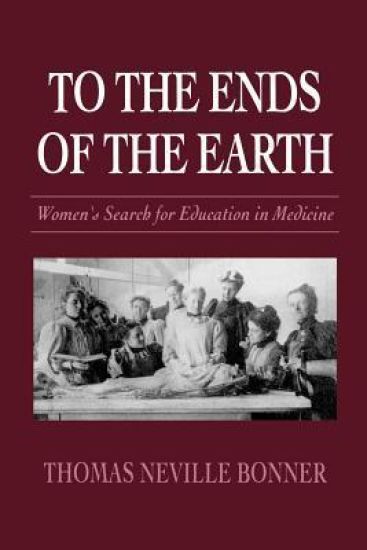
In this engagingly written book Thomas Bonner unveils the dramatic story of women’s long struggle to become physicians. Focusing both on international comparisons and on the personal histories of many of the pioneers, their determination and dedication, their setbacks and successes, he shows how European and American women gradually broke through the wall of resistance to women in medicine. In pre–Civil War America, in Tsarist Russia, in Victorian England, special schools of medicine for women were widely established as early as 1850 as a kind of way-station on the road to medical coeducation. Only in Switzerland and France, at first, could women study medicine in classes with men. As a result, hundreds and then thousands of women from Russia, Eastern Europe, England, and the United States enrolled in Swiss or Parisian universities to gain the first-class education that was denied them at home. Coming almost literally from “the ends of the earth,” they formed the largest migration of professional women in history.