Kirjojen hintavertailu – 12 859 827 kirjaa ja 27 kauppaa
Kirjailija
Thomas Paine
Kirjat ja teokset yhdessä paikassa: 604 kirjaa, julkaisuja vuosilta 1776–2027, suosituimpiin kuuluu The Political Works of Thomas Paine. Vertaile teosten hintoja ja tarkista saatavuus suomalaisista kirjakaupoista.
The Age of Reason; Being an Investigation of True and Fabulous Theology is a work by English and American political activist Thomas Paine, arguing for the philosophical position of deism. It follows in the tradition of 18th-century British deism, and challenges institutionalized religion and the legitimacy of the Bible. It was published in three parts in 1794, 1795, and 1807. In Part I, Paine outlines his major arguments and personal creed. In Parts II and III he analyzes specific portions of the Bible in order to demonstrate that it is not the revealed word of God. Most of Paine's arguments had long been available to the educated elite, but by presenting them in an engaging and irreverent style, he made deism appealing and accessible to a mass audience.
Like other legends of his era, he died before he was thirty. Unlike most others, his accomplishments embraced a far greater range of activities. As a result, he packed more excitement into his short span of years than most people could in ten lifetimes. From severe winter hazards in the mountains of Idaho to confrontations with hooligans as a U. S. Forest Service Ranger. From the challenges of learning to fly an airplane to those of teaching aviation cadets the fine arts of aerial dogfighting as a Stunt Instructor in Aerial Gunnery with the U. S. Army Air Service in WWI. As an aerial entrepreneur, from performing heart-stopping aerial maneuvers at air shows to creating and commanding an air force for the governor of Baja California to protect the territory from invading Mexican troops. From flying the most treacherous section of the transcontinental route for the U. S. Airmail Service to having his airplane's engine self-destruct in flight. All this and so much more until a tragic and fatal accident at home prematurely ended his life. The accounts in this book are especially compelling as the protagonist himself wrote them in letters to his parents. In addition to the correspondence, there are diary entries from his earlier years and newspaper articles written by the reporters who followed his career. The text is illustrated with numerous never-before-published photographs, many of them taken by Top. Come ride with "Top" Paine on this action-packed journey through the early years of the Twentieth Century It's all true, it's all real, and it's a trip you'll neither forget nor regret taking.
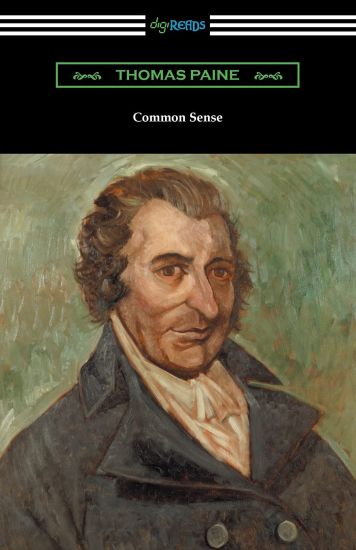
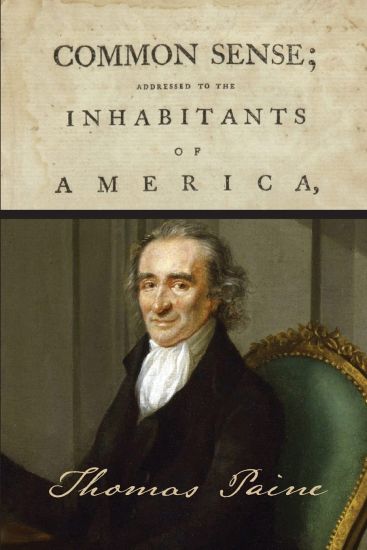
When Thomas Paine published his pamphlet Common Sense over the course of 1775 and 1776 it helped to galvanize the colonists to demand egalitarian government and separation from Great Britain. A bestseller in its day, it is recognized as one of the most important historical documents in the run up to the American Revolution. This volume contains not only the full text of Common Sense, but also the full text of Rights of Man, Paine’s defense of the French Revolution, and the first five pamphlets in his American Crisis series. This special edition features an elegantly designed cover and a durable flexible binding. It is an indispensable addition to any home history library.
In The Rights of Man, Thomas Paine not only claimed the people had the right to overthrow a government that doesn't recognize the natural rights of its citizens, it also advocated a welfare system that provided employment opportunities, child support, public education, and assistance for the elderly
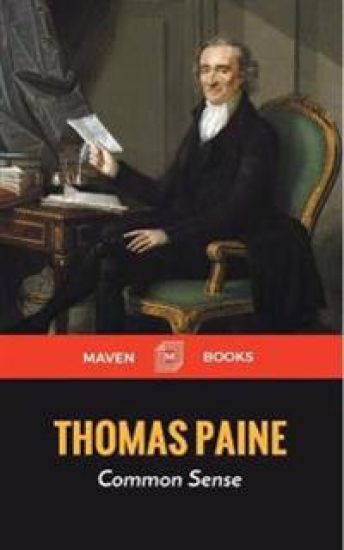
Struggling under oppressive laws, high taxes, and the heavy hand of King George the Third’s rule, the people living in early America longed for freedoms seemingly out of reach. Talk of rebellion stayed in bars and in the secret of homes, never really given serious consideration until Thomas Paine picked up a pen. Common Sense was the one of the first major cases made public for independence. Written as if it were a sermon, Paine advocates for religious freedom and independence from Great Britain. Common Sense is separated by four sections: “Of the Origin and Design of Government in General, With Concise Remarks on the English Constitution”, “Of Monarchy and Hereditary Succession,” “Thoughts on the Present State of American Affairs,” and “On the Present Ability of America, With Some Miscellaneous Reflections.” Each use concise and persuasive prose to address Paine’s main points and arguments for independence, based on the origins of the British government, the current state of America, and the issues of each. With Common Sense Thomas Paine entered a frequently talked about and yearned for solution for the young, struggling nation into public discourse for serious consideration. "Without the pen of the author of Common Sense, the sword of Washington would have been raised in vain,” John Adams said of Thomas Paine . Common Sense not only helped to inspire the American Revolution, but it also gave the founding fathers direction. Using clear, concise, and persuasive prose, Paine argues for American independence before other public figures of his time had the bravery or eloquence to. The ideologies of Common Sense are still employed in government today, and is a testament to the American spirit. Now with in a modern, easy-to-read font and with a distinct cover design, Common Sense by Thomas Paine embodies the American spirit and ingenuity like never before. It is a must-have for any collection seeking to appreciate American history and the origins of American democracy.
The book, Public Good, Being An Examination Into The Claim Of Virginia To The Vacant Western Territory, And Of The Right Of The United States To The Same: To Which Are Added, Proposals For Laying Off A New State To Be Applied As A Fund For Carrying On The War, Or Redeeming The National Debt. Written In The Year 1780, has been considered by academicians and scholars of great significance and value to literature. This forms a part of the knowledge base for future generations. So that the book is never forgotten we have represented this book in a print format as the same form as it was originally first published. Hence any marks or annotations seen are left intentionally to preserve its true nature.
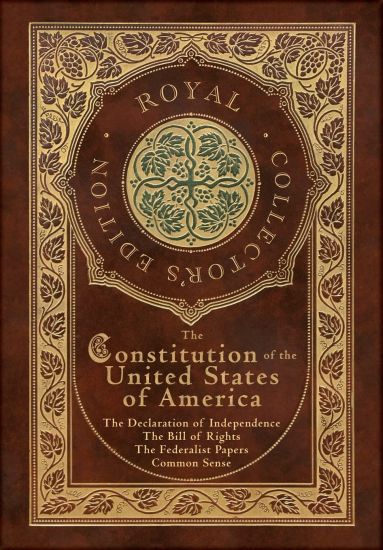
The Founding Documents of the United States of America includes the Constitution of the United States, the Declaration of Independence, the Bill of Rights, all Amendments to the Constitution, The Federalist Papers by Alexander Hamilton, James Madison, and John Jay, and Common Sense by Thomas Paine. The Federalist Papers is a collection of 85 articles and essays written under the pseudonym "Publius" to promote the ratification of the United States Constitution. The Federalist Papers are notable for their opposition to what later became the United States Bill of Rights. The idea of adding a Bill of Rights to the Constitution was originally controversial because the Constitution, as written, did not specifically enumerate or protect the rights of the people, rather it listed the powers of the government and left all that remained to the states and the people. Alexander Hamilton, the author of Federalist No. 84, feared that such an enumeration, once written down explicitly, would later be interpreted as a list of the only rights that people had. Common Sense was a pamphlet written by Thomas Paine advocating independence from Great Britain to people in the Thirteen Colonies. Writing in clear and persuasive prose, Paine marshaled moral and political arguments to encourage common people in the Colonies to fight for egalitarian government. It was published anonymously on January 10, 1776, at the beginning of the American Revolution, and became an immediate sensation.
Common Sense was a pamphlet written by Thomas Paine advocating independence from Great Britain to people in the Thirteen Colonies. Writing in clear and persuasive prose, Paine marshaled moral and political arguments to encourage common people in the Colonies to fight for egalitarian government. It was published anonymously on January 10, 1776, at the beginning of the American Revolution, and became an immediate sensation. Common Sense made public a persuasive and impassioned case for independence, which had not yet been given serious intellectual consideration. Paine connected independence with common dissenting Protestant beliefs as a means to present a distinctly American political identity and structured Common Sense as if it were a sermon. Historian Gordon S. Wood described Common Sense as "the most incendiary and popular pamphlet of the entire revolutionary era." In proportion to the population of the colonies at that time, it had the largest sale and circulation of any book published in American history. This case laminate collector's edition includes a Victorian inspired dust-jacket.
Struggling under oppressive laws, high taxes, and the heavy hand of King George the Third’s rule, the people living in early America longed for freedoms seemingly out of reach. Talk of rebellion stayed in bars and in the secret of homes, never really given serious consideration until Thomas Paine picked up a pen. Common Sense was the one of the first major cases made public for independence. Written as if it were a sermon, Paine advocates for religious freedom and independence from Great Britain. Common Sense is separated by four sections: “Of the Origin and Design of Government in General, With Concise Remarks on the English Constitution”, “Of Monarchy and Hereditary Succession,” “Thoughts on the Present State of American Affairs,” and “On the Present Ability of America, With Some Miscellaneous Reflections.” Each use concise and persuasive prose to address Paine’s main points and arguments for independence, based on the origins of the British government, the current state of America, and the issues of each. With Common Sense Thomas Paine entered a frequently talked about and yearned for solution for the young, struggling nation into public discourse for serious consideration. "Without the pen of the author of Common Sense, the sword of Washington would have been raised in vain,” John Adams said of Thomas Paine . Common Sense not only helped to inspire the American Revolution, but it also gave the founding fathers direction. Using clear, concise, and persuasive prose, Paine argues for American independence before other public figures of his time had the bravery or eloquence to. The ideologies of Common Sense are still employed in government today, and is a testament to the American spirit. Now with in a modern, easy-to-read font and with a distinct cover design, Common Sense by Thomas Paine embodies the American spirit and ingenuity like never before. It is a must-have for any collection seeking to appreciate American history and the origins of American democracy.
D'origine anglaise, Thomas Paine (1737-1809) fut un personnage tonnant. migr en Am rique, devenu Quaker, il soutint la R volution fran aise, re ut la nationalit fran aise, si gea la Convention o il refusa de voter la mort du roi, fut emprisonn sous la Terreur, chappa la guillotine et finit par retourner en Am rique. Auteur de pamphlets succ s, Paine ne vit pas publier de son vivant ce petit ouvrage qui contient une remarquable r v lation: les v ritables origines de la Franc-Ma onnerie, autrement dit un secret qui n' tait confi qu' certains Ma tres. partir de textes ma onniques et d'analyse des rituels, Thomas Paine met l'accent sur la tradition solaire de la Franc-Ma onnerie et ses mod les antiques que le lecteur est convi d couvrir.