Kirjojen hintavertailu – 12 903 725 kirjaa ja 27 kauppaa
Kirjailija
Thomas R. Hester
Kirjat ja teokset yhdessä paikassa: 5 kirjaa, julkaisuja vuosilta 2003–2015, suosituimpiin kuuluu We Came Naked and Barefoot. Vertaile teosten hintoja ja tarkista saatavuus suomalaisista kirjakaupoista.
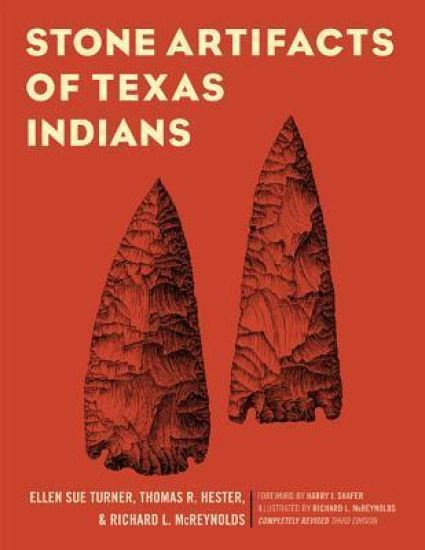
Useful for academic and recreational archaeologists alike, this book identifies and describes over 200 projectile points and stone tools used by prehistoric Native American Indians in Texas. This third edition boasts twice as many illustrations—all drawn from actual specimens—and still includes charts, geographic distribution maps and reliable age-dating information. The authors also demonstrate how factors such as environment, locale and type of artifact combine to produce a portrait of these ancient cultures.
Second place, Presidio La Bahia Award, Sons of the Republic of Texas, 2003 Perhaps no one has ever been such a survivor as álvar Núñez Cabeza de Vaca. Member of a 600-man expedition sent out from Spain to colonize "La Florida" in 1527, he survived a failed exploration of the west coast of Florida, an open-boat crossing of the Gulf of Mexico, shipwreck on the Texas coast, six years of captivity among native peoples, and an arduous, overland journey in which he and the three other remaining survivors of the original expedition walked some 1,500 miles from the central Texas coast to the Gulf of California, then another 1,300 miles to Mexico City. The story of Cabeza de Vaca has been told many times, beginning with his own account, Relación de los naufragios, which was included and amplified in Gonzalo Fernando de Oviedo y Váldez's Historia general de las Indias. Yet the route taken by Cabeza de Vaca and his companions remains the subject of enduring controversy. In this book, Alex D. Krieger correlates the accounts in these two primary sources with his own extensive knowledge of the geography, archaeology, and anthropology of southern Texas and northern Mexico to plot out stage by stage the most probable route of the 2,800-mile journey of Cabeza de Vaca. This book consists of several parts, foremost of which is the original English version of Alex Krieger's dissertation (edited by Margery Krieger), in which he traces the route of Cabeza de Vaca and his companions from the coast of Texas to Spanish settlements in western Mexico. This document is rich in information about the native groups, vegetation, geography, and material culture that the companions encountered. Thomas R. Hester's foreword and afterword set the 1955 dissertation in the context of more recent scholarship and archaeological discoveries, some of which have supported Krieger's plot of the journey. Margery Krieger's preface explains how she prepared her late husband's work for publication. Alex Krieger's original translations of the Cabeza de Vaca and Oviedo accounts round out the volume.
2003 – Texas Old Missions and Forts Restoration Association Book Award Winner – Texas Catholic Historical Society2004 – Finalist: Friends of the Dallas Public Library Award for Book Making the Most Significant Contribution to Knowledge – Texas Institute of LettersThe region that now encompasses Central Texas and northern Coahuila, Mexico, was once inhabited by numerous Native hunter-gather groups whose identities and lifeways we are only now learning through archaeological discoveries and painstaking research into Spanish and French colonial records. From these key sources, Maria F. Wade has compiled this first comprehensive ethnohistory of the Native groups that inhabited the Texas Edwards Plateau and surrounding areas during most of the Spanish colonial era. Much of the book deals with events that took place late in the seventeenth century, when Native groups and Europeans began to have their first sustained contact in the region. Wade identifies twenty-one Native groups, including the Jumano, who inhabited the Edwards Plateau at that time. She offers evidence that the groups had sophisticated social and cultural mechanisms, including extensive information networks, ladino cultural brokers, broad-based coalitions, and individuals with dual-ethnic status. She also tracks the eastern movement of Spanish colonizers into the Edwards Plateau region, explores the relationships among Native groups and between those groups and European colonizers, and develops a timeline that places isolated events and singular individuals within broad historical processes.
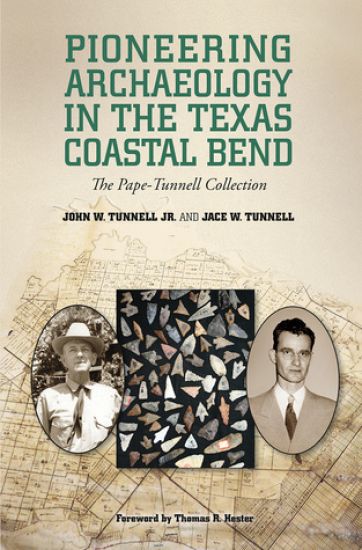
When Harold F. Pape moved to Gregory, Texas, in 1927, he quickly became fascinated by the wealth of Native American artifacts along the nearby shoreline of Corpus Christi Bay and what is now called Port Bay, a southern arm of the larger Copano Bay. A lifelong natural history enthusiast and collector, Pape met and married Lucile H. Tunnell, a widow with three young sons. Before long, John W. Tunnell, Lucile's oldest son, was accompanying Pape on his field studies in surrounding areas and the wider Texas Coastal Bend. Working in the days before much of the development that now covers the region, Pape and Tunnell studied more than two hundred sites throughout the Coastal Bend, making meticulous logs, maps, and notes of their discoveries. John W. (Wes) Tunnell Jr. and Jace Tunnell have organized and documented their family collection and present it, along with brief biographies of the two collectors, as a survey of the state of knowledge in the late 1920s and 1930s, as well as a tribute to these two important early researchers and their body of work.
Field Methods in Archaeology has been the leading source for instructors and students in archaeology courses and field schools for 60 years since it was first authored in 1949 by the legendary Robert Heizer. Left Coast has arranged to put the most recent Seventh Edition back into print after a brief hiatus, making this classic textbook again available to the next generation of archaeology students. This comprehensive guide provides an authoritative overview of the variety of methods used in field archaeology, from research design, to survey and excavation strategies, to conservation of artifacts and record-keeping. Authored by three leading archaeologists, with specialized contributions by several other experts, this volume deals with current issues such as cultural resource management, relations with indigenous peoples, and database management as well as standard methods of archaeological data collection and analysis.