Kirjojen hintavertailu – 12 859 818 kirjaa ja 27 kauppaa
Kirjailija
Thomas Richards
Kirjat ja teokset yhdessä paikassa: 34 kirjaa, julkaisuja vuosilta 1991–2026, suosituimpiin kuuluu Divine Quintessence X. Vertaile teosten hintoja ja tarkista saatavuus suomalaisista kirjakaupoista.
Heart of Practice is a unique and invaluable insight into the workings of one of theatre’s true pioneers, presented by his closest collaborator. This book charts the development of Grotowski’s dramatic research through a decade of conversations with his apprentice, Thomas Richards. Tuscany’s ‘Workcenter of Jerzy Grotowski and Thomas Richards’ is the enduring legacy of a master teacher, director and theorist, and home to much of Grotowski’s most significant work. Interviewed by leading scholars, and offering his own intimate accounts, Richards gives a vivid and detailed view of the Workcenter’s evolution, providing:concrete illustration of the Workcenter’s distinctive creative practices rigorous discussion of over twenty years of world-renowned research previously unpublished performance photos privileged insight into what Grotowski considered to be the culmination of his life’s work.
Heart of Practice is a unique and invaluable insight into the workings of one of theatre’s true pioneers, presented by his closest collaborator. This book charts the development of Grotowski’s dramatic research through a decade of conversations with his apprentice, Thomas Richards. Tuscany’s ‘Workcenter of Jerzy Grotowski and Thomas Richards’ is the enduring legacy of a master teacher, director and theorist, and home to much of Grotowski’s most significant work. Interviewed by leading scholars, and offering his own intimate accounts, Richards gives a vivid and detailed view of the Workcenter’s evolution, providing:concrete illustration of the Workcenter’s distinctive creative practices rigorous discussion of over twenty years of world-renowned research previously unpublished performance photos privileged insight into what Grotowski considered to be the culmination of his life’s work.
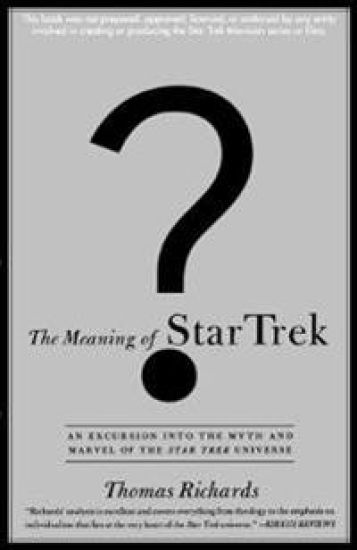
"Where does Star Trek come from? Why is it so popular? How does it go about creating a coherent world? Literary critics may take literature seriously, but they often look down on popular forms such as television shows." I feel differently. I think the meaning of the series can best be captured by looking at how it successfully creates a coherent universe. Like any great work of art or literature, the Star Trek universe has an integrity and a resonance all its own, a completeness unrivaled by any other kind of science fiction, whether movie, television show, or novel. The unique character of the series, taken not as a group of loosely connected stories but as a viable whole, is the subject of this book."--From the Introduction to The Meaning of Star TrekStar Trek has no equal. Easily the most cerebral show on television, it brought a literary sophistication to the raw material of science fiction and confounded all the formulas of television. By taking classic stories and placing them in strange new contexts, Star Trek became a modern Odyssey in outer space, a set of stories so basic to our culture that they can be told over and over again. The Meaning of Star Trek captures the essence of this timeless television masterpiece by linking the parallel universes of classical literature and popular culture. Thomas Richards examines its portrayals of contact and conflict with other species and other cultures; its deep explorations of character and identity, and its complex conception of the idea of the individual self; its remarkably rich and varied use of story and myth; and its profound appeal to our shared sense of wonder, a reverence and awe for that which science cannot explain. Enlightening, provocative, and enormously entertaining, The Meaning of Star Trek is essential reading for even the most casual admirer of the Star Trek universe, as well as a brilliant introduction to the worlds of literature, myth, and science fiction. This book was not prepared, approved, licensed, or endorsed by any entity involved in creating or producing the Star Trek television series or films. "Richards' analysis is excellent and covers everything from theology to the emphasis on individualism that lies at the very heart of the Star Trek universe."--Kirkus Reviews
`I consider this book a precious report that permits one to assimilate some of those simple and basic principles which the self-taught at times come to know, yet only after years of groping and errors. The book furnishes information regarding discoveries which the actor can understand in practice, without having to start each time from zero. Thomas Richards has worked with me systematically since 1985. Today he is my essential collaborator in the research dedicated to Art as Vehicle.' - from the Preface by Jerzy Grotowski
`I consider this book a precious report that permits one to assimilate some of those simple and basic principles which the self-taught at times come to know, yet only after years of groping and errors. The book furnishes information regarding discoveries which the actor can understand in practice, without having to start each time from zero. Thomas Richards has worked with me systematically since 1985. Today he is my essential collaborator in the research dedicated to Art as Vehicle.' - from the Preface by Jerzy Grotowski
Nineteenth-century Britain could be seen as the first information society in history-for the simple reason that it accumulated knowledge from the far-flung corners of its empire faster than it could easily digest it. The British Empire presented a vast administrative challenge; by meeting that challenge through maps and surveys, censuses and statistics, Victorian administrators developed a new symbiosis of knowledge and power. The narratives of the late nineteenth century are full of fantasies about an empire united not by force or civil control but by information. In The Imperial Archive, Thomas Richards analyzes the ways in which the Victorian organization of knowledge was enlisted into the service of the British Empire, as fields like biology, geography and geology began to function almost as extensions of British intelligence. Richards argues that the techniques invented for managing this information explosion established an enduring axis between knowledge and the state and also suggested a powerful new direction for the novel. He illustrates his argument by careful reference to a variety of institutions-above all the growth of the museum-and texts, including works by Rudyard Kipling, Erskine Childers, H. G. Wells and Bram Stoker.
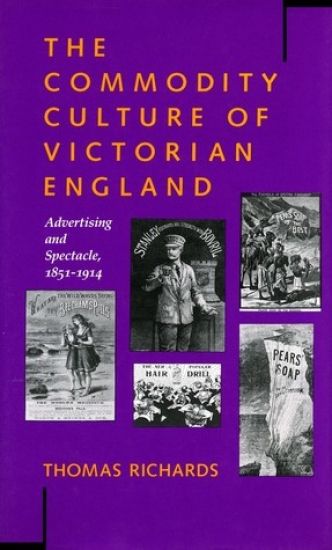
London's Great Exhibition of 1851 was based on a single, far-reaching conception: that all human life and cultural endeavour could be represented by exhibiting manufactured articles. The 'great exhibition of things' inaugurated a way of seeing that made an indelible mark on Victorian England and fashioned an enduring ideology of consumerism. This was the first world fair, the first department store, the first shopping mall: it heralded the triumph of the commodity as the focal point of everyday life and the dead centre of the modern world. In this pioneering book, Thomas Richards reveals the ways in which capitalism produced and sustained a culture of its own in the nineteenth and early twentieth centuries. Drawing in particular on the work of Guy Debord, Richards examines the birth of the commodity and the origins of advertising. He shows that the cultural forms of consumerism came into being long before the consumer economy itself, and argues that those forms have left vivid traces in the commodity culture of the present. Lucidly written and carefully grounded in analyses of individual advertisements and campaigns, this is a powerful account of the fateful conjunction of spectacle and capitalism; of a world produced, distributed and consumed, a world still too much with us.