Kirjojen hintavertailu – 12 859 819 kirjaa ja 27 kauppaa

Kirjailija

Thomas S. C. Farrell

Kirjat ja teokset yhdessä paikassa: 38 kirjaa, julkaisuja vuosilta 2005–2024, suosituimpiin kuuluu Sociolinguistics and Language Teaching. Vertaile teosten hintoja ja tarkista saatavuus suomalaisista kirjakaupoista.

Nimi esiintyy myös muodoissa: Thomas S.C. Farrell, Thomas S C Farrell

38 kirjaa

Kirjojen julkaisuvuodet: 2005–2024.

From Trainee to Teacher

From Trainee to Teacher

Thomas S. C. Farrell

Equinox Publishing Ltd
2016
sidottu
For many novice ESL/EFL teachers the transition from their teacher education program (Cert or MA) to their first year of teaching has been characterized as a type of 'reality shock' because the ideals that novice teachers may have formed during the education program are often replaced by the harsh realities of the classroom, and social and political contexts of the school in which they are teaching. One reason for this may be that teacher education programs are unable to reproduce an environment similar to that teachers face when they graduate. Even though many schools may have induction programs available, many novice teachers are often left to cope on their own in a sink-or-swim type situation, with some ultimately leaving the profession because of difficulties encountered during their first year. Every teacher must experience life as a novice when they begin their teaching career in a real classroom, and Reflective Practice for Novice Language Teachers is the book that will make the transition from the training course to the classroom as smooth as possible because it focuses on the needs of novice teachers in particular. Reflective Practice for Novice Language Teachers outlines and describes a comprehensive framework for the professional development of novice teachers through reflective practice that is grounded in the classroom realities of real teaching contexts so that they can develop beyond their novice years and become expert ESL/EFL teachers. In addition, the suggestions presented in this book can be operationalized as standards for future ESL/EFL teacher education and development programs worldwide.
From Trainee to Teacher

From Trainee to Teacher

Thomas S.C. Farrell

Equinox Publishing Ltd
2016
pokkari
For many novice ESL/EFL teachers the transition from their teacher education program (Cert or MA) to their first year of teaching has been characterized as a type of 'reality shock' because the ideals that novice teachers may have formed during the education program are often replaced by the harsh realities of the classroom, and social and political contexts of the school in which they are teaching. One reason for this may be that teacher education programs are unable to reproduce an environment similar to that teachers face when they graduate. Even though many schools may have induction programs available, many novice teachers are often left to cope on their own in a sink-or-swim type situation, with some ultimately leaving the profession because of difficulties encountered during their first year. Every teacher must experience life as a novice when they begin their teaching career in a real classroom, and Reflective Practice for Novice Language Teachers is the book that will make the transition from the training course to the classroom as smooth as possible because it focuses on the needs of novice teachers in particular. Reflective Practice for Novice Language Teachers outlines and describes a comprehensive framework for the professional development of novice teachers through reflective practice that is grounded in the classroom realities of real teaching contexts so that they can develop beyond their novice years and become expert ESL/EFL teachers. In addition, the suggestions presented in this book can be operationalized as standards for future ESL/EFL teacher education and development programs worldwide.
Language Teacher Professional Development

Language Teacher Professional Development

Thomas S.C. Farrell

Teachers of English to Speakers of Other Languages, Incorporated (TESOL)
2015
nidottu
The field of English language teaching continues to become more and more complex. To stay up-to-date with the developments as the discipline grows, English language teachers must work to expand their knowledge base by participating in continual professional development and practicing reflective teaching. Farrell provides useful insights about the many kinds of training and discusses the practices you can engage in to ensure your own growth, including team teaching, action research, and teaching portfolios. Learn about the different stages of professional development, what approaches are right for you, and how you can sustain your growth throughout your career.
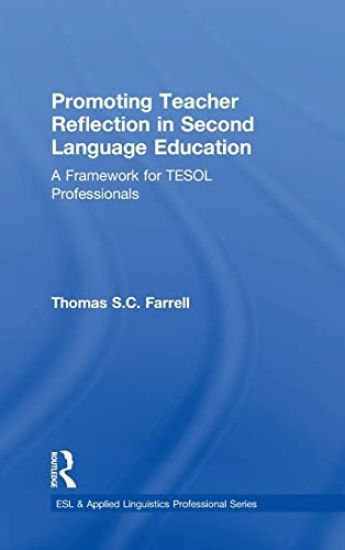
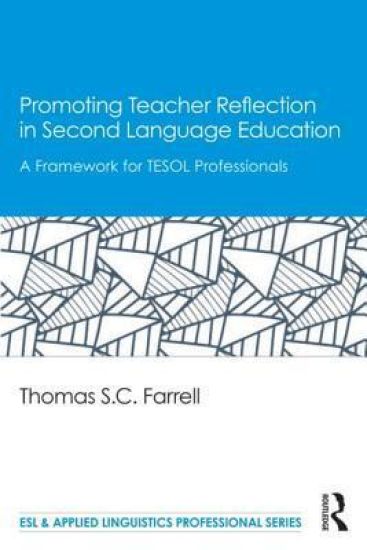
Promoting Teacher Reflection in Second Language Education
Taking the concept and the practice of reflective teaching forward, this book introduces a well-structured, flexible framework for use by teachers at all levels of development, from pre-service to novice to the most experienced. The framework outlines five levels of reflective practice—Philosophy; Principles; Theory-of-Practice; Practice; Beyond Practice—and provides specific techniques for teachers to implement each level of reflection in their work. Designed to allow readers to take either a deductive approach, moving from theory-into-practice, or an inductive approach where they start from a practice-into-theory position, the framework can be used by teachers alone, in pairs, or in a group.
Reflective Writing for Language Teachers

Reflective Writing for Language Teachers

Thomas S.C. Farrell

Equinox Publishing Ltd
2012
sidottu
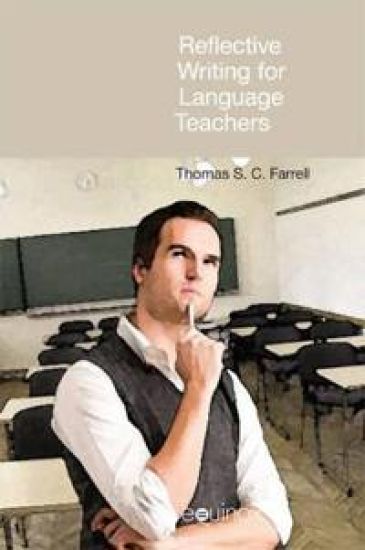
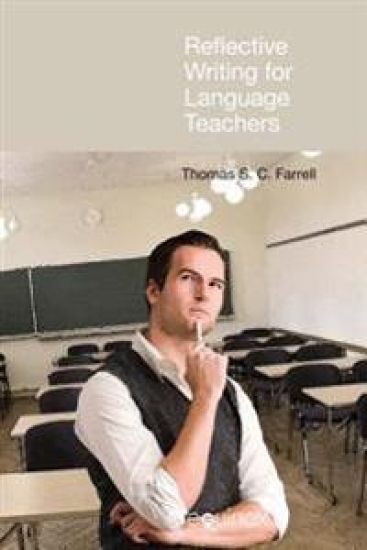
Reflective practice is now seen as a major component of many language teacher education and professional development programs worldwide. One method that has been suggested for language teachers to reflect on their work is by writing regularly about their practice. Reflective Writing for Language Teachers shows language teachers how they can use writing as a way to subject their beliefs and practices to critical reflection and offers them a means of using this type of reflective practice for professional development purposes. When language teachers write about various facets of their work over a period of time, and then read over their entries looking for patterns, that is, seeing their own thoughts, they may uncover aspects of their practice that they had not realized before beginning to write reflectively. Reflective writing develops language teachers' understanding of their practice and also leads to a clarification of the values and assumptions that underlie those practices. Reflective Writing for Language Teachers explores the impact of regular writing as a reflective tool for teachers of English as a second language, other language teachers, and classroom English or language arts teachers. The book begins with a discussion on professional development and then outlines what reflective practice involves. It also addresses such issues as self-reflection, self-discovery through narrative reflective writing, the reflective journal, reflecting on the first and the later years of teaching, reflecting with the aid of teacher development groups, and reflecting for action.
Reflective Writing for Language Teachers

Reflective Writing for Language Teachers

Thomas S.C. Farrell

Equinox Publishing Ltd
2012
pokkari
Reflective practice is now seen as a major component of many language teacher education and professional development programs worldwide. One method that has been suggested for language teachers to reflect on their work is by writing regularly about their practice. Reflective Writing for Language Teachers shows language teachers how they can use writing as a way to subject their beliefs and practices to critical reflection and offers them a means of using this type of reflective practice for professional development purposes. When language teachers write about various facets of their work over a period of time, and then read over their entries looking for patterns, that is, seeing their own thoughts, they may uncover aspects of their practice that they had not realized before beginning to write reflectively. Reflective writing develops language teachers' understanding of their practice and also leads to a clarification of the values and assumptions that underlie those practices. Reflective Writing for Language Teachers explores the impact of regular writing as a reflective tool for teachers of English as a second language, other language teachers, and classroom English or language arts teachers. The book begins with a discussion on professional development and then outlines what reflective practice involves. It also addresses such issues as self-reflection, self-discovery through narrative reflective writing, the reflective journal, reflecting on the first and the later years of teaching, reflecting with the aid of teacher development groups, and reflecting for action.
Reflecting on Teaching the Four Skills

Reflecting on Teaching the Four Skills

Thomas S.C. Farrell

The University of Michigan Press
2012
nidottu
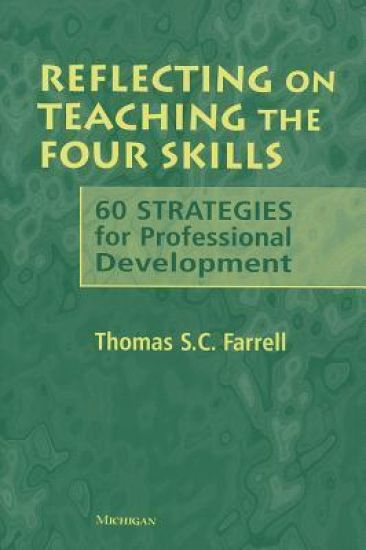
Reflecting on Teaching the Four Skills: 60 Strategies for Professional Development offers novice teachers strate­gies for the teaching of reading, writing, listening, and speaking, and for assessing those skills. The final chapter offers strategies for pursuing professional development. The strategies presented in each chapter are not necessarily the most impor­tant or the only strategies; they are examples written to help in-service or new teachers discover new techniques for addressing common challenges. Each strategy--a simple and concise statement for teachers to reflect on, fol­lowed by a discussion of the relevant theory or principle(s)—is followed by three sections:Application: A concise description of one way the strat­egy can be used and applied by language teachers. Precaution: One caveat intended to help teachers troubleshoot for, and possibly avoid, common problems before they occur. Scenario: One scenario of a teacher using the strategy, followed by reflective questions. The scenarios are based on actual experi­ences of language teachers from around the world. Each chapter closes with a set of broad-based reflection questions that can be used as the basis of classroom discussion or writing/research or for self-reflection.
Teacher's Sourcebook for Extensive Reading

Teacher's Sourcebook for Extensive Reading

George Jacobs; Thomas S. C. Farrell

Information Age Publishing
2012
sidottu
The best way for students to learn to read and to come to love reading is – surprise, surprise – by reading in quantity. Unfortunately, many of today’s students read far too little. This lack of time spent reading is particularly unfortunate, as reading constitutes a bedrock skill, essential in all subject areas. Thus, we teachers need to devote curriculum time to not only teaching students how to read but also to encouraging them to read extensively. This is what Extensive Reading is all about. Teachers Sourcebook for Extensive Reading provides hundreds of teacher tested ideas on how to do Extensive Reading. The book begins with an introduction to ‘the what’ and ‘the why’ of Extensive Reading. Thereafter, the book consists of three parts. Part 1 discusses finding materials for Extensive Reading. Part 2 offers ideas for motivating students to read and for activities that students might do after they read or while they are reading, including cooperative learning activities. Part 3 looks at how teachers can serve as advocates for Extensive Reading. Among the book’s distinctive features are breaks for reflection, first person accounts from teachers, and ideas for doing Action Research and other forms of teacher investigation and research on Extensive Reading. We hope that you will find the Teachers Sourcebook for Extensive Reading to be a practical book, but also informed by theory and researh. We also hope this book will make a difference for your students in their test scores and, even more, in their attitude toward reading, now and in the future.
Teacher's Sourcebook for Extensive Reading

Teacher's Sourcebook for Extensive Reading

George Jacobs; Thomas S. C. Farrell

Information Age Publishing
2012
nidottu
The best way for students to learn to read and to come to love reading is – surprise, surprise – by reading in quantity. Unfortunately, many of today’s students read far too little. This lack of time spent reading is particularly unfortunate, as reading constitutes a bedrock skill, essential in all subject areas. Thus, we teachers need to devote curriculum time to not only teaching students how to read but also to encouraging them to read extensively. This is what Extensive Reading is all about. Teachers Sourcebook for Extensive Reading provides hundreds of teacher tested ideas on how to do Extensive Reading. The book begins with an introduction to ‘the what’ and ‘the why’ of Extensive Reading. Thereafter, the book consists of three parts. Part 1 discusses finding materials for Extensive Reading. Part 2 offers ideas for motivating students to read and for activities that students might do after they read or while they are reading, including cooperative learning activities. Part 3 looks at how teachers can serve as advocates for Extensive Reading. Among the book’s distinctive features are breaks for reflection, first person accounts from teachers, and ideas for doing Action Research and other forms of teacher investigation and research on Extensive Reading. We hope that you will find the Teachers Sourcebook for Extensive Reading to be a practical book, but also informed by theory and researh. We also hope this book will make a difference for your students in their test scores and, even more, in their attitude toward reading, now and in the future.
Practice Teaching

Practice Teaching

Jack C. Richards; Thomas S. C. Farrell

Cambridge University Press
2011
sidottu
Practice Teaching surveys issues and procedures in conducting practice teaching. Written for language teachers in training at the diploma, undergraduate, or graduate level, Practice Teaching, A Reflective Approach surveys issues and procedures in conducting practice teaching. The book adopts a reflective approach to practice teaching and shows student teachers how to explore and reflect on the nature of language teaching and their own approaches to teaching through their experience of practice teaching.
Practice Teaching

Practice Teaching

Jack C. Richards; Thomas S. C. Farrell

Cambridge University Press
2011
pokkari
Practice Teaching surveys issues and procedures in conducting practice teaching. Written for language teachers in training at the diploma, undergraduate, or graduate level, Practice Teaching, A Reflective Approach surveys issues and procedures in conducting practice teaching. The book adopts a reflective approach to practice teaching and shows student teachers how to explore and reflect on the nature of language teaching and their own approaches to teaching through their experience of practice teaching.
Essentials for Successful English Language Teaching

Essentials for Successful English Language Teaching

Thomas S. C. Farrell; George M. Jacobs

BLOOMSBURY PUBLISHING PLC
2010
sidottu
Essentials For Successful English Language Teaching is about how we teach English Language Learners (ELLs) and how our ELLs learn. Farrell and Jacobs encourage those involved in teaching English to develop, maintain and rediscover the reasons that led them to take up the profession. They focus on the essentials in teaching the English language that teachers can implement in their instruction so that their students can excel in their learning: Encourage learner autonomy Emphasize the social nature of learning Develop curricular integration, focus on meaning Celebrate diversity Expand thinking skills Utilize alternative assessment, and Promote English language teachers as co-learners along with their students. These essentials are best implemented as a whole, rather than one at a time and so they are interwoven with each other to encourage a holistic teaching approach. Highly accessible, each chapter comes with case studies and a range of activities to encourage the reader to put each of the essentials into practice. With these the authors aim to bring an inner smile to all English language teachers that reassures them they made the right choice when they chose to become teachers of the English language. This reflective and engaging book will be invaluable to postgraduate students of TESOL and applied linguistics, and in-service language teachers.
Essentials for Successful English Language Teaching

Essentials for Successful English Language Teaching

Thomas S. C. Farrell; George M. Jacobs

Continuum International Publishing Group Ltd.
2010
nidottu
Essentials For Successful English Language Teaching is about how we teach English Language Learners (ELLs) and how our ELLs learn. Farrell and Jacobs encourage those involved in teaching English to develop, maintain and rediscover the reasons that led them to take up the profession. They focus on the essentials in teaching the English language that teachers can implement in their instruction so that their students can excel in their learning: Encourage learner autonomy Emphasize the social nature of learning: Develop curricular integration, focus on meaning. Utilize alternative assessment, and Promote English language teachers as co-learners along with their students. These essentials are best implemented as a whole, rather than one at a time and so they are interwoven with each other to encourage a holistic teaching approach. Highly accessible, each chapter comes with case studies and a range of activities to encourage the reader to put each of the essentials into practice. With these the authors aim to bring an inner smile to all English language teachers thatreassures themthey made the right choice when they chose to become teachers of the English language. This reflective and engaging book will be invaluable to postgraduate students of TESOL and applied linguistics, and in-service language teachers.
Talking, Listening, and Teaching

Talking, Listening, and Teaching

Thomas S. C. Farrell

Corwin Press Inc
2009
pokkari
'This book demystifies the verbal magic that helps turn a classroom into a learning community with lively and engaging discourse. Teachers will find the instructional elements for orchestrating dialogue that gives students an appropriate and potent voice in the teaching and learning environment' - Neal A. Glasgow, Teacher, San Dieguito Union High School District, CA, Author, "What Successful Teachers Do". Boost student participation and learning by fostering effective communication in your classroom! "Talking, Listening, and Teaching" demonstrates how important it is for teachers to understand and monitor classroom communication patterns and resolve problems that may hamper students' learning. Using examples from real classrooms, the author explains: how classroom talk is different from communication outside the classroom; how to gather and analyze data about classroom talk; what type of questioning generates good discussions; why and how to give feedback to students; and, how nonverbal communication impacts the classroom. This insightful guide to classroom communication, featuring provocative 'Thinking About Your Own Classroom' questions, is ideal for teacher study groups and benefits all educators who wish to effectively manage this important aspect of teaching and learning.
What Successful Literacy Teachers Do

What Successful Literacy Teachers Do

Neal A. Glasgow; Thomas S. C. Farrell

SAGE Publications Inc
2007
sidottu
"An interesting compilation for administrators, new teachers, and seasoned teachers. This text acts as a concise reminder of what we should all be doing in our classrooms and includes practical implementation ideas."—Patricia Ruggiano Schmidt, Professor of LiteracyLe Moyne College"Easy to read quickly, especially when looking for something specific. I definitely enjoyed the quotes to start each chapter and the research for each strategy."—Kathleen Prisbell, English TeacherRussell O. Brackman Middle School, Barnegat, NJA wealth of research-based literacy strategies in one easy-to-use, convenient format! To help teachers fulfill the diverse and individual challenges of providing comprehensive literacy instruction, What Successful Literacy Teachers Do offers a variety of research-based suggestions and proven teaching methods. Linking six decades of reading research to classroom practice, this book presents 70 instructional strategies ready for immediate classroom use. The authors, drawing on their own experience as teachers, mentors, and teacher educators, offer a rich resource for bringing differentiated approaches into every literacy classroom. The easy-to-browse table of contents covers:Phonics, phonemics, and decodingVocabulary, spelling, and word studyFluency and comprehensionAssessment, instructional materials, and technologySpecial topics, including English Language Learners, family literacy, and moreTranslating state-of-the-art research into practitioner strategies, this resource is ideal for teachers, reading coaches, mentors, teacher educators, and instructional planners.
What Successful Literacy Teachers Do

What Successful Literacy Teachers Do

Neal A. Glasgow; Thomas S. C. Farrell

SAGE Publications Inc
2007
nidottu
"An interesting compilation for administrators, new teachers, and seasoned teachers. This text acts as a concise reminder of what we should all be doing in our classrooms and includes practical implementation ideas."—Patricia Ruggiano Schmidt, Professor of LiteracyLe Moyne College"Easy to read quickly, especially when looking for something specific. I definitely enjoyed the quotes to start each chapter and the research for each strategy."—Kathleen Prisbell, English TeacherRussell O. Brackman Middle School, Barnegat, NJA wealth of research-based literacy strategies in one easy-to-use, convenient format! To help teachers fulfill the diverse and individual challenges of providing comprehensive literacy instruction, What Successful Literacy Teachers Do offers a variety of research-based suggestions and proven teaching methods. Linking six decades of reading research to classroom practice, this book presents 70 instructional strategies ready for immediate classroom use. The authors, drawing on their own experience as teachers, mentors, and teacher educators, offer a rich resource for bringing differentiated approaches into every literacy classroom. The easy-to-browse table of contents covers:Phonics, phonemics, and decodingVocabulary, spelling, and word studyFluency and comprehensionAssessment, instructional materials, and technologySpecial topics, including English Language Learners, family literacy, and moreTranslating state-of-the-art research into practitioner strategies, this resource is ideal for teachers, reading coaches, mentors, teacher educators, and instructional planners.
Professional Development for Language Teachers

Professional Development for Language Teachers

Jack C. Richards; Thomas S. C. Farrell

Cambridge University Press
2005
pokkari
Professional Development for Language Teachers examines ten different techniques that can be used to facilitate professional development in language teaching. These effective teaching tools are: self-monitoring, support groups, journal writing, classroom observation, teaching portfolios, analysis of critical incidents, case analysis, peer coaching, team teaching, and action research. The book begins with a conceptual framework for professional development. All chapters contain practical examples in the form of vignettes written by teachers using the techniques, as well as reflection questions to help readers apply the approach in their own teaching context.