

Kirjailija
Thomas Schmidinger
Kirjat ja teokset yhdessä paikassa: 13 kirjaa, julkaisuja vuosilta 2004–2025, suosituimpiin kuuluu 'Wenn der Herrgott das Wichtigste auf der Welt ist'. Vertaile teosten hintoja ja tarkista saatavuus suomalaisista kirjakaupoista.
13 kirjaa
Kirjojen julkaisuvuodet: 2004–2025.
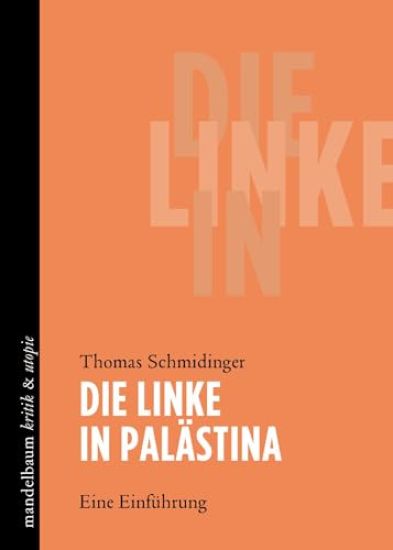

'Wenn der Herrgott das Wichtigste auf der Welt ist'
Thomas Schmidinger
Mandelbaum Verlag eG
2023
pokkari
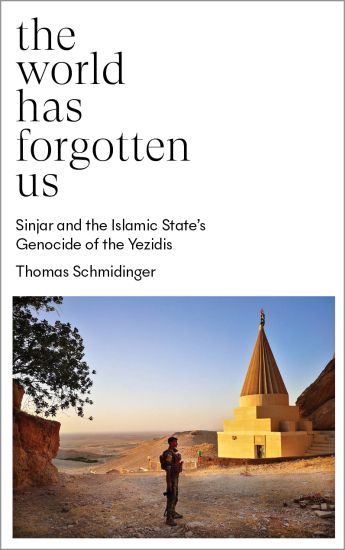
The persecution of the Yezidis, a religious community originating in Upper Mesopotamia, has been ongoing since at least the 10th century. On 3 August 2014, Islamic State attacked the Yezidi community in Sinjar, Kurdistan. Thousands were enslaved or killed in this genocide, and 100,000 people fled to Mount Sinjar, permanently exiled from their homes. Here, Thomas Schmidinger talks to the Yezidis in Iraq who tell the history of their people, why the genocide happened and how it affects their lives today. This is the first full account of these events, as told by the Yezidis in their own words, to be published in English. The failure of the Kurdistan Peshmerga of the PDK in Iraq to protect the Yezidis is explored, as is the crucial support given by the Syrian-Kurdish YPG. This multi-faceted and important history brings the fight and trauma of the Yezidis back into focus, calling for the world to remember their struggle.
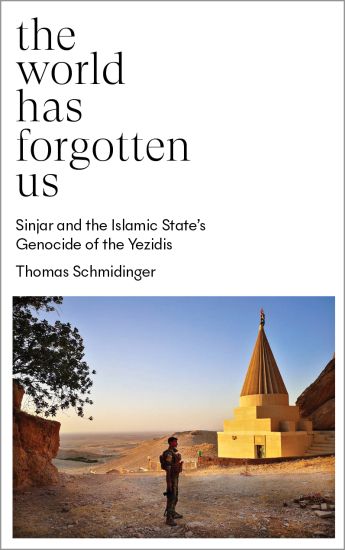
The persecution of the Yezidis, a religious community originating in Upper Mesopotamia, has been ongoing since at least the 10th century. On 3 August 2014, Islamic State attacked the Yezidi community in Sinjar, Kurdistan. Thousands were enslaved or killed in this genocide, and 100,000 people fled to Mount Sinjar, permanently exiled from their homes. Here, Thomas Schmidinger talks to the Yezidis in Iraq who tell the history of their people, why the genocide happened and how it affects their lives today. This is the first full account of these events, as told by the Yezidis in their own words, to be published in English. The failure of the Kurdistan Peshmerga of the PDK in Iraq to protect the Yezidis is explored, as is the crucial support given by the Syrian-Kurdish YPG. This multi-faceted and important history brings the fight and trauma of the Yezidis back into focus, calling for the world to remember their struggle.
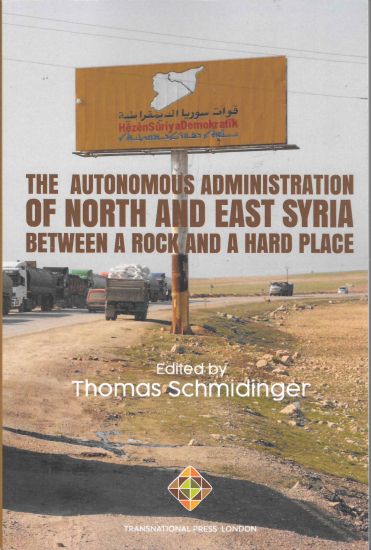
The Autonomous Administration of North and East Syria: Between A Rock and A Hard Place
Thomas Schmidinger
Transnational Press London
2020
nidottu
This book is based on papers presented at the conference. However, it is not a typical publication of academic conference proceedings because the topics are not completely congruent with those of the conference. Some lectures that could not be held due to travel restrictions related to the coronavirus pandemic were submitted as book contributions. In addition, I also wrote a short contribution on the Jewish history of the region, which has been often neglected in previous presentations of the region. The various authors for this volume have been intensively involved with the region in recent years. However, the authors do not only focus on the situation on the ground, but also on the international context of the autonomous administration. The conflict in Syria is no longer just a civil war, but a transnational conflict with important roles played not only by actors such as Russia or the USA, but also Turkey or Iran. Given the transnationality of the conflict and the role of the hegemonic powers, these authors share thoughtful analyses from very different perspectives. It is important to share these diverse views with the world so that the tragic conflict might become more comprehensible. This does not mean, however, that I necessarily advocate each particular position taken by the varied contributors to this book. The intent is to offer you multiple perspectives and certainly not a common narrative.
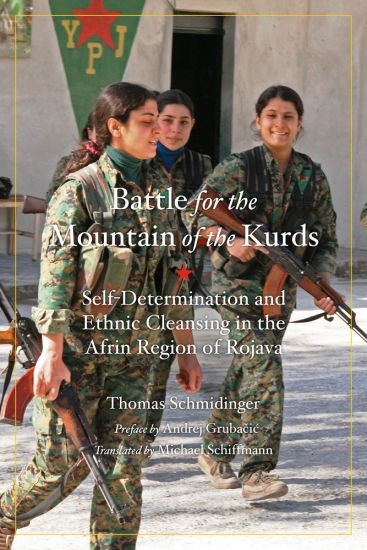
In early 2018, Turkey invaded the autonomous Kurdish region of Afrin in Syria and is currently threatening to ethnically cleanse the region. Between 2012 and 2018, the "Mountain of the Kurds" (Kurd Dagh) had been one of the quietest regions in a country otherwise torn by civil war. After the outbreak of the Syrian civil war in 2011, the Syrian army withdrew from the region, enabling the Party of Democratic Union (PYD) to introduce a Kurdish self-administration and later to establish the Canton Afrin as one of the three parts of the heavily Kurdish Democratic Federation of North-Syria, or Rojava. This self-administration, which had seen multi-party elections in 2017, included autonomy for a number of ethnic and religious groups, and provided a safe haven for up to 300,000 Syrian refugees, is now at risk of being annihilated. In this volume, Schmidinger provides a comprehensive history of the region and gives inhabitants of a variety of ethnicities, religions, political orientations, and walks of life the opportunity to speak for themselves. As things stand now, the book might seem to be in danger of becoming an epitaph for the "Mountain of the Kurds," but as the author writes, "the battle for the Mountain of the Kurds is far from over yet."
The Kurdish territory of Rojava in Syria has become a watchword for radical democracy, communalism and gender equality. But while Western radicals continue to project their own values onto the revolution, the complexities of the situation are often overlooked or misunderstood. Based on over 17 years of research and fieldwork, Thomas Schmidinger provides a detailed introduction to the history and political situation in Rojava. Outlining the history of the Kurds in Syria from the late Ottoman Empire until the Syrian civil war, he describes the developments in Rojava since 2011: the protests against the regime, the establishment of a Kurdish para-state, the conflicts between the parties about the administration of the Kurdish territory and how the PYD and its People’s Councils rule the territory. The book draws on interviews with political leaders of different parties, civil society activists, artists, fighters and religious leaders in order to paint an complex picture of the historical conflict and the contemporary situation.
The Kurdish territory of Rojava in Syria has become a watchword for radical democracy, communalism and gender equality. But while Western radicals continue to project their own values onto the revolution, the complexities of the situation are often overlooked or misunderstood. Based on over 17 years of research and fieldwork, Thomas Schmidinger provides a detailed introduction to the history and political situation in Rojava. Outlining the history of the Kurds in Syria from the late Ottoman Empire until the Syrian civil war, he describes the developments in Rojava since 2011: the protests against the regime, the establishment of a Kurdish para-state, the conflicts between the parties about the administration of the Kurdish territory and how the PYD and its People’s Councils rule the territory. The book draws on interviews with political leaders of different parties, civil society activists, artists, fighters and religious leaders in order to paint an complex picture of the historical conflict and the contemporary situation.

Gora: Slawischsprachige Muslime zwischen Kosovo, Albanien, Mazedonien und Diaspora
Thomas Schmidinger
Wiener Verlag - Vienna Academic Press
2013
nidottu

Wiener Jahrbuch für Kurdische Studien
Thomas Schmidinger
Wiener Verlag - Vienna Academic Press
2013
nidottu
Die sudanesische ArbeiterInnenbewegung war eine der starksten ArbeiterInnenbewegungen Afrikas. Sowohl die Gewerkschaften als auch die Kommunistische Partei spielten in der Unabhangigkeitsbewegung und in der Entwicklung des unabhangigen Sudan eine bedeutende Rolle, ehe sie unter General Numayri zerschlagen wurden. Der Aufstieg und die Niederlage der sudanesischen ArbeiterInnenbewegung wird in dieser Arbeit mit ahnlichen Entwicklungen in AEgypten, Algerien, Syrien, im Sudjemen und im Iraq verglichen. Diese Arbeit ist jedoch nicht nur von historischem Interesse. Nach ihrer Niederlage zu Beginn der 1970er Jahre konnte sich die sudanesische Arbeiterinnenbewegung wieder teilweise erholen und spielt so bis heute eine wichtige Rolle in der Opposition gegen die islamistische Militardiktatur.