Kirjojen hintavertailu – 12 903 725 kirjaa ja 27 kauppaa
Kirjailija
Thomas Sterner
Kirjat ja teokset yhdessä paikassa: 8 kirjaa, julkaisuja vuosilta 2006–2021, suosituimpiin kuuluu EU i en världsordning under omvandling. Vertaile teosten hintoja ja tarkista saatavuus suomalaisista kirjakaupoista.
Claes G. Alvstam; Sofie Blombäck; Pontus Braunerhjelm; Douglas Brommesson; Per Cramér; Ann-Marie Ekengren; Johan E. Eklund; Björn Fägersten; Sverker C. Jagers; Lena Lindberg; Frida Nilsson; Thomas Sterner; Erik O. Wennerström; Karolina Zurek
Hur påverkar och påverkas EU av de pågående maktförskjutningarna inom världspolitiken och utmaningarna mot den liberala världsordningen? Att grundpelarna i den liberala världsordningen såsom vi känner den sedan slutet av andra världskriget utmanas av starka krafter både inom och utom EU:s gränser utgör en av unionens hittills mest komplexa utmaningar. Komplexiteten grundar sig inte minst i att EU som organisation på samma gång är ett resultat av denna världsordning och en garant för densamma. EU:s roll i en världsordning under omvandling ger upphov till en rad frågor: På vilket sätt påverkas EU:s förmåga att främja hållbar handel och upprätthålla internationell frihandel av att USA driver en mer protektionistisk handelspolitik? Vilket handlingsutrymme har EU att agera i världspolitiken om multilaterala organisationer och globala regler undermineras? Hur kan EU påverka det internationella klimatsamarbetet givet de globala maktförskjutningar som pågår? Hur påverkas EU och sammanhållningen mellan medlemsstaterna av utomeuropeisk migration? Vilken betydelse har Brexit för EU:s sammanhållning och framtida utveckling? Hur påverkas EU:s politik av att högerpopulistiska partier tar allt större plats i många medlemsländer och hur kan EU-rättens genomslag och efterlevnad säkras gentemot nationalistiska krafter?
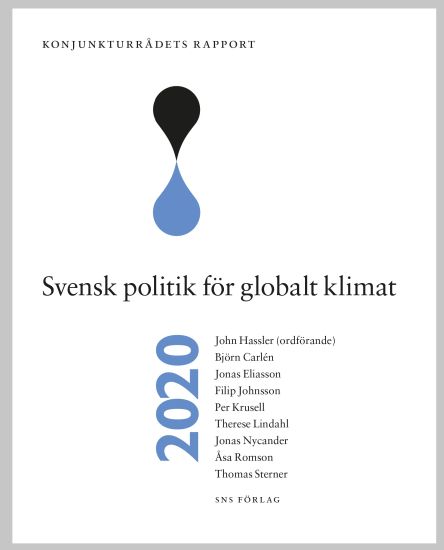
Climate policy is a complex area that requires input from many different perspectives. The SNS Economic Policy Council 2020 comprises nine researchers from a range of disciplines, with different backgrounds and with varied opinions on the debate surrounding climate policy. They analyse Swedish climate policy in a global context, describing the causes and consequences of climate change and focusing on how policy can achieve the desired reductions in carbon emissions. The report also provides answers to questions that are frequently discussed in the Swedish debate, such as the effectiveness of climate aid and whether Sweden should generate a larger surplus of fossil-free electricity for export. The members of the SNS Economic Policy Council 2020 are John Hassler (chair), Björn Carlén, Jonas Eliasson, Filip Johnsson, Per Krusell, Therese Lindahl, Jonas Nycander, Åsa Romson, and Thomas Sterner.
Klimatpolitik är ett komplext område där det finns ett behov av många perspektiv. I SNS Konjunkturråd 2020 ingår nio forskare från flera discipliner, med olika bakgrund och delvis också skiftande ståndpunkter i den klimatpolitiska debatten. De analyserar den svenska klimatpolitiken i ett globalt sammanhang genom att beskriva klimatförändringarnas orsaker och konsekvenser. Frågan om hur politiken ska kunna åstadkomma de önskade minskningarna av koldioxidutsläppen står i fokus. I rapporten besvaras även ett antal frågor som ofta diskuteras i den svenska debatten, till exempel hur effektivt det är med klimatbistånd och om Sverige bör skapa ett större fossilfritt elöverskott för export. SNS Konjunkturråd 2020 består av John Hassler (ordförande), Björn Carlén, Jonas Eliasson, Filip Johnsson, Per Krusell, Therese Lindahl, Jonas Nycander, Åsa Romson och Thomas Sterner.
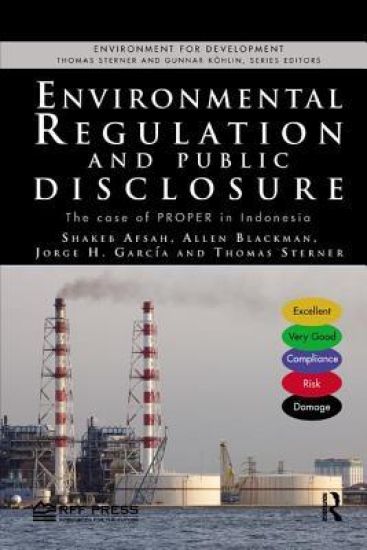
This book is a remarkable case study of an environmental policy initiative for a national environmental regulatory system in the information age. In 1995 the Indonesian Ministry of Environment took the bold step to launch an environmental disclosure initiative called the Program for Pollution Control, Evaluation and Rating (PROPER). Under PROPER, environmental performance of companies is mapped into a five-color grading scale – Gold for excellent, Green for very good, Blue for good, Red for non-compliance, and Black for causing environmental damage. These ratings are then publicly disclosed through a formal press conference and posted on the internet. Not only did this simple rating scheme create a major media buzz and enhanced environmental awareness of the general public, but it also unleashed a wide range of performance incentives that showed how markets with environmental information could function in a developing country setting. The authors provide a multidisciplinary analysis of how the PROPER program harnessed the power of public disclosure to abate the problem of industrial pollution. They describe how the program has successfully improved the average environmental compliance rate from close to thrity per cent in 1995 to as high as seventy per cent in 2011. This improvement was driven primarily by information disclosure, which avoided expensive and unpredictable legal enforcement through the court system of Indonesia. The combination of institutional history and detailed economic and analyses sheds light on the role of policy entrepreneurs who laid the foundation for disclosure and transparency, despite the constraints of the Suharto regime. The PROPER program is now internationally recognized and continues to serve as a model for many developing countries.
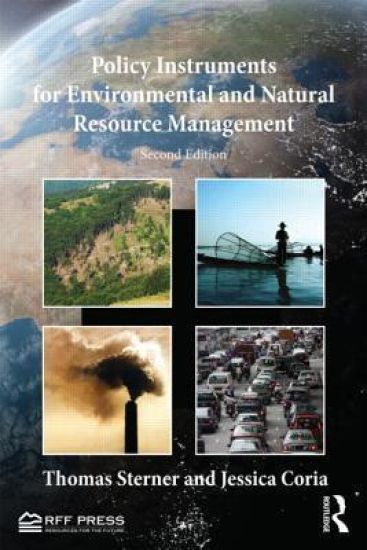
Thomas Sterner's book is an attempt to encourage more widespread and careful use of economic policy instruments. The book compares the accumulated experiences of the use of economic policy instruments in the U. S. and Europe, as well as in rich and poor countries in Asia, Africa, and Latin America. Ambitious in scope, it discusses the design of instruments that can be employed in any country in a wide range of contexts, including transportation, industrial pollution, water pricing, waste, fisheries, forests, and agriculture. While deeply rooted in economics, Policy Instruments for Environmental and Natural Resource Management is informed by political, legal, ecological, and psychological research. The new edition enhances what has already been widely hailed as a highly innovative work. The book includes greatly expanded coverage of climate change, covering aspects related to policy design, international equity and discounting, voluntary carbon markets, permit trading in United States, and the Clean Development Mechanism. Focusing ever more on leading ideas in both theory and policy, the new edition brings experimental economics into the main of its discussions. It features expanded coverage of the monitoring and enforcement of environmental policy, technological change, the choice of policy instruments under imperfect competition, and subjects such as corporate social responsibility, bio-fuels, payments for ecosystem services, and REDD.
Since the 1980's, market-based instruments for environmental policy have become increasingly important. Focusing on environmental taxation in practice, this volume collects key contributions on a wide range of topics, including comparisons of environmental taxation schemes in different countries, political economy issues and key aspects of concrete implementation. It presents a wealth of ex-ante and ex-post analyses, intended as a source of guidance for policy implementation and research. The volume features a full-length introduction locating the literature on environmental taxation in practice in a wider context of theoretical and applied issues.