Kirjojen hintavertailu – 12 903 725 kirjaa ja 27 kauppaa

Kirjailija

Thomas Sturm

Kirjat ja teokset yhdessä paikassa: 7 kirjaa, julkaisuja vuosilta 2000–2015, suosituimpiin kuuluu Pädagogik / Psychologie für die gymnasiale Oberstufe. Vertaile teosten hintoja ja tarkista saatavuus suomalaisista kirjakaupoista.

7 kirjaa

Kirjojen julkaisuvuodet: 2000–2015.

How Reason Almost Lost Its Mind – The Strange Career of Cold War Rationality

How Reason Almost Lost Its Mind – The Strange Career of Cold War Rationality

Paul Erickson; Judy L. Klein; Lorraine Daston; Rebecca Lemov; Thomas Sturm; Michael Gordin

University of Chicago Press
2015
nidottu
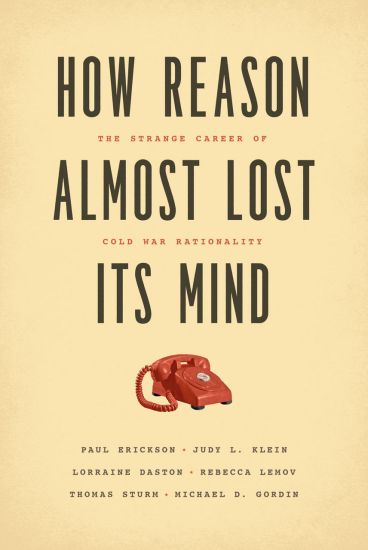
In the United States at the height of the Cold War, roughly between the end of World War II and the early 1980s, a new project of redefining rationality commanded the attention of sharp minds, powerful politicians, wealthy foundations, and top military brass. Its home was the human sciences—psychology, sociology, political science, and economics, among others—and its participants enlisted in an intellectual campaign to figure out what rationality should mean and how it could be deployed. How Reason Almost Lost Its Mind brings to life the people—Herbert Simon, Oskar Morgenstern, Herman Kahn, Anatol Rapoport, Thomas Schelling, and many others—and places, including the RAND Corporation, the Center for Advanced Study in the Behavioral Sciences, the Cowles Commission for Research and Economics, and the Council on Foreign Relations, that played a key role in putting forth a \u201cCold War rationality.\u201d Decision makers harnessed this picture of rationality—optimizing, formal, algorithmic, and mechanical—in their quest to understand phenomena as diverse as economic transactions, biological evolution, political elections, international relations, and military strategy. The authors chronicle and illuminate what it meant to be rational in the age of nuclear brinkmanship.

How Reason Almost Lost Its Mind

How Reason Almost Lost Its Mind

Paul Erickson; Judy L. Klein; Lorraine Daston; Rebecca Lemov; Thomas Sturm; Michael Gordin

University of Chicago Press
2013
sidottu
In the United States at the height of the Cold War, roughly between the end of World War II and the early 1980s, a new project of redefining rationality commanded the attention of sharp minds, powerful politicians, wealthy foundations, and top military brass. Its home was the human sciences - psychology, sociology, political science, and economics, among others - and its participants enlisted in an intellectual campaign to figure out what rationality should mean and how it could be deployed. How Reason Almost Lost Its Mind brings to life the people - Herbert Simon, Oskar Morgenstern, Herman Kahn, Anatol Rapoport, Thomas Schelling, and many others - and places, including the RAND Corporation, the Center for Advanced Study in the Behavioral Sciences, the Cowles Commission for Research and Economics, and the Council on Foreign Relations, that played a key role in putting forth a "Cold War rationality." Decision makers harnessed this picture of rationality - optimizing, formal, algorithmic, and mechanical - in their quest to understand phenomena as diverse as economic transactions, biological evolution, political elections, international relations, and military strategy. The authors chronicle and illuminate what it meant to be rational in the age of nuclear brinkmanship.
Psychology's Territories

Psychology's Territories

Mitchell Ash; Thomas Sturm

Psychology Press
2007
nidottu
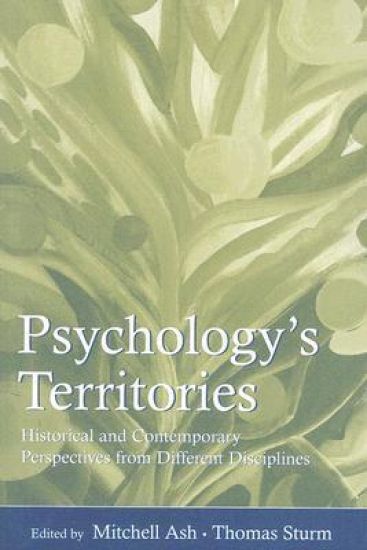
What are the conceptual and practical territories of psychology? How have the boundaries of psychological thought, research and practice developed in history, and how might they be renegotiated today? This volume presents new approaches to these questions, resulting from a three-year collaboration among internationally known psychologists, neuroscientists, social scientists, and historians and philosophers of science from Germany and the United States under the auspices of the Berlin-Brandenburg Academy of Sciences and Humanities. The authors reflect critically on past and present views of psychology by focusing on three broad topic areas: How have psychological concepts been used in disciplines such as psychology, philosophy, or neuroscience, as well as daily life? Has the use of instruments in psychological research expanded or restricted the discipline’s reach? And, how have psychological thinking and research worked in practical contexts? The volume investigates separations between, as well as interactions among, psychology and its neighboring fields and tries to overcome disciplinary distinctions in exemplary ways. The contributions aim to make historical and philosophical studies of psychology relevant to contemporary concerns, and to show how psychology can profit from better interdisciplinary cooperation–thus improving mutual understanding between different scientific cultures.
Psychology's Territories

Psychology's Territories

Mitchell Ash; Thomas Sturm

Psychology Press
2007
sidottu
What are the conceptual and practical territories of psychology? How have the boundaries of psychological thought, research and practice developed in history, and how might they be renegotiated today? This volume presents new approaches to these questions, resulting from a three-year collaboration among internationally known psychologists, neuroscientists, social scientists, and historians and philosophers of science from Germany and the United States under the auspices of the Berlin-Brandenburg Academy of Sciences and Humanities. The authors reflect critically on past and present views of psychology by focusing on three broad topic areas: How have psychological concepts been used in disciplines such as psychology, philosophy, or neuroscience, as well as daily life? Has the use of instruments in psychological research expanded or restricted the discipline’s reach? And, how have psychological thinking and research worked in practical contexts? The volume investigates separations between, as well as interactions among, psychology and its neighboring fields and tries to overcome disciplinary distinctions in exemplary ways. The contributions aim to make historical and philosophical studies of psychology relevant to contemporary concerns, and to show how psychology can profit from better interdisciplinary cooperation–thus improving mutual understanding between different scientific cultures.
Probleme Literaturtheoretischer Definition
Die neorealistische Erzahlung wurde Ende der achtziger und Anfang der neunziger Jahre in der Volksrepublik China als moeglicher Kompromiss zwischen Realismus und Avantgarde diskutiert. Ausgehend vom literarhistorischen Kontext arbeitet die Arbeit den literaturtheoretischen Neorealismus-Begriff auf. Seine Kernpunkte werden in einer Analyse reprasentativer Erzahlungen uberpruft. Wahrend sich die inhaltlichen Attribute in den untersuchten Texten weitgehend nachweisen lassen, bestatigt die Analyse die erzahltechnischen Merkmale des Begriffs ausdrucklich nicht. Der Begriff der neorealistischen Erzahlung ist damit nur bedingt aussagekraftig, die absolut formulierte Abgrenzung gegen die chinesische Realismustradition erweist sich als nur relativ.