Kirjojen hintavertailu – 12 903 725 kirjaa ja 27 kauppaa

Kirjailija

Thomas Szasz

Kirjat ja teokset yhdessä paikassa: 46 kirjaa, julkaisuja vuosilta 1984–2022, suosituimpiin kuuluu Pain and Pleasure. Vertaile teosten hintoja ja tarkista saatavuus suomalaisista kirjakaupoista.

46 kirjaa

Kirjojen julkaisuvuodet: 1984–2022.

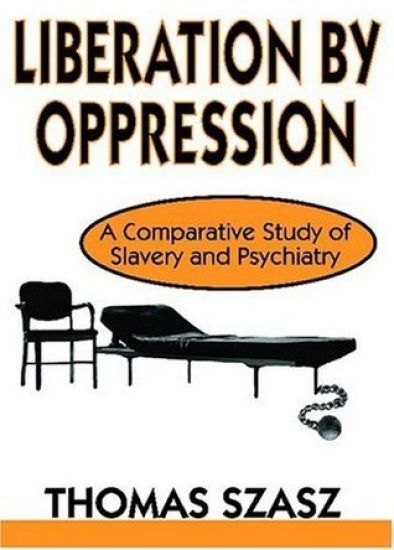
Liberation by Oppression

Liberation by Oppression

Thomas Szasz

Transaction Publishers
2003
nidottu
Originally called mad-doctoring, psychiatry began in the seventeenth century with the establishing of madhouses and the legal empowering of doctors to incarcerate persons denominated as insane. Until the end of the nineteenth century, every relationship between psychiatrist and patient was based on domination and coercion, as between master and slave. Psychiatry, its emblem the state mental hospital, was a part of the public sphere, the sphere of coercion. The advent of private psychotherapy, at the end of the nineteenth century, split psychiatry in two: some patients continued to be the involuntary inmates of state hospitals; others became the voluntary patients of privately practicing psychotherapists. Psychotherapy was officially defined as a type of medical treatment, but actually was a secular-medical version of the cure of souls. Relationships between therapist and patient, Thomas Szasz argues, was based on cooperation and contract, as is relationships between employer and employee, or, between clergyman and parishioner. Psychotherapy, its emblem the therapist's office, was a part of the private sphere, the contract. Through most of the twentieth century, psychiatry was a house divided-half-slave, and half-free. During the past few decades, psychiatry became united again: all relations between psychiatrists and patients, regardless of the nature of the interaction between them, are now based on actual or potential coercion. This situation is the result of two major "reforms" that deprive therapist and patient alike of the freedom to contract with one another: Therapists now have a double duty: they must protect all mental patients-involuntary and voluntary, hospitalized or outpatient, incompetent or competent-from themselves. They must also protect the public from all patients. Persons designated as mental patients may be exempted from responsibility for the deleterious consequences of their own behavior if it is attributed to mental illness. The radical differences between the coercive character of mental hospital practices in the public sphere, and the consensual character of psychotherapeutic practices in the private sphere, are thus destroyed. At the same time, as the scope of psychiatric coercion expands from the mental hospital to the psychiatrist's office, its reach extends into every part of society, from early childhood to old age.

A Lexicon of Lunacy

A Lexicon of Lunacy

Thomas Szasz

Transaction Publishers
2003
nidottu
Thomas Szasz is renowned for his critical exploration of the literal language of psychiatry and his rejection of officially sanctioned definitions of mental illness. His work has initiated a continuing debate in the psychiatric community whose essence is often misunderstood. Szasz's critique of the established view of mental illness is rooted in an insistent distinction between disease and behavior. In his view, psychiatrists have misapplied the vocabulary of disease as metaphorical figures to denote a range of deviant behaviors from the merely eccentric to the criminal. In A Lexicon of Lunacy, Szasz extends his analysis of psychiatric language to show how its misuse has resulted in a medicalized view of life that denies the reality of free will and responsibility. Szasz documents the extraordinary extent to which modern diagnosis of mental illness is subject to shifting social attitudes and values. He shows how economic, personal, legal, and political factors have come to play an increasingly powerful role in the diagnostic process, with consequences of blurring the distinction between cultural and scientific standards. Broadened definitions of mental illness have had a corrosive effect on the criminal justice system in undercutting traditional conceptions of criminal behavior and have encouraged state-sanctioned coercive interventions that bestow special privileges (and impose special hardships) on persons diagnosed as mentally ill. Lucidly written and powerfully argued, and now available in paperback, this provocative and challenging volume will be of interest to psychologists, criminologists, and sociologists.
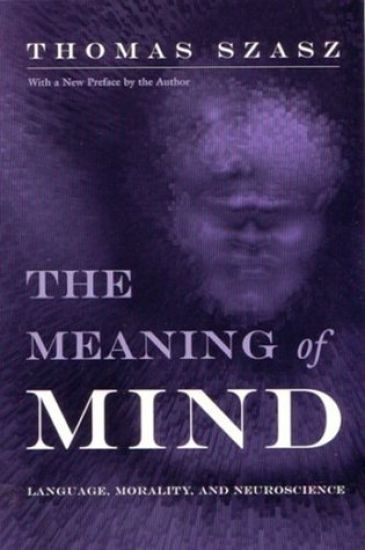
The Meaning of Mind

The Meaning of Mind

Thomas Szasz

Syracuse University Press
2002
nidottu
Thomas Szasz demonstrates the futility of analysing the mind as a collection of brain functions. In his previous publication ""The Myth of Mental Illness"", he took psychiatry to task for misconstruing human conflict and coping as mental illness. In ""Our Right to Drugs"", he exposed the irrationality and political opportunism that fuels the ""Drug War"". Here, he warns that we misconstrue the dialogue within as a problem of consciousness and neuroscience and do so at our peril.
Fatal Freedom

Fatal Freedom

Thomas Szasz

Syracuse University Press
2002
nidottu
This is a defence of every individual's right to choose a voluntary death. By maintaining statutes that determine that voluntary death is not legal, Thomas Szasz believes that our society is forfeiting one of its basic freedoms and causing the psychiatric medical establishment to treat individuals in a manner that is disturbingly inhumane. Society's penchant for defining behaviour it terms objectionable as a disease has created a psychiatric establishment that exerts far too much influence over how and when we choose to die. In a compelling argument, which addresses the most significant ethical issues of our time, Szasz compares suicide to other practices that historically began as sins, became crimes, and then mental illnesses. This book answers some of the most significant ethical questions of our time: is suicide a volutary act of an act of mental illness? Should physicians be permitted to prevent it? Should they be authorized to abet it?
Liberation by Oppression

Liberation by Oppression

Thomas Szasz

Transaction Publishers
2002
sidottu
Originally called mad-doctoring, psychiatry began in the seventeenth century with the establishing of madhouses and the legal empowering of doctors to incarcerate persons denominated as insane. Until the end of the nineteenth century, every relationship between psychiatrist and patient was based on domination and coercion, as between master and slave. Psychiatry, its emblem the state mental hospital, was a part of the public sphere, the sphere of coercion. The advent of private psychotherapy, at the end of the nineteenth century, split psychiatry in two: some patients continued to be the involuntary inmates of state hospitals; others became the voluntary patients of privately practicing psychotherapists. Psychotherapy was officially defined as a type of medical treatment, but actually was a secular-medical version of the cure of souls. Relationships between therapist and patient, Thomas Szasz argues, was based on cooperation and contract, as is relationships between employer and employee, or, between clergyman and parishioner. Psychotherapy, its emblem the therapist's office, was a part of the private sphere, the contract. Through most of the twentieth century, psychiatry was a house divided-half-slave, and half-free. During the past few decades, psychiatry became united again: all relations between psychiatrists and patients, regardless of the nature of the interaction between them, are now based on actual or potential coercion. This situation is the result of two major "reforms" that deprive therapist and patient alike of the freedom to contract with one another: Therapists now have a double duty: they must protect all mental patients-involuntary and voluntary, hospitalized or outpatient, incompetent or competent-from themselves. They must also protect the public from all patients. Persons designated as mental patients may be exempted from responsibility for the deleterious consequences of their own behavior if it is attributed to mental illness. The radical differences between the coercive character of mental hospital practices in the public sphere, and the consensual character of psychotherapeutic practices in the private sphere, are thus destroyed. At the same time, as the scope of psychiatric coercion expands from the mental hospital to the psychiatrist's office, its reach extends into every part of society, from early childhood to old age.
Pharmacracy

Pharmacracy

Thomas Szasz

Praeger Publishers Inc
2001
sidottu
In recent decades, American medicine has become increasingly politicized and politics has become increasingly medicalized. Behaviors previously seen as virtuous or wicked, wise or unwise are now dealt with as healthy or sick--unwanted behaviors to be controlled as if they were health issues. The modern penchant for transforming human problems into diseases and judicial sanctions into treatments, replacing the rule of law with the rule of medical discretion, leads to the creation of a type of government social critic Thomas Szasz calls pharmacracy. Medicalizing troublesome behaviors and social problems is tempting to voters and politicians alike: it panders to the people by promising to satisfy their needs for dependence on medical authority and offers easy self-aggrandizement to politicians as the dispensers of more and better health care. Thus, the people gain a convenient scapegoat, enabling them to avoid personal responsibility for their behavior. The government gains a rationale for endless and politically expedient wars against social problems defined as public health emergencies. The health care system gains prestige, funding, and bureaucratic power that only an alliance with the political system can provide. However, Szasz warns, the creeping substitution of pharmacracy for democracy--private medical concerns increasingly perceived as requiring a political response--inexorably erodes personal freedom and dignity. Pharmacracy: Medicine and Politics in America is a clear and convincing presentation of this hidden danger, all too often ignored in our health care debates and avoided in our political contests.
Fatal Freedom

Fatal Freedom

Thomas Szasz

Praeger Publishers Inc
1999
sidottu
Fatal Freedom is an eloquent defense of every individual's right to choose a voluntary death. The author, a renowned psychiatrist, believes that we can speak about suicide calmly and rationally, as he does in this book, and that we can ultimately accept suicide as part of the human condition. By maintaining statutes that determine that voluntary death is not legal, our society is forfeiting one of its basic freedoms and causing the psychiatric/medical establishment to treat individuals in a manner that is disturbingly inhumane according to Dr. Szasz. His important work asks and points to clear, intelligent answers to some of the most significant ethical questions of our time: • Is suicide a voluntary act? • Should physicians be permitted to prevent it? • Should they be authorized to abet it? The author's thoughtful analysis of these questions consistently holds forth patient autonomy as paramount; therefore, he argues, patients should not be prevented from exercising their free will, nor should physicians be permitted to enter the process by prescribing or providing the means for voluntary death. Dr. Szasz predicts that we will look back at our present prohibitory policies toward suicide with the same amazed disapproval with which we regard past policies toward homosexuality, masturbation, and birth control. This comparison with other practices that started as sins, became crimes, then were regarded as mental illnesses, and are now becoming more widely accepted, opens up the discussion and understanding of suicide in a historical context. The book explores attitudes toward suicide held by the ancient Greeks and Romans, through early Christianity and the Reformation, to the advent of modern psychiatry and contemporary society as a whole. Our tendency to define disapproved behaviors as diseases has created a psychiatric establishment that exerts far too much influence over how and when we choose to die. Just as we have come to accept the individual's right to birth control, so too must we accept his right to death control before we can call our society humane or free.
Psychiatric Slavery

Psychiatric Slavery

Thomas Szasz

Syracuse University Press
1998
nidottu
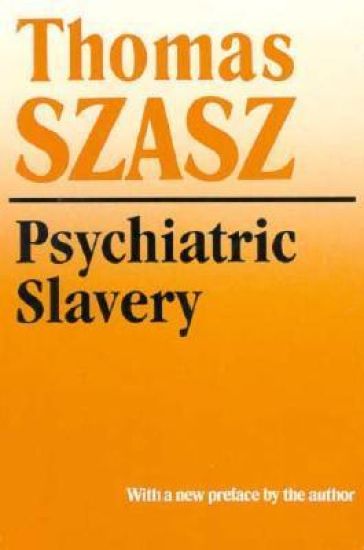
Re-examining psychiatric interventions from a cultural-historical and political-economic perspective, Szasz demonstrates that the main problem that faces mental health policymakers today is adult dependency. Millions of Americans, diagnosed as mentally ill, are drugged and confined by doctors for non-criminal conduct, go legally unpunished for the crimes they commit, and are supported by the state - not because they are sick, but because they are unproductive and unwanted. Obsessed with the twin beliefs that misbehaviour is a medical disorder and that the duty of the state is to protect adults from themselves, we have replaced criminal-punitive sentences with civil-therapeutic programmes. The result is the relentless loss of individual liberty and erosion of personal responsibility - symptoms of the transformation of a Constitutional Republic into a Therapeutic State, unconstrained by the rule of law.
Cruel Compassion

Cruel Compassion

Thomas Szasz

Syracuse University Press
1998
nidottu
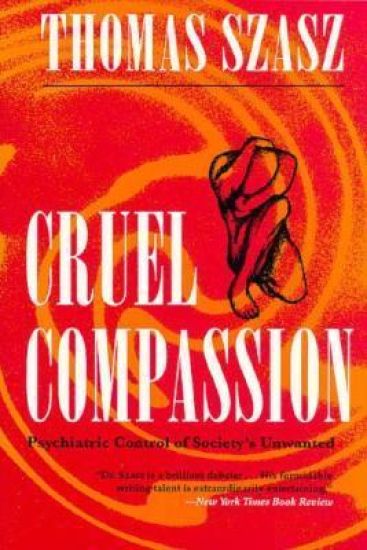
In this short work, Dr. Szasz takes aim at conventional psychiatry, and at the attendent system of courts, hospitals, and psychiatrists who confine patients against their will. The focal point is a Supreme Court case involving a man forcibly committed to a Florida asylum for 14 years. In refuting the widely held notion that the Donaldson case represents an advancement in the rights of mental patients, Dr. Szasz has put the American legal establishments on trial.
The Manufacture of Madness

The Manufacture of Madness

Thomas Szasz

Syracuse University Press
1997
nidottu

Halvin toimitettuna 22,00 €

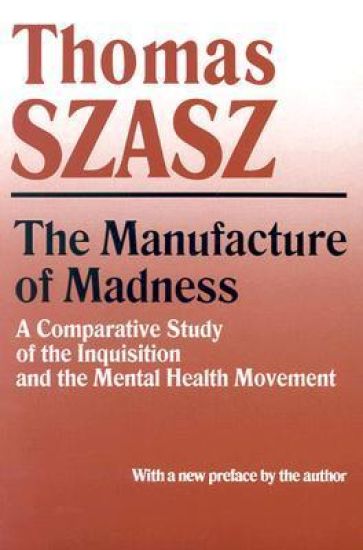
In this seminal work, Dr. Szasz examines the similarities between the Inquisition and institutional psychiatry. His purpose is to show "that the belief in mental illness and the social actions to which it leads have the same moral implications and political consequences as had the belief in witchcraft and the social actions to which it led.
Insanity

Insanity

Thomas Szasz

Syracuse University Press
1997
nidottu

Halvin toimitettuna 27,70 €

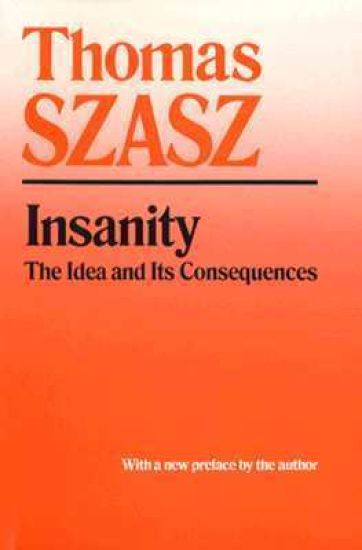
The idea of insanity pervades every aspect of our daily lives. Thomas Szasz contends that the term actually functions as a euphemism for problems in living, as an excuse for crime and misbehaviour, as a stigma for invalidating adversaries - and, generally, as a metaphor and legal fiction. In ""Insanity"", Dr. Szasz presents a systematic articulation of the precise character and practical consequences of the idea of mental illness. He shows the way to a better understanding of this almost universally misunderstood condition by first establishing the scientific criteria and linguistic conventions we use for deciding what constitutes bodily disease, and then demonstrating the metaphorical character of the ""diseases"" that affect the mind rather than the brain. This book was originally published in 1987 by John Wiley.
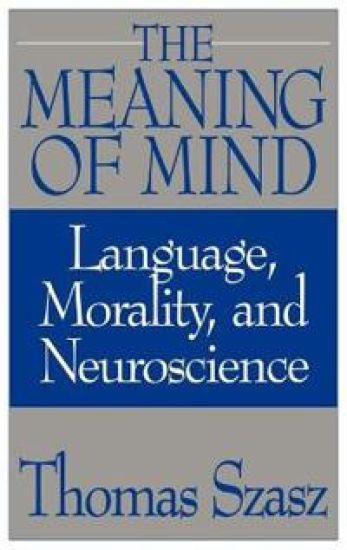
The Meaning of Mind

The Meaning of Mind

Thomas Szasz

Praeger Publishers Inc
1996
sidottu
In this brilliantly original and highly accessible work, Thomas Szasz demonstrates the futility of analyzing the mind as a collection of brain functions. Instead of trying to unravel the riddle of a mythical entity called the mind, Szasz suggests that our task should be to understand and judge persons always as moral agents responsible for their own actions, not as victims of brain chemistry. This is Szasz's most ambitious work to date. In his best-selling book, The Myth of Mental Illness, he took psychiatry to task for misconstruing human conflict and coping as mental illness. In Our Right to Drugs, he exposed the irrationality and political opportunism that fuels the Drug War. In The Meaning of Mind, he warns that we misconstrue the dialogue within as a problem of consciousness and neuroscience, and do so at our own peril. In The Meaning of Mind, Thomas Szasz argues that only as a verb does the word mind mean something in the real world, namely, attending or heeding. Minding is the ability to pay attention and adapt to one's environment by using language to communicate with others and oneself. Viewing the mind as a potentially infinite variety of self-conversations is the key that unlocks many of the mysteries we associate with this concept. Modern neuroscience is a misdirected effort to explain mind in terms of brain functions. The claims and conclusions of the diverse academics and scientists who engage in this enterprise undermine the concepts of moral agency and personal responsibility. Szasz shows that the cognitive function of speech is to enable us to talk not only to others but to ourselves (in short, to be our own interlocutor), and that the view that mind is brain—embraced by both the scientific community and the popular press—is not an empirical finding but a rhetorical ruse concealing humanity's unceasing struggle to control persons by controlling the vocabulary. The discourse of brain-mind, unlike the discourse of man as moral agent, protects people from the dilemmas intrinsic to holding themselves responsible for their own actions and holding others responsible for theirs. Because we live in an age blessed by the fruits of materialist science, reductionist explanations of the relationship between brain and mind are more popular today than ever, making this book an indispensible addition to the seemingly recondite debate about, simply, who we are.
Our Right to Drugs

Our Right to Drugs

Thomas Szasz

Syracuse University Press
1996
nidottu
In ""Our Right to Drugs"", Szasz shows how the present drug war started at the beginning of this century, when the US government first assumed the task of protecting people from patent medicines. By the end of World War I the free market in drugs was but a dim memory. Instead of dwelling on the familiar impracticality and unfairness of drug laws, Szasz demonstrates the deleterious effects of prescription laws, which place people under lifelong medical supervision. The result is that most Americans today prefer a coercive and corrupt command drug economy to a free market in drugs. Szasz stresses the consequences of the fateful transformation of the central aim of US drug prohibitions: from protecting the public from being fooled by mis-branded drugs to protecting them from harming themselves by self medication. He emphasises that a free society cannot endure if the state treats adults as if they were truant children and if its citizens reject the values of self-discipline and personal responsibility. After discussing the racial aspects of drug prohibition (eg. drug enforcers are far more likely to accost blacks than whites), Szasz suggests a connection between drug prohibition and the personal dread of the availability of an easy and pleasurable way to commit suicide.
A Lexicon of Lunacy

A Lexicon of Lunacy

Thomas Szasz

Transaction Publishers
1993
sidottu
Thomas Szasz is renowned for his critical exploration of the literal language of psychiatry and his rejection of officially sanctioned definitions of mental illness. His work has initiated a continuing debate in the psychiatric community whose essence is often misunderstood. Szasz's critique of the established view of mental illness is rooted in an insistent distinction between disease and behavior. In his view, psychiatrists have misapplied the vocabulary of disease as metaphorical figures to denote a range of deviant behaviors from the merely eccentric to the criminal. In A Lexicon of Lunacy, Szasz extends his analysis of psychiatric language to show how its misuse has resulted in a medicalized view of life that denies the reality of free will and responsibility. Szasz documents the extraordinary extent to which modern diagnosis of mental illness is subject to shifting social attitudes and values. He shows how economic, personal, legal, and political factors have come to play an increasingly powerful role in the diagnostic process, with consequences of blurring the distinction between cultural and scientific standards. Broadened definitions of mental illness have had a corrosive effect on the criminal justice system in undercutting traditional conceptions of criminal behavior and have encouraged state-sanctioned coercive interventions that bestow special privileges (and impose special hardships) on persons diagnosed as mentally ill. Lucidly written and powerfully argued, and now available in paperback, this provocative and challenging volume will be of interest to psychologists, criminologists, and sociologists.
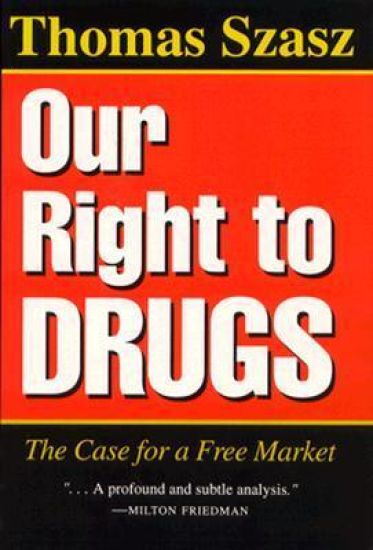
Our Right to Drugs

Our Right to Drugs

Thomas Szasz

Praeger Publishers Inc
1992
sidottu
. In Our Right to Drugs, Thomas Szasz shows that our present drug war started at the beginning of this century, when the American government first assumed the task of protecting people from patent medicines. By the end of World War I, however, the free market in drugs was but a dim memory, if that. Instead of dwelling on the familiar impracticality or unfairness of our drug laws, Szasz demonstrates the deleterious effects of prescription laws which place people under lifelong medical tutelage. The result is that most Americans today prefer a coercive and corrupt command drug economy to a free market in drugs. Throughout the book, Szasz stresses the consequences of the fateful transformation of the central aim of American drug prohibitions from protecting us from being fooled by misbranded drugs to protecting us from harming ourselves by self-medication--defined as drug abuse. And he reminds us that the choice between self-control and state coercion applies to all areas of our lives, drugs being but one of the theaters in which this perennial play may be staged. A free society, Szasz emphasizes, cannot endure if its citizens reject the values of self-discipline and personal responsibility and if the state treats adults as if they were naughty children. In a no-holds-barred examination of the implementation of the War on Drugs, Szasz shows that under the guise of protecting the vulnerable members of our society--especially children, blacks, and the sick--our government has persecuted and injured them. Leading politicians persuade parents to denounce their children, and encourage children to betray their parents and friends--behavior that subverts family loyalties and destroys basic human decency. And instead of protecting blacks and Hispanics from dangerous drugs, this holy war has allowed us to persecute them, not as racists but as therapists--working selflessly to bring about a drug-free America. Last but not least, to millions of sick Americans, the War on Drugs has meant being deprived of the medicines they want-- because the drugs are illegal, unapproved here though approved abroad, or require a prescription a physician may be afraid to provide. The bizarre upshot of our drug policy is that many Americans now believe they have a right to die, which they will do anyway, while few believe they have a right to drugs, even though that does not mean they have to take any. Often jolting, always stimulating, Our Right to Drugs is likely to have the same explosive effect on our ideas about drugs and drug laws as, more than thirty years ago, The Myth of Mental Illness had on our ideas about insanity and psychiatry.
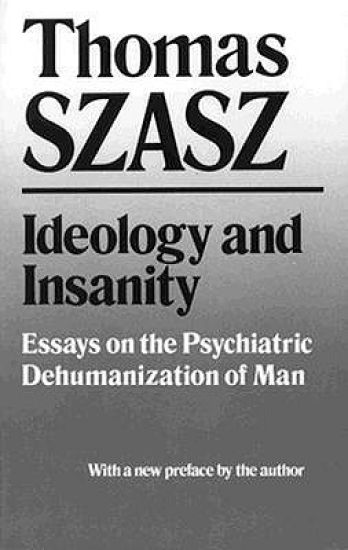
Ideology and Insanity

Ideology and Insanity

Thomas Szasz

Syracuse University Press
1991
nidottu
This book is a collection of the earliest essays of Thomas Szasz, in which he staked out his position on "the nature, scope, methods, and values of psychiatry." On each of these issues, he opposed the official position of the psychiatric profession. Where conventional psychiatrists saw themselves diagnosing and treating mental illness, Szasz saw them stigmatizing and controlling persons; where they saw hospitals, Szasz saw prisons; where they saw courageous professional advocacy of individualism and freedom, Szasz saw craven support of collectivism and oppression.
Sex By Prescription

Sex By Prescription

Thomas Szasz

Syracuse University Press
1990
nidottu
For St Augustine, sexual desire was a disease; to the great doctors of coitus today, lack of sexual desire is a disease. For Dr Szasz, both these presumptions are absurd and unscientific. He argues persuasively that human sexuality - however it may be expressed - reveals and reflects who we are and who we want to be. There are no ""sexual disorders"" that need to be cured by ""sex therapies"" - there is only the never-ending task of having to develop and shape our lives. Szasz maintains that we evade that task by handing the management of our sexual lives over to sex education and sex therapists.
Anti-Freud

Anti-Freud

Thomas Szasz

Syracuse University Press
1990
nidottu
Sigmund Freud once courted the favour of Austrian writer and satirist, Karl Kraus, and failed to obtain it. Kraus's favourite themes were the power of language, its abuse by psychiatrists, psychoanalysts, and journalists, and the catastrophic consequences of this abuse. According to Thomas Szasz, Kraus saw through the rhetoric of psychoanalysis and regarded its practitioners as enemies of human dignity. "Anti-Freud" provides readers with a general introduction to Kraus's life and work and his place in cultural history, followed by translations of his selected writings on psychiatry. Published originally in 1977 under the title "Karl Kraus and the Soul Doctors", this first paperback editions contains a new preface by Szasz.
Law, Liberty and Psychiatry

Law, Liberty and Psychiatry

Thomas Szasz

Syracuse University Press
1989
nidottu
Dr. Thomas Szasz on the shortcomings of commitment procedures, and the inadequacies of protections afforded patients in psychiatric institutions. He alerts us to the existing and potential abuses of human rights in mental health programs and procedures.
Pain and Pleasure

Pain and Pleasure

Thomas Szasz

Syracuse University Press
1988
nidottu
In this work Dr. Szasz dispels popular and scientific confusion about what pain and pleasure actually are. Demonstrating the doubtful value of such distinctions as "real" and Imagined" pain, or "physical" and "intellectual" pleasure, he analyses the basic concepts-psychological, philosophical, and sociological-involved in bodily feelings and discusses how these feelings are communicated. Some of the subjects discussed in Pain and Pleasure include: self-mutilation, sexual satisfaction, "hysterical anesthesia," false pregnancy, laughter, homosexuality, and dream analysis.