Kirjailija
Thomas Watson
Kirjat ja teokset yhdessä paikassa: 183 kirjaa, julkaisuja vuosilta 1983–2026, suosituimpiin kuuluu The Godly Man's Picture. Vertaile teosten hintoja ja tarkista saatavuus suomalaisista kirjakaupoista.
183 kirjaa
Kirjojen julkaisuvuodet: 1983–2026.

This Classic book - The Ten Commandment -- introduces and orients the reader to critical biblical/theological thinking from the puritan perspective. All of Thomas Watson's writings and sermons are replete with sound doctrine, practical wisdom, and heart-searching application. Watson's presentation is written with a clarity that fosters biblical thought and facilitates Bible comprehension. His profound spirituality, gripping remarks, practical illustrations, and beauty of expression make him one of the most irresistible of the Puritans. You won't be disappointed. Thomas Watson is consistently one of the best Bible scholars and this one is at the top of his writing. He's bold in his writings but solid in Scripture. "It's impossible to measure the influence of Watson over four centuries. His works remain in print and are widely read, which shouldn't surprise us. J. I. Packer considers him "one of the most outstanding writer on practical and devotional themes." All of Thomas Watson's writings and sermons are replete with sound doctrine, practical wisdom, and heart-searching application. His profound spirituality, gripping remarks, practical illustrations, and beauty of expression make him one of the most irresistible of the Puritans.

Every one of the Ten Commandments is relevant today. Some think of these commandments as the Law of Moses, now replaced by God's grace and mercy, but a closer look reveals that we can't willfully break a single one of the commandments and live. Every one of the commandments wholeheartedly obeyed will produce fruit of righteousness, peace, and spiritual prosperity. Society says "do whatever you want" but a careful study and application of this set of "life principles" will provide boundless fruit for the righteous. Originally written in the 1600's, Thomas Watson's commentary on the Ten Commandments is as relevant today as it was then, if not more so. The text was carefully updated for modern readers, with much care taken to convey the truth in Watson's writings in such a way that readers today can more easily understand his writing, and as such, more easily apply the truth to their own lives. May the Lord God of heaven and earth bless you richly as you read and obey About the AuthorThomas Watson (c. 1620-1686) was an English Nonconformist Puritan pastor and author. He earned his Bachelor of Arts and Master of Arts degrees from Emmanuel College, Cambridge. In 1646 Watson was employed at St. Stephen Walbrook Church in London, where he remained for the next sixteen years. Thomas married Abigail Beadle in about 1647, and they had at least seven children, although four of the children died when young. During the English Civil War (1642-1649), Watson leaned toward Presbyterian views, and he sided with the Presbyterians in opposition to the death of King Charles I. Watson was imprisoned in 1651 for his part in a plot to bring back Charles II. In 1652 Watson was released from prison and returned to his duties at St. Stephen Walbrook Church. After the Act of Uniformity was passed in 1662, Watson, a Nonconformist, could no longer preach there, although he continued preaching in private when he was able. After the Declaration of Indulgence was passed in 1672, Thomas Watson was able to obtain a license to preach at Crosby Hall in London. He continued preaching there until his health began to decline. He then retired to Barnston in Essex, where he died in 1686 while praying.
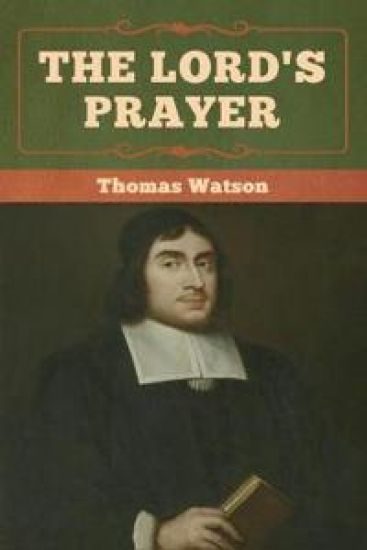
Thomas Watson (c. 1620 - 1686) was an English, Nonconformist, Puritan preacher and author. He was educated at Emmanuel College, Cambridge, where he was noted for remarkably intense study. In 1646 he commenced a sixteen-year pastorate at St. Stephen's, Walbrook. He showed strong Presbyterian views during the civil war, with, however, an attachment to the king, and in 1651 he was imprisoned briefly with some other ministers for his share in Christopher Love's plot to recall Charles II of England. He was released on 30 June 1652, and was formally reinstated as vicar of St. Stephen's Walbrook. He obtained great fame and popularity as a preacher until the Restoration, when he was ejected for Nonconformity. Notwithstanding the rigor of the acts against dissenters, Watson continued to exercise his ministry privately as he found opportunity. Upon the Declaration of Indulgence in 1672 he obtained a licence to preach at the great hall in Crosby House. After preaching there for several years, his health gave way, and he retired to Barnston, Essex, where he died suddenly while praying in secret. He was buried on 28 July 1686. (wikipedia.org)

Thomas Watson's Body of Practical Divinity is one of the most precious of the peerless works of the Puritans; and those best acquainted with it prize it most. Watson was one of the most concise, racy, illustrative, and suggestive of those eminent divines who made the Puritan age the Augustan period of evangelical literature. There is a happy union of sound doctrine, heart-searching experience and practical wisdom throughout all his works, and his Body of Divinity is, beyond all the rest, useful to the student and the minister...

Thomas Watson's Body of Practical Divinity is one of the most precious of the peerless works of the Puritans; and those best acquainted with it prize it most. Watson was one of the most concise, racy, illustrative, and suggestive of those eminent divines who made the Puritan age the Augustan period of evangelical literature. There is a happy union of sound doctrine, heart-searching experience and practical wisdom throughout all his works, and his Body of Divinity is, beyond all the rest, useful to the student and the minister...

Thomas Watson (c. 1620 - 1686) was an English, Nonconformist, Puritan preacher and author. He was educated at Emmanuel College, Cambridge, where he was noted for remarkably intense study. In 1646 he commenced a sixteen-year pastorate at St. Stephen's, Walbrook. He showed strong Presbyterian views during the civil war, with, however, an attachment to the king, and in 1651 he was imprisoned briefly with some other ministers for his share in Christopher Love's plot to recall Charles II of England. He was released on 30 June 1652, and was formally reinstated as vicar of St. Stephen's Walbrook. He obtained great fame and popularity as a preacher until the Restoration, when he was ejected for Nonconformity. Notwithstanding the rigor of the acts against dissenters, Watson continued to exercise his ministry privately as he found opportunity. Upon the Declaration of Indulgence in 1672 he obtained a licence to preach at the great hall in Crosby House. After preaching there for several years, his health gave way, and he retired to Barnston, Essex, where he died suddenly while praying in secret. He was buried on 28 July 1686. (wikipedia.org)

Thomas Watson (c. 1620 - 1686) was an English, Nonconformist, Puritan preacher and author. He was educated at Emmanuel College, Cambridge, where he was noted for remarkably intense study. In 1646 he commenced a sixteen-year pastorate at St. Stephen's, Walbrook. He showed strong Presbyterian views during the civil war, with, however, an attachment to the king, and in 1651 he was imprisoned briefly with some other ministers for his share in Christopher Love's plot to recall Charles II of England. He was released on 30 June 1652, and was formally reinstated as vicar of St. Stephen's Walbrook. He obtained great fame and popularity as a preacher until the Restoration, when he was ejected for Nonconformity. Notwithstanding the rigor of the acts against dissenters, Watson continued to exercise his ministry privately as he found opportunity. Upon the Declaration of Indulgence in 1672 he obtained a licence to preach at the great hall in Crosby House. After preaching there for several years, his health gave way, and he retired to Barnston, Essex, where he died suddenly while praying in secret. He was buried on 28 July 1686. (wikipedia.org)

Thomas Watson (c. 1620 - 1686) was an English, Nonconformist, Puritan preacher and author. He was educated at Emmanuel College, Cambridge, where he was noted for remarkably intense study. In 1646 he commenced a sixteen-year pastorate at St. Stephen's, Walbrook. He showed strong Presbyterian views during the civil war, with, however, an attachment to the king, and in 1651 he was imprisoned briefly with some other ministers for his share in Christopher Love's plot to recall Charles II of England. He was released on 30 June 1652, and was formally reinstated as vicar of St. Stephen's Walbrook. He obtained great fame and popularity as a preacher until the Restoration, when he was ejected for Nonconformity. Notwithstanding the rigor of the acts against dissenters, Watson continued to exercise his ministry privately as he found opportunity. Upon the Declaration of Indulgence in 1672 he obtained a licence to preach at the great hall in Crosby House. After preaching there for several years, his health gave way, and he retired to Barnston, Essex, where he died suddenly while praying in secret. He was buried on 28 July 1686. (wikipedia.org)

Thomas Watson (c. 1620 - 1686) was an English, Nonconformist, Puritan preacher and author. He was educated at Emmanuel College, Cambridge, where he was noted for remarkably intense study. In 1646 he commenced a sixteen-year pastorate at St. Stephen's, Walbrook. He showed strong Presbyterian views during the civil war, with, however, an attachment to the king, and in 1651 he was imprisoned briefly with some other ministers for his share in Christopher Love's plot to recall Charles II of England. He was released on 30 June 1652, and was formally reinstated as vicar of St. Stephen's Walbrook. He obtained great fame and popularity as a preacher until the Restoration, when he was ejected for Nonconformity. Notwithstanding the rigor of the acts against dissenters, Watson continued to exercise his ministry privately as he found opportunity. Upon the Declaration of Indulgence in 1672 he obtained a licence to preach at the great hall in Crosby House. After preaching there for several years, his health gave way, and he retired to Barnston, Essex, where he died suddenly while praying in secret. He was buried on 28 July 1686. (wikipedia.org)

Thomas Watson (c. 1620 - 1686) was an English, Nonconformist, Puritan preacher and author. He was educated at Emmanuel College, Cambridge, where he was noted for remarkably intense study. In 1646 he commenced a sixteen-year pastorate at St. Stephen's, Walbrook. He showed strong Presbyterian views during the civil war, with, however, an attachment to the king, and in 1651 he was imprisoned briefly with some other ministers for his share in Christopher Love's plot to recall Charles II of England. He was released on 30 June 1652, and was formally reinstated as vicar of St. Stephen's Walbrook. He obtained great fame and popularity as a preacher until the Restoration, when he was ejected for Nonconformity. Notwithstanding the rigor of the acts against dissenters, Watson continued to exercise his ministry privately as he found opportunity. Upon the Declaration of Indulgence in 1672 he obtained a licence to preach at the great hall in Crosby House. After preaching there for several years, his health gave way, and he retired to Barnston, Essex, where he died suddenly while praying in secret. He was buried on 28 July 1686. (wikipedia.org)

Thomas Watson (c. 1620 - 1686) was an English, Nonconformist, Puritan preacher and author. He was educated at Emmanuel College, Cambridge, where he was noted for remarkably intense study. In 1646 he commenced a sixteen-year pastorate at St. Stephen's, Walbrook. He showed strong Presbyterian views during the civil war, with, however, an attachment to the king, and in 1651 he was imprisoned briefly with some other ministers for his share in Christopher Love's plot to recall Charles II of England. He was released on 30 June 1652, and was formally reinstated as vicar of St. Stephen's Walbrook. He obtained great fame and popularity as a preacher until the Restoration, when he was ejected for Nonconformity. Notwithstanding the rigor of the acts against dissenters, Watson continued to exercise his ministry privately as he found opportunity. Upon the Declaration of Indulgence in 1672 he obtained a licence to preach at the great hall in Crosby House. After preaching there for several years, his health gave way, and he retired to Barnston, Essex, where he died suddenly while praying in secret. He was buried on 28 July 1686. (wikipedia.org)

Thomas Watson (c. 1620 - 1686) was an English, Nonconformist, Puritan preacher and author. He was educated at Emmanuel College, Cambridge, where he was noted for remarkably intense study. In 1646 he commenced a sixteen-year pastorate at St. Stephen's, Walbrook. He showed strong Presbyterian views during the civil war, with, however, an attachment to the king, and in 1651 he was imprisoned briefly with some other ministers for his share in Christopher Love's plot to recall Charles II of England. He was released on 30 June 1652, and was formally reinstated as vicar of St. Stephen's Walbrook. He obtained great fame and popularity as a preacher until the Restoration, when he was ejected for Nonconformity. Notwithstanding the rigor of the acts against dissenters, Watson continued to exercise his ministry privately as he found opportunity. Upon the Declaration of Indulgence in 1672 he obtained a licence to preach at the great hall in Crosby House. After preaching there for several years, his health gave way, and he retired to Barnston, Essex, where he died suddenly while praying in secret. He was buried on 28 July 1686. (wikipedia.org)
Thomas Watson is consistently one of the best Bible scholars and this one is at the top of his writing. He's bold in his writings This Classic book - The Lord's Prayer -- introduces and orients the reader to critical biblical/theological thinking from the puritan perspective. All of Thomas Watson's writings and sermons are replete with sound doctrine, practical wisdom, and heart-searching application. Watson's presentation is written with a clarity that fosters biblical thought and facilitates Bible comprehension. His profound spirituality, gripping remarks, practical illustrations, and beauty of expression make him one of the most irresistible of the Puritans. You won't be disappointedbut solid in Scripture. "It's impossible to measure the influence of Watson over four centuries. His works remain in print and are widely read, which shouldn't surprise us. J. I. Packer considers him "the most outstanding pastor, evangelist, and writer on practical and devotional themes."

A Divine Cordial represents the best of Puritan exposition by one of the best of Puritan preachers. Thomas Watson first published this little treatise in 1663 and it has remained one of the more popular of Puritan works. This book will "make the wicked sad," but also "make the godly joyful." It is sometimes known by the title of "All Things for Good," and will certainly help the believer to wrestle with, and triumph in, the various phases of God's providence. This large print edition has been edited with today's readers in mind and annotated to supply helpful information about the terms and people mentioned.
This book has been considered by academicians and scholars of great significance and value to literature. This forms a part of the knowledge base for future generations. So that the book is never forgotten we have represented this book in a print format as the same form as it was originally first published. Hence any marks or annotations seen are left intentionally to preserve its true nature.
All That Bedevils Us: A Tale of the Second Iteration
Thomas Watson
Independently Published
2019
nidottu
If not for the intervention of the insectoid beings called the T'lack, the Faceless War would have ended with the extinction of Humanity and its Sibling Species. That intervention came at a great cost for the T'lack. No one knows or understands Humanity's debt to the T'lack better than Jan Costa, who paid his own terrible price at the end of that war. Now the T'lack are themselves in grave danger, facing a devastating civil war between rival factions and threatened by a mysterious race of beings on the far side of T'lack space. Jan Costa leads a multi-species expeditionary force into the unknown, seeking to save his alien friends both from themselves and the new threat they have aroused. What he discovers out beyond the frontier will change everything, with the very existence of the T'lack hanging in the balance.

The Process: Nine Essays on the Experience of Writing Fiction & "Muse" A Short Story
Thomas Watson
Independently Published
2019
nidottu
Writing fiction of any length is a journey through unexplored territory, with the intention of leaving a trail behind for others to follow. In these short essays, one writer shares his view of such journeys, and how it feels to take them. It's a quick look inside one writer's way of working, and of how stories can come into being. Also included is the never before published short story "Muse."