Kirjojen hintavertailu – 12 903 725 kirjaa ja 27 kauppaa

Kirjailija

Thomas Weber

Kirjat ja teokset yhdessä paikassa: 102 kirjaa, julkaisuja vuosilta 1980–2026, suosituimpiin kuuluu Schatz, endlich Schmerzfrei!. Vertaile teosten hintoja ja tarkista saatavuus suomalaisista kirjakaupoista.

102 kirjaa

Kirjojen julkaisuvuodet: 1980–2026.

Situated in Translations – Cultural Communities and Media Practices
Cultural communities are shaped and produced by ongoing processes of translation understood as aesthetic media practices – such is the premise of this volume. Taking on perspectives from cultural, literary and media studies as well as postcolonial theory, the chapters shed light on composite cultural and heterotypical translation processes across various media, such as texts, films, graphic novels, theater and dance performances. Thus, the authors explore the cultural contexts of diverse media milieus in order to explain how cultural communities come into being.
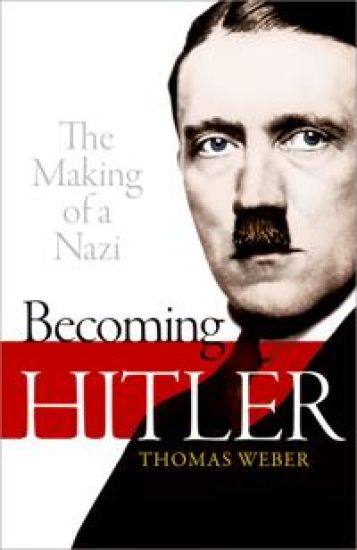
Becoming Hitler

Becoming Hitler

Thomas Weber

Oxford University Press
2021
nidottu
The fateful story of Adolf Hitler's transformation from awkward, feckless loner to lethal, charismatic demagogue. The story of the making of Adolf Hitler that we are all familiar with is the one Hitler himself wove in his 1924 trial, and then expanded upon in Mein Kampf. It tells of his rapid emergence as National Socialist leader in 1919, and of how he successfully rallied most of Munich and the majority of Bavaria's establishment to support the famous beer-hall putsch of 1923. It is an account which has largely been taken at face value for over ninety years. Yet, on closer examination, Hitler's account of his experiences in the years immediately following the First World War turns out to be every bit as unreliable as his account of his experiences as a soldier during the war itself. In Becoming Hitler, Thomas Weber continues from where he left off in his previous book, Hitler's First War, stripping away the layers of myth and fabrication in Hitler's own tale to tell the real story of Hitler's politicization and radicalization in post-First World War Munich. It is the gripping account of how an awkward and unemployed loner with virtually no recognizable leadership qualities and fluctuating political ideas turned into the charismatic, self-assured, virulently anti-Semitic leader with an all-or-nothing approach to politics with whom the world was soon to become tragically familiar. As Weber clearly shows, far from the picture of a fully-formed political leader which Hitler wanted to portray in Mein Kampf, his ideas and priorities were still very uncertain and largely undefined in early 1919 — and they continued to shift until 1923. It was the failed Ludendorff putsch of November 1923 - and the subsequent Ludendorff trial — which was to prove the making of Hitler. And he was not slow to spot the opportunity that it offered. As the movers and shakers of Munich's political scene tried to blame everything on him in the course of the trial, Hitler was presented with a golden opportunity to place himself at the centre of attention, turning what had been the 'Ludendorff trial' into the 'Hitler trial'. Henceforth, he would no longer be merely a local Bavarian political leader. From now on, he would present himself as a potential 'national saviour'. In the months after the trial, Hitler cemented this myth by writing Mein Kampf from his comfortable prison cell. His years of metamorphosis were now behind him. His years as Führer were soon to come.

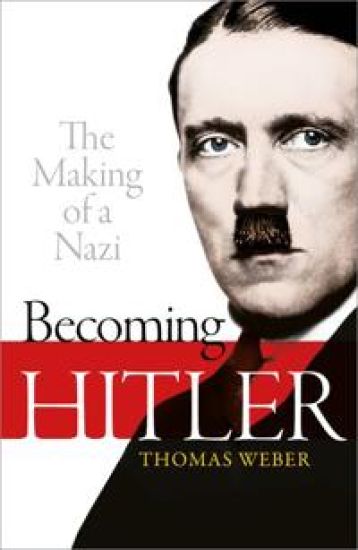
Becoming Hitler: The Making of a Nazi

Becoming Hitler: The Making of a Nazi

Thomas Weber

Oxford University Press
2017
sidottu
The story of the making of Adolf Hitler that we are all familiar with is the one Hitler himself wove in his 1924 trial, and then expanded upon in Mein Kampf. It tells of his rapid emergence as National Socialist leader in 1919, and of how he successfully rallied most of Munich and the majority of Bavaria's establishment to support the famous beer-hall putsch of 1923. It is an account which has largely been taken at face value for over ninety years. Yet, on closer examination, Hitler's account of his experiences in the years immediately following the First World War turns out to be every bit as unreliable as his account of his experiences as a soldier during the war itself. In Becoming Hitler, Thomas Weber continues from where he left off in his previous book, Hitler's First War, stripping away the layers of myth and fabrication in Hitler's own tale to tell the real story of Hitler's politicization and radicalization in post-First World War Munich. It is the gripping account of how an awkward and unemployed loner with virtually no recognizable leadership qualities and fluctuating political ideas turned into the charismatic, self-assured, virulently anti-Semitic leader with an all-or-nothing approach to politics with whom the world was soon to become tragically familiar. As Weber clearly shows, far from the picture of a fully-formed political leader which Hitler wanted to portray in Mein Kampf, his ideas and priorities were still very uncertain and largely undefined in early 1919 -- and they continued to shift until 1923. It was the failed Ludendorff putsch of November 1923 - and the subsequent Ludendorff trial -- which was to prove the making of Hitler. And he was not slow to spot the opportunity that it offered. As the movers and shakers of Munich's political scene tried to blame everything on him in the course of the trial, Hitler was presented with a golden opportunity to place himself at the centre of attention, turning what had been the 'Ludendorff trial' into the 'Hitler trial'. Henceforth, he would no longer be merely a local Bavarian political leader. From now on, he would present himself as a potential 'national saviour'. In the months after the trial, Hitler cemented this myth by writing Mein Kampf from his comfortable prison cell. His years of metamorphosis were now behind him. His years as Führer were soon to come.

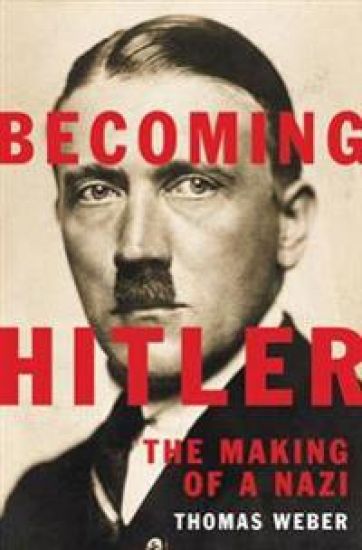
Becoming Hitler: The Making of a Nazi

Becoming Hitler: The Making of a Nazi

Thomas Weber

BASIC BOOKS
2017
sidottu

Halvin toimitettuna 58,60 €

An award-winning historian charts Hitler's radical transformation after World War I from a directionless loner into a powerful National Socialist leader In Becoming Hitler, award-winning historian Thomas Weber examines Adolf Hitler's time in Munich between 1918 and 1926, the years when Hitler shed his awkward, feckless persona and transformed himself into a savvy opportunistic political operator who saw himself as Germany's messiah. The story of Hitler's transformation is one of a fateful match between man and city. After opportunistically fluctuating between the ideas of the left and the right, Hitler emerged as an astonishingly flexible leader of Munich's right-wing movement. The tragedy for Germany and the world was that Hitler found himself in Munich; had he not been in Bavaria in the wake of the war and the revolution, his transformation into a National Socialist may never have occurred. In Becoming Hitler, Weber brilliantly charts this tragic metamorphosis, dramatically expanding our knowledge of how Hitler became a lethal demagogue.
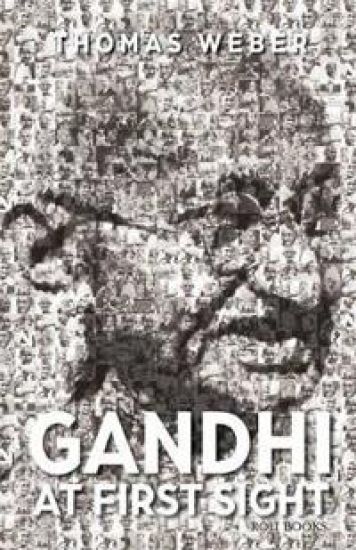
Gandhi at First Sight

Gandhi at First Sight

Thomas Weber

Roli Books Pvt Ltd
2015
pokkari
'Meeting the Mahatma' was a special moment for most of the people who captured it later in memorable prose. Gandhi at First Sight is a collection of such heartfelt moments of people from Sarojini Naidu to Katherine Mayo and from Romain Rolland to Charlie Chaplin, of an experience that was profound and sometimes even life-changing. 'In Gandhi at First Sight, Tom Weber has executed a simple yet brilliant concept with a masterly touch, an impressive understanding of the varied individuals whose first impressions of Gandhi he has included, and an enriching introduction.' -Rajmohan Gandhi 'Weber... shows with an astonishing array of first meeting accounts precisely how Gandhi forged relationships from the beginning by making indelible initial impressions. This book... brings us incomparably closer to comprehending Gandhi's extraordinary personal power.' -Dennis Dalton, Columbia University, New York 'Thomas Weber brings to life the memories of meetings. These firstperson, autobiographical accounts provide glimpses of the private world of friendship, of being a disciple and a pathfinder.' -Tridip Suhrud, Director, Sabarmati Ashram Preservation Memorial Trust 'With Gandhi gone two-thirds of a century, we have been in danger of losing touch with a man who was the most intriguing figure of his time. Now, however, we have these unique accounts of encounters with him that allow Gandhi to reach across the decades with a message that endures through time.' -Charles DiSalvo, West Virginia University, West Virginia
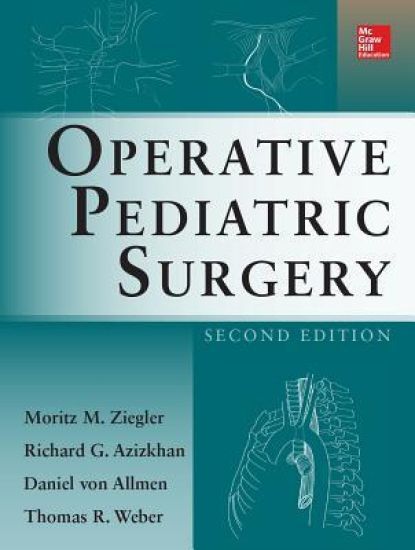
Operative Pediatric Surgery

Operative Pediatric Surgery

Moritz Ziegler; Richard Azizkhan; Daniel von Allmen; Thomas Weber

McGraw-Hill Medical
2014
sidottu
Publisher's Note: Products purchased from Third Party sellers are not guaranteed by the publisher for quality, authenticity, or access to any online entitlements included with the product. The definitive illustrated resource on the surgical management of infants and children -- with an emphasis on operative techniqueA Doody's Core Title for 2017! Operative Pediatric Surgery, Second Edition is a comprehensive, well-illustrated text that delivers expert coverage of the pathophysiology, diagnosis, and treatment of pediatric surgical disease. This detailed single-volume resource is enhanced by numerous drawings, radiographs, and photographs that illustrate the authors’ preferred operative techniques. Wherever appropriate, diagnostic and care guidelines are also included. Operative Pediatric Surgery, Second Edition is divided into 11 sections that include a total of 100 chapters. The book opens with an informative General Principles section that provides important background information on topics such as the history of pediatric surgery, ethical considerations, pediatric surgical critical care, and office-based ambulatory surgery. The rest of the text is organized primarily by organ, enhanced by a timely section on solid organ transplantation. In this Second Edition, each chapter author has thoroughly updated and refreshed their topic, and in many instances, minimally invasive operative techniques are included with open approaches. There are also exciting new chapters on:HypospadiasVesicoureteral refluxNon-rhabdomyosarcoma soft tissue sarcomasGastrointestinal polyps and cancerAdolescent bariatric surgeryOperative Pediatric Surgery will prove to be an essential reference for pediatric surgeons seeking optimal diagnosis and treatment approaches for their patients.
Der Deutsche Orden - Herrschaftskonsolidierung in Preußen und Livland nach Innen und Außen
Essay aus dem Jahr 2012 im Fachbereich Geschichte Europa - and. L nder - Mittelalter, Fr he Neuzeit, Note: 2,3, Universit t Trier, Veranstaltung: Seminar "Das 13. Jahrhundert," Sprache: Deutsch, Abstract: 1. Einleitung 2. Vertragliche Legitimation des Ordensstaates durch die Goldbulle von Rimini, den Kruschwitzer Vertrag und die Bulle von Rieti 3. Milit rische Absicherung der eroberten Gebiete durch die Errichtung eines Burgensystems, sowie das Erhalten von Subsidien und milit rischer Unterst tzung aus dem Reich aufgrund der Litauer-Kreuzz ge 4. St dte-, Siedlungspolitik und Einf hrung des Kulmer Rechts 5. Fazit 6. Literaturverzeichnis