Kirjojen hintavertailu – 12 859 824 kirjaa ja 27 kauppaa
Kirjailija
Thor Hogan
Kirjat ja teokset yhdessä paikassa: 10 kirjaa, julkaisuja vuosilta 2004–2024, suosituimpiin kuuluu Wind Tunnel and Propulsion Test Facilities. Vertaile teosten hintoja ja tarkista saatavuus suomalaisista kirjakaupoista.
Philip S. Anton; Eugene Gritton; Richard Mesic; Paul S. Steinberg; Dana J. Johnson; Michael Block; Michael Brown; Jeffrey A. Drezner; James Dryden; Tom Hamilton; Thor Hogan; Deborah Peetz; Raj Raman; Joe Strong; William Trimble
Analyzes the nation's aeronautic testing needs and the effectiveness of and management issues for, NASA's major wind tunnel and test propulsion facilities in serving those needs. The National Aeronautics and Space Adrninistration's (NASA's) wind tunnel and propulsion test facilities continue to be important to U. S. competitiveness across the military, commercial, and space sectors. Unfortunately, managemen tissues are creating real risks to these facilities. NASA needs to develop an aeronautics test technology vision and plan; analyze the viability of a national test facility plan; identify and maintain its minimum set of facilities; and identify financial shared support to keep its underutilized but essential facilities from entering financial collapse.

This book proposes a radical reorganization of political and electoral power to address the current political imbalance between urban and rural populations in the United States. Hogan argues that, despite being smaller in population, a “financialist-ruralist coalition” has effectively used the Constitution—especially equal representation in the Senate—to create an anti-urban “vetocracy.” This political imbalance protects the interests of the financial elite and rural cultural conservatives, while effectively blocking urban interests, particularly regarding the adoption of a broad range of structural reforms and progressive policy preferences. By re-dividing many of the largest federated states into smaller city-states, the book posits, the United States would reduce the ability of non-urban interests to control the Senate. This would allow an empowered urbanite alliance to pass the forward-looking legislation the nation needs to remain internationally competitive in the coming decades.
In 1990, NASA began developing Mission to Planet Earth (MTPE), an initiative aimed at using satellites to study the planet’s environment from space. With the Earth Observing System (EOS) as its technological cornerstone, MTPE’s main goal was to better understand fundamental processes such as climate change. The View from Space tells the remarkable story of this unprecedented convergence of science, technology, and policy in one of the most significant “Big Science” programs in human history. Richard B. Leshner and Thor Hogan offer an engrossing behind-the-scenes look at how and why NASA managed to make an aggressive earth science research program part of the national agenda—an accomplishment made possible by the pragmatic and assertive efforts of the earth science community. This is the first book to focus on describing and analyzing the historical evolution of the MPTE/EOS initiative from its formative years in the 1980s to its political and technical struggles in the 1990s to its scientific successes in the 2000s. Though detailed in its coverage of science and technology, The View from Space is primarily concerned with questions of policy—specifically, how MTPE/EOS came to be, how it developed, and how its proponents navigated the fraught politics of the time. Compelling in its own right, this in-depth history of the initiative is also a valuable object lesson in how political, technical, and scientific infighting can shape a project of such national and global consequence—particularly in the age of climate change.
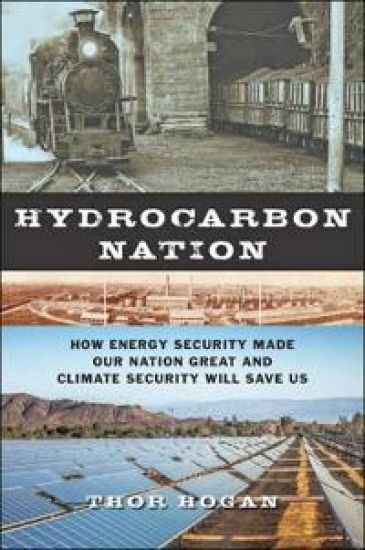
Understanding the complex history of US fossil fuel use can help us build a sustainable future. In Hydrocarbon Nation, Thor Hogan looks at how four technological revolutions—industrial, agricultural, transportation, and electrification—drew upon the enormous hydrocarbon wealth of the United States, transforming the young country into a nation with unparalleled economic and military potential. Each of these advances engendered new government policies aimed at strengthening national and economic security. The result was unprecedented energy security and the creation of a nation nearly impervious to outside threats. However, when this position weakened in the decades after the peaking of domestic conventional oil supplies in 1970, the American political and economic systems were severely debilitated. At the same time, climate change was becoming a major concern. Fossil fuels created the modern world, yet burning them created a climate crisis. Hogan argues that everyday Americans and policymakers alike must embrace the complexity of this contradiction in order to help society chart a path forward. Doing so, Hogan explains, will allow us to launch a critically important sustainability revolution capable of providing energy and climate security in the future. Hydrocarbon Nation provides reasons to believe that we can succeed in expanding on the benefits of the Hydrocarbon Age in order to build a sustainable future.
NASA SP 2007-4410. NASA History Series. Recounts the story of the rise of Space Exploration Initiative (SEI) and its eventual demise. Tells of organizational, cultural, and personal confrontation. Organizational skirmishes involved the Space Council versus NASA, the White House versus congressional appropriators, and the Johnson Space Center versus the rest of the space agency--all seeking control of the national space policy process.
This report reviews the court proceedings that led to the uncovering of abusive diagnostic practices in silica litigation, then identifies several areas in which changes in litigation practices and procedures could increase the likelihood that similar diagnosing practices would be uncovered in the future or prevented from occurring in the first place.