Kirjojen hintavertailu – 12 903 735 kirjaa ja 27 kauppaa

Kirjailija

Thorana S. Nelson

Kirjat ja teokset yhdessä paikassa: 19 kirjaa, julkaisuja vuosilta 1993–2025, suosituimpiin kuuluu The Contemporary Relational Supervisor. Vertaile teosten hintoja ja tarkista saatavuus suomalaisista kirjakaupoista.

Nimi esiintyy myös muodoissa: Thorana S Nelson

19 kirjaa

Kirjojen julkaisuvuodet: 1993–2025.

The Contemporary Relational Supervisor

The Contemporary Relational Supervisor

Robert E. Lee; Thorana S. Nelson; Toni S. Zimmerman

TAYLOR FRANCIS LTD
2025
nidottu
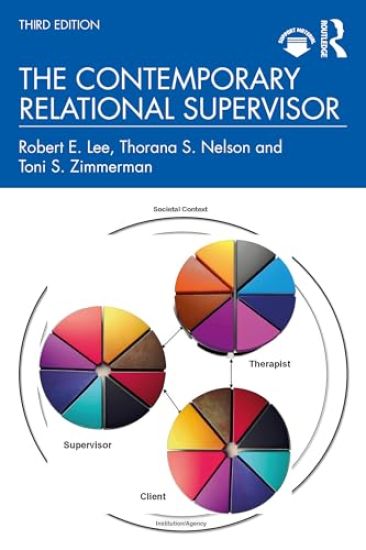
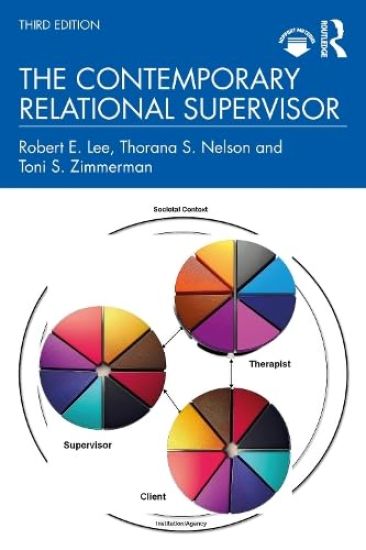
This leading resource is an empirically based, socioculturally attuned, and learner-friendly text on the cutting edge of couple and family therapy supervision. The revised third edition provides emerging supervisors with the conceptual and pragmatic tools to engage a new wave of therapists, helping them move forward together into a world of highly systemic, relational, developmental, and integrative supervision and clinical practice. Chapters are redesigned to align with the AAMFT Supervision Course, the gold-standard for couple and family therapists. The authors discuss major supervision models and approaches, evaluation, ethical and legal issues, and therapist development. This new edition features literature updates and addresses socioculturally attuned systemic supervision in each chapter. It also includes a new chapter entirely devoted to contextual factors which includes attunement to race, gender, sexual orientation, culture, as well as new coverage of telehealth for therapy and supervision. Filled with discussions and exercises to engage readers throughout, this practical text helps emerging therapists feel grounded in their knowledge, develop their own personal voice, and meet the needs of modern therapy clients. The book is intended for developing and experienced clinicians and supervisors intent on acquiring up-to-date and forward-looking, systemic, CFT supervisory mastery.
The Contemporary Relational Supervisor

The Contemporary Relational Supervisor

Robert E. Lee; Thorana S. Nelson; Toni S. Zimmerman

TAYLOR FRANCIS LTD
2025
sidottu
This leading resource is an empirically based, socioculturally attuned, and learner-friendly text on the cutting edge of couple and family therapy supervision. The revised third edition provides emerging supervisors with the conceptual and pragmatic tools to engage a new wave of therapists, helping them move forward together into a world of highly systemic, relational, developmental, and integrative supervision and clinical practice. Chapters are redesigned to align with the AAMFT Supervision Course, the gold-standard for couple and family therapists. The authors discuss major supervision models and approaches, evaluation, ethical and legal issues, and therapist development. This new edition features literature updates and addresses socioculturally attuned systemic supervision in each chapter. It also includes a new chapter entirely devoted to contextual factors which includes attunement to race, gender, sexual orientation, culture, as well as new coverage of telehealth for therapy and supervision. Filled with discussions and exercises to engage readers throughout, this practical text helps emerging therapists feel grounded in their knowledge, develop their own personal voice, and meet the needs of modern therapy clients. The book is intended for developing and experienced clinicians and supervisors intent on acquiring up-to-date and forward-looking, systemic, CFT supervisory mastery.

The Contemporary Relational Supervisor 2nd edition

The Contemporary Relational Supervisor 2nd edition

Robert E. Lee; Thorana S. Nelson; Toni S. Zimmerman

Routledge
2021
sidottu
The Contemporary Relational Supervisor, 2nd edition, is an empirically based, academically sophisticated, and learner-friendly text on the cutting edge of couple and family therapy supervision. This extensively revised second edition provides emerging supervisors with the conceptual and pragmatic tools to engage a new wave of therapists, helping them move forward together into a world of highly systemic, empirically derived, relational, developmental, and integrative supervision and clinical practice. The authors discuss major supervision models and approaches, evaluation, ethical and legal issues, and therapist development. They present methods that help tailor and extend supervision practices to meet the clinical, institutional, economic, and cultural realities that CFT therapists navigate. Filled with discussions and exercises to engage readers throughout, as well as updates surrounding telehealth and social justice, this practical text helps emerging therapists feel more grounded in their knowledge and develop their own personal voice. The book is intended for developing and experienced clinicians and supervisors intent on acquiring up-to-date and forward-looking, systemic, CFT supervisory mastery.
The Contemporary Relational Supervisor 2nd edition

The Contemporary Relational Supervisor 2nd edition

Robert E. Lee; Thorana S. Nelson; Toni S. Zimmerman

Routledge
2021
nidottu
The Contemporary Relational Supervisor, 2nd edition, is an empirically based, academically sophisticated, and learner-friendly text on the cutting edge of couple and family therapy supervision. This extensively revised second edition provides emerging supervisors with the conceptual and pragmatic tools to engage a new wave of therapists, helping them move forward together into a world of highly systemic, empirically derived, relational, developmental, and integrative supervision and clinical practice. The authors discuss major supervision models and approaches, evaluation, ethical and legal issues, and therapist development. They present methods that help tailor and extend supervision practices to meet the clinical, institutional, economic, and cultural realities that CFT therapists navigate. Filled with discussions and exercises to engage readers throughout, as well as updates surrounding telehealth and social justice, this practical text helps emerging therapists feel more grounded in their knowledge and develop their own personal voice. The book is intended for developing and experienced clinicians and supervisors intent on acquiring up-to-date and forward-looking, systemic, CFT supervisory mastery.
Family Therapy Supervision in Extraordinary Settings

Family Therapy Supervision in Extraordinary Settings

Laurie L. Charles; Thorana S. Nelson

Routledge
2019
nidottu
Family Therapy Supervision in Extraordinary Settings showcases the dynamism of systemic family therapy supervision/consultation as it expands beyond typical and historical traditions. In this unique collection, contributors write about their innovations, unexpected learnings, and “perfect accidents” in the context of systemic therapy. These essays highlight creative approaches to supervision, present a wide variety of clinical cases and therapy settings, and demonstrate how training takes place in real time. Each chapter illustrates increasingly diverse settings in which systemic family therapy services are delivered, whether in public mental health care for families across high-, low-, and middle-income countries, in areas of armed conflict or instability due to political violence or war, or stable, liberal democracies with robust public mental health systems. Each setting of supervision is extraordinary in the way it supports family therapy service delivery. Given the wide variation in access to systemic family therapy services, and the diverse settings in which systemic family therapy services are delivered, a set of brief, specific, and lively cases is called for that focus on the dynamic nature of a family therapy supervision and consultation interaction and its influence on clients, trainees, and supervisors. Working as a family therapist in the world today, an era of global mental health, is as full of wonder and challenge as it was in the time family therapy originated as a profession. It is thus no accident that supervision and consultation work is just as extraordinary. This book will be essential reading for family therapy and counseling supervisors, as well as a helpful reference for supervisees.
Family Therapy Supervision in Extraordinary Settings

Family Therapy Supervision in Extraordinary Settings

Laurie L. Charles; Thorana S. Nelson

Routledge
2019
sidottu
Family Therapy Supervision in Extraordinary Settings showcases the dynamism of systemic family therapy supervision/consultation as it expands beyond typical and historical traditions. In this unique collection, contributors write about their innovations, unexpected learnings, and “perfect accidents” in the context of systemic therapy. These essays highlight creative approaches to supervision, present a wide variety of clinical cases and therapy settings, and demonstrate how training takes place in real time. Each chapter illustrates increasingly diverse settings in which systemic family therapy services are delivered, whether in public mental health care for families across high-, low-, and middle-income countries, in areas of armed conflict or instability due to political violence or war, or stable, liberal democracies with robust public mental health systems. Each setting of supervision is extraordinary in the way it supports family therapy service delivery. Given the wide variation in access to systemic family therapy services, and the diverse settings in which systemic family therapy services are delivered, a set of brief, specific, and lively cases is called for that focus on the dynamic nature of a family therapy supervision and consultation interaction and its influence on clients, trainees, and supervisors. Working as a family therapist in the world today, an era of global mental health, is as full of wonder and challenge as it was in the time family therapy originated as a profession. It is thus no accident that supervision and consultation work is just as extraordinary. This book will be essential reading for family therapy and counseling supervisors, as well as a helpful reference for supervisees.
Solution-Focused Brief Therapy with Families
Solution-Focused Brief Therapy with Families describes SFBT from a systemic perspective and provides students, educators, trainers, and practitioners with a clear explanation and rich examples of SFBT and systemic family therapy. Family therapists will learn how SFBT works with families, solution-focused therapists will learn how a systemic understanding of clients and their contexts can enhance their work, and all will learn how to harness the power of each to the service of their clients. The book starts with an exploration of systems, cybernetics, and communication theory basics such as wholeness, recursion, homeostasis, and change. Following this is an introduction to five fundamental family therapy approaches and an overview of Solution-Focused Brief Therapy. Next, the author considers SFBT within a systems paradigm and provides a demonstration of SFBT with families and couples. Each step is explicated with ideas from both SFBTA as well as systems. The final chapter shows how SFBT practices can be applied to a variety of family therapy approaches. This accessible text is enhanced by descriptions, case examples, dialogue, and commentary that are both systemic and solution-focused. Readers will come away with a new appreciation for both the systemic worldview of SFBT and SFBT principles as applied to systemic work.
Solution-Focused Brief Therapy with Families
Solution-Focused Brief Therapy with Families describes SFBT from a systemic perspective and provides students, educators, trainers, and practitioners with a clear explanation and rich examples of SFBT and systemic family therapy. Family therapists will learn how SFBT works with families, solution-focused therapists will learn how a systemic understanding of clients and their contexts can enhance their work, and all will learn how to harness the power of each to the service of their clients. The book starts with an exploration of systems, cybernetics, and communication theory basics such as wholeness, recursion, homeostasis, and change. Following this is an introduction to five fundamental family therapy approaches and an overview of Solution-Focused Brief Therapy. Next, the author considers SFBT within a systems paradigm and provides a demonstration of SFBT with families and couples. Each step is explicated with ideas from both SFBTA as well as systems. The final chapter shows how SFBT practices can be applied to a variety of family therapy approaches. This accessible text is enhanced by descriptions, case examples, dialogue, and commentary that are both systemic and solution-focused. Readers will come away with a new appreciation for both the systemic worldview of SFBT and SFBT principles as applied to systemic work.
Solution-Focused Brief Practice with Long-Term Clients in Mental Health Services

Solution-Focused Brief Practice with Long-Term Clients in Mental Health Services

Joel K. Simon; Thorana S. Nelson

Routledge Member of the Taylor and Francis Group
2007
sidottu
Valuable patient-centered ideas for treating mental illness Traditional forms of mental health care can often center more on simply avoiding hospitalization than on promoting wellness by focusing on a patient’s personal feelings and hopes. In fact, these established methods can even have a dehumanizing and devaluing effect on a patient. Solution-Focused Brief Practice with Long-Term Clients in Mental Health Services is a practical introduction and guide that provides practitioners an alternative way of thinking about and working with individuals who have been long-term users of the mental health system. Through interviews, case studies, and actual client testimony, this valuable text demonstrates the most effective ways to establish patient-centered conversations that forge collaborative relationships, realize strengths, and use them to move toward healing. Solution-Focused Brief Practice with Long-Term Clients in Mental Health Services is a strength-based approach that utilizes a client’s personal and social resources to help them find a satisfactory solution to the sources of their need for professional help. This book offers a unique approach that can be applied to those who have been in the mental health system for many years and may remain so. Accessible and useable, this guide explores the meaning of conventional diagnosis and treatment and how both can actually reinforce the client’s disability, chronicity, and sense of helplessness as a person. Topics Solution-Focused Brief Practice with Long-Term Clients in Mental Health Services covers include: the tools of solution-focused brief practice working with borderline personality disorder adaptability and application to different contexts reading the client during discussion sessions emphasizing an individual’s healthy parts the role of community support rethinking the medical model implementing solution-focused practices in agencies and hospitals poststructuralism, social constructionism, and language games and many more! Solution-Focused Brief Practice with Long-Term Clients in Mental Health Services is extensively referenced with a detailed bibliography. It is an essential resource for psychiatrists, social workers, psychologists, family therapists, counselors, nurse practitioners, and schools of social work and family therapy training programs. Staff of inpatient psychiatric hospitals, psycho-social clubs, and community mental health clinics will also benefit from this indispensable text.
Solution-Focused Brief Practice with Long-Term Clients in Mental Health Services

Solution-Focused Brief Practice with Long-Term Clients in Mental Health Services

Joel K. Simon; Thorana S. Nelson

Routledge Member of the Taylor and Francis Group
2007
nidottu
Valuable patient-centered ideas for treating mental illness Traditional forms of mental health care can often center more on simply avoiding hospitalization than on promoting wellness by focusing on a patient’s personal feelings and hopes. In fact, these established methods can even have a dehumanizing and devaluing effect on a patient. Solution-Focused Brief Practice with Long-Term Clients in Mental Health Services is a practical introduction and guide that provides practitioners an alternative way of thinking about and working with individuals who have been long-term users of the mental health system. Through interviews, case studies, and actual client testimony, this valuable text demonstrates the most effective ways to establish patient-centered conversations that forge collaborative relationships, realize strengths, and use them to move toward healing. Solution-Focused Brief Practice with Long-Term Clients in Mental Health Services is a strength-based approach that utilizes a client’s personal and social resources to help them find a satisfactory solution to the sources of their need for professional help. This book offers a unique approach that can be applied to those who have been in the mental health system for many years and may remain so. Accessible and useable, this guide explores the meaning of conventional diagnosis and treatment and how both can actually reinforce the client’s disability, chronicity, and sense of helplessness as a person. Topics Solution-Focused Brief Practice with Long-Term Clients in Mental Health Services covers include: the tools of solution-focused brief practice working with borderline personality disorder adaptability and application to different contexts reading the client during discussion sessions emphasizing an individual’s healthy parts the role of community support rethinking the medical model implementing solution-focused practices in agencies and hospitals poststructuralism, social constructionism, and language games and many more! Solution-Focused Brief Practice with Long-Term Clients in Mental Health Services is extensively referenced with a detailed bibliography. It is an essential resource for psychiatrists, social workers, psychologists, family therapists, counselors, nurse practitioners, and schools of social work and family therapy training programs. Staff of inpatient psychiatric hospitals, psycho-social clubs, and community mental health clinics will also benefit from this indispensable text.
Education and Training in Solution-Focused Brief Therapy

Education and Training in Solution-Focused Brief Therapy

Thorana S Nelson

Routledge Member of the Taylor and Francis Group
2005
sidottu
The one-of-a-kind book that provides training exercises illustrating solution-focused brief therapy! As we recognize our own problem behavior in our lives, most of us struggle for ways to change it. Solution-focused brief therapy is the highly effective practice that works by changing concentration from ’problem’ behavior to ’solution’ behavior in just a few sessions. Education and Training in Solution-Focused Brief Therapy presents articles, essays, and a multitude of exercises that explain this unique type of therapy with an eye toward helping readers to use the ideas for use in their own training and practice. Detailed descriptions of training workshops and exercises spotlight the experiences of SFBT therapists to illuminate in-depth basic concepts and strategies. Education and Training in Solution-Focused Brief Therapy relies on two fundamental ideas, that of a therapist discovering and reinforcing a clients’ existing solutions and exceptions to the problem. Expert trainers discuss strategies that work for training and practicing Solution-focused brief therapy. Several exercises for clients are examined, as well as exercises for the training and supervision of other practitioners learning the process. Exercises include The Name Game, the Complaining Exercise, Inside and Outside, the ’Deck of Trumps,’ and the Solution-Focused Scavenger Hunt. Each chapter explains the circumstances in which to use each exercise, the best ways to enhance effectiveness, and how to stay on track in the teaching or training. This one-of-a-kind book includes helpful tables, thorough questionnaires, penetrating case studies, and each chapter is extensively referenced. Education and Training in Solution-Focused Brief Therapy discusses brief therapy principles such as: negotiating goals engagement through complimenting future orientation language should be imaginative and positive explanations and actions taken to solve problems are interconnected challenging the perceived causes of problems reframing the problem so that it becomes a friend acknowledgement and acceptance of clientEducation and Training in Solution-Focused Brief Therapy brings together essential ideas, suggestions, strategies, and exercises for solution-focused brief therapy training, making this an invaluable resource for solution-focused brief therapists and therapists who teach and train this form of therapy.
Education and Training in Solution-Focused Brief Therapy

Education and Training in Solution-Focused Brief Therapy

Thorana S Nelson

Routledge Member of the Taylor and Francis Group
2005
nidottu
The one-of-a-kind book that provides training exercises illustrating solution-focused brief therapy! As we recognize our own problem behavior in our lives, most of us struggle for ways to change it. Solution-focused brief therapy is the highly effective practice that works by changing concentration from ’problem’ behavior to ’solution’ behavior in just a few sessions. Education and Training in Solution-Focused Brief Therapy presents articles, essays, and a multitude of exercises that explain this unique type of therapy with an eye toward helping readers to use the ideas for use in their own training and practice. Detailed descriptions of training workshops and exercises spotlight the experiences of SFBT therapists to illuminate in-depth basic concepts and strategies. Education and Training in Solution-Focused Brief Therapy relies on two fundamental ideas, that of a therapist discovering and reinforcing a clients’ existing solutions and exceptions to the problem. Expert trainers discuss strategies that work for training and practicing Solution-focused brief therapy. Several exercises for clients are examined, as well as exercises for the training and supervision of other practitioners learning the process. Exercises include The Name Game, the Complaining Exercise, Inside and Outside, the ’Deck of Trumps,’ and the Solution-Focused Scavenger Hunt. Each chapter explains the circumstances in which to use each exercise, the best ways to enhance effectiveness, and how to stay on track in the teaching or training. This one-of-a-kind book includes helpful tables, thorough questionnaires, penetrating case studies, and each chapter is extensively referenced. Education and Training in Solution-Focused Brief Therapy discusses brief therapy principles such as: negotiating goals engagement through complimenting future orientation language should be imaginative and positive explanations and actions taken to solve problems are interconnected challenging the perceived causes of problems reframing the problem so that it becomes a friend acknowledgement and acceptance of clientEducation and Training in Solution-Focused Brief Therapy brings together essential ideas, suggestions, strategies, and exercises for solution-focused brief therapy training, making this an invaluable resource for solution-focused brief therapists and therapists who teach and train this form of therapy.
Making the Impossible Difficult

Making the Impossible Difficult

John H Frykman; Thorana S Nelson

iUniverse
2003
pokkari
When we get in a problem situation, we often keep making the same mistake over and over again. Sometimes, the problem itself is repeating a remedy that never works. It's a broken record or a hamster running in a wheel that keeps going around and around and gets nowhere. This book is about ways to change the game, to get on track and unstuck. William Glasser, Phoebe Prosky, David Baum, Joan Barth, Michael Hoyt, airline pilot Doug Doherty and about thirty others share their lives and experiences in "Making the Impossible Difficult: Tools for Getting Unstuck . The editors and writers invite you to share their struggles, triumphs, and experiences in this anthology of poems, illustrations, stories, and essays. Some are short, some long; some require thinking, others are for drinking in. Here there are examples of tools for getting unstuck from the troubles that beset us all.
101 More Interventions in Family Therapy

101 More Interventions in Family Therapy

Thorana S Nelson; Terry S Trepper

Routledge Member of the Taylor and Francis Group
1998
sidottu
Inside 101 More Interventions in Family Therapy, you'll discover many revolutionary and flexible strategies for family counseling intervention that you can tailor, amend, and apply in your own practice. Designed to appeal to professionals of beginning, intermediate, or advanced level status, 101 More Interventions in Family Therapy caters to an even broader range of ethnic, racial, gender, and class contexts than did its well-received predecessor, 101 Interventions in Family Therapy. You'll also find that this volume encompasses a wider variety of family therapy orientations, including strategic, behavioral, family of origin, solution-focused, and narrative. In 101 More Interventions in Family Therapy, you'll have at your fingertips a collection of favorite, tried-and-true interventions compiled, revised, and delivered to you by the professionals who use them--the clinicians themselves. You'll gain valuable insight into:effective and useful assessment strategies therapy that addresses school and career problems questions to use in solution-focused therapy questions to use in narrative therapy ideas for resolving intergenerational issuesToo often, the in-the-trenches accounts you need to help add variety and a high success rate to your own practice come to you piecemeal in journals or newsletters. But in 101 More Interventions in Family Therapy, you'll find 101 handy, easy-to-read, and fun ways to modify your own therapeutic styles for a truly diverse variety of clientele and settings right where you want them--in one volume, in one place. Even after a few chapters, you'll discover 101 reasons to be happy with the prospect of improving your practice. Specifically, some of the interesting tips and techniques you'll read about include:applying theater techniques to family therapy using an alarm clock and rubber band as props in clinical practice with children, couples, and families utilizing the “play baby” intervention to coach parents on ways to address their child(ren)'s concerns adopting a “Columbo therapy” approach--one in which the therapist acts confused and asks questions out of a genuine curiosity about the client's experience--to take a one-down position with clients creating a safe space in therapy and helping clients transfer it into their lives using homework to increase the likelihood of producing desired therapeutic outcomes
101 More Interventions in Family Therapy

101 More Interventions in Family Therapy

Thorana S Nelson; Terry S Trepper

Routledge Member of the Taylor and Francis Group
1998
nidottu
Inside 101 More Interventions in Family Therapy, you'll discover many revolutionary and flexible strategies for family counseling intervention that you can tailor, amend, and apply in your own practice. Designed to appeal to professionals of beginning, intermediate, or advanced level status, 101 More Interventions in Family Therapy caters to an even broader range of ethnic, racial, gender, and class contexts than did its well-received predecessor, 101 Interventions in Family Therapy. You'll also find that this volume encompasses a wider variety of family therapy orientations, including strategic, behavioral, family of origin, solution-focused, and narrative. In 101 More Interventions in Family Therapy, you'll have at your fingertips a collection of favorite, tried-and-true interventions compiled, revised, and delivered to you by the professionals who use them--the clinicians themselves. You'll gain valuable insight into:effective and useful assessment strategies therapy that addresses school and career problems questions to use in solution-focused therapy questions to use in narrative therapy ideas for resolving intergenerational issuesToo often, the in-the-trenches accounts you need to help add variety and a high success rate to your own practice come to you piecemeal in journals or newsletters. But in 101 More Interventions in Family Therapy, you'll find 101 handy, easy-to-read, and fun ways to modify your own therapeutic styles for a truly diverse variety of clientele and settings right where you want them--in one volume, in one place. Even after a few chapters, you'll discover 101 reasons to be happy with the prospect of improving your practice. Specifically, some of the interesting tips and techniques you'll read about include:applying theater techniques to family therapy using an alarm clock and rubber band as props in clinical practice with children, couples, and families utilizing the “play baby” intervention to coach parents on ways to address their child(ren)'s concerns adopting a “Columbo therapy” approach--one in which the therapist acts confused and asks questions out of a genuine curiosity about the client's experience--to take a one-down position with clients creating a safe space in therapy and helping clients transfer it into their lives using homework to increase the likelihood of producing desired therapeutic outcomes
Tales from Family Therapy

Tales from Family Therapy

Thorana S Nelson; Terry S Trepper; Frank N Thomas

Routledge Member of the Taylor and Francis Group
1998
sidottu
You often see books on theoretical approaches and new interventions in therapy, but you rarely, if ever, find a book where therapists discuss their personal reactions to and views of the therapy they offer. In this amazing volume, Tales from Family Therapy: Life-Changing Clinical Experiences, psychologists, psychotherapists, and marriage and family counselors come together to share their unique experiences in therapy sessions and how they’ve learned that often the clients know more than they do! As you will see, and as these therapists reveal, sometimes all the top-notch and most innovative theories in the world won’t help a client in distress. Tales from Family Therapy isn’t just about therapists learning a lesson or two from their clients. It’s about compassion, healing, being taken by surprise, thinking on your toes, and encouraging people to believe in their strengths--not just their weaknesses. These stories represent to the authors some of the most special, most rewarding, and most puzzling moments in all their years of therapy. They invite you to share in their recollections and discussions of:the power of speaking accepting, respecting, and working with the realities clients bring the importance of first impressions in counseling how personal narratives develop through relationship coloring outside the lines of the dominant culture helping clients determine when rocking the boat is needed listening to your clients and not just your theories developing the self-of-therapistIn the therapy room anything can happen, and as Tales from Family Therapy shows, anything does. Graduate students, counselors, licensed therapists, family educators, and family sciences professionals, as well as lay readers, will find this insightful book a helpful forum where the struggles, doubts, and triumphs of psychotherapy are revealed to encourage and inspire those who participate in the therapeutic process.
Tales from Family Therapy

Tales from Family Therapy

Thorana S Nelson; Terry S Trepper; Frank N Thomas

Routledge Member of the Taylor and Francis Group
1998
nidottu
You often see books on theoretical approaches and new interventions in therapy, but you rarely, if ever, find a book where therapists discuss their personal reactions to and views of the therapy they offer. In this amazing volume, Tales from Family Therapy: Life-Changing Clinical Experiences, psychologists, psychotherapists, and marriage and family counselors come together to share their unique experiences in therapy sessions and how they’ve learned that often the clients know more than they do! As you will see, and as these therapists reveal, sometimes all the top-notch and most innovative theories in the world won’t help a client in distress. Tales from Family Therapy isn’t just about therapists learning a lesson or two from their clients. It’s about compassion, healing, being taken by surprise, thinking on your toes, and encouraging people to believe in their strengths--not just their weaknesses. These stories represent to the authors some of the most special, most rewarding, and most puzzling moments in all their years of therapy. They invite you to share in their recollections and discussions of:the power of speaking accepting, respecting, and working with the realities clients bring the importance of first impressions in counseling how personal narratives develop through relationship coloring outside the lines of the dominant culture helping clients determine when rocking the boat is needed listening to your clients and not just your theories developing the self-of-therapistIn the therapy room anything can happen, and as Tales from Family Therapy shows, anything does. Graduate students, counselors, licensed therapists, family educators, and family sciences professionals, as well as lay readers, will find this insightful book a helpful forum where the struggles, doubts, and triumphs of psychotherapy are revealed to encourage and inspire those who participate in the therapeutic process.
101 Interventions in Family Therapy

101 Interventions in Family Therapy

Thorana S Nelson; Terry S Trepper

Routledge Member of the Taylor and Francis Group
1993
sidottu
Here is an exciting collection of favorite and successful family therapy interventions from therapists which inspire more creative therapy methods in your own practice. 101 Interventions in Family Therapy features contributions by a diverse group of well-known leaders in the field, “therapists on the street,” and faculty of family therapy training programs. Each clinician presents a creative and useful intervention beginning with a complete description of the method, followed by the specific indications and contraindications for its application, and concludes with a particular case illustration. These engaging and informative stories document helpful interventions that really work, not the exotic and impractical methods of prolific marriage and family authors. Therapists at all levels can learn and incorporate these into their work with families. Practicing clinicians will learn what works for other therapists while graduate-level students and beginning counselors will benefit from the integration of theory and practice exemplified in the practical case examples. The rich and varied writing styles in this enjoyable volume reflect a multitude of personal therapeutic styles. You will find valuable insight and innovative treatment methods on critical family therapy topics such as eating disorders, the adolescent years, marriage counseling, stepfamilies, divorce therapy, communication difficulties, and conflicts with dual career couples. The smorgasbord of interventions found in this book include bibliotherapy, use of touch, creative use of space, ritual enactment, gift-giving, storytelling and countless other interventions, both revolutionary and commonsense, to enhance and improve your therapy with families.
101 Interventions in Family Therapy

101 Interventions in Family Therapy

Thorana S Nelson; Terry S Trepper

Routledge Member of the Taylor and Francis Group
1993
nidottu
Here is an exciting collection of favorite and successful family therapy interventions from therapists which inspire more creative therapy methods in your own practice. 101 Interventions in Family Therapy features contributions by a diverse group of well-known leaders in the field, “therapists on the street,” and faculty of family therapy training programs. Each clinician presents a creative and useful intervention beginning with a complete description of the method, followed by the specific indications and contraindications for its application, and concludes with a particular case illustration. These engaging and informative stories document helpful interventions that really work, not the exotic and impractical methods of prolific marriage and family authors. Therapists at all levels can learn and incorporate these into their work with families. Practicing clinicians will learn what works for other therapists while graduate-level students and beginning counselors will benefit from the integration of theory and practice exemplified in the practical case examples. The rich and varied writing styles in this enjoyable volume reflect a multitude of personal therapeutic styles. You will find valuable insight and innovative treatment methods on critical family therapy topics such as eating disorders, the adolescent years, marriage counseling, stepfamilies, divorce therapy, communication difficulties, and conflicts with dual career couples. The smorgasbord of interventions found in this book include bibliotherapy, use of touch, creative use of space, ritual enactment, gift-giving, storytelling and countless other interventions, both revolutionary and commonsense, to enhance and improve your therapy with families.