Kirjojen hintavertailu – 12 903 725 kirjaa ja 27 kauppaa

Kirjailija

Tiago Saraiva

Kirjat ja teokset yhdessä paikassa: 6 kirjaa, julkaisuja vuosilta 2016–2026, suosituimpiin kuuluu Fascist Pigs. Vertaile teosten hintoja ja tarkista saatavuus suomalaisista kirjakaupoista.

6 kirjaa

Kirjojen julkaisuvuodet: 2016–2026.

Moving Crops and the Scales of History

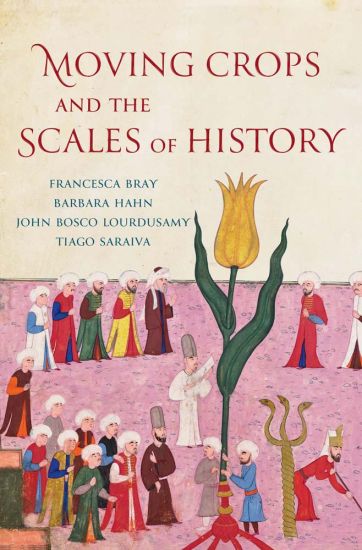
Moving Crops and the Scales of History

Francesca Bray; Barbara Hahn; John Bosco Lourdusamy; Tiago Saraiva

YALE UNIVERSITY PRESS
2023
sidottu

Halvin toimitettuna 41,90 €

A bold redefinition of historical inquiry based on the “cropscape”—the people, creatures, technologies, ideas, and places that surround a crop Human efforts to move crops from one place to another have been a key driving force in history. Crops have been on the move for millennia, from wildlands into fields, from wetlands to dry zones, from one imperial colony to another. This book is a bold but approachable attempt to redefine historical inquiry based on the “cropscape”: the assemblage of people, places, creatures, technologies, and other elements that form around a crop. The cropscape is a method of reconnecting the global with the local, the longue durée with microhistory, and people, plants, and places with abstract concepts such as tastes, ideas, skills, politics, and economic forces. Through investigating a range of contrasting cropscapes spanning millennia and the globe, the authors break open traditional historical structures of period, geography, and direction to glean insight into previously invisible actors and forces.
Fascist Pigs

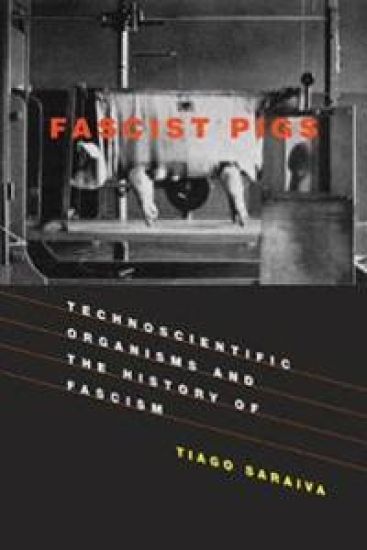
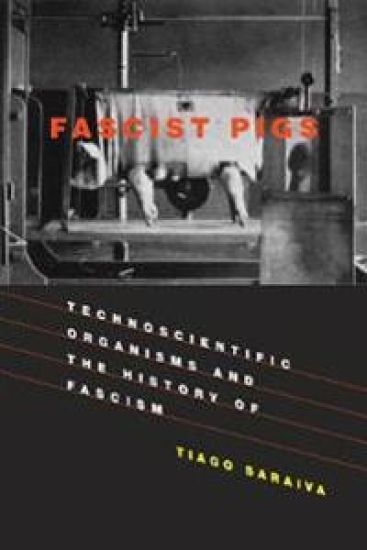
Fascist Pigs

Tiago Saraiva

MIT Press
2018
pokkari
How the breeding of new animals and plants was central to fascist regimes in Italy, Portugal, and Germany and to their imperial expansion. In the fascist regimes of Mussolini's Italy, Salazar's Portugal, and Hitler's Germany, the first mass mobilizations involved wheat engineered to take advantage of chemical fertilizers, potatoes resistant to late blight, and pigs that thrived on national produce. Food independence was an early goal of fascism; indeed, as Tiago Saraiva writes in Fascist Pigs, fascists were obsessed with projects to feed the national body from the national soil. Saraiva shows how such technoscientific organisms as specially bred wheat and pigs became important elements in the institutionalization and expansion of fascist regimes. The pigs, the potatoes, and the wheat embodied fascism. In Nazi Germany, only plants and animals conforming to the new national standards would be allowed to reproduce. Pigs that didn't efficiently convert German-grown potatoes into pork and lard were eliminated. Saraiva describes national campaigns that intertwined the work of geneticists with new state bureaucracies; discusses fascist empires, considering forced labor on coffee, rubber, and cotton in Ethiopia, Mozambique, and Eastern Europe; and explores fascist genocides, following Karakul sheep from a laboratory in Germany to Eastern Europe, Libya, Ethiopia, and Angola. Saraiva's highly original account-the first systematic study of the relation between science and fascism-argues that the "back to the land" aspect of fascism should be understood as a modernist experiment involving geneticists and their organisms, mass propaganda, overgrown bureaucracy, and violent colonialism.
Fascist Pigs

Fascist Pigs

Tiago Saraiva

MIT Press
2016
sidottu
How the breeding of new animals and plants was central to fascist regimes in Italy, Portugal, and Germany and to their imperial expansion. In the fascist regimes of Mussolini's Italy, Salazar's Portugal, and Hitler's Germany, the first mass mobilizations involved wheat engineered to take advantage of chemical fertilizers, potatoes resistant to late blight, and pigs that thrived on national produce. Food independence was an early goal of fascism; indeed, as Tiago Saraiva writes in Fascist Pigs, fascists were obsessed with projects to feed the national body from the national soil. Saraiva shows how such technoscientific organisms as specially bred wheat and pigs became important elements in the institutionalization and expansion of fascist regimes. The pigs, the potatoes, and the wheat embodied fascism. In Nazi Germany, only plants and animals conforming to the new national standards would be allowed to reproduce. Pigs that didn't efficiently convert German-grown potatoes into pork and lard were eliminated. Saraiva describes national campaigns that intertwined the work of geneticists with new state bureaucracies; discusses fascist empires, considering forced labor on coffee, rubber, and cotton in Ethiopia, Mozambique, and Eastern Europe; and explores fascist genocides, following Karakul sheep from a laboratory in Germany to Eastern Europe, Libya, Ethiopia, and Angola. Saraiva's highly original account-the first systematic study of the relation between science and fascism-argues that the "back to the land" aspect of fascism should be understood as a modernist experiment involving geneticists and their organisms, mass propaganda, overgrown bureaucracy, and violent colonialism.
The Orchard in the Ruins

The Orchard in the Ruins

Tiago Saraiva

THE UNIVERSITY OF CHICAGO PRESS
2026
nidottu
Ingeniously connects the history of citrus cultivation to the production and maintenance of whiteness in sites around the world. In The Orchard in the Ruins, acclaimed historian Tiago Saraiva illuminates the global impact of cloning Californian oranges, a practice that emerged in the aftermath of the great depression of the 1890s. Cloning promised control, uniformity, and resistance to an array of environmental and economic threats. But Californian orchards—white-owned but tended by workers of Chinese, Japanese, Mexican, or Indigenous origin—were also places where plantations and race intertwined. Agricultural anxieties about strains of oranges and their value, Saraiva shows, formed a continuum with anxieties about vanishing whiteness. The Orchard in the Ruins connects Californian history to other sites of citrus cultivation: South Africa, where concerns about white poverty grew during the early twentieth century; Mandatory Palestine, where orchards were key to Zionist undertakings; colonial Algeria, where French settlers transformed the landscape with European farming techniques; and Brazil, where orchards were cultivated post-abolition. Drawing on local histories as well as the works of John Dewey, J. M. Coetzee, Edward Said, Frantz Fanon, and artist Tarsila do Amaral, Saraiva shows that in each place, orchards grew in the wake of specific historical crises. Orange cultivation was a transnational project in cultivating whiteness, one in which studies of fruits, buds, rootstocks, fungi, and viruses became race-making experiments. A must-read for anyone interested in the history of science, technology, agriculture, and race, The Orchard in the Ruins reveals a troubled account of science-led attempts to remedy crumbling worlds.
The Orchard in the Ruins

The Orchard in the Ruins

Tiago Saraiva

THE UNIVERSITY OF CHICAGO PRESS
2026
sidottu
Ingeniously connects the history of citrus cultivation to the production and maintenance of whiteness in sites around the world. In The Orchard in the Ruins, acclaimed historian Tiago Saraiva illuminates the global impact of cloning Californian oranges, a practice that emerged in the aftermath of the great depression of the 1890s. Cloning promised control, uniformity, and resistance to an array of environmental and economic threats. But Californian orchards—white-owned but tended by workers of Chinese, Japanese, Mexican, or Indigenous origin—were also places where plantations and race intertwined. Agricultural anxieties about strains of oranges and their value, Saraiva shows, formed a continuum with anxieties about vanishing whiteness. The Orchard in the Ruins connects Californian history to other sites of citrus cultivation: South Africa, where concerns about white poverty grew during the early twentieth century; Mandatory Palestine, where orchards were key to Zionist undertakings; colonial Algeria, where French settlers transformed the landscape with European farming techniques; and Brazil, where orchards were cultivated post-abolition. Drawing on local histories as well as the works of John Dewey, J. M. Coetzee, Edward Said, Frantz Fanon, and artist Tarsila do Amaral, Saraiva shows that in each place, orchards grew in the wake of specific historical crises. Orange cultivation was a transnational project in cultivating whiteness, one in which studies of fruits, buds, rootstocks, fungi, and viruses became race-making experiments. A must-read for anyone interested in the history of science, technology, agriculture, and race, The Orchard in the Ruins reveals a troubled account of science-led attempts to remedy crumbling worlds.
Inventing a European Nation

Inventing a European Nation

Maria Paula Diogo; Tiago Saraiva

Springer International Publishing AG
2020
nidottu
This book deals with the simultaneous making of Portuguese engineers and the Portuguese nation-state from the mid seventeenth century to the late twentieth century. It argues that the different meanings of being an engineer were directly dependent of projects of nation building and that one cannot understand the history of engineering in Portugal without detailing such projects. Symmetrically, the authors suggest that the very same ability of collectively imagining a nation relied on large measure on engineers and their practices. National culture was not only enacted through poetry, music, and history, but it demanded as well fortresses, railroads, steam engines, and dams. Portuguese engineers imagined their country in dialogue with Italian, British, French, German or American realities, many times overlapping such references. The book exemplifies how history of engineering makes more salient the transnational dimensions of national history. This is valid beyond the Portuguese case and draws attention to the potential of history of engineering for reshaping national histories and their local specificities into global narratives relevant for readers across different geographies.