Kirjojen hintavertailu – 12 903 725 kirjaa ja 27 kauppaa
Kirjailija
Tibor R. Machan
Kirjat ja teokset yhdessä paikassa: 28 kirjaa, julkaisuja vuosilta 1985–2020, suosituimpiin kuuluu Individual Rights Reconsidered. Vertaile teosten hintoja ja tarkista saatavuus suomalaisista kirjakaupoista.
This volume explores whether government action is in fact indispensable in the face of natural calamities—earthquakes, floods, and the like—and what might be done to restrain the expansion of the scope of governmental power if emergency circumstances warrant intervention.
These contributions examine the tragedy of the commons and what is affected by the tragedy. What is the proper scope of the public realm? The main insight is that human individuality needs to be properly accommodated in a system of community life, in law, and in public policy.
The essays in this volume reconsider the case of the basic tenets of the U. S. political tradition, outlined in the Declaration of Independence and expressed in much of the U. S. legal system. The authors answer the innumerable criticisms advanced against the political philosophy of natural individual human rights over the last two centuries.
In Classical Individualism, Tibor R. Machan argues that individualism is far from being dead. Machan identifies, develops and defends what he calls classical individualism - an individualism humanised by classical philosophy, rooted in Aristotle rather than Hobbes. This book does not reject the social nature of human beings, but finds that every one has a self-directed agent who is responsible for what he or she does. Machan rejects all types of collectivism, including communitarianism, ethnic solidarity, racial unity, and gender identity. The ideas expressed here have important social and political implications, and will be of interest to anyone concerned with the notion of individuality and individual responsibility.
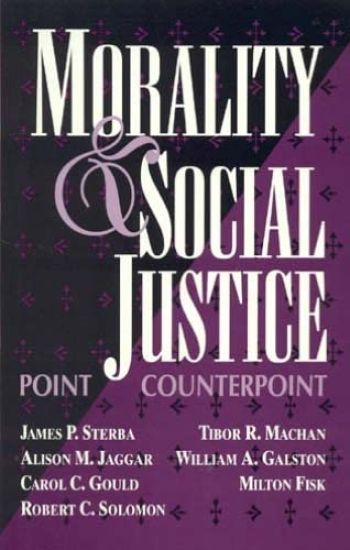
These original essays by seven leading contemporary political philosophers spanning the political spectrum explore the possibility of achieving agreement in political theory. Each philosopher defends in a principal essay his or her own view of social justice and also comments on two or more of the other essays. The result is a lively exchange that leaves the reader to judge to what degree the contributors achieve agreement or reconciliation.
These original essays by seven leading contemporary political philosophers spanning the political spectrum explore the possibility of achieving agreement in political theory. Each philosopher defends in a principal essay his or her own view of social justice and also comments on two or more of the other essays. The result is a lively exchange that leaves the reader to judge to what degree the contributors achieve agreement or reconciliation.
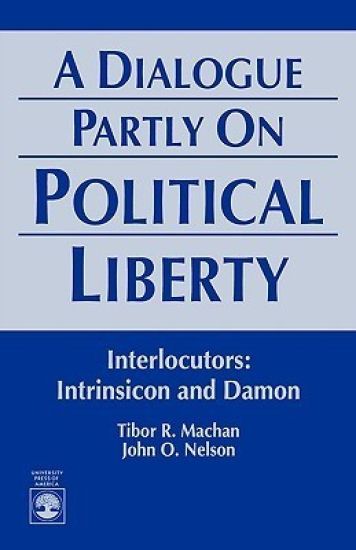
This work is a classic dialogue between two philosophers, with the unusual twist that it was actually conducted, not fabricated, by two different philosophers. It presents in a conversational tone the various crucial and not so crucial aspects of the topic of political liberty and what if any value it has for us. The topics covered range from the main theme to such others as the nature of goodness, the open question argument (G. E. Moore), the nature of conceptual knowledge, whether being rational might be the highest moral good and what it entails, how to judge theories of mortality, the difference between goodness and moral goodness, and much more. Both undergraduate and graduate students of philosophy and in particular political philosophy, will find this book invaluable.