Kirjojen hintavertailu – 12 903 735 kirjaa ja 27 kauppaa

Kirjailija

Tikva Frymer-Kensky

Kirjat ja teokset yhdessä paikassa: 6 kirjaa, julkaisuja vuosilta 1993–2024, suosituimpiin kuuluu Wisdom from the Witch of Endor. Vertaile teosten hintoja ja tarkista saatavuus suomalaisista kirjakaupoista.

6 kirjaa

Kirjojen julkaisuvuodet: 1993–2024.

Wisdom from the Witch of Endor

Wisdom from the Witch of Endor

Tikva Frymer-Kensky; Adele Reinhartz

WILLIAM B EERDMANS PUBLISHING CO
2024
pokkari

Halvin toimitettuna 18,90 €

Four simple rules, amazing results--how wisdom from an overlooked biblical hero can change your life Tikva Frymer-Kensky shows readers how a seemingly minor story in the first book of Samuel can teach them key lessons to dramatically improve their lives. Saul, abandoned by God, approaches a medium in the village of Endor to call up the spirit of Samuel. Though Saul had outlawed her craft, she helped him when he promised her safety. And after Samuel prophesied Saul's death, she showed the shaken king hospitality. Determination. Excellence. Caution. Benevolence. Four qualities of the "witch" of Endor will bring you success, even when the whole world stands against you. Are you ready to follow your dreams? To succeed when others tell you to give up? Embrace the wisdom of a little-known hero from the Bible--and see how it leads you to the life you were meant to live.

The JPS Bible Commentary: Ruth

The JPS Bible Commentary: Ruth

Tamara Cohn Eskenazi; Tikva Frymer-Kensky

Jewish Publication Society
2011
sidottu
Thanks to these generous donors for making the publication of this book possible: Dr. and Mrs. Lawrence Deutsch. The latest in the JPS Bible Commentary series, 2011 National Jewish Book Award Winner, Barbara Dobkin Award in Women’s StudiesThe moving story of Ruth, with its themes of loyalty, loving kindness (hesed), and redemption, is one of the great narratives of the Bible. Socially, the Israelites were aware of their responsibility to protect the weak and unprotected among them. Redemption secures the life of the people as a community, not just as individuals. In this story, Boaz fills the familial obligation to marry the widow of a deceased relative who never was able to father children, both to continue the family line and protect an otherwise vulnerable woman. The authors provide a critical, line-by-line commentary of the biblical text, presented in its original Hebrew, complete with vocalization and cantillation marks, as well as the 1985 JPS English translation. The extensive introduction places the book within its historical, literary, and critical context, discusses contemporary interpretations of the story of Ruth, and examines its major motifs and themes, among them: family, marriage and levirate marriage in biblical and ancient Israel, redemption and inheritance, hesed, and the book’s connection with the Jewish holiday of Shavuot.
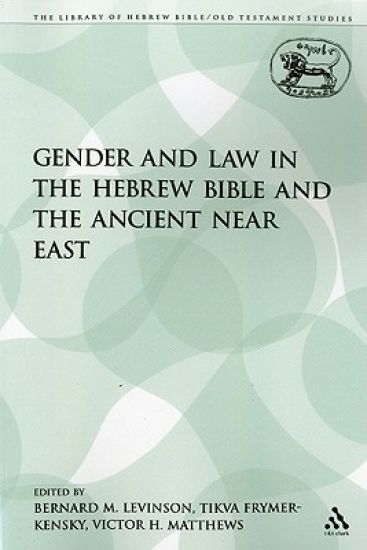
Gender and Law in the Hebrew Bible and the Ancient Near East

Gender and Law in the Hebrew Bible and the Ancient Near East

Victor H. Matthews; Tikva Frymer-Kensky; Bernard M. Levinson

Continuum International Publishing Group Ltd.
2009
nidottu
This striking new contribution to gender studies demonstrates the essential role of Israelite and Near East law in the historical analysis of gender. The theme of these studies of Babylonian, Hittite, Assyrian, and Israelite law is this: What is the significance of gender in the formulation of ancient law and custom? Feminist scholarship is enriched by these studies in family history and the status of women in antiquity. At the same time, conventional legal history is repositioned, as new and classical texts are interpreted from the vantage point of feminist theory and social history. Papers from SBL Biblical Law Section form the core of this collection.
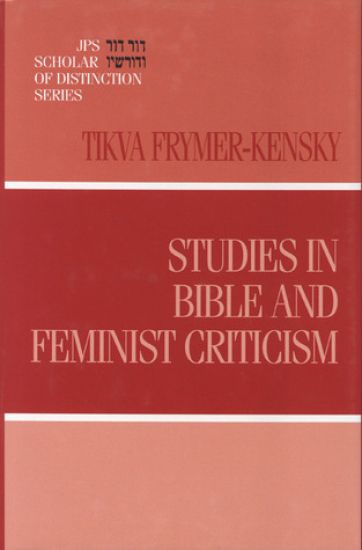
Studies in Bible and Feminist Criticism

Studies in Bible and Feminist Criticism

Tikva Frymer-Kensky

Jewish Publication Society
2006
sidottu
A JPS Scholar of Distinction title The best writings of the long and distinguished career of renowned feminist Bible scholar Tikva Frymer-Kensky. Each of the thirty essays here delves into a topic that gives us much food for thought: the Bible as interpreted through ancient Near-Eastern creation myths, flood myths, and goddess myths; gender in the Bible; the feminist approach to Jewish law; comparative Jewish and Christian perspectives on the Hebrew Bible; biblical perspectives on ecology; creating a theology of healing; feminine God-talk. The volume concludes with the author’s own original prayers in the form of poetic meditations on pregnancy and birthing. This book is unique, not only because it is the only volume in the JPS Scholar of Distinction series written by a woman, but also because Frymer-Kensky’s personal and forthright voice resonates so clearly throughout each piece. Scholars and students of Bible, Jewish studies, and women’s studies will surely find this to be a one-of-a kind collection.
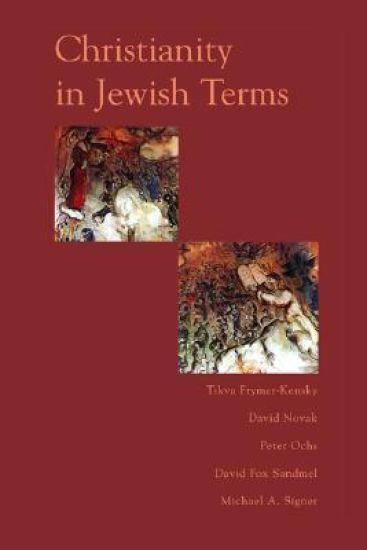
Christianity In Jewish Terms

Christianity In Jewish Terms

David Novak; David Sandmel; Michael Singer; Peter Ochs; Tikva Frymer-kensky

Basic Books
2002
pokkari
Over the past few decades, there has been a dramatic and unprecedented shift in Jewish-Christian relations, including signs of a new, improved Christian attitude towards Jews. Christianity in Jewish Terms is a Jewish theological response to the profound changes that have taken place in Christian thought. The book is divided into ten chapters, each of which features a main essay, written by a Jewish scholar, that explores the meaning of a set of Christian beliefs. Following the essay are responses from a second Jewish scholar and a Christian scholar. Designed to generate new conversations within the American Jewish community and between the Jewish and Christian communities, Christianity in Jewish Terms lays the foundation for better understanding. It was named a Choice Outstanding Academic Book of 2001.
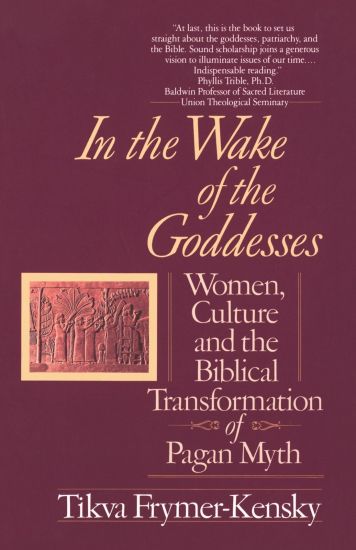
In the Wake of the Goddesses: Women, Culture and the Biblical Transformation of Pagan Myth
The current return to spiritual values has spawned a surge of interest in the ancient goddess-based religions as a remedy to a long tradition of misogyny in the Western religions. But how accurate are these current representations of the goddess in polytheism? And did Judeo-Christian religion really turn its back on women? These are some of the questions that scholar and feminist Tivka Frymer-Kensky sets out to answer in this iconoclastic study of gender in religions past and present. Her argument, illustrated with fascinating accounts of myth and ritual dating back to the early days of Sumer, Assyria, and Greece, is that although polytheism did accord females an important role, the strict division between male and female actually served to keep women in a subordinate position. The goddesses were progressively "ghettoized" their sphere was eventually relegated to home and hearth, while male gods took over as patrons of wisdom and learning. This dualism was displaced by the Bible, which embraced a surprisingly egalitarian view of human nature in which women were not considered to be inherently inferior. In a provocative work of biblical scholarship on gender and sexuality, Frymer-Kensky shows that the ideal of monotheism may offer far more to us today than a return to the gender-based worldview of the goddess religions.