Kirjojen hintavertailu – 12 903 724 kirjaa ja 27 kauppaa

Kirjailija

Til Wykes

Kirjat ja teokset yhdessä paikassa: 3 kirjaa, julkaisuja vuosilta 1994–2016, suosituimpiin kuuluu Group CBT for Psychosis. Vertaile teosten hintoja ja tarkista saatavuus suomalaisista kirjakaupoista.

3 kirjaa

Kirjojen julkaisuvuodet: 1994–2016.

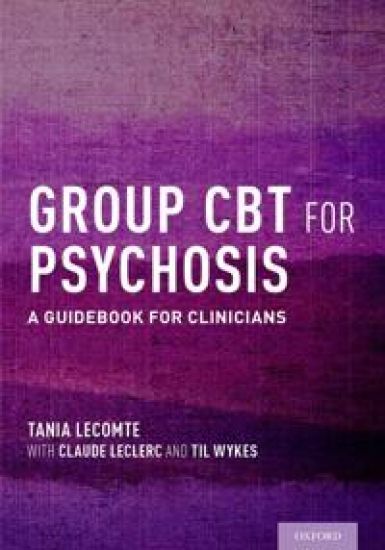
Group CBT for Psychosis

Group CBT for Psychosis

Tania Lecomte; Claude Leclerc; Til Wykes

Oxford University Press Inc
2016
nidottu
Psychosis implies an alteration of one's reality, with specific beliefs and sensory experiences that affect one's judgment and capacity to function socially. Previously, medication alone was believed to attenuate or eliminate psychotic symptoms; however, more than two decades of empirical evidence now support the use of cognitive behavior therapy (CBT) for psychosis, including group CBT for psychosis. Group CBT for Psychosis offers the first published group therapy module of its kind and is suitable for a broad range of mental health professionals. Group therapy for people with psychosis is often recommended given its cost-efficiency and indirect benefits such as improved social skills and social support, yet delivery of this group intervention necessitates specialized skills and knowledge not typically included as part of most clinical training programs. This book offers thorough descriptions of relevant techniques, clinical vignettes, and worksheets for use in group sessions. Individual chapters focus on the basics of CBT for psychosis, essential elements of group therapy, explaining the CBT model in a group context, techniques for various symptoms, measuring change, common obstacles to group CBT for psychosis, and much more. Group CBT for Psychosis will be a valuable resource for psychiatrists, psychologists, psychiatric nurses, occupational therapists, social workers, and graduate students in these fields. Professors and supervisors teaching clinical skills, such as how to run groups or how to conduct CBT in groups with people with psychotic disorders, will also find this book very useful.

A Dictionary of Statistics for Psychologists

A Dictionary of Statistics for Psychologists

Brian S. Everitt; Til Wykes

John Wiley Sons Inc
1999
nidottu
Psychologists need to know about statistics but they can easily get bogged down in unfamiliar jargon. This new dictionary is an invaluable reference for all undergraduate and postgraduate students of psychology. It provides definitions of the statistical terms most commonly encountered in psychological literature. It explains simply and clearly what the methods/topics are and how to apply them, and in many cases, some mathematical details and a numerical example follow a brief written account of a term. In addition, graphical material help make definitions clearer. This unique approach makes this dictionary an essential purchase for all students grappling with increasingly sophisticated statistical methods in their data analysis.
Violence and Health Care Professionals

Violence and Health Care Professionals

Til Wykes

Singular Publishing Group Inc.
1994
nidottu
Til Wykes BACKGROUND The recent publication of several surveys on violence was the impetus for this book. The first was carried out in 1986 by the Health and Safety Commission Health Services Advisory Committee (1987). They conducted a comprehensive survey of the inddence of violence to 5000 workers in five separate health districts. The results from the 3000 people who eventually replied made many in the caring professions worried. One in 200 workers had suffered a major injury following a violent attack during the previous year and a further one in ten needed first aid following an assault. Other surveys also showed high risks: of sodal service staff, 6% had suffered an attack in the past 5 years (Saunders, 1987), and sodal workers were at even high er risk. 29% had been assaulted in the last 3 years (Rowett, 1986). In addition, 4% of general practitioners had experienced an attack resulting in injury in the past year (D'Urso and Hobbs, 1989). Clinical psychologists were also at risk - 53% had been assaulted at least once during their professional career and 18% in the past year (Perkins, 1991). Media reports of extreme violence seem to be the tip of the iceberg. Many staff are attacked and some of these attacks have serious physical or psychological consequences that interfere with the victim' s ability to return to their full working capadty. This loss of highly trained staff should be recognized by employers and the community.