Kirjojen hintavertailu – 12 859 828 kirjaa ja 27 kauppaa
Kirjailija
Tim Allen
Kirjat ja teokset yhdessä paikassa: 22 kirjaa, julkaisuja vuosilta 1990–2023, suosituimpiin kuuluu An Iron Age and Romano-British Enclosed Settlement at Watkins Farm, Northmoor, Oxon. Vertaile teosten hintoja ja tarkista saatavuus suomalaisista kirjakaupoista.
Facing up to Benjamin P ret's demand that poets 'show by total non-conformity their opposition to the world' this little book embodies refusal. It's perverse offering of 97 ways of looking at what cannot be seen refuses, in particular, to grow into a 'well-greased body of work'. Playfully anti-misrerabilist in their attack, the poems take the ball early and smack it in different directions all at the same time. Jeremy Over
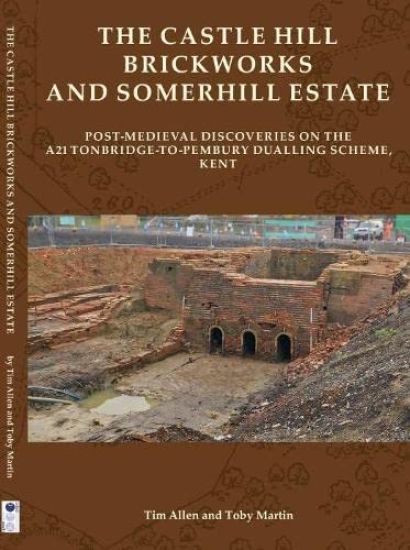
Excavation by Oxford Archaeology for the A21 Tonbridge to Pembury Dualling Scheme in Kent uncovered the well-preserved remains of a 19th-century rural estate brickworks, very few examples of which still survive. The Castle Hill Brickworks was established by 1833 within the grounds of the Somerhill Estate, and continued to produce bricks, tiles and drains for the estate and the local area until the 1930s. The excavated remains included three kilns, six drying sheds, a workshop and two pugmills, together with a cottage, office, clay pits and ponds, and provide the most complete picture of a rural brickworks that has been published from anywhere in the south-east of England. Construction of the road necessitated the removal of Burgess Hill Farm, one of the post-medieval farms attached to the estate. Following the dismantling of the listed barn and stables for re-erection at the Weald and Downland Living Museum and the recording and demolition of the farmhouse and other buildings, trenches were excavated to characterise the below-ground remains and corroborate the buildingsequence. Both the brickworks and the farm were situated alongside the Tonbridge to Hastings road (later the A21), and between them a turnpike milepost was found in situ, and the remains of the 17th/18th-century road were preserved at a passing place on the slope up to Castle Hill, where timber for the brickworks was grown.
The texts in this volume run parallel with the years of Austerity leading to Brexit and its fallout, issues internalised here before resurfacing within new narrative contexts and scenarios in which modern cultural history competes with autobiographical conflict to be transported elsewhere by the chimera of language. Motifs arising from the perspective of age and change echo, but sparsely; what really unites the poems is a cruel humour, as often self-directed as aimed at the democracy of poisons. "Tim Allen combines images with the anarchic verve of Lautreamont and the early Surrealists. The sentences which result are both playful and rebellious, generating quirky narrative threads which are soon subsumed again by the text. Each poem is a helter skelter rush of improvisation, an exercise in indeterminacy bounded only by the imposed 28 line, four stanzas form used throughout the book." -Simon Collings "Why does what they call high modernism have so much religion bronchial hymns and ripped sacking in it? There is a phase of childhood when the child does nothing but ask awkward questions, and Tim Allen may be an example of someone who never abandoned this phase. His unwillingness to retain the answers opened up a new world with new conventions. Are things really as they are or are they ceaselessly reformulated into moral patterns by the generalising powers of language? As the prose units of democracy of poisons develop, their polished and surreal surface becomes more and more convincing. The title presumably refers to a 24-hour media slew in which toxic ideas try to win popularity contests. There is a camaraderie of bad ideas." -Andrew Duncan
Peasant Tower is a book-length poem by the UK poet Tim Allen. Riding along on the top deck, its 275 couplets have a range of sound like this: // film director stands out in swarm of snappers / litter on radar skittles behind vehicle // skis clutter up left luggage / get your tongue around the yawn of an afternoon prayer // bums and faces but no overheads / stories in which young men's wallets are cuckoo clocks // incinerator in church cellar / a bird with eleven feet gets accepted by the establishment // messing around with an extraction fan / emasculated by a dowsing stick // subeditor crosses out coincidences in crossword / e.g. bus shelter in cathedral crypt // gull on its tod on refuse tip reads scorched love letter / vintage carnival route empty of the peanut // she stands back-to-front before a lost child / motorcycle sidecar carrying a demolished block of flats //
What is an Entrepreneur? I think it is a person that takes a chance in organizing a business; risking their money to earn more money than what they started with. America is surrounded with entrepreneurs, some are small risks and many are risking everything they own. Most entrepreneurs are under- funded and 51% do not survive after their 2nd year. Think of a local shopping centers that offers: a 7 11 store, Nails/Spa, Pizza, Sub shop, a local Diner or Restaurant, etc. totals 5 entrepreneurs that invested their savings into a business: risking all of their money. You can find 4, 5 and more businesses in your neighborhood, all thinking they can do a job better than the failed Entrepreneur before them. I have learned the following steps are necessary to succeed: A business requires the following: 1. Start with a Business Plan, a must. 2. Sales Forecast, monitor closely, daily, monthly. 3. Funding Flexible: best Case and worst Case 4. Relying on friends and family for funding are risky and can cause years of frustration; last resource. 5. Leadership: Don't demand a successful task unless you can do it yourself. 6. Make decisions quickly, Do Not Procrastinate 7. Find a business you like, no love. 8. Be willing to work late at night and arrive early in the morning. 9. First in.... Last out..... of Business 10. Entrepreneurs are what makes Capitalization work in America; cherish the Opportunity. Good Luck Serial Entrepreneur CEO
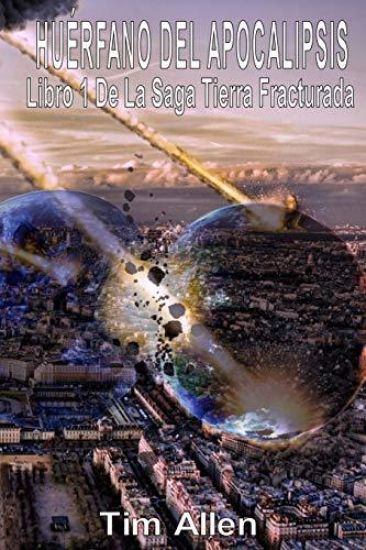
El comandante Orlando Iron Wolf se encuentra a bordo de la Estaci n Espacial Internacional cuando el parpadeo de una luz en la consola de su computadora lo alerta de la presencia de un cometa que se desplaza a toda velocidad en una trayectoria con colisi n directa contra la Tierra. Sin posibilidad de evitar el inminente cataclismo, el mundo se sume en el p nico y la anarqu a. Se construyen enormes naves de transporte para colonizar la Luna y comienza la evacuaci n de unos pocos elegidos. Cuando se tuerce la misi n del transbordador pilotado por Wolf para estudiar el cometa que se aproxima a toda velocidad, este se ver forzado a sumirse en un sue o profundo criog nico mientras la computadora de a bordo asume el control de la nave. Wolf se despierta 50.000 a os despu s en una Tierra salvajemente distinta. Dotado de una fuerza incre ble, pronto se encuentra atrapado en una guerra entre tribus primitivas y su supervivencia depender de Syn, una inteligencia artificial avanzada que se ha enamorado de l. Conseguir Wolf ayudar a devolver a la Tierra su antigua gloria o tal vez la civilizaci n est condenada a fracasar?
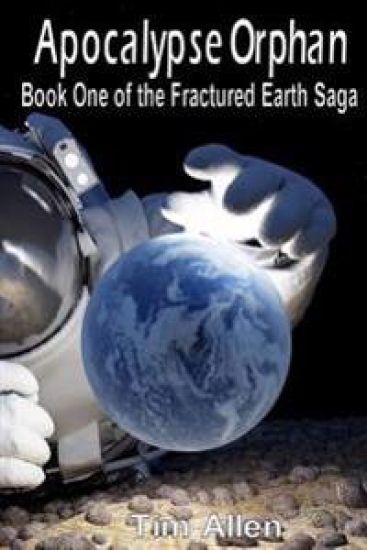
The year is 2025, and a rogue comet is on a collision course with earth. Man has decided to abandon the planet after all the fail safes have proven ineffective. Moon bases are built, huge starships are created and equipped to save as many people as possible. Lotteries determine who will be saved as anarchy rises on the once proud earth. Orlando 'Iron" Wolf is sent to observe the comet and is somehow trapped in the comets coma. He is cryogenically frozen in the ships Deep SPace Chambers and is watched through centuries by Syn, the onboard computer. When Wolf is finally released from the comets gri, thousands of years have passed. Earh is smaller, due to the collision with the comet and a new smaller moon called Earth 2 orbits in tandom with the moon. WOlf finds himself far stronger than an average human being, he's faster and his immense size frightens the natives on the planet. His only companion is the female AI of his ships computer. Can Wolf help mankind reclaim its past glory or will man perish in a brave new world.
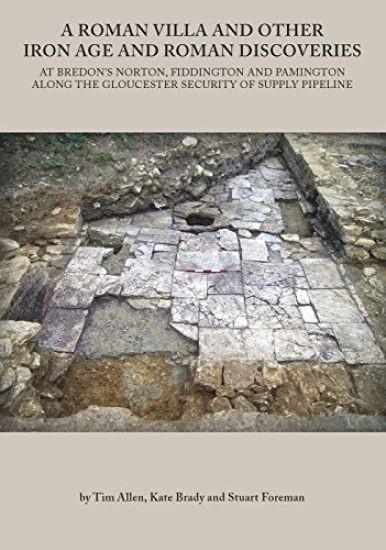
This report presents the results of archaeological investigations along the 17km-long Gloucester Security of Supply Water Pipeline in the vicinity of Tewkesbury. The archaeological mitigation works were commissioned by Severn Trent Water; following evaluation of the whole route, three sites were chosen for excavation, at Fiddington and Pamington in Gloucestershire and at Bredon’s Norton in Worcestershire. The site at Pamington revealed oval enclosures of mid-late Iron Age date, that at Fiddington elements of a rural settlement spanning all of the Roman period. At Bredon’s Norton the pipeline cut through a series of Iron Age and Roman settlement enclosures and their internal features, and also included human burials of both periods. Unusually, one Iron Age burial was accompanied by a saw, and among the Roman burials was a cemetery of seven newborn infants. An unexpected discovery was the remains of a Roman bath-house with a plunge pool flagged with stones and decorated with painted wall-plaster. This was later drained and had a central cistern inserted, while the loft was used to store grain. The building was destroyed by fire at the very end of the Roman period, resulting in the exceptional preservation of charred grain, together with fragmentary timbers, on the floor.
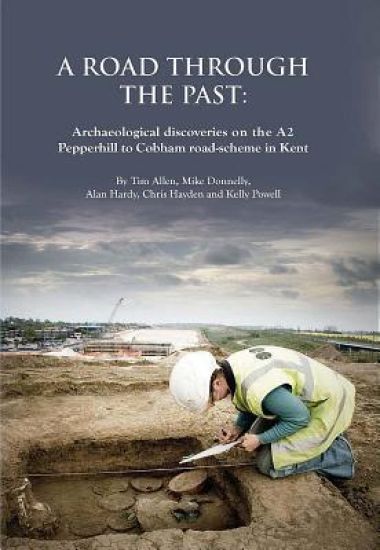
Excavations along the new road line have revealed nearly 6000 years of human activity, from a massive marker post erected by early Neolithic farmers at the head of a dry valley to a bizarre burial of several different animals dating to the sixteenth century AD. Prehistoric discoveries include two enclosures of the middle Bronze Age, both associated with some of the earliest cobbled roads in Kent, a collection of Iron Age storage pits rich in diverse deliberate offerings, and the emergence of a nucleated hamlet in the middle Iron Age. Most exciting were rich cremation burials of the late Iron Age and early Roman periods, probably successive generations of a local family, whose rise to prominence coincides with the growth of the cult centre at Springhead nearby. The metal vessels include types new to Britain, the pottery stamps suggest the movement of continental potters to Kent, and one grave has the clearest evidence of furniture yet found from early Roman Britain. Medieval settlements of the late 11th-14th centuries mirror the renewed importance of Watling Street after the Norman conquest, and its eventual return to obscurity due to competition from the ferry from London to Gravesend.
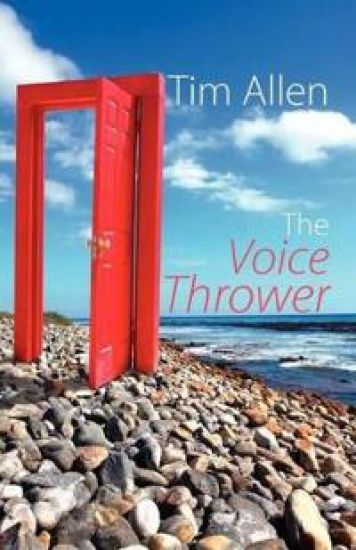
The Voice Thrower is from a batch of long poems begun in the 90s, arising in my "anti poetry" phase. The title should speak for itself, except it doesn't, which is the whole point of being a voice thrower. The poem had a twin, The Submissive Bastards, initially sharing the trope of a red sky at dusk, but TVT's sky turned into a horizon at sea, specifically from Portland looking west across Lyme Bay (Portlanders call it West Bay anyway). While The Voice Thrower's bastard twin became more controlled, TVT grew ever wilder until, while trying to round it off, I began to suspect the poem was an unconscious attempt to engage with the memory of my mother (Hannah Lawton), yet I resisted making this the focus and let the poem mutate again, the original trope of the red horizon (my mother had red hair) spreading rhizome-like through the various scenarios. The irony though was that the more it tried to resist biography the more autobiographical it became. -Tim Allen
This volume describes the results of archaeological investigations carried out between 2003 and 2006 on behalf of the Northmoor Trust in the parishes of Little Wittenham and Long Wittenham, Oxfordshire. The work included examination of cropmarks, large-scale geophysical surveys, fieldwalking and excavations. Geophysical survey was concentrated in and around the scheduled hillfort at Castle Hill, Little Wittenham (Oxfordshire SAM No. 208), and revealed a smaller enclosure within the hillfort dated by excavation to the late Bronze Age. The survey also suggested that otherwise archaeological features within the hillfort were relatively sparse. A section across the hillfort ditch and rampart did not produce a clear construction date, though in the interior both early and middle Iron Age pits were found, some containing human burials or bones. The hillfort ditch appears to have been cleaned out throughout the Iron Age, the spoil probably used to enhance the outer bank. The hillfort was also used in the late Roman period (4th century AD), when very large rectangular pits were dug, and midden material was piled up behind and over the Iron Age rampart. People were also buried in the interior at this time. Saxon finds were very few, but a medieval pit and a quarry indicate occupation in the 12th/13th centuries AD. Coring of peat deposits beside the Thames north of Castle Hill provided evidence of the environmental succession from the early Iron Age onwards. On the plateau below the hillfort cropmarks and geophysical survey revealed a dense settlement stretching west, to Hill Farm and beyond. This included a late Bronze Age and early Iron Age midden some 50 m across, a middle Iron Age curving boundary ditch down the middle with smaller sub-rectangular enclosures either side, and early and middle Iron Age penannular enclosures, four-post structures and pits. Settlement seems to have shifted southwards and westwards in the middle Iron Age, and late Iron Age or early Roman ditches were also found near to Hill Farm. The Roman settlement was mainly 2nd–3rd century AD, and probably consisted of four enclosures, one of which contained a masonry building (now largely destroyed) with a tiled roof, decorated with mosaic tesserae and painted wall plaster. This enclosure was approached by a ditched trackway, with a second larger enclosure alongside. A third enclosure was partly revealed north of Hill Farm, and a fourth enclosure (not investigated) lay alongside Roman field boundaries west of Hill Farm. Despite earlier finds at Hill Farm, no Saxon evidence was found in these excavations. The project has revealed a unique combination of late Bronze Age hilltop enclosure, external settlement and an adjacent midden. In the early Iron Age the hilltop enclosure was replaced by the hillfort, where feasting occurred, while the adjacent settlement around the midden grew to be one of the largest in the region. The midden was abandoned in the middle Iron Age, and a long boundary ditch may have divided this ancestral area off from settlement to the south and west. There was also more middle Iron Age activity within the hillfort, including a number of human burials. In the Roman period the settlement probably included a small villa, while the hillfort itself was probably reoccupied in the later 4th century AD. Intriguingly both Roman cremations and inhumations were buried around and within the hillfort, suggesting a continuity of burial location spanning 1000 years. Geophysical survey and evaluation trenches were also dug across a cropmark complex at Neptune Wood east of Long Wittenham, revealing an early Iron Age enclosure ditch, a Roman trackway and associated fields, and a pair of large middle Saxon pits or waterholes.
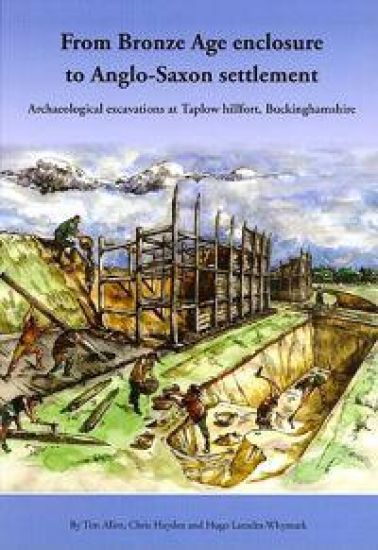
Recent excavations at Taplow Court have revealed a long sequence of activity stretching from the Mesolithic to the Anglo-Saxon period. Mesolithic struck flints and charred hazelnuts, and early Neolithic flints, were found in a small number of tree-throw holes. A group of inter-cutting hollows or shallow pits of Early Bronze Age date included sherds of Collared Urn and worked flint, rare evidence of domestic activity of this period. There were also finds of the middle Bronze Age, although no features of that phase were confirmed. In the late Bronze Age, a defensible hilltop enclosure about 1.2 ha was constructed on the site. The enclosure, probably first established in the 11th century cal BC, had a complex sequence of defences including a pair of post-rows possibly indicating a timber palisade backed by a raised walkway, a trench-built palisade, a ditch and rampart and further posthole-lines outside the ditch. Only a limited area of the interior was examined, but includes a series of parallel fence lines, one probable roundhouse and up to five possible four-post structures, with occupation extending into the 9th century cal BC. Following a probable hiatus in activity represented by a standstill deposit in the upper part of the ditch, a larger U-profiled hillfort ditch was constructed in the Early Iron Age, probably in the 5th century cal BC, the spoil being dumped over the previous ditch to form a timber-laced rampart, which was soon after destroyed in places by fire. The remains of the charred timbers within the rampart have revealed some details of its construction. The ditch however remained open into the Saxon period, and another internal roundhouse may be Middle Iron Age. A third and even larger V-profiled ditch was found outside the second ditch. Although the date of construction of this outer ditch is uncertain, it too remained open into the Saxon period, suggesting that the hillfort had many ditches its later stages. Price is approximate.
"I had in mind a kind of anti prose poem that would look and smell like one but give a different taste and have a different texture. One way of doing this was by making the conclusion of each Set flat and deflationary, almost deliberately poor in the sense that they never approached closure, either artificially or in actuality." (Tim Allen)
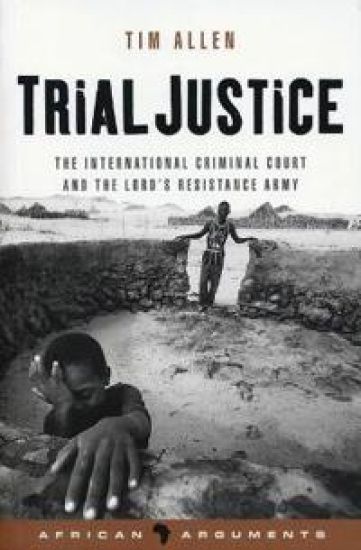
The International Criminal Court (ICC) has run into serious problems with its first big case -- the situation in northern Uganda. There is no doubt that appalling crimes have occurred here. Over a million people have been forced to live in overcrowded displacement camps under the control of the Ugandan army. Joseph Kony's Lord's Resistance Army has abducted thousands, many of them children and has systematically tortured, raped, maimed and killed. Nevertheless, the ICC has confronted outright hostility from a wide range of groups, including traditional leaders, representatives of the Christian Churches and non-governmental organizations. Even the Ugandan government, which invited the court to become involved, has been expressing serious reservations. Tim Allen assesses the controversy. While recognizing the difficulties involved, he shows that much of the antipathy towards the ICC's intervention is misplaced. He also draws out important wider implications of what has happened. Criminal justice sets limits to compromise and undermines established procedures of negotiation with perpetrators of violence. Events in Uganda have far reaching implications for other war zones - and not only in Africa. Amnesties and peace talks may never be quite the same again.
The International Criminal Court (ICC) has run into serious problems with its first big case -- the situation in northern Uganda. There is no doubt that appalling crimes have occurred here. Over a million people have been forced to live in overcrowded displacement camps under the control of the Ugandan army. Joseph Kony's Lord's Resistance Army has abducted thousands, many of them children and has systematically tortured, raped, maimed and killed. Nevertheless, the ICC has confronted outright hostility from a wide range of groups, including traditional leaders, representatives of the Christian Churches and non-governmental organizations. Even the Ugandan government, which invited the court to become involved, has been expressing serious reservations. Tim Allen assesses the controversy. While recognizing the difficulties involved, he shows that much of the antipathy towards the ICC's intervention is misplaced. He also draws out important wider implications of what has happened. Criminal justice sets limits to compromise and undermines established procedures of negotiation with perpetrators of violence. Events in Uganda have far reaching implications for other war zones - and not only in Africa. Amnesties and peace talks may never be quite the same again.
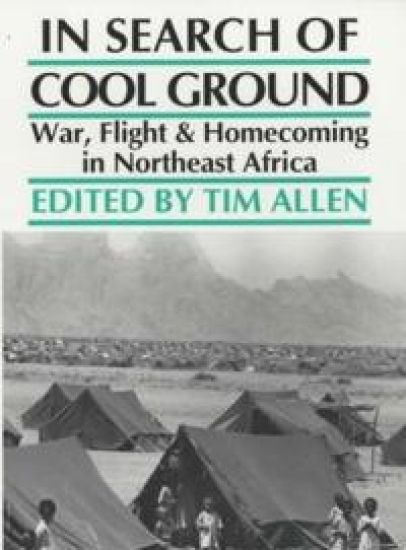
This volume focuses on population displacement in Northeast Africa. For many people, flight across an international border occurs repeatedly and is not a uniquely traumatic event. For many more, displacement has occurred within their own countries. The contributors suggest that in situations of such long-term upheaval, notions of flight into refuge and repatriation to a homeland cease to have much meaning. These populations have received minimal assistance from international organizations and have lacked protection from oppressive governments and marauding guerillas. Their plight has largely been ignored. North America: Africa World Press