Kirjojen hintavertailu – 12 859 827 kirjaa ja 27 kauppaa
Kirjailija
Tim Andrews
Kirjat ja teokset yhdessä paikassa: 8 kirjaa, julkaisuja vuosilta 2002–2022, suosituimpiin kuuluu The Changing Face of Multinationals in South East Asia. Vertaile teosten hintoja ja tarkista saatavuus suomalaisista kirjakaupoista.
Ninetoes, once a hobgoblin NPC, is now a wizard and, what's more, levelling up in his own adventure. But what really sets the Adventurer apart from the other peoples of Adrenon, is his ability to make a Choice. Choose to fight; choose to live; choose to become. Ninetoes has begun to unlock his truest potential and no longer fights alone, for Ninetoes is a Necromancer. But this dark power is shunned by most and makes his goal of returning as a hero to save his people all the more difficult to accomplish. Whatever else might be true, Ninetoes will need more than animated servants if he's to fulfil his potential: he'll need allies and companions. In short, a Party.
What if, instead of trying to predict the future, we could just pick the one we want - and then invent it? Well, we can. This book describes seven stunning technological advances that will occur by 2050 and shows how to combine them, starting now, to build a future that will let billions thrive. The smartphone in your pocket could guide 120 million Apollo-era spacecraft to the moon and back, all at the same time. And whatever replaces that phone in 30 years will be a million times more powerful. Many other technologies are on similar trajectories, and the core tools of genomics - which let us understand and even manipulate genetic code - are actually improving far faster, with broad implications for our health, for the foods we eat, and for just about everything else. How can a person even visualize a MILLION-fold improvement over 30 years, let alone a series of them that will interact with each other in profound ways? The traditional approach has been to think in bite-sized increments, of perhaps three to five years, and to let the rest of the future take care of itself. The authors propose a different way. They propose to harness the future, not to just let it happen. They do the million-fold imagining for the reader, describing seven so-incredible-as-to-be-almost-magical technological building blocks that will be available to all of us in 2050. These building blocks-in computing, communication, information, genomics, energy, water, and transportation-are following what the authors have dubbed the Laws of Zero. The technologies are increasing in power so fast in cost that you can count on them heading toward zero(ish) cost over the next three decades, meaning that infinite(ish) amounts of those resources will be available. The book paints visions of how the world could look if we all start planning now and experiment our way toward taking full advantage of the technological marvels that will be available. The authors provide what they call "future histories" - short, provocative "news" articles set in 2050 that describe how key aspects of the world might look in areas such as transportation, health care, climate, and trust. It's easy to imagine falling into dystopian scenarios, a la those depicted in classics like 1984 and Brave New World. This book provides an optimistic vision of the future, very much grounded in facts and the lessons of history, while showing how individuals, companies, and governments can make this vision a reality. The authors aren't claiming they can predict the future. They very much abide by the oft-used line that "it is difficult to make predictions, especially about the future." No, rather than predict the future, they want to draw on a lesson they learned from personal computing pioneer Alan Kay: "The best way to predict the future is to invent it." The authors want to invent a perfect future. More precisely, they want to help you invent it.
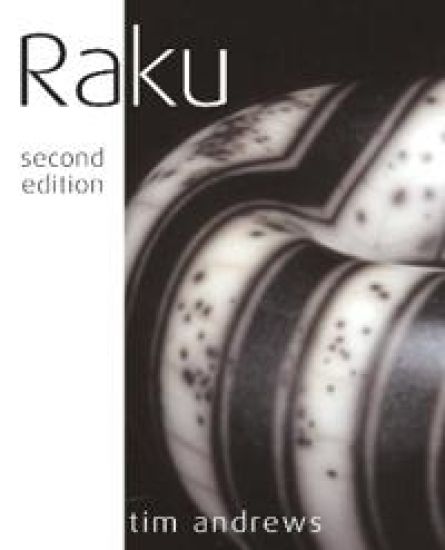
The essential guide to raku techniques, covering clay types, glazes, kilns, firing methods and reduction processes. Over the last thirty years interest in the raku pottery technique has grown hugely – the excitement, immediacy and unpredictability of the raku process catching and firing the imagination of professional and amateur potters alike. Despite its association with amateur pottery classes, when practised at a higher level, it is an unforgiving, demanding medium which tests pots and potters to the limit. The famous Japanese potter Hamada said that he wanted to wait until the end of his life before making raku pots as it was the most difficult and important technique to master. A growing number of potters have turned to this medium however, as a serious expression of their work, finding new (or perhaps old) and varied techniques to explore, and thriving on the opportunities provided by the raku process to transform accidents and mistakes into new techniques or innovative pieces. This new edition of Raku has new text and is beautifully illustrated in full colour throughout with an almost totally new selection of images from the work of the many highly-regarded raku potters featured. As in the previous edition, an important focus of the book is the exploration of the work, inspiration and influences of some sixty-five artists. The gallery of artists featured has been greatly updated and expanded to reflect new techniques by established raku potters and also the work of more recent converts to the medium. New entries include Toshio Ohi, Maika Korfmacher, Yasuo Terada, Marvin Sweet, John Wheeldon, Maila Klementinnen, Ashraf and Sue Hanna and Justin Novak to name but a few. This also remains a highly practical book for the practicing potter, providing a fresh and comprehensive overview of raku techniques, covering clay types, glazes, kilns, firing methods and reduction processes. It also provides recipes for clays and glazes used by the potters featured. A history of raku is also included following its inception in Japan at the end of the 16th century to its introduction to the West by Bernard Leach up until the present day. Those exciting early years are vividly brought to life with anecdotes from David Leach. Raku provides all the essential practical information you need to start raku firing. It is also a great source of inspiration for potters and of delight for those interested in contemporary ceramics.
In a global business environment characterized by volatility and change, the formation of enduring relationships with consumers is paramount, but also notoriously difficult. Developing a unique brand personality is increasingly recognized as a key method to achieving the goal of customer loyalty. Focusing on the creation, development and management of brands in the world’s most dynamic, diverse and challenging business environment, Building Brands in Asia challenges the assumption that the continuing success of global brands in Asia is a given. The first part examines the challenge multinational corporations face in balancing brand consistency with local effectiveness. In the second part, attention shifts to Asian company brands, where the focus on branding has been relatively muted until now. Through a variety of sector and country contexts – from facilities management to football clubs, places to pop bands, home appliances to home weaving - we narrate simply and clearly the value, meaning, auditing, aligning, extending and architecture of brands from the likes of Haier, Ah Yee Taung, Axis Bank, OCS, Caltex, Manchester United and Thai Airways in markets as diverse as Japan, Laos, Korea and Singapore. Replete with anecdotes, interviews and case studies, Andrews and Chew provide an insightful, detailed and timely examination for all those interested in today’s primary corporate preoccupation set in the world’s most exciting marketplace.
In a global business environment characterized by volatility and change, the formation of enduring relationships with consumers is paramount, but also notoriously difficult. Developing a unique brand personality is increasingly recognized as a key method to achieving the goal of customer loyalty. Focusing on the creation, development and management of brands in the world’s most dynamic, diverse and challenging business environment, Building Brands in Asia challenges the assumption that the continuing success of global brands in Asia is a given. The first part examines the challenge multinational corporations face in balancing brand consistency with local effectiveness. In the second part, attention shifts to Asian company brands, where the focus on branding has been relatively muted until now. Through a variety of sector and country contexts – from facilities management to football clubs, places to pop bands, home appliances to home weaving - we narrate simply and clearly the value, meaning, auditing, aligning, extending and architecture of brands from the likes of Haier, Ah Yee Taung, Axis Bank, OCS, Caltex, Manchester United and Thai Airways in markets as diverse as Japan, Laos, Korea and Singapore. Replete with anecdotes, interviews and case studies, Andrews and Chew provide an insightful, detailed and timely examination for all those interested in today’s primary corporate preoccupation set in the world’s most exciting marketplace.
This book examines how and why corporate strategy, structure and culture is continuing to change markedly in South East Asia. Among the issues that have forced widespread changes in the region are the economic meltdown, the growth in electronic technology, regional market integration, changing levels of education, business process standardisation and transparency measures, the rise in 'corporate governance' and political developments among the targeted countries. Specifically, this book discusses the changing nature of MNC business culture, strategy and practice in the ASEAN regional trading bloc. This comprises Thailand, Vietnam, Myanmar, Lao PDR, Malaysia, Singapore, Indonesia, Brunei and the Philippines. This book provides a rich and detailed account of how and why these organisations are evolving and restructuring in the post-economic crisis era. Multiple, in-depth case-studies are incorporated from the point of view of participants.
This book examines how and why corporate strategy, structure and culture is continuing to change markedly in South East Asia. Among the issues that have forced widespread changes in the region are the economic meltdown, the growth in electronic technology, regional market integration, changing levels of education, business process standardisation and transparency measures, the rise in 'corporate governance' and political developments among the targeted countries. Specifically, this book discusses the changing nature of MNC business culture, strategy and practice in the ASEAN regional trading bloc. This comprises Thailand, Vietnam, Myanmar, Lao PDR, Malaysia, Singapore, Indonesia, Brunei and the Philippines. This book provides a rich and detailed account of how and why these organisations are evolving and restructuring in the post-economic crisis era. Multiple, in-depth case-studies are incorporated from the point of view of participants.