
Kirjailija
Tim Chester
Kirjat ja teokset yhdessä paikassa: 100 kirjaa, julkaisuja vuosilta 1994–2026, suosituimpiin kuuluu Life with Jesus: Youth Edition. Vertaile teosten hintoja ja tarkista saatavuus suomalaisista kirjakaupoista.
100 kirjaa
Kirjojen julkaisuvuodet: 1994–2026.
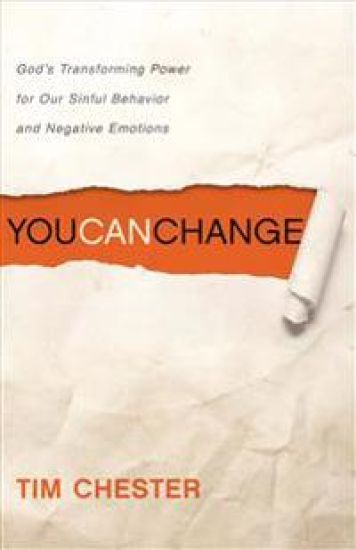
You Can Change: God's Transforming Power for Our Sinful Behavior and Negative Emotions
Tim Chester
Crossway
2010
nidottu
It's about heart change, not behavior change. That's the conviction of Tim Chester as he seeks to help everyday Christians "connect the truth about God with our Monday-morning struggles." This interactive book, laid out in workbook fashion, is for newer Christians struggling with sin and for more mature Christians who have plateaued in their faith as they seek to find victory over sin in their lives. With a conviction that sanctification is God's work and the journey to holiness is joyful, Chester guides readers through a "change project"-beginning with the selection of one area of life they would like to modify. Each chapter includes a question (e.g., Why would you like to change? What truths do you need to turn to?) to guide readers as they deal with a specific sin or struggle, truths from God's word, and a reflection guide to help readers through their change project.

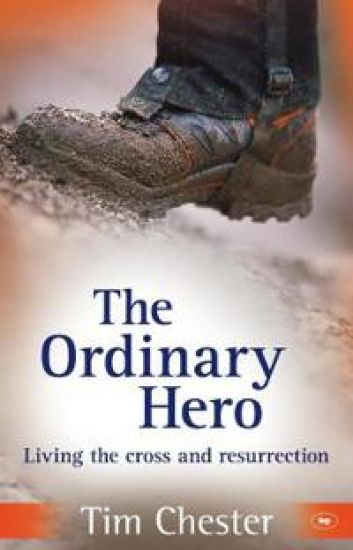
The cross and resurrection provide the pattern for discipleship today, calling Christians to a radical new way of living. The Ordinary Hero invites us to : live out the radical implications of grace apply the way of the cross: sacrificial love and service, to every area of life accept the pattern of suffering followed by glory as normal pursue spiritual power, not for its own sake, but in order to live the weakness of the cross embark on risk-taking lives because we're focussed on the world to come Says the author, 'This book strikes a note that is rarely heard today. In particular, the important themes of suffering followed by glory, and the hiddenness of the Christian life, are all but absent in contemporary Christian thought.' The book concludes with a powerful story of an ordinary hero.
Do you say 'yes' to requests when really you mean to say 'no'- Do you feel permanently trapped by your 24/7 lifestyle? While offering practical help to busy Christians, Tim Chester also opts for root-and-branch treatment: you need to deal radically with the things that are driving you. If you're busy because of the following: 'I need to prove myself' 'Otherwise things get out of control' 'I like the pressure/money' think again! At the root of our 'slavery' are serious misunderstandings, often reinforced by our culture. If we want to be free, then we need to counteract them with God's word. It's important to manage our time, but it's more important to manage our hearts. God has promised his rest to all who are weary and burdened (Matthew 11:28). It's up to us to accept it.
Many books are written by experts. This book isn't one of them,' admits Tim Chester. 'It was written out of my own struggle to change. My long battle with particular issues set me searching the Bible as well as writings from the past. This book shares the amazing truths I discovered that now give me hope. 'For years I wondered if I'd ever overcome certain sins. And while I can't claim to have conquered sin - for no one ever can do - here are discoveries that have led to change in my life and in the lives of others.' You may be: A new Christian, struggling to change the habits of your former way of life. An older Christian, feeling you've plateaued: you grew quickly when you first believed but now your Christian life is much of a muchness. A Christian who's fallen into sin in a big way, wondering how you'll ever get back on track. Other books describe how we should live, but this book outlines how we can change. It's about hope: the hope we have in Jesus, hope for forgiveness, and hope for real and lasting change. God promises liberating grace and transforming power to his people.
How does the eschatological future impinge on the present? Is the kingdom of God present outside the confession of Christ in movements towards social justice? Is Christian hope a stimulus to social involvement or an alternative? And how does the present impinge on the eschatological future? What is the relationship between our actions now and the new creation? Is there eschatological continuity between the two? Jurgen Moltmann, one of our most influential contemporary theologians, has had much to say both on eschatology and its relationship to mission. This book explores his thought along with evangelical responses to it. Eschatology has been central to evangelical debates about social involvement ever since the Laussanne Congress in 1974. The book examines how evangelicals themselves have related hope and mission. The book highlights the important contribution Moltmann has made while offering a critique of his thought from an evangelical perspective. In so doing, it touches on pertinent issues for evangelical missiology. The conclusion takes John Calvin as a starting point, proposing 'an eschatology of the cross' which offers a critique of the over-realized eschatologies in liberation theology and triumphalistic forms of evangelicalism.
How does the eschatological future impinge on the present? Is the kingdom of God present outside the confession of Christ in movements towards social justice? Is Christian hope a stimulus to social involvement or an alternative? And how does the present impinge on the eschatological future? What is the relationship between our actions now and the new creation? Is there eschatological continuity between the two? Jurgen Moltmann, one of our most influential contemporary theologians, has had much to say both on eschatology and its relationship to mission. This book explores his thought along with evangelical responses to it. Eschatology has been central to evangelical debates about social involvement ever since the Laussanne Congress in 1974. The book examines how evangelicals themselves have related hope and mission. The book highlights the important contribution Moltmann has made while offering a critique of his thought from an evangelical perspective. In so doing, it touches on pertinent issues for evangelical missiology. The conclusion takes John Calvin as a starting point, proposing 'an eschatology of the cross' which offers a critique of the over-realized eschatologies in liberation theology and triumphalistic forms of evangelicalism.
How does the eschatological future impinge on the present? Is the kingdom of God present outside the confession of Christ in movements towards social justice? Is Christian hope a stimulus to social involvement or an alternative? And how does the present impinge on the eschatological future? What is the relationship between our actions now and the new creation? Is there eschatological continuity between the two? Jurgen Moltmann, one of our most influential contemporary theologians, has had much to say both on eschatology and its relationship to mission. This book explores his thought along with evangelical responses to it. Eschatology has been central to evangelical debates about social involvement ever since the Laussanne Congress in 1974. The book examines how evangelicals themselves have related hope and mission. The book highlights the important contribution Moltmann has made while offering a critique of his thought from an evangelical perspective. In so doing, it touches on pertinent issues for evangelical missiology. The conclusion takes John Calvin as a starting point, proposing 'an eschatology of the cross' which offers a critique of the over-realized eschatologies in liberation theology and triumphalistic forms of evangelicalism.

Basic practical book on the person and work of the Holy Spirit


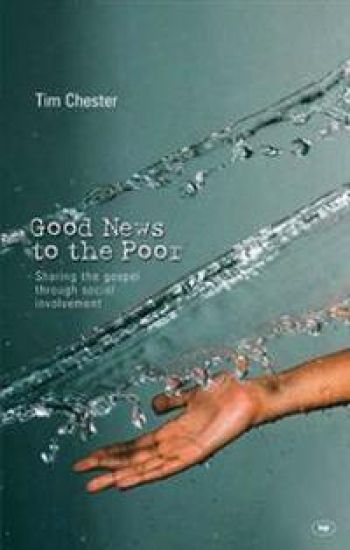
How do we respond to the silent appeal in the dark eyes of the child in the charity catalogue, or the blanketed figure in the cold shop-doorway? Should we share the gospel with them, or a bowl of soup? Throughout history, men and women such as Wilberforce, Shaftesbury, Carey and Booth have recognized a call to help the needy. Others have argued that our first task is evangelism, that Christians should not meddle in politics, that social action is a distraction. Do we serve Christ through preaching his Word, or should we use words only when necessary? Tim Chester argues passionately that evangelism and social action are inseparable as two arms of the church's mission. He presents a biblical case for truly evangelical social action that is shaped and inspired by the gospel. He urges conservatives not to marginalize those who uphold the cause of the oppressed, and those involved in social action not to neglect the preaching of the Word.
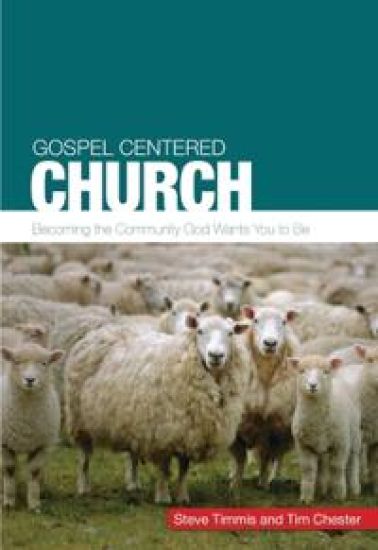
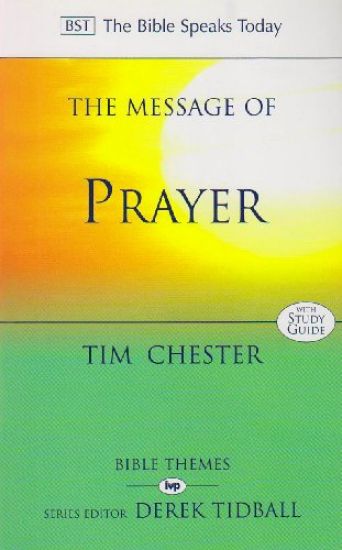
Many books on the practice of prayer seem to be informed more by the experiences of their authors than by Scripture. However, the Bible not only teaches us about prayer, it also gives us many examples of prayer. It is God's Word to us, and it teaches us how to respond to that Word. Tim Chester's insightful exposition of this central aspect of Christian living is driven by the conviction that we need to reform not only our thinking and behaviour in the light of God's Word, but also our praying. Drawing on a wide range of biblical texts, he explores the foundations and the practice of prayer, and shows that how we understand prayer is necessarily bound up with how we understand the gospel, and God himself.
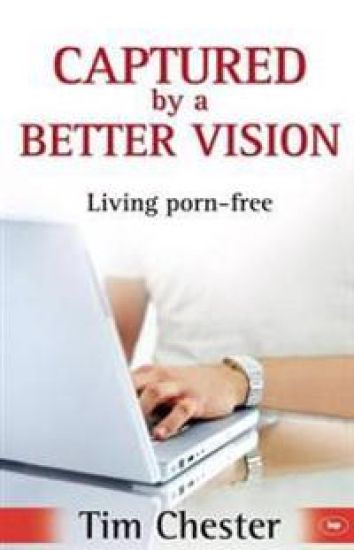
You long to be free but... Pornography has reached epidemic proportions. And in God's eyes porn is ugly. It devalues other human beings and the good gift of sex in favour of a destructive imitation. Tim Chester points us to something infinitely better, something that captivates without causing shame, remorse or embarrassment: the glory and beauty of Christ. We are made to be satisfied with God alone, and told to avoid the sin that hinders our relationship with him. Tim exposes the lies and deceptions of porn, inviting us to be fully free, and showing positively and practically how this can be possible in daily life. We can be captured by a better vision.