
Kirjojen hintavertailu – 12 903 725 kirjaa ja 27 kauppaa

Kirjailija

Tim D. Jickells

Kirjat ja teokset yhdessä paikassa: 2 kirjaa, julkaisuja vuosilta 2003–2012, suosituimpiin kuuluu An Introduction to Environmental Chemistry. Vertaile teosten hintoja ja tarkista saatavuus suomalaisista kirjakaupoista.

2 kirjaa

Kirjojen julkaisuvuodet: 2003–2012.

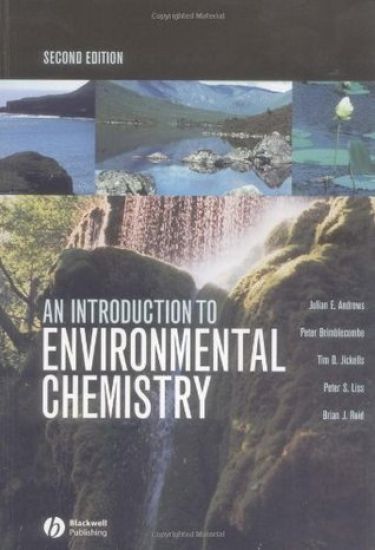
An Introduction to Environmental Chemistry

An Introduction to Environmental Chemistry

Julian E. Andrews; Peter Brimblecombe; Tim D. Jickells; Peter S. Liss; Brian Reid

Blackwell Science Ltd
2003
nidottu
This introductory text explains the fundamentals of the chemistry of the natural environment and the effects of mankind's activities on the earth's chemical systems. Retains an emphasis on describing how natural geochemical processes operate over a variety of scales in time and space, and how the effects of human perturbation can be measured. Topics range from familiar global issues such as atmospheric pollution and its effect on global warming and ozone destruction, to microbiological processes that cause pollution of drinking water deltas. Contains sections and information boxes that explain the basic chemistry underpinning the subject covered. Each chapter contains a list of further reading on the subject area. Updated case studies. No prior chemistry knowledge required. Suitable for introductory level courses.
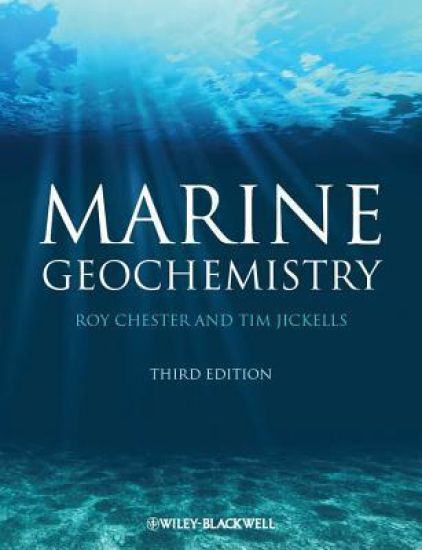
Marine Geochemistry

Marine Geochemistry

Roy Chester; Tim D. Jickells

Wiley-Blackwell (an imprint of John Wiley Sons Ltd)
2012
nidottu
Marine Geochemistry offers a fully comprehensive and integrated treatment of the chemistry of the oceans, their sediments and biota. The first edition of the book received strong critical acclaim and was described as ‘a standard text for years to come.’ This third edition of Marine Geochemistry has been written at a time when the role of the oceans in the Earth System is becoming increasingly apparent. Following the successful format adopted previously, this new edition treats the oceans as a unified entity, and addresses the question ‘how do the oceans work as a chemical system?’ To address this question, the text has been updated to cover recent advances in our understanding of topics such as the carbon chemistry of the oceans, nutrient cycling and its effect on marine chemistry, the acidification of sea water, and the role of the oceans in climate change. In addition, the importance of shelf seas in oceanic cycles has been re-evaluated in the light of new research. Marine Geochemistry offers both undergraduate and graduate students and research workers an integrated approach to one of the most important reservoirs in the Earth System. Additional resources for this book can be found at: www.wiley.com/go/chester/marinegeochemistry.