Kirjojen hintavertailu – 12 903 737 kirjaa ja 27 kauppaa

Kirjailija

Tim Fulford

Kirjat ja teokset yhdessä paikassa: 32 kirjaa, julkaisuja vuosilta 1996–2026, suosituimpiin kuuluu Travels, Explorations and Empires, 1770-1835, Part I Vol 4. Vertaile teosten hintoja ja tarkista saatavuus suomalaisista kirjakaupoista.

32 kirjaa

Kirjojen julkaisuvuodet: 1996–2026.

Science Writing in the Romantic Era 1770-1837
In 1802 Humphry Davy hailed a new era in which science was empowering mankind as never before: ‘it has’, he said, ‘bestowed upon him powers which may be almost called creative; which have enabled him to modify and change the beings surrounding him, and by his experiments to interrogate nature with power, not simply as a scholar, passive and seeking only to understand her operations, but rather as a master, active with his own instruments.’ This statement, which Mary Shelley had in mind when she invented Victor Frankenstein, made of the scientist a Romantic, sublime figure – a dominant male who penetrated nature at will. It neatly epitomised the increased cultural authority that science acquired in the years 1770-1837; it also heralded a modern, industrial society that benefited from the technologies and treatments which organised science enabled, yet at the same time degraded the planet. As Davy knew, it was in the Romantic era that scientists pioneered vaccination – the technique that has saved millions from early death and tamed once fatal diseases; it was also in that era that they developed the carbon-burning machines that, in the process of driving the factory, the railway and the steamship, led to today’s climate change. This anthology will present cross-sections of the developments that Davy – and Mary Shelley – witnessed and predicted. It aims, that is to say, not only to offer a collection of great discoveries – especially those that impacted literature – but also to reveal some of the ways in which science came to power and how it began to achieve the status, for good and ill, that it possesses today.

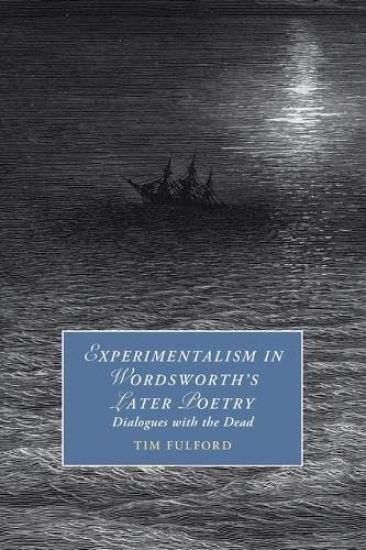
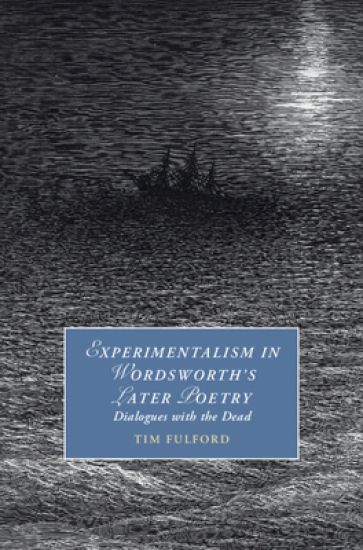
Experimentalism in Wordsworth's Later Poetry

Experimentalism in Wordsworth's Later Poetry

Tim Fulford

Cambridge University Press
2026
Nidottu
Tim Fulford provides detailed readings of a range of little-known, late and difficult poems which together present an alternative Wordsworth to the one we are used to. This newly-revealed Wordsworth continued experimenting with form, genre and style as his career progressed so as to ponder the challenging experiences presented by later life. Fulford invites the reader to engage, through Wordsworth's poetry, with such broadly-felt concerns as quarantine, isolation, mental illness and bereavement. Focused yet broad in chronological scope, this study also considers the literature of Wordsworth's old age in relation to his earlier work.
Experimentalism in Wordsworth's Later Poetry

Experimentalism in Wordsworth's Later Poetry

Tim Fulford

Cambridge University Press
2023
sidottu
Tim Fulford provides detailed readings of a range of little-known, late and difficult poems which together present an alternative Wordsworth to the one we are used to. This newly-revealed Wordsworth continued experimenting with form, genre and style as his career progressed so as to ponder the challenging experiences presented by later life. Fulford invites the reader to engage, through Wordsworth's poetry, with such broadly-felt concerns as quarantine, isolation, mental illness and bereavement. Focused yet broad in chronological scope, this study also considers the literature of Wordsworth's old age in relation to his earlier work.
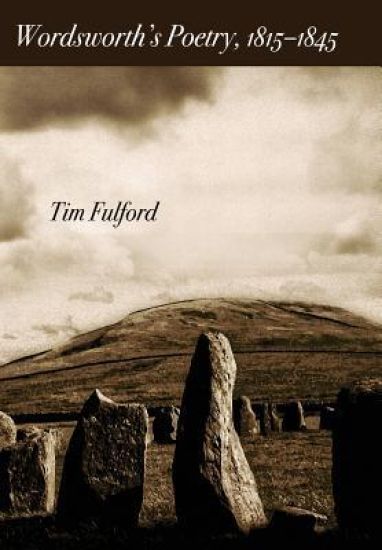
Wordsworth's Poetry, 1815-1845

Wordsworth's Poetry, 1815-1845

Tim Fulford

University of Pennsylvania Press
2019
sidottu
The later poetry of William Wordsworth, popular in his lifetime and influential on the Victorians, has, with a few exceptions, received little attention from contemporary literary critics. In Wordsworth's Poetry, 1815-1845, Tim Fulford argues that the later work reveals a mature poet far more varied and surprising than is often acknowledged. Examining the most characteristic poems in their historical contexts, he shows Wordsworth probing the experiences and perspectives of later life and innovating formally and stylistically. He demonstrates how Wordsworth modified his writing in light of conversations with younger poets and learned to acknowledge his debt to women in ways he could not as a young man. The older Wordsworth emerges in Fulford's depiction as a love poet of companionate tenderness rather than passionate lament. He also appears as a political poet-bitter at capitalist exploitation and at a society in which vanity is rewarded while poverty is blamed. Most notably, he stands out as a history poet more probing and more clear-sighted than any of his time in his understanding of the responsibilities and temptations of all who try to memorialize the past.
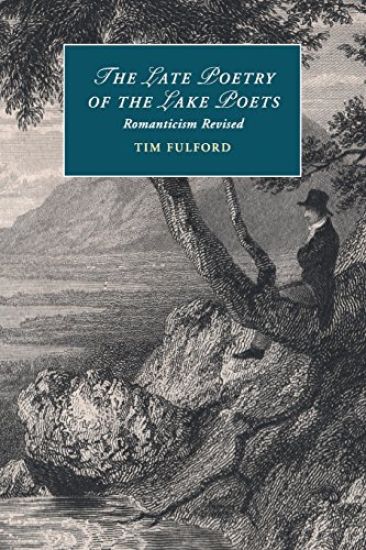
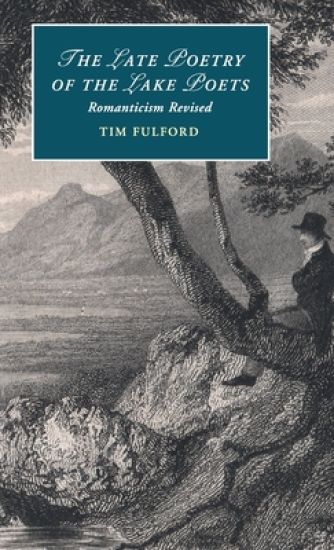
The Late Poetry of the Lake Poets

The Late Poetry of the Lake Poets

Tim Fulford

Cambridge University Press
2016
pokkari
The long-established association of Romanticism with youth has resulted in the early poems of the Lake Poets being considered the most significant. Tim Fulford challenges the tendency to overlook the later poetry of no longer youthful poets, which has had the result of neglecting the Wordsworth, Coleridge and Southey of the 1820s and leaving unexamined the three poets' rise to popularity in the 1830s and 1840s. He offers a fresh perspective on the Lake Poets as professional writers shaping long careers through new work, as well as the republication of their early successes. The theme of lateness, incorporating revision, recollection, age and loss, is examined within contexts including gender, visual art, and the commercial book market. Fulford investigates the Lake Poets' later poems for their impact now, while also exploring their historical effects in their own time and counting the costs of their omission from Romanticism.
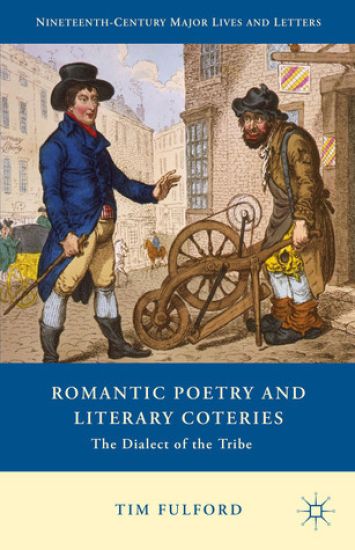
Romantic Poetry and Literary Coteries

Romantic Poetry and Literary Coteries

Tim Fulford

Palgrave Macmillan
2015
sidottu
Combining historical poetics and book history, Romantic Poetry and Literary Coteries shows Romanticism as characterized by tropes and forms that were jointly produced by literary circles. To show these connections, Fulford pulls from a wealth of print material including political squibs, magazine essays, illustrated tour poems, and journals.
The Late Poetry of the Lake Poets

The Late Poetry of the Lake Poets

Tim Fulford

Cambridge University Press
2013
sidottu
The long-established association of Romanticism with youth has resulted in the early poems of the Lake Poets being considered the most significant. Tim Fulford challenges the tendency to overlook the later poetry of no longer youthful poets, which has had the result of neglecting the Wordsworth, Coleridge and Southey of the 1820s and leaving unexamined the three poets' rise to popularity in the 1830s and 1840s. He offers a fresh perspective on the Lake Poets as professional writers shaping long careers through new work, as well as the republication of their early successes. The theme of lateness, incorporating revision, recollection, age and loss, is examined within contexts including gender, visual art, and the commercial book market. Fulford investigates the Lake Poets' later poems for their impact now, while also exploring their historical effects in their own time and counting the costs of their omission from Romanticism.
Robert Southey: Later Poetical Works, 1811–1838 Vol 3

Robert Southey: Later Poetical Works, 1811–1838 Vol 3

Tim Fulford; Lynda Pratt; Carol Bolton; Rachel Crawford; Ian Packer; Diego Saglia; Daniel E White

Routledge
2012
sidottu
Central to any reappraisal of Southey’s mid to late career, is 'Roderick'. This best-selling epic romance has not been republished since 1838 and is contextualised here within Southey’s wider oeuvre. The four-volume edition also benefits from a general introduction, volume introductions, textual variants, endnotes and a consolidated index.
Robert Southey: Later Poetical Works, 1811–1838 Vol 1

Robert Southey: Later Poetical Works, 1811–1838 Vol 1

Tim Fulford; Lynda Pratt; Carol Bolton; Rachel Crawford; Ian Packer; Diego Saglia; Daniel E White

Routledge
2012
sidottu
Central to any reappraisal of Southey’s mid to late career, is 'Roderick'. This best-selling epic romance has not been republished since 1838 and is contextualised here within Southey’s wider oeuvre. The four-volume edition also benefits from a general introduction, volume introductions, textual variants, endnotes and a consolidated index.
Robert Southey: Later Poetical Works, 1811–1838 Vol 4

Robert Southey: Later Poetical Works, 1811–1838 Vol 4

Tim Fulford; Lynda Pratt; Carol Bolton; Rachel Crawford; Ian Packer; Diego Saglia; Daniel E White

Routledge
2012
sidottu
Central to any reappraisal of Southey’s mid to late career, is 'Roderick'. This best-selling epic romance has not been republished since 1838 and is contextualised here within Southey’s wider oeuvre. The four-volume edition also benefits from a general introduction, volume introductions, textual variants, endnotes and a consolidated index.
Robert Southey: Later Poetical Works, 1811–1838 Vol 2

Robert Southey: Later Poetical Works, 1811–1838 Vol 2

Tim Fulford; Lynda Pratt; Carol Bolton; Rachel Crawford; Ian Packer; Diego Saglia; Daniel E White

Routledge
2012
sidottu
Central to any reappraisal of Southey’s mid to late career, is 'Roderick'. This best-selling epic romance has not been republished since 1838 and is contextualised here within Southey’s wider oeuvre. The four-volume edition also benefits from a general introduction, volume introductions, textual variants, endnotes and a consolidated index.
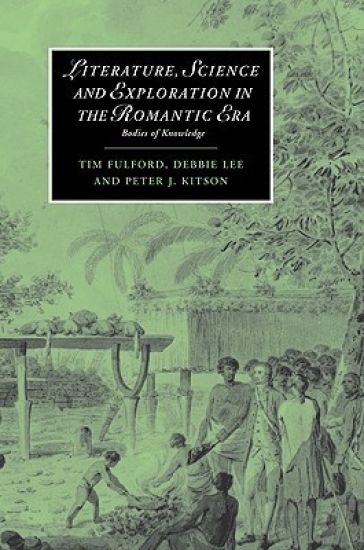
Literature, Science and Exploration in the Romantic Era

Literature, Science and Exploration in the Romantic Era

Tim Fulford; Debbie Lee; Peter J. Kitson

Cambridge University Press
2007
pokkari
In 1768, Captain James Cook made the most important scientific voyage of the eighteenth century. He was not alone: scores of explorers like Cook, travelling in the name of science, brought new worlds and new peoples within the horizon of European knowledge for the first time. Their discoveries changed the course of science. Old scientific disciplines, such as astronomy and botany, were transformed; new ones, like craniology and comparative anatomy, were brought into being. Scientific disciplines, in turn, pushed literature of the period towards new subjects, forms and styles. Works as diverse as Mary Shelley's Frankenstein and Wordsworth's Excursion responded to the explorers' and scientists' latest discoveries. This wide-ranging and well-illustrated study shows how literary Romanticism arose partly in response to science's appropriation of explorers' encounters with foreign people and places and how it, in turn, changed the profile of science and exploration.
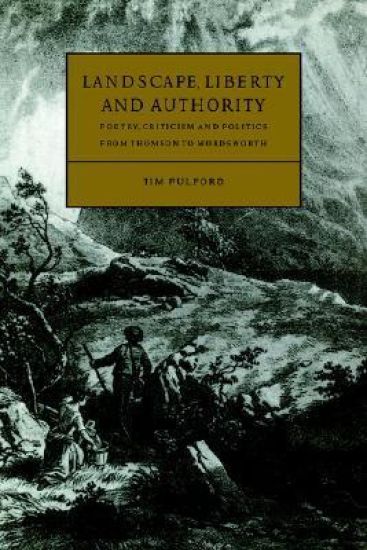
Landscape, Liberty and Authority

Landscape, Liberty and Authority

Tim Fulford

Cambridge University Press
2006
pokkari
Eighteenth-century landscape description formed part of a larger debate over the nature of liberty and authority which was vital to a Britain newly defining its nationhood in a period of growing imperial power and rapid economic change. Tim Fulford examines landscape description in the writings of Thomson, Cowper, Johnson, Gilpin, Repton, Wordsworth, Coleridge and others, revealing tensions that arose as writers struggled for authority over the public sphere and sought to redefine the nature of that authority. In his investigation of poetry and political and aesthetic writing, Dr Fulford throws light on the legacy of Commonwealth and Country-party ideas of liberty. Also discussed are the significance of the Miltonic sublime, the politics of the picturesque and the post-colonial encounter of the Scottish tour. Dr Fulford goes on to show how the early radicalism and later conservatism of Wordsworth and Coleridge were shaped, in part, by eighteenth-century literary political and literary authorities. His study offers an understanding of literary and political influence that cuts across conventional periodization, finding new links between the early eighteenth and nineteenth centuries.