Kirjojen hintavertailu – 12 903 725 kirjaa ja 27 kauppaa

Kirjailija

Tim Jacoby

Kirjat ja teokset yhdessä paikassa: 6 kirjaa, julkaisuja vuosilta 2004–2016, suosituimpiin kuuluu Understanding Conflict and Violence. Vertaile teosten hintoja ja tarkista saatavuus suomalaisista kirjakaupoista.

6 kirjaa

Kirjojen julkaisuvuodet: 2004–2016.

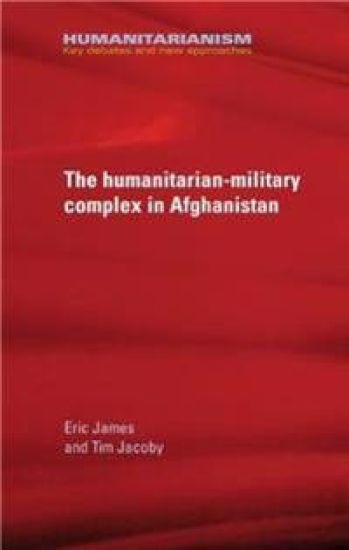
The Military-Humanitarian Complex in Afghanistan

The Military-Humanitarian Complex in Afghanistan

Eric James; Tim Jacoby

Manchester University Press
2016
sidottu
Violent conflict brings together two seemingly disparate groups: humanitarians and soldiers. This mixes and convolutes agendas, blurring lines that are often perceived to be sacrosanct. Delving deeply into the history and reasons of why these two groups work in close proximity, this study provide a unique insight into the history, ethical dilemmas and policy conundrums when aid workers operate close to the military. Using Afghanistan as a case study, analytical rigour, deep primary research and "field" knowledge are combined in an exceptional contribution to this important area. This book gives scholars and practitioners alike a nuanced perspective on the challenges faced by aid workers, military personnel and decision-makers alike in countries affected by violent conflicts, hosting foreign military interventions and receiving international aid.
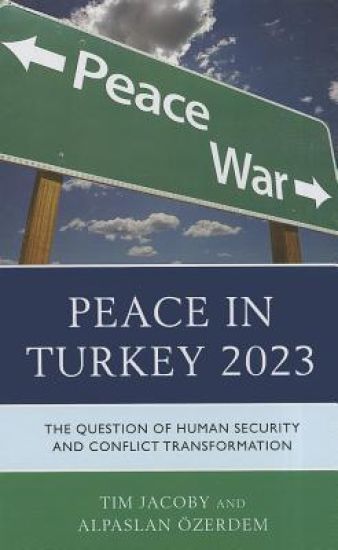
Peace in Turkey 2023

Peace in Turkey 2023

Tim Jacoby; Alpaslan Özerdem

Lexington Books
2012
sidottu
Peace in Turkey 2023: The Question of Human Security and Conflict Transformation, by Tim Jacoby and Alpaslan Özerdem, explores how the Kurdish conflict could possibly be transformed towards positive peace. By drawing on peace, conflict transformation and human security theories, Peace in Turkey 2023 seeks to redress a long-felt concern in Turkey: how to address the current challenge of establishing sustainable peace in the country. What will Turkey look like at its Republic’s centenary celebrations in 2023? Will it be able to resolve the Kurdish crisis through peaceful means and successfully transform the conflict towards positive peace? Will it be a country of peace, prosperity, rule of law, and democracy, or will the current violence intensify and continue to polarize society? To address these questions, Jacoby and Özerdem use scenario-writing derived from peace theory to highlight new ways to consider political violence and the future of Turkey, this study will appeal to both specialist and non-specialist students and teachers from a diverse range of disciplinary backgrounds.
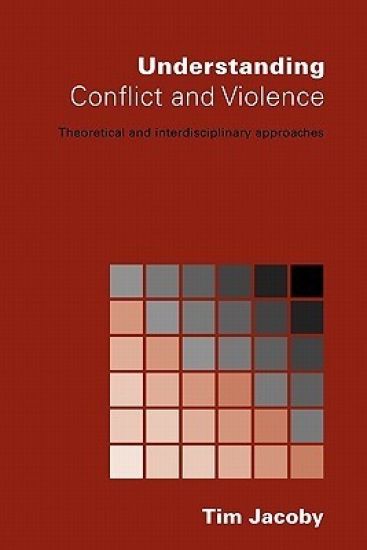
Understanding Conflict and Violence
This book examines and interprets a wide range of approaches to the causes of violence and conflict. The causes of violence and conflict are often left untheorized, or they are discussed as an existent problem assumed to be an inevitable part of human interaction. Adopting an accessible approach, this volume presents readers with a clear understanding of the causes of violence and conflict by highlighting their evolutionary roots and illustrating them with in-depth case studies and examples. Tim Jacoby addresses the fragmented nature of the literature on conflict theory by drawing upon a wide range of disciplinary traditions, seeking to reflect the fact that international relations, history, economics, development, politics and sociology all share a long-standing interest in the study of conflict and violence and that common concerns make interdisciplinary stimulating and productive. Understanding Conflict & Violence will be of interest to students and scholars across the disciplines of international relations, history, economics, development, politics and sociology.
Understanding Conflict and Violence
This book examines and interprets a wide range of approaches to the causes of violence and conflict. The causes of violence and conflict are often left untheorized, or they are discussed as an existent problem assumed to be an inevitable part of human interaction. Adopting an accessible approach, this volume presents readers with a clear understanding of the causes of violence and conflict by highlighting their evolutionary roots and illustrating them with in-depth case studies and examples. Tim Jacoby addresses the fragmented nature of the literature on conflict theory by drawing upon a wide range of disciplinary traditions, seeking to reflect the fact that international relations, history, economics, development, politics and sociology all share a long-standing interest in the study of conflict and violence and that common concerns make interdisciplinary stimulating and productive. Understanding Conflict & Violence will be of interest to students and scholars across the disciplines of international relations, history, economics, development, politics and sociology.
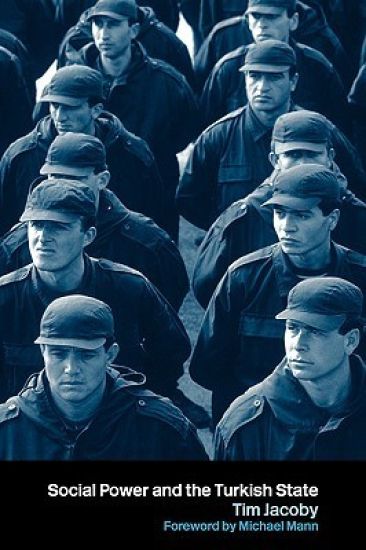
Social Power and the Turkish State
This book focuses on the historical sociology of the Turkish state, seeking to compare the development of the Ottoman/Turkish state with similar processes of large scale historical change in Europe identified by Michael Mann in The Sources of Social Power. Jacoby traces the contours of Turkey's 'modernisation' with the intention of formulating a fresh way to approach state development in countries on the global economic periphery, particularly those attempting to effect closer ties with northern markets. It also highlights matters of social change pertinent to states grappling with issues relating to political Islam, minority identity and irredentist dissent.
Social Power and the Turkish State
This book focuses on the historical sociology of the Turkish state, seeking to compare the development of the Ottoman/Turkish state with similar processes of large scale historical change in Europe identified by Michael Mann in The Sources of Social Power. Jacoby traces the contours of Turkey's 'modernisation' with the intention of formulating a fresh way to approach state development in countries on the global economic periphery, particularly those attempting to effect closer ties with northern markets. It also highlights matters of social change pertinent to states grappling with issues relating to political Islam, minority identity and irredentist dissent.