Kirjojen hintavertailu – 12 859 818 kirjaa ja 27 kauppaa

Kirjailija

Tim Legrand

Kirjat ja teokset yhdessä paikassa: 5 kirjaa, julkaisuja vuosilta 2020–2025, suosituimpiin kuuluu The Architecture of Policy Transfer. Vertaile teosten hintoja ja tarkista saatavuus suomalaisista kirjakaupoista.

5 kirjaa

Kirjojen julkaisuvuodet: 2020–2025.

Bad Public Policy

Bad Public Policy

Michael Howlett; Ching Leong; Tim Legrand

Cambridge University Press
2025
pokkari
Policy studies assume the existence of baseline parameters – such as honest governments doing their best to create public value, publics responding in good faith, and both parties relying on a policy-making process which aligns with the public interest. In such circumstances, policy goals are expected to be produced through mechanisms in which the public can articulate its preferences and policy-makers are expected to listen to what has been said in determining their governments' courses of action. While these conditions are found in some governments, there is evidence from around the world that much policy-making occurs without these pre-conditions and processes. Unlike situations which produce what can be thought of as 'good' public policy, 'bad' public policy is a more common outcome. How this happens and what makes for bad public policy are the subjects of this Element. This title is also available as Open Access on Cambridge Core.
Bad Public Policy

Bad Public Policy

Michael Howlett; Ching Leong; Tim Legrand

Cambridge University Press
2025
sidottu
Policy studies assume the existence of baseline parameters – such as honest governments doing their best to create public value, publics responding in good faith, and both parties relying on a policy-making process which aligns with the public interest. In such circumstances, policy goals are expected to be produced through mechanisms in which the public can articulate its preferences and policy-makers are expected to listen to what has been said in determining their governments' courses of action. While these conditions are found in some governments, there is evidence from around the world that much policy-making occurs without these pre-conditions and processes. Unlike situations which produce what can be thought of as 'good' public policy, 'bad' public policy is a more common outcome. How this happens and what makes for bad public policy are the subjects of this Element. This title is also available as Open Access on Cambridge Core.
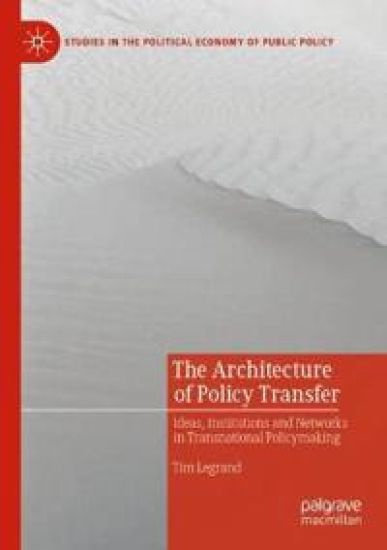
The Architecture of Policy Transfer

The Architecture of Policy Transfer

Tim Legrand

Springer Nature Switzerland AG
2021
nidottu
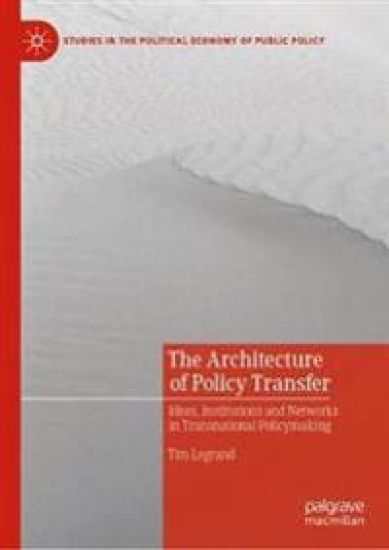
This book investigates the increasing circulation and transfer of public policy ideas between the UK, US and Australia since the 1990s. It argues that the upsurge in policy transfer amongst and between these states can be explained by a structural and shared commitment between these states to a distinctive institutional ideology of policy-making. This ideology, it is claimed, is partly a product of the historical proximity of ‘Anglosphere’ states, and in recent years can be traced through the evolution of New Public Management principles through to Third Way communitarianism.
The Architecture of Policy Transfer

The Architecture of Policy Transfer

Tim Legrand

Springer Nature Switzerland AG
2020
sidottu
This book investigates the increasing circulation and transfer of public policy ideas between the UK, US and Australia since the 1990s. It argues that the upsurge in policy transfer amongst and between these states can be explained by a structural and shared commitment between these states to a distinctive institutional ideology of policy-making. This ideology, it is claimed, is partly a product of the historical proximity of ‘Anglosphere’ states, and in recent years can be traced through the evolution of New Public Management principles through to Third Way communitarianism.
Banning Them, Securing Us?

Banning Them, Securing Us?

Lee Jarvis; Tim Legrand

Manchester University Press
2020
sidottu
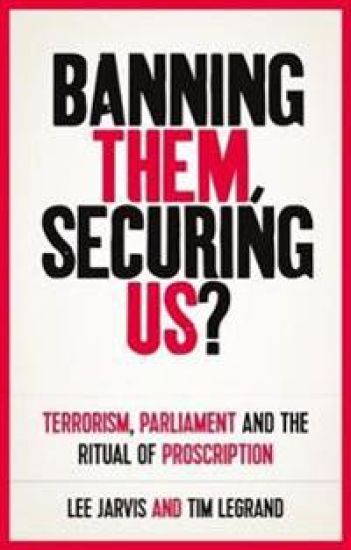
Banning them, securing us? explores the proscribing – or banning – of terrorist organisations within the United Kingdom across a period of twenty years. The process of banning specific organisations, Jarvis and Legrand argue, is as much a ritualistic performance of liberal democracy as it is a technique for increasing national security from the threat posed by terrorism. Characterised by a repetitive script, an established cast of characters and a predictable outcome, this ritual provides an important contribution to the construction of Britain as a liberal, democratic, moderate space. It does so, paradoxically, through extending the reach of a power that has limited political or judicial oversight and considerable implications for rights, freedoms and political participation. Offering a discursive analysis of all British Parliamentary debates on the banning of terrorist organisations since the introduction of Britain’s current proscription regime in 2000, this book provides the first sustained treatment of this counter-terrorism power in the United Kingdom and beyond.