Kirjojen hintavertailu – 12 903 724 kirjaa ja 27 kauppaa

Kirjailija

Tim Lomas

Kirjat ja teokset yhdessä paikassa: 11 kirjaa, julkaisuja vuosilta 1992–2024, suosituimpiin kuuluu Happiness. Vertaile teosten hintoja ja tarkista saatavuus suomalaisista kirjakaupoista.

11 kirjaa

Kirjojen julkaisuvuodet: 1992–2024.

Applied Positive Psychology

Applied Positive Psychology

Tim Lomas; Kate Hefferon; Itai Ivtzan; Kirsty Gardiner

SAGE PUBLICATIONS LTD
2024
sidottu

Halvin toimitettuna 164,80 €

Updated with the latest theory and research and structured around a pioneering multidimensional model of wellbeing, this book equips you with the knowledge and tools to apply positive psychology to many areas of life. This includes interventions aimed at developing mental and physical functioning, as well as recommendations for enhancing relationships and reshaping organisational structures. A wealth of case studies show you how these practices can be successfully deployed in diverse real-world contexts, such as society, religion, the classroom and the workplace. Key features include: Learning objectives Practice essay questions and quizzes Useful psychometric tools you can adapt for your own research Summary boxes Case study and reflection boxes Suggested further reading Keyword definitions and glossary list of acronyms This book is essential reading for students of Applied Positive Psychology or the Psychology of Happiness and Wellbeing. Tim Lomas is a Psychology Research Scientist in the Department of Epidemiology at the Harvard T. H. Chan School of Public Health, and part of the Human Flourishing Program at Harvard University. Kate Hefferon has studied, lectured and worked in the areas of wellbeing and trauma research for 20 years. Itai Ivtzan is the Director of the School of Positive Transformation. Kirsty Gardiner is a Chartered Social Psychologist and a Research Director of a DEI consultancy.

Applied Positive Psychology

Applied Positive Psychology

Tim Lomas; Kate Hefferon; Itai Ivtzan; Kirsty Gardiner

SAGE PUBLICATIONS LTD
2024
nidottu

Halvin toimitettuna 39,40 €

Updated with the latest theory and research and structured around a pioneering multidimensional model of wellbeing, this book equips you with the knowledge and tools to apply positive psychology to many areas of life. This includes interventions aimed at developing mental and physical functioning, as well as recommendations for enhancing relationships and reshaping organisational structures. A wealth of case studies show you how these practices can be successfully deployed in diverse real-world contexts, such as society, religion, the classroom and the workplace. Key features include: Learning objectives Practice essay questions and quizzes Useful psychometric tools you can adapt for your own research Summary boxes Case study and reflection boxes Suggested further reading Keyword definitions and glossary list of acronyms This book is essential reading for students of Applied Positive Psychology or the Psychology of Happiness and Wellbeing. Tim Lomas is a Psychology Research Scientist in the Department of Epidemiology at the Harvard T. H. Chan School of Public Health, and part of the Human Flourishing Program at Harvard University. Kate Hefferon has studied, lectured and worked in the areas of wellbeing and trauma research for 20 years. Itai Ivtzan is the Director of the School of Positive Transformation. Kirsty Gardiner is a Chartered Social Psychologist and a Research Director of a DEI consultancy.

Happiness

Happiness

Tim Lomas

MIT PRESS LTD
2023
nidottu
A concise and engaging exploration of how we understand happiness. What does it mean to feel happiness? As a state of mind, it’s elusive. As a concept—despite the plethora of pop psychology books on the subject—it’s poorly understood. In this volume in the MIT Press Essential Knowledge series, psychologist Tim Lomas offers a concise and engaging overview of our current understanding of happiness. Lomas explains that although the field of positive psychology, which focuses on happiness, emerged only in the last twenty-five years, interest in the meaning of happiness goes back several millennia. Drawing on a variety of disciplines, from philosophy and sociology to economics and anthropology, Lomas offers an expansive vision of what happiness means, exploring a significant range of experiential territory. After considering such related concepts as wellbeing and flourishing, Lomas traces ideas of happiness from the ancient Buddhist notions of sukha and nirvana through Aristotle’s distinction between hedonic and eudaemonic happiness to today’s therapeutic and scientific approaches. He discusses current academic perspectives, looking at the breadth of happiness research across disciplines; examines the mechanics of happiness—the physiological, psychological, phenomenological, and sociocultural processes that make up happiness; explores the factors that influence happiness, both individual and social; and discusses the cultivation of happiness.
The Happiness Dictionary

The Happiness Dictionary

Tim Lomas

Piatkus Books
2021
nidottu
'A delightful compendium' - Evening StandardHave you ever had a feeling that you couldn't quite describe, because no English word exists for it? Indeed, without such a word, it's difficult to remember or understand the feeling, and to talk about it with other people. This applies to all aspects of life, but most of all to that most sought-after of feelings, happiness, where our ability to both experience and understand it is limited by the words at our disposal. However, all is not lost. Even if English has not created a word for a specific feeling, another language probably has. These are known as 'untranslatable' words, because they lack an exact equivalent in another language. By discovering and learning these words, the boundaries of our world expand accordingly. These words allow us to give voice to feelings that we've probably experienced, but have previously lacked the ability to conceptualise. They may even allow us to encounter new feelings that we hadn't previously been aware of or enjoyed. This book will introduce you to a wealth of untranslatable words relating to happiness, from languages across the world. Reading it will enrich not just your understanding of happiness, but also the way that you experience it.
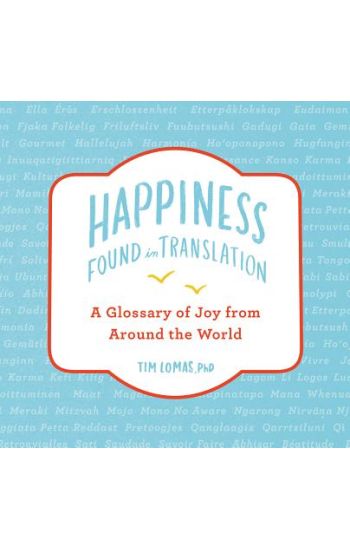
Happiness--Found in Translation: A Glossary of Joy from Around the World
A beautifully illustrated dictionary of words from around the world that describe experiences of happiness for which there are no equivalents in the English language. Have you ever had a feeling that you couldn't quite describe because there was no word in English that captured it? Our ability to fully experience moments of joy in our lives can be limited by the words at our disposal. In this magical book, psychologist Tim Lomas surveys words from around the world to help readers put their finger on feelings of happiness that before might have lingered for only a moment in their mind's eye before disappearing. The ideal gift for language lovers, or for anyone looking for a megadose of pure joy, Happiness--Found in Translation features such "untranslatable" words as: Bazodee A Creole (Trinidad and Tobago) word to describe a dizzy and dazed happiness, a bewildered, discombobulated joy. Charmolypi A Greek word for the sad, joy-making sorrow when happiness and sadness intermingle. W w i A Chinese term for natural, spontaneous, and effortless action, skilfully flowing with the currents of life. Happiness--Found in Translation gives readers access to the great happiness that the world's languages have to offer.
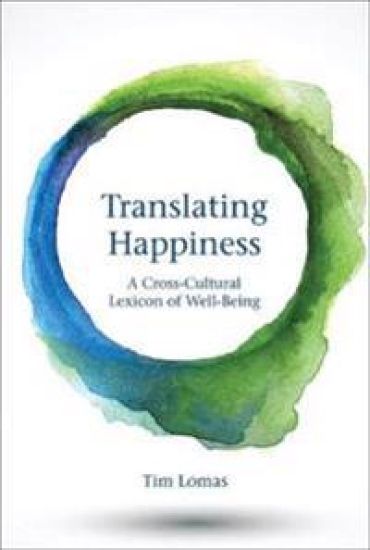
Translating Happiness

Translating Happiness

Tim Lomas

MIT Press
2019
pokkari
How embracing untranslatable terms for well-being-from the Finnish sisu to the Yiddish mensch-can enrich our emotional understanding and experience. Western psychology is rooted in the philosophies and epistemologies of Western culture. But what of concepts and insights from outside this frame of reference? Certain terms not easily translatable into English-for example, nirva?a (from Sanskrit), or agape (from Classical Greek), or turangawaewae (from Maori)-are rich with meaning but largely unavailable to English-speaking students and seekers of wellbeing. In this book, Tim Lomas argues that engaging with "untranslatable" terms related to well-being can enrich not only our understanding but also our experience. We can use these words, Lomas suggests, to understand and express feelings and experiences that were previously inexpressible. Lomas examines 400 words from 80 languages, arranges them thematically, and develops a theoretical framework that highlights the varied dimensions of well-being and traces the connections between them. He identifies three basic dimensions of well-being-feelings, relationships, and personal development-and then explores each in turn through untranslatable words. Ananda, for example, usually translated as bliss, can have spiritual associations in Buddhist and Hindu contexts; kefi in Greek expresses an intense emotional state-often made more intense by alcohol. The Japanese concept of koi no yokan means a premonition or presentiment of love, capturing the elusive and vertiginous feeling of being about to fall for someone, imbued with melancholy and uncertainty; the Yiddish term mensch has been borrowed from its Judaic and religious connotations to describe an all-around good human being; and Finnish offers sisu-inner determination in the face of adversity. Expanding the lexicon of well-being in this way showcases the richness of cultural diversity while reminding us powerfully of our common humanity. Lomas's website, www.drtimlomas.com/lexicography, allows interested readers to contribute their own words and interpretations.
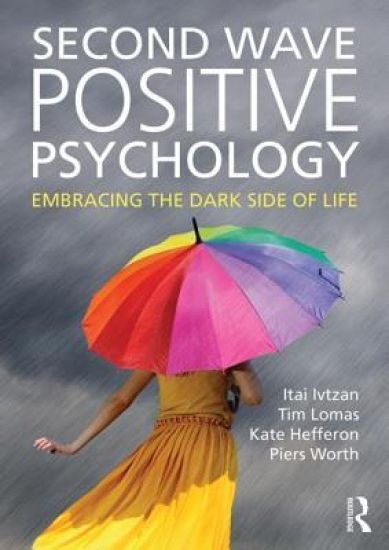
Second Wave Positive Psychology

Second Wave Positive Psychology

Itai Ivtzan; Tim Lomas; Kate Hefferon; Piers Worth

Routledge
2015
sidottu
Positive psychology is currently equated with theory and research on the positive aspects of life. The reality could not be further from the truth. Positive psychology investigates and researches some of the most difficult and painful experiences. Second Wave Positive Psychology: Embracing the Dark Side of Life is an innovative and groundbreaking textbook that explores a variety of topics we consider to be part of the ‘dark’ side of life while emphasising their role in our positive functioning and transformation as human beings. This more nuanced approach to the notions of ‘positive’ and ‘negative’ can be described as the ‘second wave' of Positive Psychology. Positive Psychology is one of the fastest growing and least understood branches of psychology. Exploring topics at the heart of Positive Psychology, such as meaning, resilience, human development, mortality, change, suffering, and spirituality, this book engages with so-called ‘negative’ matters from a Positive Psychology angle, showing how the path of personal development can involve experiences which, while challenging, can lead to growth, insight, healing and transformation. Containing useful resources, case studies, practical exercises and chapter summaries, Second Wave Positive Psychology is an essential guide for undergraduate and postgraduate students studying positive psychology, as well as clinicians wanting to know more about the subject. It will also be relevant to the layperson who is interested in positive psychology.
Second Wave Positive Psychology

Second Wave Positive Psychology

Itai Ivtzan; Tim Lomas; Kate Hefferon; Piers Worth

Routledge
2015
nidottu
Positive psychology is currently equated with theory and research on the positive aspects of life. The reality could not be further from the truth. Positive psychology investigates and researches some of the most difficult and painful experiences. Second Wave Positive Psychology: Embracing the Dark Side of Life is an innovative and groundbreaking textbook that explores a variety of topics we consider to be part of the ‘dark’ side of life while emphasising their role in our positive functioning and transformation as human beings. This more nuanced approach to the notions of ‘positive’ and ‘negative’ can be described as the ‘second wave' of Positive Psychology. Positive Psychology is one of the fastest growing and least understood branches of psychology. Exploring topics at the heart of Positive Psychology, such as meaning, resilience, human development, mortality, change, suffering, and spirituality, this book engages with so-called ‘negative’ matters from a Positive Psychology angle, showing how the path of personal development can involve experiences which, while challenging, can lead to growth, insight, healing and transformation. Containing useful resources, case studies, practical exercises and chapter summaries, Second Wave Positive Psychology is an essential guide for undergraduate and postgraduate students studying positive psychology, as well as clinicians wanting to know more about the subject. It will also be relevant to the layperson who is interested in positive psychology.
Re-discovering the Making of the UK: Britain 1500-1750

Re-discovering the Making of the UK: Britain 1500-1750

Tim Lomas; Colin Shephard

Hodder Murray
2001
nidottu
Re-Discovering the Past is SHP's ideal series for mixed-ability teaching in Key Stage 3, combining clear author text, accessible but worthwhile activities and clear lines of enquiry. About the seriesThrough this series you can ensure your teaching of National Curriculum History is totally accessible, interesting and worthwhile. It is based on the Schools History Project's awarding-winning series Discovering the Past but for this series SHP have: • streamlined the content, • simplified the language, • scaffolded the tasks, while retaining their characteristic emphasis on challenging readers to think deeply and pursue historical enquiry. SHP have also provided extensive support for further differentiation through FREE online support material via the Hodder History Nest. About this titleRe-Discovering the Making of the UK provides an accessible textbook for the early modern part of the revised History National Curriculum: 'The development of Church, state and society in Britain 1509-1745'. It investigates four key topics:- Daily life in the 1500s (for the rich, the poor, and family life)- Religious change in Tudor times (from the English Reformation to the Gunpowder Plot)- The English Civil War (from 1642 to the Restoration)- The Scientific Revolution (viewed in context)The Making of the UK Special Needs Support Materials and Re-Discovering the Making of the UK Teacher's Resource Book are available FREE from the Hodder History Nest. The full series:Re-discovering Medieval Realms 1066-1500Re-discovering the Making of the United Kingdom 1500-1750Re-discovering Britain 1750-1900Re-discovering the Twentieth Century World