Kirjojen hintavertailu – 12 903 724 kirjaa ja 27 kauppaa
Kirjailija
Tim Murray
Kirjat ja teokset yhdessä paikassa: 9 kirjaa, julkaisuja vuosilta 2007–2026, suosituimpiin kuuluu Exploring the Archaeology of the Modern City in Nineteenth-century Australia. Vertaile teosten hintoja ja tarkista saatavuus suomalaisista kirjakaupoista.
This book presents research into the urban archaeology of 19th-century Australia. It focuses on the detailed archaeology of 20 cesspits in The Rocks area of Sydney and the Commonwealth Block site in Melbourne. It also includes discussions of a significant site in Sydney – First Government House. The book is anchored around a detailed comparison of contents of 20 cesspits created during the 19th century, and examines patterns of similarity and dissimilarity, presenting analyses that work towards an integration of historical and archaeological data and perspectives. The book also outlines a transnational framework of comparison that assists in the larger context related to building a truly global archaeology of the modern city. This framework is directly related a multi-scalar approach to urban archaeology. Historical archaeologists have been advocating the need to explore the archaeology of the modern city using several different scales or frames of reference. The most popular (and most basic) of these has been the household. However, it has also been acknowledged that interpreting the archaeology of households beyond the notion that every household and associated archaeological assemblage is unique requires archaeologists and historians to compare and contrast, and to establish patterns. These comparisons frequently occur at the level of the area or district in the same city, where archaeologists seek to derive patterns that might be explained as being the result of status, class, ethnicity, or ideology. Other less frequent comparisons occur at larger scales, for example between cities or countries, acknowledging that the archaeology of the modern western city is also the archaeology of modern global forces of production, consumption, trade, immigration and ideology formation. This book makes a contribution to that general literature
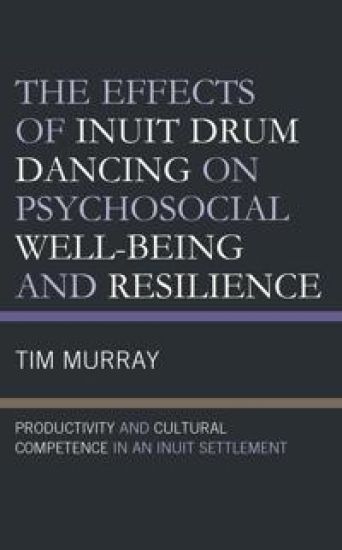
Since time immemorial, Inuit drum dancing songs have been used throughout the Arctic to reaffirm kinship ties, decompress from the rigors of hunting and gathering, and redirect competitive behavior. The Effects of Inuit Drum Dancing on Psychosocial Well-Being and Resilience: Productivity and Cultural Competence in an Inuit Settlement explores the sociocultural context surrounding two forms of traditional Inuit drum dancing in Ulukhaktok, an Inuit settlement in the Canadian Northwest Territories. Tim Murray uses case studies and social script analysis to argue that drum dance participation has emerged in this community as a way of supporting the psychosocial well-being of the settlement’s younger population and to explore how in the wake of colonization, drum dancing has resolidified in Ulukhaktok. Specifically, chapters examine the impacts of generational isolation and its downstream effects on the lives of settlement youth and young adults, the deployment of drum dancing as a tactical resource for modulating emotional access with elders, and its reemergence within the Ulukhaktok taskscape as a platform for reinterpreting local understandings of productivity and cultural competence.
This volume forms a collection of papers tracking the emergence of the history of archaeology from a subject of marginal status in the 1980s to the mainstream subject which it is today. Professor Timothy Murrays essays have been widely cited and track over 20 years in the development of the subject. The papers are accompanied by a new introduction which surveys the development of the subject over the last 25 years as well as a reflection of what this means for the philosophy of archaeology and theoretical archaeology. This volume spans Tims successful career as an academic at the forefront of the study of the history of archaeology, both in Australia and internationally. During his career he has held posts in Britain and Europe as well as Australia, most notably at the University of Cambridge, The Institute of Archaeology at UCL, Leiden University and the University of Paris. He now edits The Bulletin of the History of Archaeology.
This book presents research into the urban archaeology of 19th-century Australia. It focuses on the detailed archaeology of 20 cesspits in The Rocks area of Sydney and the Commonwealth Block site in Melbourne. It also includes discussions of a significant site in Sydney – First Government House. The book is anchored around a detailed comparison of contents of 20 cesspits created during the 19th century, and examines patterns of similarity and dissimilarity, presenting analyses that work towards an integration of historical and archaeological data and perspectives. The book also outlines a transnational framework of comparison that assists in the larger context related to building a truly global archaeology of the modern city. This framework is directly related a multi-scalar approach to urban archaeology. Historical archaeologists have been advocating the need to explore the archaeology of the modern city using several different scales or frames of reference. The most popular (and most basic) of these has been the household. However, it has also been acknowledged that interpreting the archaeology of households beyond the notion that every household and associated archaeological assemblage is unique requires archaeologists and historians to compare and contrast, and to establish patterns. These comparisons frequently occur at the level of the area or district in the same city, where archaeologists seek to derive patterns that might be explained as being the result of status, class, ethnicity, or ideology. Other less frequent comparisons occur at larger scales, for example between cities or countries, acknowledging that the archaeology of the modern western city is also the archaeology of modern global forces of production, consumption, trade, immigration and ideology formation. This book makes a contribution to that general literature
The WoWs pack a punch, bringing insights from a person who successfully climbed the corporate ladder from Accounting Clerk to CEO. The WoWs provide the reader the opportunity to learn from the best classroom, the real world. The author brings unique stories from his career that deliver practical everyday advice. The world has drastically changed as a result of the COVID pandemic, now more than ever the WoWs can be leveraged to accelerate your career. Whether you are a CEO or a college student the WoWs deliver results.
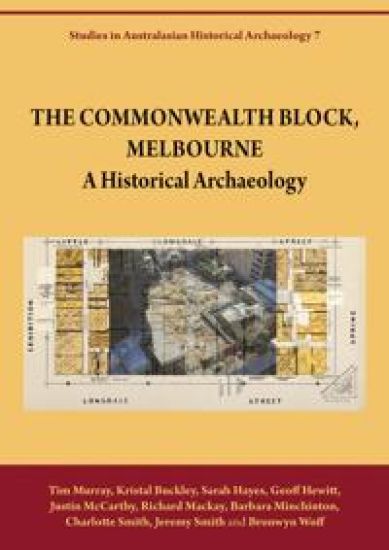
Tim Murray; Kristal Buckley; Sarah Hayes; Geoff Hewitt; Justin McCarthy; Richard Mackay; Barbara Minchinton; Charlotte Smith; Jeremy Smith; Bronwyn Woff
For much of the 19th and 20th centuries, Melbourne’s Little Lonsdale Street – locally known as ‘Little Lon’ – was notorious as a foul slum and brothel district, occupied by the itinerant and the criminal. The stereotype of ‘slumdom’ defined ‘Little Lon’ in the minds of Melbournians, and became entrenched in Australian literature and popular culture. The Commonwealth Block, Melbourne tells a different story. This groundbreaking book reports on almost three decades of excavations conducted on the Commonwealth Block – the area of central Melbourne bordered by Little Lonsdale, Lonsdale, Exhibition and Spring streets. Since the 1980s, archaeologists and historians have pieced together the rich and complex history of this area, revealing a working-class and immigrant community that was much more than just a slum. The Commonwealth Block, Melbourne delves into the complex social, cultural and economic history of this forgotten community.
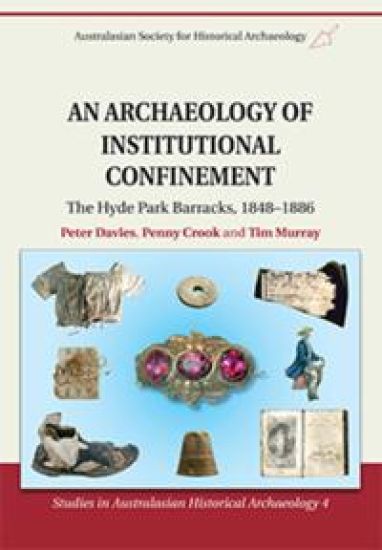
The archaeological assemblage from the Hyde Park Barracks is one of the largest, most comprehensive and best preserved collections of artefacts from any 19th-century institution in the world. Concealed for up to 160 years in the cavities between floorboards and ceilings, the assemblage is a unique archaeological record of institutional confinement, especially of women. The underfloor assemblage dates to the period 1848 to 1886, during which a female Immigration Depot and a Government Asylum for Infirm and Destitute Women occupied the second and third floors of the Barracks. Over the years the women discarded and swept beneath the floor thousands of clothing and textile fragments, tobacco pipes, religious items, sewing equipment, paper scraps and numerous other objects, many of which rarely occur in typical archaeological deposits. These items are presented in detail in this book, and provide unique insight into the private lives of young female migrants and elderly destitute women, most of whom will never be known from historical records.
This engaging work uses key discoveries, events, people, techniques, and controversies to give the general reader a rich history of archaeology from its beginnings in the 16th century to the present. The history of archaeology leads from the musty collections of dilettante antiquarians to high-tech science. The book identifies three major developmental periods—Birth of Archaeology (16th–18th centuries), Archaeology of Origins and Empires (19th century), and World Archaeology (20th century). An introductory essay acquaints the reader with the essence of the science for each period. The short entries comprising the balance of the book expand on the themes introduced in the essays. Organized around personalities, techniques, controversies, and conflicts, the encyclopedia brings to life the history of archaeology. It broadens the general reader's knowledge by detailing the professional significance of widely known discoveries while introducing to wider knowledge obscure but important moments in archaeology. Archaeology is replete with the visionaries and swashbucklers of popular myth; it is also filled with careful and dedicated scientists.200 entries present chronological milestones in the history of archaeologyIncludes 70 photographs and drawings of people, sites, and artifactsThree maps locate sites mentioned throughout the textIncludes an extensive bibliography for introductory essays and each entry