
Kirjailija
Tim Vivian
Kirjat ja teokset yhdessä paikassa: 9 kirjaa, julkaisuja vuosilta 2005–2024, suosituimpiin kuuluu Door of the Wilderness: The Greek, Coptic, and Copto-Arabic Sayings of St. Antony of Egypt. Vertaile teosten hintoja ja tarkista saatavuus suomalaisista kirjakaupoista.
9 kirjaa
Kirjojen julkaisuvuodet: 2005–2024.
Congregations are shrinking and in decline. Fewer people are part of communities of faith. Michael Plekon's previous book, Community as Church, Church as Community, traced the factors behind this as well as the resurrection of parishes that have reimagined themselves in diverse ways. Pastors have played essential roles in such transformation. But where are the ordained today? Ministry Matters is a sustained meditation on the vocation, lives, and work of pastors today. We listen to an ecumenical group of exceptional pastor-theologians on how pastors live and serve. These include George Keith, Nicholas Afanasiev, Barbara Brown Taylor, C. Andrew Doyle, Andrew Root, Sarah Coakley, Samuel Wells, Rowan Williams, Henri Nouwen, Pope Francis, David Barnhart, and Will Willimon, with commentary from Michael Plekon, who has served as priest in both western and eastern churches for over forty years. Many years of pastoral experience are shared here, providing a feast of reflection on the shepherds of God's flock.
Poetry should be transitive, and deal with something other. Thus, a doorway offers transition, liminal space, an invitation, a going across, into possibly numerous somethings other. We can't assume, however, that the door is always open; if closed, we need to open it. A doorway can confront us: Have we the courage to reach for the handle? Given the horrors of 2020 and 2021, we must open the door both to grieving and thanksgiving. The poems here are midrashim. Midrash is a reflection on scripture. These poems first imagine passages and stories from the Bible and then reimagine them: they build stages, create, and breathe life into characters, and landscape biblical passages with new, often challenging, backgrounds. Many of the poems here have religio-political subtexts. The poems speak of darkness, the things that darken our country and our hearts, but they also speak of the life-giving lights of mystery, wonder, and thanksgiving, the things that give us hope. As writer and poet Louise Erdrich tells us, "This is how our lives complete themselves, / as effortless as weather, circles blaze / in ordinary days, and through our waking selves / they reach, to touch our true and sleeping speech."
Door of the Wilderness: The Greek, Coptic, and Copto-Arabic Sayings of St. Antony of Egypt
Elizabeth Agaiby; Tim Vivian
BRILL
2021
sidottu
Saint Antony of Egypt (c. 251–356), often called “the father of monasticism,” has numerous representations: the Antony of the Life of Antony and the Letters, but also the Antony of around 120 sayings or apophthegmata. This volume presents fresh English translations of the Greek and Coptic sayings, as well as the first English translation of the Copto-Arabic sayings that are based on unpublished manuscripts. The volume thus opens the door to a richer image of Saint Antony’s many identities across various languages and traditions.
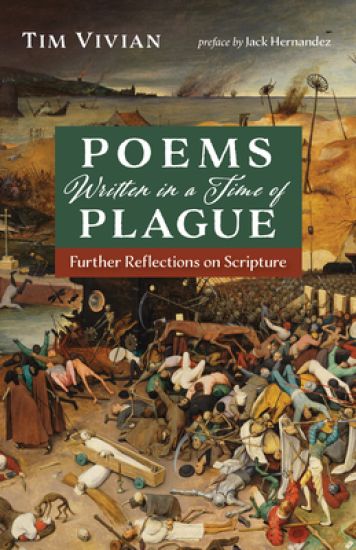
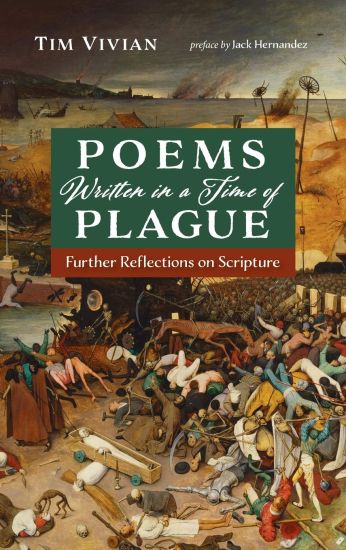
Plague is both metaphor and physical presence. The poems in this volume, written between January and June of 2020, address the plagues of COVID-19; racism, police brutality; and political indifference, ineptness, and malfeasance. The poems offer the hope that the first plague has taught us about the good fruits of compassion and community and that the continuing nonviolent protests in the United States over the second plague, racism, will help birth a resurrection in the hearts, minds, and souls of all Americans, a new Easter. The twentieth-century theologian Karl Barth astutely said, ""The pastor and his congregation should not imagine that they are a religious society that is fixated only] on certain themes, but that they live in this world. We do indeed need, according to my old formulation, the Bible and the newspaper."" With the poems in this volume, the author, newspaper in hand, reflects on events from January to early June 2020 and does so by integrating reflections on Scripture with current events.
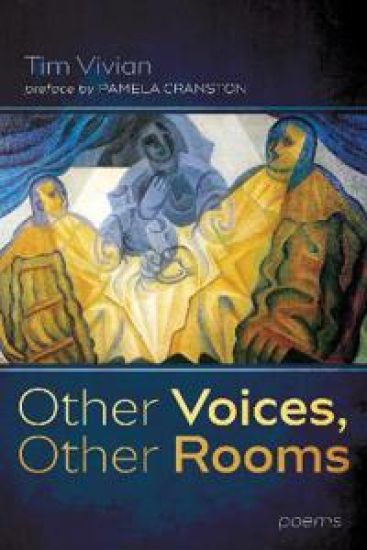
Why do we tell stories? Why are stories so indigenous to religion? Stories. Sacred stories. The three Western Scriptures express themselves most fully, and deeply, in stories. The original idea of ""story"" is ""inquiry,"" the ""result of research, information, knowledge,"" ""telling, exposition, account, history."" Its verb makes verbal these nouns: ""to seek to know oneself, inform oneself, do research, inquire,"" ""interrogate,"" ""examine, explore, observe."" All history is story. Most Scripture is story. Such stories, all stories, ask for--even demand--attentive listening, interpretation, and reinterpretation. Each of us, therefore, becomes an interpreter, speaking in tongues (so to speak), even if only for herself or himself. The poems here offer such explorations; they take scriptural stories and imagine--and reimagine--them in order to offer the reader different angles and perspectives, new experiences. Such experiences, such perspectives, can help us see the Scriptures, and ourselves, anew.
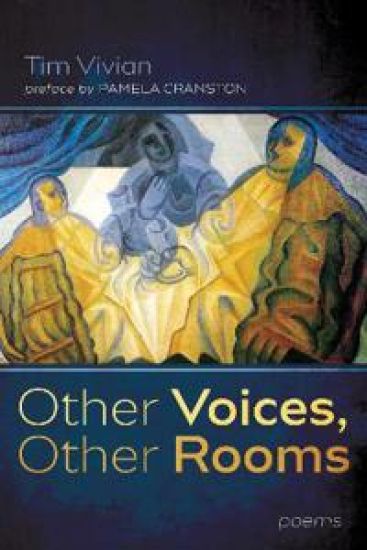
Why do we tell stories? Why are stories so indigenous to religion? Stories. Sacred stories. The three Western Scriptures express themselves most fully, and deeply, in stories. The original idea of ""story"" is ""inquiry,"" the ""result of research, information, knowledge,"" ""telling, exposition, account, history."" Its verb makes verbal these nouns: ""to seek to know oneself, inform oneself, do research, inquire,"" ""interrogate,"" ""examine, explore, observe."" All history is story. Most Scripture is story. Such stories, all stories, ask for--even demand--attentive listening, interpretation, and reinterpretation. Each of us, therefore, becomes an interpreter, speaking in tongues (so to speak), even if only for herself or himself. The poems here offer such explorations; they take scriptural stories and imagine--and reimagine--them in order to offer the reader different angles and perspectives, new experiences. Such experiences, such perspectives, can help us see the Scriptures, and ourselves, anew.
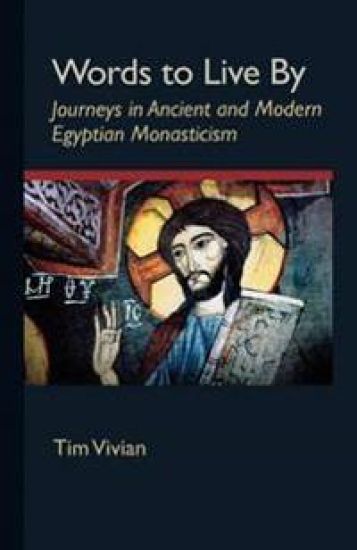
"Personal accounts of journeys to present-day monasteries in Egypt and translations of ancient monastic texts"--Provided by publisher.