Kirjojen hintavertailu – 12 903 725 kirjaa ja 27 kauppaa

Kirjailija

Tim Wharton

Kirjat ja teokset yhdessä paikassa: 5 kirjaa, julkaisuja vuosilta 2009–2026, suosituimpiin kuuluu Pragmatics and Emotion. Vertaile teosten hintoja ja tarkista saatavuus suomalaisista kirjakaupoista.

5 kirjaa

Kirjojen julkaisuvuodet: 2009–2026.

Pragmatics and Emotion

Pragmatics and Emotion

Tim Wharton; Louis de Saussure

Cambridge University Press
2026
pokkari
It has long been received wisdom in semantics and pragmatics that 'the head' and 'the heart' are two opposing forces, a view that has led scholars, until now, to explore the mental processes behind cognition, and the mental processes behind emotion, as two separate entities. This bold, innovative book challenges this view, and provides an original study of how we communicate our emotions through language, drawing on both pragmatic theory and affective science. It begins with the assumption that emotional or expressive meaning plays such a central role in human interaction that any pragmatic theory worth its salt must account for it. It meets the associated challenges head-on and strives to integrate affect within one theory of utterance interpretation, showing that emotional meaning and rationality/reasoning can be analysed within one framework. Written in a clear and concise style, it is essential reading for anyone interested in communication and emotion.
Pragmatics and Emotion

Pragmatics and Emotion

Tim Wharton; Louis de Saussure

Cambridge University Press
2023
sidottu
It has long been received wisdom in semantics and pragmatics that 'the head' and 'the heart' are two opposing forces, a view that has led scholars, until now, to explore the mental processes behind cognition, and the mental processes behind emotion, as two separate entities. This bold, innovative book challenges this view, and provides an original study of how we communicate our emotions through language, drawing on both pragmatic theory and affective science. It begins with the assumption that emotional or expressive meaning plays such a central role in human interaction that any pragmatic theory worth its salt must account for it. It meets the associated challenges head-on and strives to integrate affect within one theory of utterance interpretation, showing that emotional meaning and rationality/reasoning can be analysed within one framework. Written in a clear and concise style, it is essential reading for anyone interested in communication and emotion.
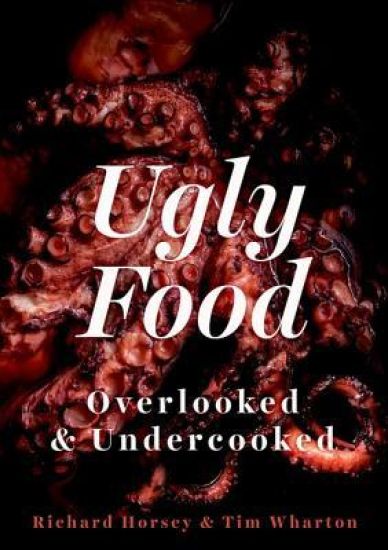
Ugly Food

Ugly Food

Richard Horsey; Tim Wharton

C Hurst Co Publishers Ltd
2016
sidottu
Why don't we eat more octopus? Cheeks and feet are good value and delicious, so why do people prefer fillet or chops? What about rabbits and squirrels? And what's wrong with ugly vegetables? The food industry, like the fashion industry, seems driven by the pursuit of impossible perfection: pre-packaged meats with nary a head, foot or set of giblets in sight, and supermarkets stacked with rows of blemish-free fruit and vegetables. But the same ingredients that are neglected, overlooked, and forgotten, are also tasty, sustainable and cheap. Ugly Food aims to change the way people think about food, revealing the tips and tricks you need to prepare undervalued ingredients with ease. Alongside recipes, Horsey and Wharton provide social histories of foods that are positively brimming with fascinating facts, fictions and flavours. Recipes include: Ox-Cheek Salad a la Hongroise, Lao Chicken Feet Salad, Maldivian Curried Octopus, Spiced Squirrel Popcorn, Deep-fried Rabbit Ears, Sheep's Brain on Toast, and Char Siu Pigs' Cheeks.
Pragmatics and Non-Verbal Communication

Pragmatics and Non-Verbal Communication

Tim Wharton

Cambridge University Press
2009
pokkari
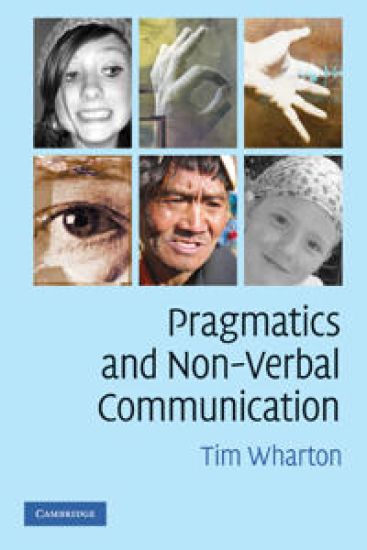
The way we say the words we say helps us convey our intended meanings. Indeed, the tone of voice we use, the facial expressions and bodily gestures we adopt while we are talking, often add entirely new layers of meaning to those words. How the natural non-verbal properties of utterances interact with linguistic ones is a question that is often largely ignored. This book redresses the balance, providing a unique examination of non-verbal behaviours from a pragmatic perspective. It charts a point of contact between pragmatics, linguistics, philosophy, cognitive science, ethology and psychology, and provides the analytical basis to answer some important questions: How are non-verbal behaviours interpreted? What do they convey? How can they be best accommodated within a theory of utterance interpretation?
Pragmatics and Non-Verbal Communication

Pragmatics and Non-Verbal Communication

Tim Wharton

Cambridge University Press
2009
sidottu
The way we say the words we say helps us convey our intended meanings. Indeed, the tone of voice we use, the facial expressions and bodily gestures we adopt while we are talking, often add entirely new layers of meaning to those words. How the natural non-verbal properties of utterances interact with linguistic ones is a question that is often largely ignored. This book redresses the balance, providing a unique examination of non-verbal behaviours from a pragmatic perspective. It charts a point of contact between pragmatics, linguistics, philosophy, cognitive science, ethology and psychology, and provides the analytical basis to answer some important questions: How are non-verbal behaviours interpreted? What do they convey? How can they be best accommodated within a theory of utterance interpretation?