
Kirjojen hintavertailu – 12 903 725 kirjaa ja 27 kauppaa

Kirjailija

Timo Tiihonen

Kirjat ja teokset yhdessä paikassa: 2 kirjaa, julkaisuja vuosilta 2016–2018, suosituimpiin kuuluu Mathematical Modelling. Vertaile teosten hintoja ja tarkista saatavuus suomalaisista kirjakaupoista.

2 kirjaa

Kirjojen julkaisuvuodet: 2016–2018.

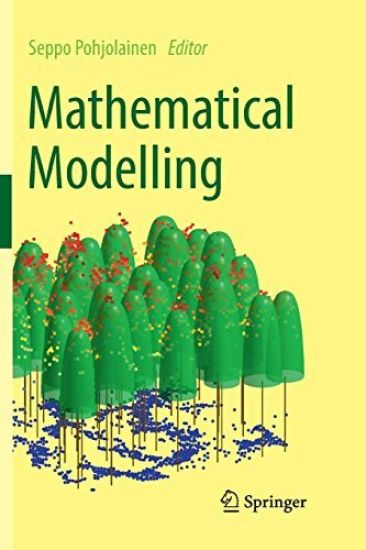
Mathematical Modelling

Mathematical Modelling

Matti Heiliö; Timo Lähivaara; Erkki Laitinen; Timo Mantere; Jorma Merikoski; Seppo Pohjolainen; Kimmo Raivio; Risto Silvennoinen; Antti Suutala; Tanja Tarvainen; Timo Tiihonen; Jukka Tuomela; Esko Turunen; Marko Vauhkonen

Springer International Publishing AG
2018
nidottu
This book provides a thorough introduction to the challenge of applying mathematics in real-world scenarios. Modelling tasks rarely involve well-defined categories, and they often require multidisciplinary input from mathematics, physics, computer sciences, or engineering. In keeping with this spirit of modelling, the book includes a wealth of cross-references between the chapters and frequently points to the real-world context. The book combines classical approaches to modelling with novel areas such as soft computing methods, inverse problems, and model uncertainty. Attention is also paid to the interaction between models, data and the use of mathematical software. The reader will find a broad selection of theoretical tools for practicing industrial mathematics, including the analysis of continuum models, probabilistic and discrete phenomena, and asymptotic and sensitivity analysis.
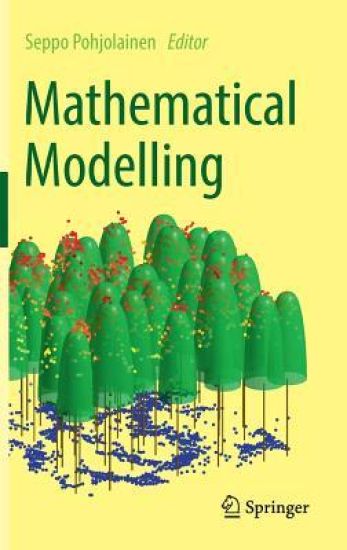
Mathematical Modelling

Mathematical Modelling

Matti Heiliö; Timo Lähivaara; Erkki Laitinen; Timo Mantere; Jorma Merikoski; Seppo Pohjolainen; Kimmo Raivio; Risto Silvennoinen; Antti Suutala; Tanja Tarvainen; Timo Tiihonen; Jukka Tuomela; Esko Turunen; Marko Vauhkonen

Springer International Publishing AG
2016
sidottu
This book provides a thorough introduction to the challenge of applying mathematics in real-world scenarios. Modelling tasks rarely involve well-defined categories, and they often require multidisciplinary input from mathematics, physics, computer sciences, or engineering. In keeping with this spirit of modelling, the book includes a wealth of cross-references between the chapters and frequently points to the real-world context. The book combines classical approaches to modelling with novel areas such as soft computing methods, inverse problems, and model uncertainty. Attention is also paid to the interaction between models, data and the use of mathematical software. The reader will find a broad selection of theoretical tools for practicing industrial mathematics, including the analysis of continuum models, probabilistic and discrete phenomena, and asymptotic and sensitivity analysis.