Kirjojen hintavertailu – 12 903 725 kirjaa ja 27 kauppaa

Kirjailija

Timon Beyes

Kirjat ja teokset yhdessä paikassa: 5 kirjaa, julkaisuja vuosilta 2016–2024, suosituimpiin kuuluu The Creativity Complex – A Companion to Contemporary Culture. Vertaile teosten hintoja ja tarkista saatavuus suomalaisista kirjakaupoista.

5 kirjaa

Kirjojen julkaisuvuodet: 2016–2024.

Organizing Color

Organizing Color

Timon Beyes

STANFORD UNIVERSITY PRESS
2024
pokkari
We live in a world that is saturated with color, but how should we make sense of color's force and capacities? This book develops a theory of color as fundamental medium of the social. Constructed as a montage of scenes from the past two hundred years, Organizing Color demonstrates how the interests of capital, management, governance, science, and the arts have wrestled with color's allure and flux. Beyes takes readers from Goethe's chocolate experiments in search of chromatic transformation to nineteenth-century Scottish cotton mills designed to modulate workers' moods and productivity, from the colonial production of Indigo in India to globalized categories of skin colorism and their disavowal. Tracing the consumption, control and excess of industrial and digital color, other chapters stage encounters with the literary chromatics of Pynchon's Gravity's Rainbow processing the machinery of the chemical industries, the red of political revolt in Godard's films, and the blur of education and critique in Steyerl's Adorno's Grey. Contributing to a more general reconsideration of aesthetic capitalism and the role of sensory media, this book seeks to pioneer a theory of social organization—a "chromatics of organizing"—that is attuned to the protean and world-making capacity of color.
Organizing Color

Organizing Color

Timon Beyes

STANFORD UNIVERSITY PRESS
2024
sidottu
We live in a world that is saturated with color, but how should we make sense of color's force and capacities? This book develops a theory of color as fundamental medium of the social. Constructed as a montage of scenes from the past two hundred years, Organizing Color demonstrates how the interests of capital, management, governance, science, and the arts have wrestled with color's allure and flux. Beyes takes readers from Goethe's chocolate experiments in search of chromatic transformation to nineteenth-century Scottish cotton mills designed to modulate workers' moods and productivity, from the colonial production of Indigo in India to globalized categories of skin colorism and their disavowal. Tracing the consumption, control and excess of industrial and digital color, other chapters stage encounters with the literary chromatics of Pynchon's Gravity's Rainbow processing the machinery of the chemical industries, the red of political revolt in Godard's films, and the blur of education and critique in Steyerl's Adorno's Grey. Contributing to a more general reconsideration of aesthetic capitalism and the role of sensory media, this book seeks to pioneer a theory of social organization—a "chromatics of organizing"—that is attuned to the protean and world-making capacity of color.
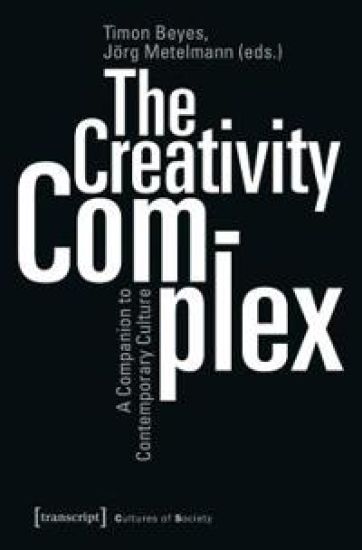
The Creativity Complex – A Companion to Contemporary Culture

The Creativity Complex – A Companion to Contemporary Culture

Timon Beyes; Jörg Metelmann

Transcript Verlag
2021
nidottu
Wherever we turn, we find creative practices and creative spaces, creative organizations and creative subjects. At work or in public places, in media representations and in advertisements, on social platforms, in schools and universities: There is a demand to be new and special, conspicuous and singular. How did this creativity complex and its imperative to be creative come about? Which terms and concepts enable us to understand its multiple and partly contradictory forms and processes? Where are its limits? Gathering and interweaving 40 short and incisive essays, this companion maps, investigates and illuminates the contemporary creativity complex.
Organize

Organize

Timon Beyes; Lisa Conrad; Reinhold Martin; Geert Lovink; Ned Rossiter

University of Minnesota Press
2019
pokkari
A pioneering systematic inquiry into-and mapping of-the field of media and organization Media organize things into patterns and relations. As intermediaries among people and between people and worlds, media shape sociotechnical orders. At the same time, media are organized: while they condition different organizational forms and processes, they, too, are formed and can be re-formed. This intimate relation of media and organizing is timeless. Yet arguably, digital media technologies repose the question of organization-and thus of power and domination, control and surveillance, disruption and emancipation. Bringing together leading media thinkers and organization theorists, this book interrogates organization as an effect and condition of media. How can we understand the recursive relation between media and organization? How can we think, explore, critique, and perhaps alter the organizational bodies and scripts that shape contemporary life? Organize will be of interest to scholars and students of new and old media, social organization, and technology. Moreover, the dialogical form of these essays provides a concise and path-breaking view on the recursive relation between technological media and social organization. The book therefore establishes and maps “media and organization” as a highly relevant field of inquiry, appealing to those with a critical interest in the technological conditioning of the social.
Social Media  New Masses

Social Media New Masses

Inge Baxmann; Timon Beyes; Pias Clause

Diaphanes AG
2016
nidottu
Mass gatherings are at the center of contemporary discussions about community formation, communication, and social control. As new digital technologies and social media platforms have emerged, the concept of the mass gathering has evolved in parallel to take account of the different ways masses and crowds may form, including digital masses like flash mobs and protest groups. At the same time, these new digital masses provide a remarkable opportunity to reevaluate the broader historiographical framework surrounding mass gatherings. With Social Media New Masses, Inge Baxmann, Timon Beyes, and Claus Pias have brought together a diverse group of sociologists, media and cultural studies theorists, and historians of knowledge and technology who, together, outline the contours of this expanding field of research and analyze the differences between the old and new conceptions of masses and the distinct conditions and political consequences for each. Contributors to the volume include Marie-Luise Angerer, Dirk Baecker, Christian Borch, Christoph Engemann, Charles Ess, Wolfgang Hagen, Peter Krapp, Mirko Tobias Sch fer, and Sebastian Vehlken.