Kirjojen hintavertailu – 12 859 819 kirjaa ja 27 kauppaa
Kirjailija
Timothy Clark
Kirjat ja teokset yhdessä paikassa: 41 kirjaa, julkaisuja vuosilta 1992–2025, suosituimpiin kuuluu Charles Tomlinson. Vertaile teosten hintoja ja tarkista saatavuus suomalaisista kirjakaupoista.
The twenty-first century has seen an increased awareness of the forms of environmental destruction that cannot immediately be seen, localised or, by some, even acknowledged. Ecocriticism on the Edge explores the possibility of a new mode of critical practice, one fully engaged with the destructive force of the planetary environmental crisis. Timothy Clark argues that, in literary and cultural criticism, the “Anthropocene”, which names the epoch in which human impacts on the planet’s ecological systems reach a dangerous limit, also represents a threshold at which modes of interpretation that once seemed sufficient or progressive become, in this new counterintuitive context, inadequate or even latently destructive. The book includes analyses of literary works, including texts by Paule Marshall, Gary Snyder, Ben Okri, Henry Lawson, Lorrie Moore and Raymond Carver.
The twenty-first century has seen an increased awareness of the forms of environmental destruction that cannot immediately be seen, localised or, by some, even acknowledged. Ecocriticism on the Edge explores the possibility of a new mode of critical practice, one fully engaged with the destructive force of the planetary environmental crisis. Timothy Clark argues that, in literary and cultural criticism, the “Anthropocene”, which names the epoch in which human impacts on the planet’s ecological systems reach a dangerous limit, also represents a threshold at which modes of interpretation that once seemed sufficient or progressive become, in this new counterintuitive context, inadequate or even latently destructive. The book includes analyses of literary works, including texts by Paule Marshall, Gary Snyder, Ben Okri, Henry Lawson, Lorrie Moore and Raymond Carver.
‘The Great Wave’ is a colour woodblock print designed by Japanese artist Hokusai in around 1830. The print, of which numerous multiples were made, shows a monster of a wave rearing up and about to come crashing down on three fishing boats and their crews. One of a monumental series known as ‘Thirty-six views of Mount Fuji’, Hokusai’s Great Wave – with the graceful snow-clad Mount Fuji on the horizon, unperturbed but wittily dwarfed by the towering strength of the wave that threatens to engulf the struggling boats – has become an iconic image of the power of nature and the relative smallness of man. One of the most famous pieces of Japanese art, this extraordinary artwork has had a huge impact worldwide and has served as a source of inspiration to artists, both past and present. This beautifully illustrated book explores the meaning behind Hokusai’s Great Wave, in the context of the Mount Fuji series and Japanese art as a whole. Taking an intimate look at the Wave’s artistic and historical significance and its influence on popular culture, this concise introduction explains why Hokusai’s modern masterpiece had such an impact after its creation in 1830 and why it continues to fascinate, inspire and challenge today.
Since the publication of his mammoth work, Being and Time, Martin Heidegger has remained one of the most influential figures in contemporary thought, and is a key influence for modern literary and cultural theory. This guidebook provides an ideal entry-point for readers new to Heidegger, outlining such issues and concepts as: the limits of 'theory'the history of beingthe origin of the work of artlanguagethe literary workpoetry and the politicalHeidegger's involvement with Nazism. Fully updated throughout and featuring a new section on enviromental thought and ecocriticism, this guidebook clearly and concisely introduces Heidegger's crucial work relating to art, language and poetry, and outlines his continuing influence on critical theory.
Since the publication of his mammoth work, Being and Time, Martin Heidegger has remained one of the most influential figures in contemporary thought, and is a key influence for modern literary and cultural theory. This guidebook provides an ideal entry-point for readers new to Heidegger, outlining such issues and concepts as: the limits of 'theory'the history of beingthe origin of the work of artlanguagethe literary workpoetry and the politicalHeidegger's involvement with Nazism. Fully updated throughout and featuring a new section on enviromental thought and ecocriticism, this guidebook clearly and concisely introduces Heidegger's crucial work relating to art, language and poetry, and outlines his continuing influence on critical theory.
The degrading environment of the planet is something that touches everyone. This 2011 book offers an introductory overview of literary and cultural criticism that concerns environmental crisis in some form. Both as a way of reading texts and as a theoretical approach to culture more generally, 'ecocriticism' is a varied and fast-changing set of practices which challenges inherited thinking and practice in the reading of literature and culture. This introduction defines what ecocriticism is, its methods, arguments and concepts, and will enable students to look at texts in a wholly new way. Boxed sections explain key critical terms and contemporary debates in the field with 'hands-on' examples and comparisons. Timothy Clark's thoughtful approach makes this an ideal first encounter with environmental readings of literature.
The degrading environment of the planet is something that touches everyone. This 2011 book offers an introductory overview of literary and cultural criticism that concerns environmental crisis in some form. Both as a way of reading texts and as a theoretical approach to culture more generally, 'ecocriticism' is a varied and fast-changing set of practices which challenges inherited thinking and practice in the reading of literature and culture. This introduction defines what ecocriticism is, its methods, arguments and concepts, and will enable students to look at texts in a wholly new way. Boxed sections explain key critical terms and contemporary debates in the field with 'hands-on' examples and comparisons. Timothy Clark's thoughtful approach makes this an ideal first encounter with environmental readings of literature.
Management consultants are typically seen as key mediators in the flow of management ideas. And yet little is known about exactly what happens when they work together with clients, behind closed doors in consulting projects. Do they really innovate or simply legitimate existing knowledge? This book presents research from a three year long 'fly-on-the-wall study' of consulting projects and challenges our taken for granted view of consultancy. It draws on and integrates theories of knowledge and social boundaries to reveal a picture of complex and shifting insider-outsider relationships. Here, the outsider or expert status of consultants in relation to their clients cannot be assumed in their day-to-day project interactions. Different actors, roles, and types of knowledge are involved in an interactive and dynamic process where various boundaries are constructed, reinforced, negotiated and transformed. The chapters selectively explore these dynamics, revealing the importance of boundary complexity, the role of humour and challenge in often tense relationships, and the importance of shared knowledge domains such as sector knowledge. This in-depth analysis of inter-organizational project teams also covers a wide range of consultancy contexts, drawing on cases studies which include: * a US-based strategy firm and a multinational client, * the public and private sectors, * a sole practitioner consultant, * IT implementation in financial services. The book is important for all those with an interest in management consultancy, project working and management knowledge as well as in innovation/change, inter-organisational relations, boundaries and professional services. The authors include some of the leading research experts on management consultancy as well as a former management consultant and current expert in management learning.
Business celebrities such as Bill Gates, Richard Branson and Rupert Murdoch are among the most widely recognised, admired and sometimes even vilified individuals in the world. Like their celebrity peers from the entertainment, sports, arts and political worlds, business celebrities exert an influence that is pervasive, but difficult to assess, evaluate and explain. Business celebrities have been around for as long as big business itself, but this is the first book to provide a systematic exploration of how they are constructed and why they exist. Business celebrities include entrepreneurs, CEOs, and management gurus. The book argues that these individuals are not self-made, but rather are created by a process of widespread media exposure to the point that their actions, personalities and even private lives function symbolically to represent significant dynamics and tensions prevalent in the contemporary business environment. Demystifying Business Celebrity raises questions about the impact and significance of the production of celebrity upon our understanding of, and our ability to promote the practice of leadership in an enlightened manner. The book will prove a useful addition to the enlightened business student’s bookshelf and will be informative reading for all those with an interest in business and management.
Business celebrities such as Bill Gates, Richard Branson and Rupert Murdoch are among the most widely recognised, admired and sometimes even vilified individuals in the world. Like their celebrity peers from the entertainment, sports, arts and political worlds, business celebrities exert an influence that is pervasive, but difficult to assess, evaluate and explain. Business celebrities have been around for as long as big business itself, but this is the first book to provide a systematic exploration of how they are constructed and why they exist. Business celebrities include entrepreneurs, CEOs, and management gurus. The book argues that these individuals are not self-made, but rather are created by a process of widespread media exposure to the point that their actions, personalities and even private lives function symbolically to represent significant dynamics and tensions prevalent in the contemporary business environment. Demystifying Business Celebrity raises questions about the impact and significance of the production of celebrity upon our understanding of, and our ability to promote the practice of leadership in an enlightened manner. The book will prove a useful addition to the enlightened business student’s bookshelf and will be informative reading for all those with an interest in business and management.
This book, using the paintings that Mary McMurtrie left to illustrate an unpublished book on cottage garden flowers, records how she created the garden at Balbithan and used her nursery to distribute the double primroses and cottage garden plants which her husband, John McMurtrie, bequeathed to her. Mary McMurtrie belonged to the small band of enthusiasts, which included Margery Fish and Gladys Emmerson, who grew double primroses during the period after the Second World War. At a time when every fifth day a house of some architectural importance was being demolished, these enthusiasts, along with fellow gardeners, preserved many of the plants from our gardening heritage of the previous centuries. Gently proud of her Scots ancestry, Mary would have been delighted to know that one of her paintings was chosen as a gift for Prince Charles during a visit to The Gordon Highlander Regiment in 2006.
Management consultants are typically seen as key mediators in the flow of management ideas. And yet little is known about exactly what happens when they work together with clients, behind closed doors in consulting projects. Do they really innovate or simply legitimate existing knowledge? This book presents research from a three year long 'fly-on-the-wall study' of consulting projects and challenges our taken for granted view of consultancy. It draws on and integrates theories of knowledge and social boundaries to reveal a picture of complex and shifting insider-outsider relationships. Here, the outsider or expert status of consultants in relation to their clients cannot be assumed in their day-to-day project interactions. Different actors, roles, and types of knowledge are involved in an interactive and dynamic process where various boundaries are constructed, reinforced, negotiated and transformed. The chapters selectively explore these dynamics, revealing the importance of boundary complexity, the role of humour and challenge in often tense relationships, and the importance of shared knowledge domains such as sector knowledge. This in-depth analysis of inter-organizational project teams also covers a wide range of consultancy contexts, drawing on cases studies which include: * a US-based strategy firm and a multinational client, * the public and private sectors, * a sole practitioner consultant, * IT implementation in financial services. The book is important for all those with an interest in management consultancy, project working and management knowledge as well as in innovation/change, inter-organisational relations, boundaries and professional services. The authors include some of the leading research experts on management consultancy as well as a former management consultant and current expert in management learning.
Jacques Derrida is undoubtedly one of the foremost figures in the development of twentienth-century literary theory. The school of 'deconstruction' that has grown out of his work has been either absorbed into the corpus of modern literary theory, or criticized for its departures from the original texts of Derrida in whose name it is practised. Timothy Clark's innovative book traces instead sources of Derrida's practice of 'literature' as a form of philosophical thinking, in the work of Heidegger and Blanchot. It offers a welcome stylistic clarity in a field beleaguered by its philosophical and linguistic difficulty. Clark gives close readings of key texts including Heidegger's Conversation on a Country Path, Blanchot's L'attente l'oubli, and Derrida's Pas and Signsponge, and widens the scope of his discussion of philosophical cultivation of 'literary' forms to include in addition the issues of creativity, influence and responsibility as they appear in the work of Lyotard and Levinas.
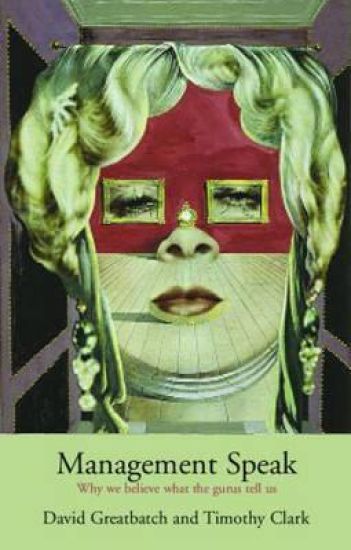
Based on primary research into the public lectures of management gurus, this fascinating new volume analyzes how such gurus disseminate their ideas, values and visions on the international management lecture circuit. Adopting a novel conceptual/theoretical perspective, it brings together insights from the fields of management, sociology, media studies, communications and social psychology. Written by leading figures in the field, this topical book covers such broad ranging areas as the live presentation of management ideas, using rhetoric, legitimating ideas, values and visions, the grammar of persuasion and charisma and oratory and is a valuable resource for students academics and researchers in the fields of management, sociology, and communications.
Based on primary research into the public lectures of management gurus, this fascinating new volume analyzes how such gurus disseminate their ideas, values and visions on the international management lecture circuit. Adopting a novel conceptual/theoretical perspective, it brings together insights from the fields of management, sociology, media studies, communications and social psychology. Written by leading figures in the field, this topical book covers such broad ranging areas as the live presentation of management ideas, using rhetoric, legitimating ideas, values and visions, the grammar of persuasion and charisma and oratory and is a valuable resource for students academics and researchers in the fields of management, sociology, and communications.
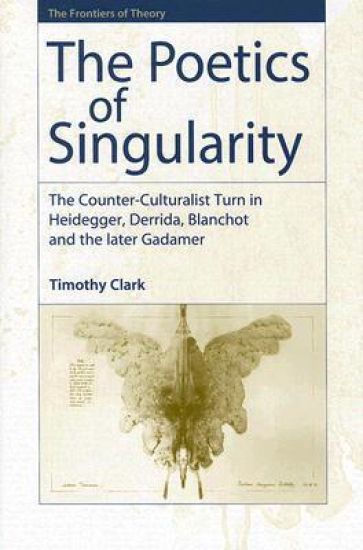
This polemical book reveals the basic tenets of what may be called a 'poetics of singularity' in Martin Heidegger, Maurice Blanchot, Jacques Derrida and the strange late essays of Hans Georg Gadamer. At issue is the at first simple, even familiar, idea that literary or poetic 'meaning' cannot be stated in terms other than its own, that a text strives towards the status of being an example, if of anything, only of itself, sole witness of what it alone projects. This issue opens a series of powerful questions concerning basic features of Western thought - about the nature of understanding, on Kierkegaard's 'singular individual' that is yet each human life in its exceptionality, of the uniqueness of historical testimony, the nature of community. The Poetics of Singularity forms an ethically compelling alternative to the currently dominant cultural/social studies paradigm in literary criticism, a neo-Darwinian understanding of art and life which is sometimes only a disguised version of American nationalism. Features * An original work of scholarship combining elucidation, research and polemics. * Identifies a forceful tradition of twentieth-century poetics - which differs from received ideas of 'deconstruction' - which the author names 'the poetics of singularity'. * Makes available in English some previously untranslated material in the chapters on Heidegger and Gadamer, and covers relatively unknown texts by Blanchot and some very recent work by Derrida.
Ever since his early collections of the late 1950s and early 1960s repudiated the parochialism of some of the ‘Movement’ poets, Charles Tomlinson has formed a unique voice in contemporary British Poetry. Cosmopolitan, intellectual, and polyglot, he has achieved an original blend of the high modernist tradition, English Romantic aesthetics and contemporary phenomenology. His work forms, in his own words, a ‘phenomenology of perception’, one adapted to what could be termed an environmentalist ethic and aesthetic, a defence of the irreducible idioms of ‘place’. This book, the first on this major English writer from a British publisher, forms a comprehensive defence of Tomlinson’s project, including his work as a graphic artist, as a translator, and as a participator in experiments in multiple authorship and multi-lingual poetry.
This electronic textbook introduces chemistry students to the world of orbitals using 3D and VRML representation of molecular orbitals. The electronic components of the book are included together with the necessary representation tools in the CD-ROM accompanying the book.
Margery Fish has often been called the 'Mother of Modern Gardening'. Today gardeners come from all over the world to visit her garden at East Lambrook in Somerset - to discover for themselves the glorious results of her special genius. She grew plants that pleased her and did not need too much work, and showed for the first time how it was possible to have flowers in the garden all year round.