
Kirjojen hintavertailu – 12 903 725 kirjaa ja 27 kauppaa

Kirjailija

Timothy J. Biblarz

Kirjat ja teokset yhdessä paikassa: 2 kirjaa, julkaisuja vuodelta 2002, suosituimpiin kuuluu How Families Still Matter. Vertaile teosten hintoja ja tarkista saatavuus suomalaisista kirjakaupoista.

2 kirjaa

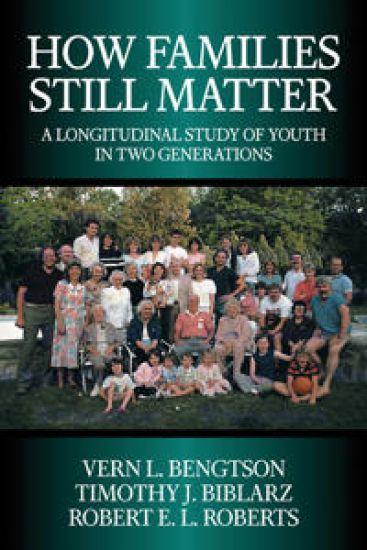
How Families Still Matter

How Families Still Matter

Vern L. Bengtson; Timothy J. Biblarz; Robert E. L. Roberts

Cambridge University Press
2002
pokkari
How Families Still Matter casts doubt on the conventional wisdom about family decline during the last decades of the twentieth century. The authors draw from the longest-running longitudinal study of families in the world - the Longitudinal Study of Generations, conducted at the University of Southern California - to discover whether parents are really less critical in shaping the life choices and achievements of their children than they were a generation ago. They compare the influence of parents (on self-confidence, values, and levels of achievement) on the Baby Boomer generation with that of Baby-Boomer parents on their own Generation-X children. The findings may surprise many readers. Generation-X youth showed higher levels of education, career attainments, and self-esteem than their parents as youth, and similar values were found across generations. They indicate the ‘resilience’ of family bonds across generations even against the backdrop of massive social and family changes since the 1960s.
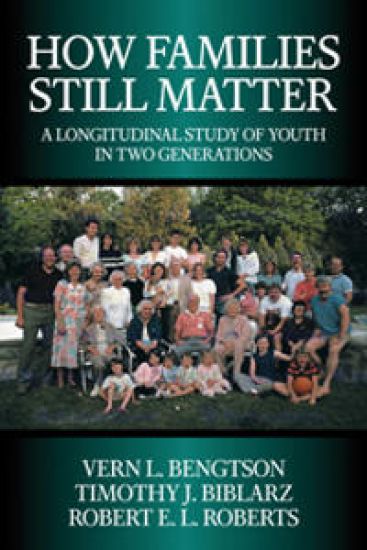
How Families Still Matter

How Families Still Matter

Vern L. Bengtson; Timothy J. Biblarz; Robert E. L. Roberts

Cambridge University Press
2002
sidottu
How Families Still Matter casts doubt on the conventional wisdom about family decline during the last decades of the twentieth century. The authors draw from the longest-running longitudinal study of families in the world - the Longitudinal Study of Generations, conducted at the University of Southern California - to discover whether parents are really less critical in shaping the life choices and achievements of their children than they were a generation ago. They compare the influence of parents (on self-confidence, values, and levels of achievement) on the Baby Boomer generation with that of Baby-Boomer parents on their own Generation-X children. The findings may surprise many readers. Generation-X youth showed higher levels of education, career attainments, and self-esteem than their parents as youth, and similar values were found across generations. They indicate the 'resilience' of family bonds across generations even against the backdrop of massive social and family changes since the 1960s.