Kirjojen hintavertailu – 12 903 735 kirjaa ja 27 kauppaa
Kirjailija
Timothy Ogden
Kirjat ja teokset yhdessä paikassa: 3 kirjaa, julkaisuja vuosilta 2011–2025, suosituimpiin kuuluu Financial Inclusion. Vertaile teosten hintoja ja tarkista saatavuus suomalaisista kirjakaupoista.
Over 30 percent of the world's adults lack access to basic financial tools—more often women, members of minority groups, and poor families. The abilities to buy what you need, when you need it, to put money aside for the future, and to withstand bad luck without financial ruin seem like basic elements of life in a functioning economy. But life is not that simple for people who lack financial tools. In fact, the tighter the budget, the more you need and benefit from financial services. Financial inclusion—or, put another way, having the tools necessary to take control of one's finances and make progress towards one's goals—is essential to a just and fair society. In Financial Inclusion: What Everyone Needs to Know, prominent experts Jonathan Morduch and Timothy Ogden explain in straightforward language how the lack of financial inclusion reinforces broader inequities in our society. Using their extensive backgrounds in finance, technology, economic change, and inequality, Morduch and Ogden detail efforts to guarantee that all people, rich and poor, have access to quality financial services and the ability to make prudent financial choices. Framed by the simple concept of equal access, this book explains the mechanisms of one of the most contentious and misunderstood parts of modern economics by answering a few core questions: What is financial inclusion? Why does it matter? How does it work? When doesn't it work? What are the risks? How can more people be included?
Over 30 percent of the world's adults lack access to basic financial tools—more often women, members of minority groups, and poor families. The abilities to buy what you need, when you need it, to put money aside for the future, and to withstand bad luck without financial ruin seem like basic elements of life in a functioning economy. But life is not that simple for people who lack financial tools. In fact, the tighter the budget, the more you need and benefit from financial services. Financial inclusion—or, put another way, having the tools necessary to take control of one's finances and make progress towards one's goals—is essential to a just and fair society. In Financial Inclusion: What Everyone Needs to Know, prominent experts Jonathan Morduch and Timothy Ogden explain in straightforward language how the lack of financial inclusion reinforces broader inequities in our society. Using their extensive backgrounds in finance, technology, economic change, and inequality, Morduch and Ogden detail efforts to guarantee that all people, rich and poor, have access to quality financial services and the ability to make prudent financial choices. Framed by the simple concept of equal access, this book explains the mechanisms of one of the most contentious and misunderstood parts of modern economics by answering a few core questions: What is financial inclusion? Why does it matter? How does it work? When doesn't it work? What are the risks? How can more people be included?
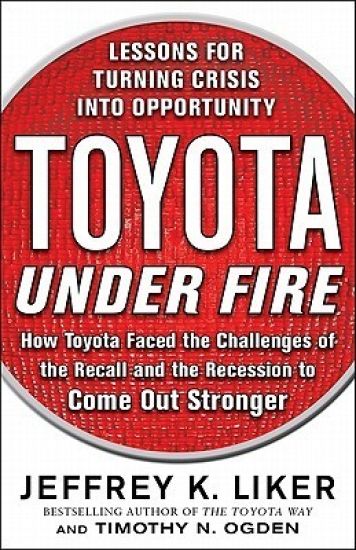
The definitive inside account of Toyota's greatest crisis—and lessons you can apply to your own company"Those who write off Toyota in the current climate of second guessing and speculation are making a profound mistake and need to read this book to get the facts. Toyota is a company that will channel the current challenges to push themselves to even more relentless continuous improvement."—Charles Baker, former Chief Engineer and Vice President for R&D, Honda of America"Toyota Under Fire is a superb book and should prove very helpful to American industry's understanding of the problems faced and how any company can prevent similar occurrences in the future."—Norman Bodek, author, founder of Productivity Press, and inductee in 2010 Industry Week Manufacturing Hall of Fame"As a former automotive supplier executive and student of Toyota, I was concerned to see the many negative reports and investigations into the quality and safety of its vehicles. Toyota Under Fire tells the story of how this great company is growing wiser and stronger by living its culture and values."—Michael Fisher, CEO, Cincinnati Children's Hospital Medical Center"Just as Toyota has put itself through excruciating soul-searching in order to understand what went wrong, so should we all take advantage of the opportunity for learning presented to us by Toyota's misfortune. In these pages, you will find that the actual circumstances were far more complex, nuanced, and uncertain than you saw reported in the news."—John Y. Shook, Chairman and CEO, Lean Enterprise Institute"The most comprehensive and detailed review to date of the circumstances that led to the crisis, and the events and contexts that caused it to escalate.”—Strategy & Business About the BookFor decades, Toyota has been setting standards that are the envy—and goal—of organizations worldwide. Its legendary management principles and business philosophy, first documented by Jeffrey K. Liker in his influential book The Toyota Way, changed the business world's approach to operational excellence. Granted unprecedented access to Toyota's facilities worldwide, Liker, along with Timothy N. Ogden, investigated the inside story of how Toyota faced the challenges of the recession and the recall crisis of 2009–2010. In both cases, the company was caught off guard—and found that a root cause of the challenges it faced was its failure to live up to its own principles. But the fundamentals were still there, and the company has ultimately come out of the most challenging years of its postwar existence even stronger than before. Toyota Under Fire chronicles all the events of the recession and the recall crisis in detail, providing valuable lessons any business leader can use to survive and thrive in a crisis, no matter how large:Crisis response must start by building a strong culture long before the crisis hits. Culture matters far more than decisions made by top executives. Investing in people, even in the depths of a recession, is the surest path to long-term profitability. Because it had founded its culture on such principles, Toyota didn’t need to amass an army of public relations, marketing, and legal experts to "put out the fire"; instead, it redoubled efforts to live up to its founding tenet, going "back to basics." Toyota began solving this crisis more than 70 years ago, when its organizational culture was first established. Apply the lessons of Toyota Under Fire to your company, and you'll meet any future management challenge calmly, responsibly, and effectively—the Toyota Way.