Kirjojen hintavertailu – 12 903 725 kirjaa ja 27 kauppaa

Kirjailija

Timothy R. Johnson

Kirjat ja teokset yhdessä paikassa: 5 kirjaa, julkaisuja vuosilta 1999–2023, suosituimpiin kuuluu S.O.L.D.: The Breakthrough System To Sell Less And Make More. Vertaile teosten hintoja ja tarkista saatavuus suomalaisista kirjakaupoista.

5 kirjaa

Kirjojen julkaisuvuodet: 1999–2023.

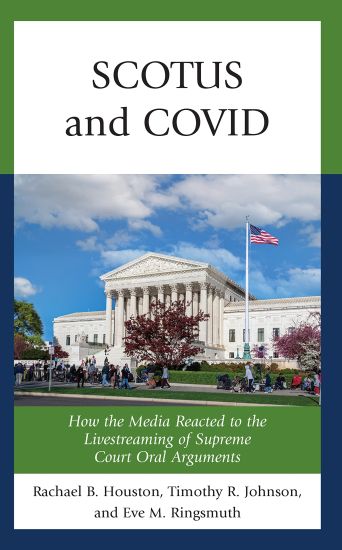
SCOTUS and COVID

SCOTUS and COVID

Rachael Houston; Timothy R. Johnson; Eve M. Ringsmuth

BLOOMSBURY PUBLISHING PLC
2023
sidottu
This book compares the volume and nature of online print and broadcast television coverage from major media outlets from all U. S. Supreme Court oral argument sessions during the October 2019, 2020, and 2021 Terms. The authors demonstrate that the move to livestreaming the Court’s oral argument sessions increased the frequency and depth of online print news media’s coverage in the short term but not in the long term. For both online print and broadcast outlets, their findings suggest that the benefits of increased transparency offered by livestreaming oral argument audio did not come with significant disadvantages for the Court in terms of long-term changes in its news media coverage. The authors analysis provides timely evidence that speaks to the current, and ongoing, debate about public access to the Supreme Court. It also speaks to the likely consequences of permanently continuing the practice of livestreaming oral argument audio and sheds light on the ramifications of other potential expansions in transparency at the Supreme Court, such as livestreaming opinion announcement audio or providing live video coverage of the Court’s proceedings. This work speaks to the impact of increased access to oral arguments and the inner workings of government institutions more broadly. Indeed, the U. S. Supreme Court was not the only institution to grapple with the constraints of the COVID-19 pandemic and opportunities for unprecedented, and instantaneous, access to anyone, anywhere. Better understanding the implications of the Court’s decision to livestream audio from its proceedings provides leverage on the consequences of greater government transparency for news media coverage and, by extension, individuals’ exposure to, and interaction with, government more generally.
SCOTUS and COVID

SCOTUS and COVID

Rachael Houston; Timothy R. Johnson; Eve M. Ringsmuth

ROWMAN LITTLEFIELD
2023
nidottu
This book compares the volume and nature of online print and broadcast television coverage from major media outlets from all U. S. Supreme Court oral argument sessions during the October 2019, 2020, and 2021 Terms. The authors demonstrate that the move to livestreaming the Court’s oral argument sessions increased the frequency and depth of online print news media’s coverage in the short term but not in the long term. For both online print and broadcast outlets, their findings suggest that the benefits of increased transparency offered by livestreaming oral argument audio did not come with significant disadvantages for the Court in terms of long-term changes in its news media coverage. The authors analysis provides timely evidence that speaks to the current, and ongoing, debate about public access to the Supreme Court. It also speaks to the likely consequences of permanently continuing the practice of livestreaming oral argument audio and sheds light on the ramifications of other potential expansions in transparency at the Supreme Court, such as livestreaming opinion announcement audio or providing live video coverage of the Court’s proceedings. This work speaks to the impact of increased access to oral arguments and the inner workings of government institutions more broadly. Indeed, the U. S. Supreme Court was not the only institution to grapple with the constraints of the COVID-19 pandemic and opportunities for unprecedented, and instantaneous, access to anyone, anywhere. Better understanding the implications of the Court’s decision to livestream audio from its proceedings provides leverage on the consequences of greater government transparency for news media coverage and, by extension, individuals’ exposure to, and interaction with, government more generally.
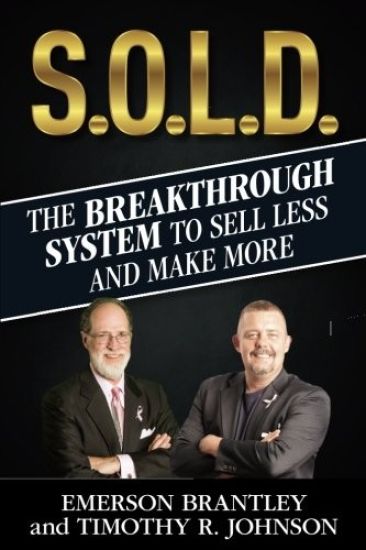
S.O.L.D.: The Breakthrough System To Sell Less And Make More

S.O.L.D.: The Breakthrough System To Sell Less And Make More

Timothy R. Johnson; Emerson Brantley

Celebrity Publishing
2018
nidottu
S. O. L. D. The Breakthrough System To Sell Less And Make MoreWhat happens when you mix a Marketing Pirate with the King of Connections? More sales and less work It's the formula that every salesperson, entrepreneur, and marketer wants to know... Emerson Brantley - The Marketing Pirate or Captain Copy. Emerson Brantley's credentials are impressive. Founder of WEB3Direct.com, Whytology(TM) Process Formula, Co-Founder Why-To-Wealth(TM) Marketing & Sales Strategy System (WhyToWealth.com) he is a thought leader, strategist and copywriter and the brains behind close-to 9,000 successful marketing campaigns. Emerson has worked worldwide, on amongst other things, the longest-running lead-generating TV infomercial ever aired. He has been dubbed "One of the Country's Top 50 Marketing Copywriters, based on the ability to generate sales." You can't argue with that Meanwhile, his co-star in S. O. L. D is Timothy R. Johnson who also answers to The King of Connections. He is the founder of S. O. L. D. Business Development Process, Co-Founder Why-To-Wealth(TM) and the Marketing & Sales Strategy System (WhyToWealth.com)Tim Johnson knows firsthand the consequences of poor marketing, networking, and sales processes. He learned the hard way by building several successful businesses from scratch. Like so many people, while Tim's success had its perks, he found it consumed more and more of his life. So much so, that he began to search for solutions to streamline his operations, to fix the "holes" in his staffing, sales and marketing processes, continue to network and build relationships, and put in automated systems and processes that made sure his clients had the same experience, consistently. His efforts paid off: Tim saw his business expand while cutting his workload by two-thirds. The combination of these two great minds are the foundations on which S. O. L. D. The Breakthrough System To Sell Less And Make More is based. About S. O. L. DUnlike other approaches, S. O. L. D unites your Marketing and Sales Strategy and will show you how to de-clutter your current systems and narrow-down your focus. In return, you will see results from both areas. If you have a business (no matter how big or small) you probably have some if not all of these worries and concerns: A marketing strategy that isn't workingThat your sales and marketing teams work independently from each otherThat these same teams are not bringing in the 'goods.'You have a message, but it isn't getting to the right peopleYou're not engaging with the right peopleYour business has hit the 'wall.'You give a lot but are getting little back in terms of financial rewardYou have 'lost' your wayYour company has merged with your competitors - it's hard to see how you stand out from the crowdSome of your clients take up too much time whereas others aren't getting the attention that they deserveAvoid long working hours with disappointing results-instead, make your sales and marketing strategies do the hard work Get your copy today.
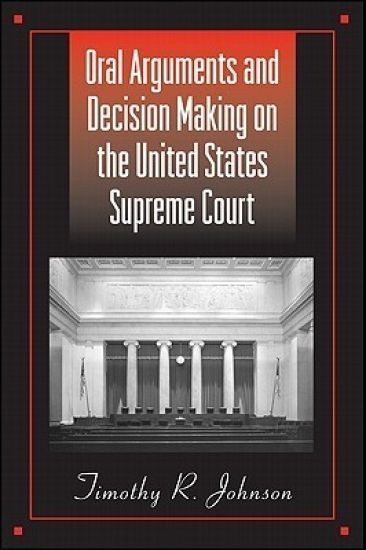
Oral Arguments and Decision Making on the United States Supreme Court

Oral Arguments and Decision Making on the United States Supreme Court

Timothy R. Johnson

State University of New York Press
2011
pokkari
How oral arguments influence the decisions of Supreme Court justices. Timothy R. Johnson focuses on an all-too-often ignored aspect of the Supreme Court's decision-making process by providing a systematic explanation of how justices use oral arguments to make substantive legal and policy decisions. Using the arguments filed to the Court in legal briefs, oral argument transcripts, notes taken by Justice Lewis F. Powell during oral arguments, conference notes and internal memos of justices, and Court opinions, the book analyzes justices' behavior during these proceedings. The result is an impressive account demonstrating that justices use oral arguments to gather information regarding legal and policy options in a case, the preferences of competing political institutions and actors, and institutional rules that might affect the choices they make.
Religious Institutions and Minor Parties in the United States

Religious Institutions and Minor Parties in the United States

Paul A. Djupe; Christophe P. Gilbert; Timothy R. Johnson; David Peterson

Praeger Publishers Inc
1999
sidottu
Gilbert et al. examine the impact of churches and church membership patterns on third parties and independent candidates in 20th-century U. S. politics. Candidates who choose not to run for office under the rubric of a major party face a well-known set of obstacles, yet the absence of discussion about the interconnections between religious institutions and minor parties is striking. The book presents a theoretical framework for understanding how religious institutions create, support, and sustain the political culture of local communities; by playing this role religious institutions support major parties and impede the electoral chances of political outsiders. The book's central finding is that third candidates are not privy to the ties that bind Democratic and Republican voters to their parties; one of the factors that creates and strengthens such ties is religion. Therefore, third candidates do best where church and party loyalties are weakest, or where third candidates have existing bases of support. The rare third candidate or minor party that possesses a base of support centered around a denomination or religious group can overcome such barriers. These conclusions are supported by analysis of census data, election returns, and voter surveys spanning the 20th century. Special attention is given to the 1992 and 1996 presidential candidacies of H. Ross Perot. This is an important analysis for scholars and other researchers dealing with American third parties and independent candidates and the impact of religion on politics.