Kirjojen hintavertailu – 12 903 725 kirjaa ja 27 kauppaa

Kirjailija

Timothy Rice

Kirjat ja teokset yhdessä paikassa: 8 kirjaa, julkaisuja vuosilta 1994–2022, suosituimpiin kuuluu Manual of Regulation-Focused Psychotherapy for Children (RFP-C) with Externalizing Behaviors. Vertaile teosten hintoja ja tarkista saatavuus suomalaisista kirjakaupoista.

8 kirjaa

Kirjojen julkaisuvuodet: 1994–2022.

Manual of Regulation-Focused Psychotherapy for Children (RFP-C) with Externalizing Behaviors
Manual of Regulation-Focused Psychotherapy for Children (RFP-C) with Externalizing Behaviors: A Psychodynamic Approach offers a new, short term psychotherapeutic approach to working dynamically with children who suffer from irritability, oppositional defiance and disruptiveness. RFP-C enables clinicians to help by addressing and detailing how the child’s externalizing behaviors have meaning which they can convey to the child. Using clinical examples throughout, Hoffman, Rice and Prout demonstrate that in many dysregulated children, RFP-C can: Achieve symptomatic improvement and developmental maturation as a result of gains in the ability to tolerate and metabolize painful emotions, by addressing the crucial underlying emotional component. Diminish the child’s use of aggression as the main coping device by allowing painful emotions to be mastered more effectively. Help to systematically address avoidance mechanisms, talking to the child about how their disruptive behavior helps them avoid painful emotions. Facilitate development of an awareness that painful emotions do not have to be so vigorously warded off, allowing the child to reach this implicit awareness within the relationship with the clinician, which can then be expanded to life situations at home and at school. This handbook is the first to provide a manualized, short-term dynamic approach to the externalizing behaviors of childhood, offering organizing framework and detailed descriptions of the processes involved in RFP-C. Supplying clinicians with a systematic individual psychotherapy as an alternative or complement to PMT, CBT and psychotropic medication, it also shifts focus away from simply helping parents manage their children’s misbehaviors. Significantly, the approach shows that clinical work with these children is compatible with understanding the children’s brain functioning, and posits that contemporary affect-oriented conceptualizations of defense mechanisms are theoretically similar to the neuroscience construct of implicit emotion regulation, promoting an interface between psychodynamics and contemporary academic psychiatry and psychology. Manual of Regulation-Focused Psychotherapy for Children (RFP-C) with Externalizing Behaviors: A Psychodynamic Approach is a comprehensive tool capable of application at all levels of professional training, offering a new approach for psychoanalysts, child and adolescent counselors, psychotherapists and mental health clinicians in fields including social work, psychology and psychiatry.

Manual of Regulation-Focused Psychotherapy for Children (RFP-C) with Externalizing Behaviors
Manual of Regulation-Focused Psychotherapy for Children (RFP-C) with Externalizing Behaviors: A Psychodynamic Approach offers a new, short term psychotherapeutic approach to working dynamically with children who suffer from irritability, oppositional defiance and disruptiveness. RFP-C enables clinicians to help by addressing and detailing how the child’s externalizing behaviors have meaning which they can convey to the child. Using clinical examples throughout, Hoffman, Rice and Prout demonstrate that in many dysregulated children, RFP-C can: Achieve symptomatic improvement and developmental maturation as a result of gains in the ability to tolerate and metabolize painful emotions, by addressing the crucial underlying emotional component. Diminish the child’s use of aggression as the main coping device by allowing painful emotions to be mastered more effectively. Help to systematically address avoidance mechanisms, talking to the child about how their disruptive behavior helps them avoid painful emotions. Facilitate development of an awareness that painful emotions do not have to be so vigorously warded off, allowing the child to reach this implicit awareness within the relationship with the clinician, which can then be expanded to life situations at home and at school. This handbook is the first to provide a manualized, short-term dynamic approach to the externalizing behaviors of childhood, offering organizing framework and detailed descriptions of the processes involved in RFP-C. Supplying clinicians with a systematic individual psychotherapy as an alternative or complement to PMT, CBT and psychotropic medication, it also shifts focus away from simply helping parents manage their children’s misbehaviors. Significantly, the approach shows that clinical work with these children is compatible with understanding the children’s brain functioning, and posits that contemporary affect-oriented conceptualizations of defense mechanisms are theoretically similar to the neuroscience construct of implicit emotion regulation, promoting an interface between psychodynamics and contemporary academic psychiatry and psychology. Manual of Regulation-Focused Psychotherapy for Children (RFP-C) with Externalizing Behaviors: A Psychodynamic Approach is a comprehensive tool capable of application at all levels of professional training, offering a new approach for psychoanalysts, child and adolescent counselors, psychotherapists and mental health clinicians in fields including social work, psychology and psychiatry.
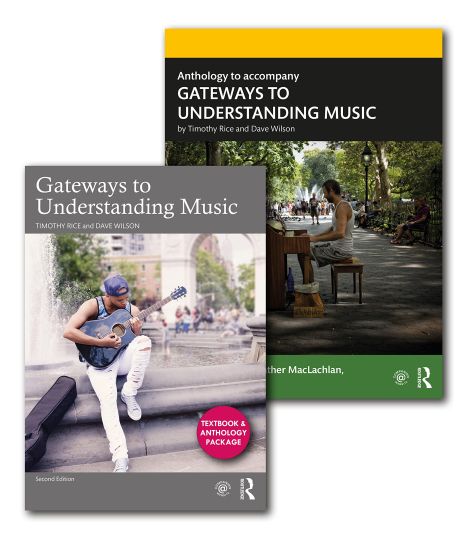
Gateways to Understanding Music (TEXTBOOK + ANTHOLOGY PACK)

Gateways to Understanding Music (TEXTBOOK + ANTHOLOGY PACK)

Timothy Rice; Dave Wilson

TAYLOR FRANCIS LTD
2022
muu
This two-book package contains the paperback textbook (978-1-032-21629-4) and paperback anthology (978-0-367-48538-2). Gateways to Understanding Music, Second Edition, explores music in all the categories that constitute contemporary musical experience: European classical, popular, jazz, and world music. Covering the oldest forms of human music making to the newest, this chronology presents music from a global rather than a Eurocentric perspective. Each of sixty "Gateways" addresses a particular genre, style, or period of music. Every Gateway opens with a guided listening example that unlocks a world of music through careful study of its structural elements. How did the piece come to be composed or performed? How did it respond to the social and cultural issues at the time, and what does that music means today? Students learn to listen to, explain, understand, and ultimately value the music they encounter in their world. The anthology to accompany the textbook is comprised of musical "texts." These broadly-defined texts—primarily musical scores—facilitate the integration of score study and music theory into the ethno-/musicology curriculum, a necessary focus in the training of the professional musician. As posed by the textbook, the last question in each modular "gateway" is "Where do I go from here?" This resource provides one more opportunity to go beyond the textbook to examine music scores and texts in even greater depth. The anthology is a combination of primary sources for study: musical scores, music transcriptions, along with a few primary source documents and musical exercises.
Gateways to Understanding Music

Gateways to Understanding Music

Timothy Rice; Dave Wilson

TAYLOR FRANCIS LTD
2022
sidottu
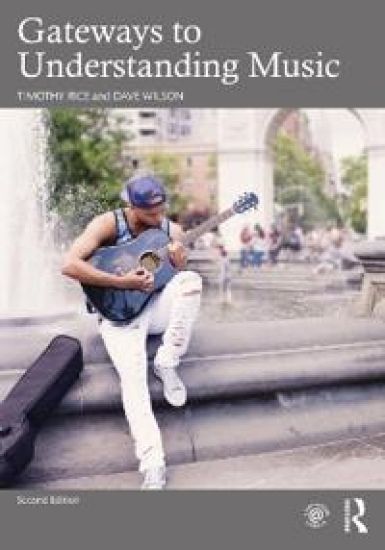
Gateways to Understanding Music, Second Edition, explores music in all the categories that constitute contemporary musical experience: European classical, popular, jazz, and world music. Covering the oldest forms of human music making to the newest, this chronology presents music from a global rather than a Eurocentric perspective. Each of 60 "gateways" addresses a particular genre, style, or period of music. Every gateway opens with a guided listening example that unlocks a world of music through careful study of its structural elements. How did the piece come to be composed or performed? How did it respond to the social and cultural issues at the time, and what does that music mean today? Students learn to listen to, explain, understand, and ultimately value all the music they encounter in their world. New to this edition is a broader selection of musical examples that reflect the values of diversity, equity, and inclusion advocated by North American universities. Eight gateways have been replaced. A timeline of gateways helps students see the book’s historical narrative at a glance. Features Values orientation - Diverse, equitable, and inclusive approach to music history. All genres of music - Presents all music as worthy of study, including classical, world, popular, and jazz. Global scope within a historical narrative - Begins with small-scale forager societies up to the present, with a shifting focus from global to European to American influences. Recurring themes - Aesthetics, emotion, social life, links to culture, politics, economics, and technology. Modular framework - 60 gateways - each with a listening example - allow flexibility to organize chronologically or by the seven themes. Consistent structure - With the same step-by-step format, students learn through repeated practice how to listen and how to think about music. Anthology of scores - For those courses that use the textbook in a music history sequence. Gateways to Understanding Music continues to employ a website to host the audio examples and instructor’s resources.
Gateways to Understanding Music

Gateways to Understanding Music

Timothy Rice; Dave Wilson

TAYLOR FRANCIS LTD
2022
nidottu
Gateways to Understanding Music, Second Edition, explores music in all the categories that constitute contemporary musical experience: European classical, popular, jazz, and world music. Covering the oldest forms of human music making to the newest, this chronology presents music from a global rather than a Eurocentric perspective. Each of 60 "gateways" addresses a particular genre, style, or period of music. Every gateway opens with a guided listening example that unlocks a world of music through careful study of its structural elements. How did the piece come to be composed or performed? How did it respond to the social and cultural issues at the time, and what does that music mean today? Students learn to listen to, explain, understand, and ultimately value all the music they encounter in their world. New to this edition is a broader selection of musical examples that reflect the values of diversity, equity, and inclusion advocated by North American universities. Eight gateways have been replaced. A timeline of gateways helps students see the book’s historical narrative at a glance. Features Values orientation - Diverse, equitable, and inclusive approach to music history. All genres of music - Presents all music as worthy of study, including classical, world, popular, and jazz. Global scope within a historical narrative - Begins with small-scale forager societies up to the present, with a shifting focus from global to European to American influences. Recurring themes - Aesthetics, emotion, social life, links to culture, politics, economics, and technology. Modular framework - 60 gateways - each with a listening example - allow flexibility to organize chronologically or by the seven themes. Consistent structure - With the same step-by-step format, students learn through repeated practice how to listen and how to think about music. Anthology of scores - For those courses that use the textbook in a music history sequence. Gateways to Understanding Music continues to employ a website to host the audio examples and instructor’s resources.
May It Fill Your Soul

May It Fill Your Soul

Timothy Rice

University of Chicago Press
1994
nidottu
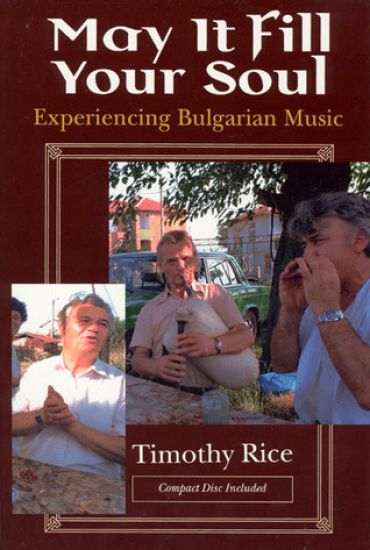
This ethnography documents and interprets the history of folk music, song and dance in Bulgaria over a 70-year period of dramatic change. From 1920 to 1989, Bulgaria changed from a nearly medieval village society to a Stalinist-planned industrial economy to a mix of capitalist and socialist markets and cultures. In the context of this history, Rice brings Bulgarian folk music to life by focusing on the biography of the Varimezov family, including the musician Kostadin and his wife Todora, a singer. Combining interviews with his own experiences of learning how to play, sing and dance Bulgarian folk music, Rice presents a detailed account of traditional, aural learning processes in the ethnomusicological literature. Using a combination of traditionally dichotomous musicological and ethnographic approaches, Rice tells the story of how individual musicians learned their tradition, how they lived it during the pre-Communist era of family farming, how the tradition changed with industrialization brought under Communism, and finally, how it flourished and evolved in the recent, unstable political climate. This work - complete with a compact disc and musical examples - contributes not only to ethnomusicological theory and method, but also to our understanding of Slavic folklore, Eastern European anthropology and cultural processes in Socialist states.
May It Fill Your Soul

May It Fill Your Soul

Timothy Rice

University of Chicago Press
1994
sidottu
This ethnography documents and interprets the history of folk music, song and dance in Bulgaria over a 70-year period of dramatic change. From 1920 to 1989, Bulgaria changed from a nearly medieval village society to a Stalinist-planned industrial economy to a mix of capitalist and socialist markets and cultures. In the context of this history, Rice brings Bulgarian folk music to life by focusing on the biography of the Varimezov family, including the musician Kostadin and his wife Todora, a singer. Combining interviews with his own experiences of learning how to play, sing and dance Bulgarian folk music, Rice presents a detailed account of traditional, aural learning processes in the ethnomusicological literature. Using a combination of traditionally dichotomous musicological and ethnographic approaches, Rice tells the story of how individual musicians learned their tradition, how they lived it during the pre-Communist era of family farming, how the tradition changed with industrialization brought under Communism, and finally, how it flourished and evolved in the recent, unstable political climate. This work - complete with a compact disc and musical examples - contributes not only to ethnomusicological theory and method, but also to our understanding of Slavic folklore, Eastern European anthropology and cultural processes in Socialist states.