Kirjojen hintavertailu – 12 903 725 kirjaa ja 27 kauppaa

Kirjailija

Timothy Venning

Kirjat ja teokset yhdessä paikassa: 33 kirjaa, julkaisuja vuosilta 2005–2026, suosituimpiin kuuluu Royal Mysteries: The Medieval Period. Vertaile teosten hintoja ja tarkista saatavuus suomalaisista kirjakaupoista.

33 kirjaa

Kirjojen julkaisuvuodet: 2005–2026.

Royal Mysteries: The Medieval Period

Royal Mysteries: The Medieval Period

Timothy Venning

PEN SWORD BOOKS LTD
2026
nidottu
Royal murder mysteries never fail to intrigue readers and TV viewers. Here are some of the most haunting and even horrific episodes from the middle ages, based on latest historical research and historiography, and authentic and rare sources, including archaeology and DNA evidence, uncovering wonderful tales of pathos, tragedy, suffering and romance. This is history for specialists and general readers - and sceptics - given the intense media coverage, including TV, and interest in exciting and accessible popular history. The famous and also less well-known mysteries, which may be new to readers, surrounding British Royalty, are included from around the 11th to the 15th centuries. The murder mysteries show personal and individual tragedy but are also a vehicle for historical analysis. William II - William Rufus - was he murdered or killed accidentally by a 'stray arrow', allowing brother Henry to seize the throne, or was it God's punishment for William's irreligious living and persecution of the church? Or was Edward II murdered at the instigation of Queen Isabella - 'she-wolf of France' - and her lover, Roger Mortimer. who assumed the throne? Did he survive to live peaceably in Italy? Richard II resembled Edward II, as a rather inadequate figure, and was deposed by his rival, Henry IV. Did he die, and if so, was it murder or suicide? Was Edward IV a bigamist? Mystery, if not murder, but wrapped in dynastic rivalry and sex scandal, and usurpation of the throne. The 'Princes in the Tower' and who who killed them if anyone? A beguiling mystery for over 500 years with their usurping uncle Richard III's guilt contested by 'Ricardians'.
Born to be Kings?

Born to be Kings?

Timothy Venning

PEN SWORD BOOKS LTD
2026
sidottu
A detailed academic history which reads like an 'inside story' and shows the British state following the rise to great power status after the Treaty of Utrecht in 1713. The Jacobite challenge came from within with fear of foreign invasion by international great power rivals, France and Spain in support of the Stuarts. The challenge went to the heart of the British establishment following the defeat and exile of James II and advent of William and Mary - the 'Glorious Revolution' in 1688 and the reigns of the Hanoverian George 1 and II. This challenge was seen as an existential threat to the British state as a great power. English Tory fears of hostility from the new Hanoverian heir lead to attempt to pre-empt Hanoverian Succession by bringing in James II's son, but he refuses to help this by abandoning Catholicism. At crucial moment, with new king George I disliked and significant Tory grass-roots plotting, Jacobite sponsor Louis XIV dies - then hired shipping is wrecked in Channel storm. The latter recurs for Bonnie Prince Charlie in 1744. The following themes caused great worries for governments and even after final resolution left doubt - even the Hanoverians contemplate decamping to Germany. Included were the birth of a male heir to James II; dissent and religion - trial of the Seven Bishops; William invasion was successful but with moves to back Mary as English sole queen; Nine Years War and opposition to William III's Grand Alliance of Protestant powers and distant support for Catholic Stuarts; fear of French invasion and coup and William III regicide; Hanoverian succession but Scottish Stuart opposition with great power support of France, Sweden, Russia, Spain; the 'Fifteen' 1715-16 and 'Forty-five' 1745-6 rebellions and invasions defeated but panic in Westminster government; lingering Jacobite support and plots of coups against George II.
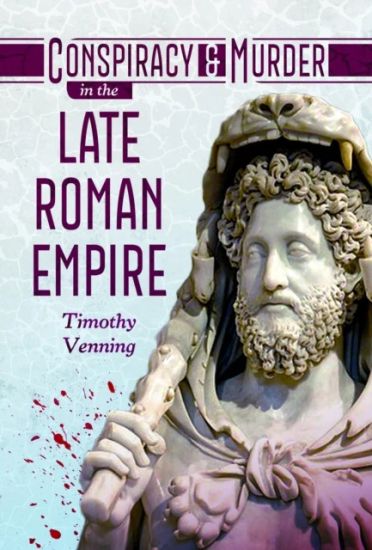
Conspiracy and Murder in the late Roman Empire

Conspiracy and Murder in the late Roman Empire

Timothy Venning

PEN SWORD BOOKS LTD
2026
sidottu
A powerful and graphic text making readers feel involved and 'being there', and based on deep academic research in original and secondary sources. A revisionist history casting vivid light on emperors, cronies, families, rivals, revealing murder, conspiracy, betrayal - almost all known 'sins' - and in the context of survival and foundation of the Roman Empire, East and West. The great names are portrayed with triumphs and failures. Hadrian's indiffereant record including Britain, Commodious 'philosopher king' and linked to Prince Albert in the 19th century, Constantine the Great and Christian empire of East and West, Julian's 'apostacy' and pagan revival resisted, and finally the Goths and the Christian empire.
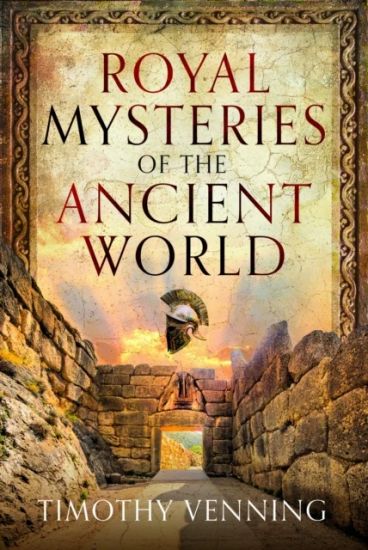
Royal Mysteries of the Ancient World

Royal Mysteries of the Ancient World

Timothy Venning

PEN SWORD BOOKS LTD
2026
sidottu
Mysteries of rulers of Ancient World, Greece, Rome and Mesopotamia in Near East and Middle East involving great empire - Persia (modern Iran) - when the huge region was the centre of world geopolitics. Text is deeply researched in primary and secondary sources. History and legend are set out and distinguished. The period goes up to the Christian Roman Empire of Constantine the Great, and includes key figures - Cyrus the Great, Darius, Philip of Macedon, Alexander the Great, Julius Caesar, Claudius, Mark Antony, Augustus, Caligula – many known to readers. And the story has fascinating intimate and even murderous accounts of competition among the elite, both admirable and incompetent, and even sordid.
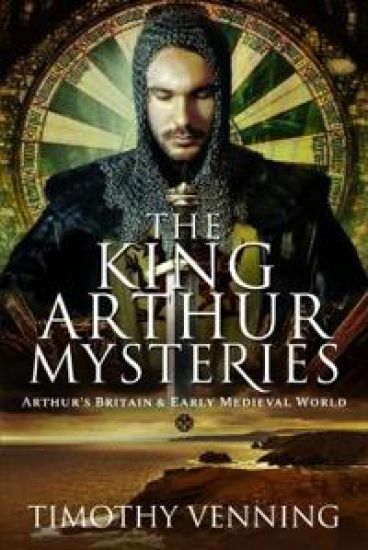
The King Arthur Mysteries

The King Arthur Mysteries

Timothy Venning

PEN SWORD BOOKS LTD
2026
nidottu
An up-to-date and comprehensive guide to the history of the 'Arthurian' phenomenon - the imaginary and historical world of the great British warlord and one of the huge historical mysteries of early and medieval Britain. The Arthurian story, based on fact and fiction, is central to Britain's 'creation myth' and the concept of Britain's heroic past. This is a deeply researched and scholarly but essentially accessible history and analysis for general readers and specialists and based on an impressive array of sources including Romano-British, Anglo-Saxon, rare medieval English, French and German sources, and archaeology - essential for modern historical research in early history. Modern and contemporary historiography is covered including 'debunking' treatments. The study surveys King Arthur in fact and fiction, his family, knights, and the legends that have grown up around them and developed to the enduring interest from history, literature to TV and film.
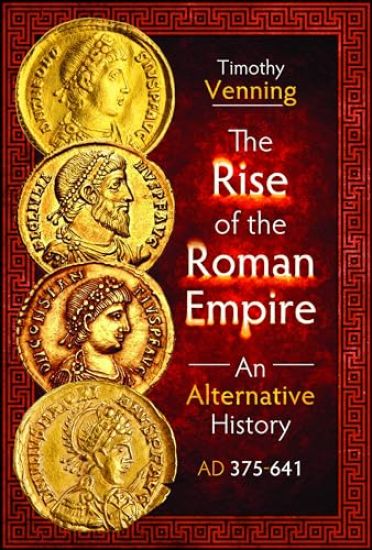
The Rise of the Roman Empire: An Alternative History, AD 375-641

The Rise of the Roman Empire: An Alternative History, AD 375-641

Timothy Venning

PEN SWORD BOOKS LTD
2025
sidottu

Halvin toimitettuna 38,00 €

An alternative history of success rather than decline anf fall. The actual history is set out and the alternative history with Old Time Lines (OTL) for reference. It is a vivid narrative, deeply researched, full of events and people, great and minor igur6es who come to life. It is a story of division and controversy concerning imperial and dynastic ambition and struggle, often caustic family relationships, cultural and religious disputes with surviving paganism and the classical philosophy of Neo-Platonism, and exandng Christianity in church and state in both Empires. The Empires are expanding in Europe, the Middle East and Africa. Division and crisis is followed by restoration, more division but finally re-unification.
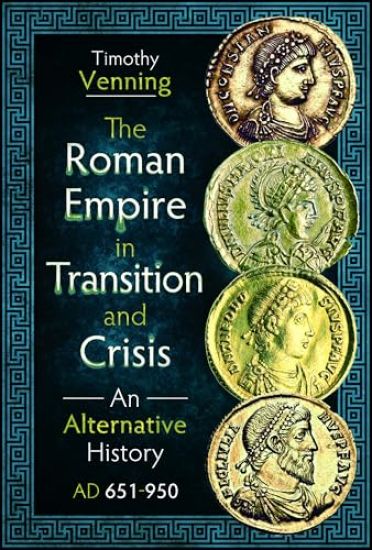
The Roman Empire in Transition and Crisis

The Roman Empire in Transition and Crisis

Timothy Venning

PEN SWORD BOOKS LTD
2025
sidottu
This is not a success story but one of transition and ultimate fall. It is detailed, hugely researched, full of action, peronality, and a vivid narrative of political struggle for imperial power as Roman Emperor. It is especially impresive on the role of women, the tangled personal lives, of the elite family competition. And all against the backdrop of transition and decline. But struggle and competition take the Roman Empire and its agents, military and civil, to action on a global scale, to extreme northern Europe, Europe, the Balkaons, Near and Middle East, South and East Asia, Africa and even fringes of (later) America. And all to defend or extend imperial interest. But defence against declne is always presnent and a consant plea is for 'Something to be done' to keep the show on the road. The actual history is set out in brief with the time lines, original Original Time Lines (OTL). Here is the changing and struggling Empire with Western and Eastern Empires and emperors and popes, and Catholic and Orthordox churches, and with theology, philosophy and culture emerging from a Classical world . The list of emperors and empresses runs from AD 496-950 - from mid-empire to imperial evening and fall.
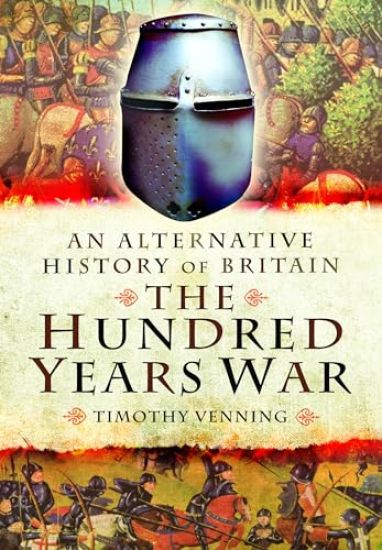
An Alternative History of Britain: The Hundred Years War
Continuing his exploration of the alternative paths that British history might so easily have taken, Timothy Venning turns his attention to the Hundred Years War between England and France. Could the English have won in the long term, or, conversely, have been decisively defeated sooner? Among the many scenarios discussed are what would have happened if the Black Prince had not died prematurely of the Black Death, leaving the 10-year-old Richard to inherit Edward IIIs crown. What would have been the consequences if France's Scottish allies had been victorious at Neville's Cross in 1346, while most English forces were occupied in France? What if Henry V had recovered from the dysentery that killed him at 35, giving time for his son Henry VI to inherit the combined crowns of France and England as a mature (and half-French) man rather than an infant controlled by others? And what if Joan of Arc had not emerged to galvanize French resistance at Orleans? While necessarily speculative, all the scenarios are discussed within the framework of a deep understanding of the major driving forces, tensions and trends that shaped British history and help to shed light upon them. In so doing they help the reader to understand why things panned out as they did, as well as what might have been in this fascinating period that still arouses such strong passions on both sides of the Channel.
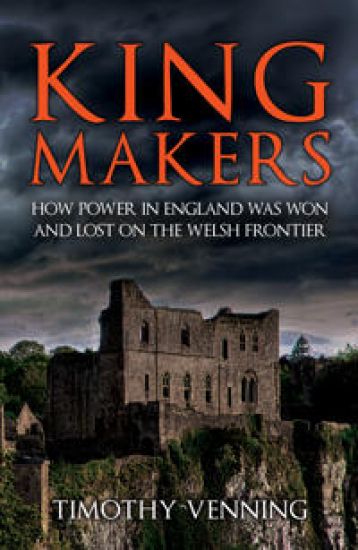
Kingmakers

Kingmakers

Timothy Venning

AMBERLEY PUBLISHING
2023
pokkari
For a medieval English king, delegation was a necessary evil; and nowhere more necessary – nor more potentially disastrous – than on the Anglo-Welsh borders. The Marcher lords first empowered by William I were relied upon by subsequent Norman and Plantagenet kings to protect the dangerous frontiers of the realm. In Wales, as in Ireland, the smaller size and military weakness of divided neighbouring states encouraged conquest, with the seized lands enhancing the power of the aggressive English lords. They were granted ever greater authority by the monarch, to the point where they believed they ruled like kings. They intermarried, schemed for extra lands and snatched power in a complex and often violent political process. Owing to their resources and unparalleled military effectiveness, they soon came to overawe kings and dominate national events. The strength of the Marcher lords would come to the fore at numerous times in the nation’s history in the shape of notorious figures such as Simon de Montfort and Roger Mortimer. The civil war of King Stephen’s reign, the baronial resistance to King John, the overthrow of Edward II and Richard II; all of these crises turned upon the involvement of the lords of the Marches. Timothy Venning explores their mentality and reveals the dramatic careers both of those who prospered from their loyalty to the king and those whose power was gained by treachery – from the Norman Conquest to the beginnings of the Tudor dynasty.
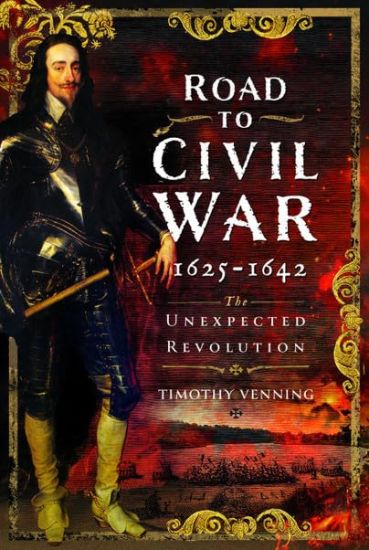
Road to Civil War, 1625-1642

Road to Civil War, 1625-1642

Timothy Venning

PEN SWORD BOOKS LTD
2023
sidottu
A revisionist history showing a gradual build-up of opposition and a drift to conflict which few expected or wanted. And this was despite growing Stuart absolutism, threats to Parliament and the accepted civil order and religious controversy. It is forensic study, full of fascinating and even unexpected details, principal actors come to life and readers will feel involved in an existential crisis of the British state(s). The study of the three Kingdoms covers the major themes of religious dispute with Laud, Wentworth and Strafford - towering figures - church reform, 'godly'religions and explosion of 'news' and pamphlets, the King and Lords and Commons, the Queen's, often suspect influence, King Charles' absolutism and rigidity, and iconic events like the Grand Remonstance, arrest of the Five Members, Charles' departure from London and the raising of the Royal Standard for war.
Royal Mysteries of the Stuart and Georgian Periods

Royal Mysteries of the Stuart and Georgian Periods

Timothy Venning

PEN SWORD BOOKS LTD
2023
sidottu
'There is nothing new under the sun', a phrase ascribed originally to King Solomon, applies to the present book, with echoes of 'modern' themes exposing royal scandal, sex, corruption, political absolutism - attempted - religious controversy, danger of mass-terrorism, murder and 'suspicious' deaths, 'fake news' and international threat from superpowers. And all focussing on inside stories which today would be 'investigative journalism' with huge popular media interest. This is history for both specialists and, especially, for general readers, given media interest, including TV and film coverage in 'exciting' popular history, as set out by the author. The earlier 'Royal Mysteries' in the series were full of tragedy, suffering, pathos, heroism and romance, but the present set are equally interesting and disturbing and revisionist. These include the alleged attempt to murder James I and VI before the became King of England; the scandal at court involving 'poisoned tarts', James' 'toy-boy', and a subsequent murder trial. And the following questions and mysteries: did Charles II really promise to convert to Catholicism to please Louis XIV; did Charles marry his mistress Lucy Walter, mother of rebel Duke of Monmouth; was James II and VII an enlightened religious reformer or trying to convert England to Catholicism - the religion of European superpowers; did George I 'disappear' (a 'hit' in modern terms) his divorced wife's lover before ascending the English throne; did the unpopular Duke of Cumberland murder his gay lover; did the hugely admired 'respectable' George III, devoted husband and father, marry a middle-class Quaker woman?
Royal Mysteries of the Tudor Period

Royal Mysteries of the Tudor Period

Timothy Venning

PEN SWORD BOOKS LTD
2023
sidottu
The Tudor period is familiar to British public in reading and viewing in books, TV series and film - list is endless, from Shakespeare and Fletcher in the 1600s to Hilary Mantel et al, and involving internationally famous authors and actors. This is backdrop to the 'Royal Mysteries' which reflect aspects of enduring modern interest. These include royal family drama, sex, scandal, violence, tragedy, murder both judicial and from personal rivalry. The period is dominated and overshadowed by the gigantic and brutal figure of Henry VIII , the 'British Stalin', with his six wives with two got rid of by judicial murder. Royal Mysteries occur throughout the period. The battle of Bosworth Field in 1485 did not end the Wars of the Roses, Henry VII's claim was disputed by Pretenders, and following the unresolved disappearance of the 'Princes in the Tower', Lambert Simnel and Perkin Warbeck with considerable and allegedly Yorkist support. Then came Anne Boleyn, who to many, including modern writers and top historians, a religious reformer, idealist and gifted woman, ruthlessly put down and maligned and executed by the brutal Henry VIII and victim of manipulating figures like Cromwell in a royal court full of 'spin' and 'fake news'. And the stories Elizabeth I and Mary Queen of Scots are similarly packed with mystery and scandal. Elizabeth's possible suitor and potential husband was Robert Dudley and his ailing wife died in suspicious circumstances. And the long saga of Elizabeth and Mary involved Mary's tangled affairs involving murder and conspiracy to replace Elizabeth on the English throne.
The Fall of Cromwell's Republic and the Return of the King
This book completes the series of studies of the 'British Revolution of the Three Kingdoms of England and Wales, Scotland and Ireland ' and covers the period from the fall of the 'failed state' and Protectorate in 1657 to the restoration of the Stuart monarchy and Charles II in 1660, examines the Restoration settlement in depth and a high point in Stuart pro-French and Catholic policy - contrary to the 1660 Restoration understanding when Charles !! vowed reluctance 'go on {his} travels again' and follows the Stuart Restoration and pro-French - and pro-Catholic foreign policy to 1670. Cromwell's death had signalled the end of an overarching figure who held the failing state together and began England's nascent 'great power' foreign and 'colonial' policy. It covers Richard Cromwell's emergence and as a figure far from the 'Tumbledown Dick' of popular legend. Also, the remarkable role of General George Monck as the genial military man guiding the failing and chaotic state to Restoration and stability. Monck underpinned the gentry and merchant class as the root of state and society which outlived civil wars, military dictatorship, political chaos and Stuart monarchical rule.
A Chronology of Medieval British History

A Chronology of Medieval British History

Timothy Venning

TAYLOR FRANCIS LTD
2022
nidottu
A Chronology of Medieval British History 1307–1485 is a year-by-year guide to political, military, religious and cultural developments in the states within the British Isles from 1307-1485. The book uses a range of primary sources to provide a detailed and comprehensive narrative of events as they occurred. Throughout, the dating and accuracy of the records are identified, and problems of interpretation highlighted. The result is both a narrative of developments in parallel and inter-connected polities, and an ‘epitome’ of source material. Where exact data is difficult to come by or problematic on account of the political bias of the sources, this is evaluated and various options in interpretation referenced along with any recent developments in study and interpretation by academic experts. Using a chronological framework and dividing the material into separate sections for each state or region each year to allow for easy cross-referencing, A Chronology of Medieval British History 1307–1485 is ideal for students of medieval British and European history.
A Chronology of Medieval British History

A Chronology of Medieval British History

Timothy Venning

TAYLOR FRANCIS LTD
2022
nidottu
A Chronology of Medieval British History 1066–1307 covers events in British history, starting with the arrival of the new Norman ruling dynasty which ‘connected’ British politics, culture, religion and society more closely to mainland Europe, and ending with Edward I’s death and Robert Bruce’s revolt in 1307. The book is designed as a year-by-year guide to political, military, religious and cultural developments, centred on the states within the British Isles – England, Scotland, the Welsh states until annexation in 1282, and Ireland until conquest in the 1170s. Throughout the book, a detailed but succinct narrative of events is provided, clearly explaining what happened and when. The relevant sources and the latest academic studies for each period are listed, and any difficulties relating to the dating, accuracy and interpretation of records are identified. Comprehensive and accessible, A Chronology of Medieval British History 1066–1307 will be of great use to students of medieval British and European history.
If Rome Hadn't Fallen

If Rome Hadn't Fallen

Timothy Venning

Pen Sword Military
2020
nidottu
This is a fascinating exploration of how the history of Europe, and indeed the world, might have been different if the Western Roman Empire had survived the crises that pulled it apart in the 4th and 5th centuries. Dr Timothy Venning starts by showing how that survival and recovery might plausibly have happened if several relatively minor things had been different. He then moves on to discuss a series of scenarios which might have altered the course of subsequent history dramatically. Would the survival of a strong Western Empire have assisted the Eastern (Byzantine) Empire in halting the expansion of Islam in the Middle East and North Africa? How would the Western Roman Empire have handled the Viking threat? Could they even have exploited the Viking discovery of America and established successful colonies there? While necessarily speculative, all the scenarios are discussed within the framework of a deep understanding of the major driving forces, tensions and trends that shaped European history and help to shed light upon them. In so doing they help the reader to understand why things panned out as they did, as well as what might have been.
An Alternative History of Britain: The Tudors

An Alternative History of Britain: The Tudors

Timothy Venning

Pen Sword Military
2020
nidottu
Continuing his exploration of the pathways of British history, Timothy Venning examines the turning points of the Tudor period, though he also strays over into the early Stuart period. As always, he discusses the crucial junctions at which History could easily have taken a different turn and analyses the possible and likely results. While necessarily speculative to a degree, the scenarios are all highly plausible and rooted in a firm understanding of actually events and their context. In so doing, Timothy Venning gives the reader a clearer understanding of the factors at play and why things happened the way they did, as well as a tantalizing view of what might so easily have been different. Key scenarios discussed in this volume include: Did the pretenders Lambert Simnel and Perkin Warbeck ever have a realistic chance of a successful invsasion/coup? If Henry Fitzroy, Henry VIIIs illegitimate son, had not died young, might he have been a suitable King or at least Regent on the Kings death? What if Edward VI had not died at 15 but reigned into the 1560s and 70s? How might the Spanish Armada have succeeded in landing an army in England, and with what likely outcome?
A Chronology of Medieval British History
A Chronology of Medieval British History 1307–1485 is a year-by-year guide to political, military, religious and cultural developments in the states within the British Isles from 1307-1485. The book uses a range of primary sources to provide a detailed and comprehensive narrative of events as they occurred. Throughout, the dating and accuracy of the records are identified, and problems of interpretation highlighted. The result is both a narrative of developments in parallel and inter-connected polities, and an ‘epitome’ of source material. Where exact data is difficult to come by or problematic on account of the political bias of the sources, this is evaluated and various options in interpretation referenced along with any recent developments in study and interpretation by academic experts. Using a chronological framework and dividing the material into separate sections for each state or region each year to allow for easy cross-referencing, A Chronology of Medieval British History 1307–1485 is ideal for students of medieval British and European history.
A Chronology of Medieval British History
A Chronology of Medieval British History 1066–1307 covers events in British history, starting with the arrival of the new Norman ruling dynasty which ‘connected’ British politics, culture, religion and society more closely to mainland Europe, and ending with Edward I’s death and Robert Bruce’s revolt in 1307. The book is designed as a year-by-year guide to political, military, religious and cultural developments, centred on the states within the British Isles – England, Scotland, the Welsh states until annexation in 1282, and Ireland until conquest in the 1170s. Throughout the book, a detailed but succinct narrative of events is provided, clearly explaining what happened and when. The relevant sources and the latest academic studies for each period are listed, and any difficulties relating to the dating, accuracy and interpretation of records are identified. Comprehensive and accessible, A Chronology of Medieval British History 1066–1307 will be of great use to students of medieval British and European history.
A Chronology of the Crusades

A Chronology of the Crusades

Timothy Venning; Peter Frankopan

Routledge
2019
nidottu
A Chronology of the Crusades provides a day-by-day development of the Crusading movement, the Crusades and the states created by them through the medieval period. Beginning in the run-up to the First Crusade in 1095, to the fall of Constantinople in 1453, and ending with the Turkish attack on Belgrade in 1456, this reference is a comprehensive guide to the events of each Crusade, concentrating on the Near East, but also those Christian expeditions sanctioned by the Papacy as ‘Crusades’ in the medieval era. As well as clashes between Christians and Muslims in the Latin States, Timothy Venning also chronicles the Albigensian Crusade, clashes in Anatolia and the Balkans and the Reconquista in the Iberian Peninsula. Both detailed and accessible, this chronology draws together material from contemporary Latin/Frankish, Byzantine and Arab/Muslim sources with assessment and explanation to produce a readable narrative which gives students an in-depth overview of one of the most enduringly fascinating periods in medieval history. Including an introduction by Peter Frankopan which summarises and contextualises the period, this book is an essential resource for students and academics alike.