Kirjojen hintavertailu – 12 903 724 kirjaa ja 27 kauppaa

Kirjailija

Tin Lun LAM

Kirjat ja teokset yhdessä paikassa: 5 kirjaa, julkaisuja vuosilta 2012–2024, suosituimpiin kuuluu Introduction to Intelligent Robot System Design. Vertaile teosten hintoja ja tarkista saatavuus suomalaisista kirjakaupoista.

5 kirjaa

Kirjojen julkaisuvuodet: 2012–2024.

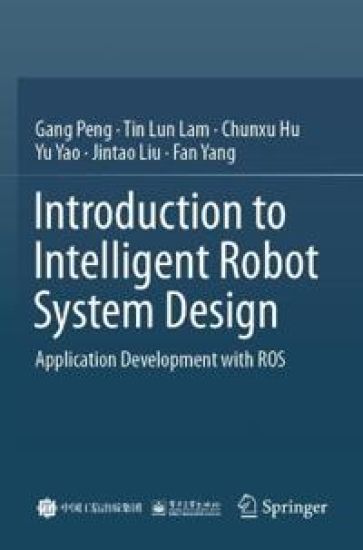
Introduction to Intelligent Robot System Design

Introduction to Intelligent Robot System Design

Gang Peng; Tin Lun LAM; Chunxu Hu; Yu Yao; Jintao Liu; Fan Yang

SPRINGER VERLAG, SINGAPORE
2024
nidottu
This book introduces readers to the principles and practical applications of intelligent robot system with robot operating system (ROS), pursuing a task-oriented and hands-on approach. Taking the conception, design, implementation, and operation of robot application systems as a typical project, and through “learning-by-doing, practicing-while-learning” approach, it familiarizes readers with ROS-based intelligent robot system design and development step by step. The topics covered include ROS principles, mobile robot control, Lidar, simultaneous localization and mapping (SLAM), navigation, manipulator control, image recognition, vision calibration, object grasping, vision SALM, etc., with typical practical application tasks throughout the book, which are essential to mastering development methods for intelligent robot system. Easy to follow and rich in content, the book can be used at colleges and universities as learning material and a teaching reference book for “intelligent robot,” “autonomous intelligent system,” “robotics principles,” and “robot system application development with ROS” in connection with automation, robotics engineering, artificial intelligence (AI), mechatronics, and other related majors. The book can assist in mastering the development and design of robot systems and provide the necessary theoretical and practical references to cultivate robot system development capabilities and can be used as teaching material for engineering training and competitions, or for reference, self-study, and training by engineering and technical personnel, teachers, and anyone who wants to engage in intelligent robot system development and design.
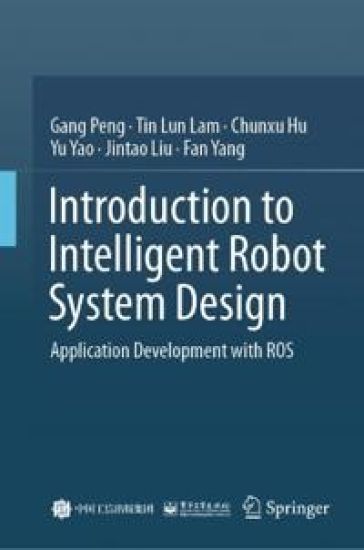
Introduction to Intelligent Robot System Design

Introduction to Intelligent Robot System Design

Gang Peng; Tin Lun LAM; Chunxu Hu; Yu Yao; Jintao Liu; Fan Yang

SPRINGER VERLAG, SINGAPORE
2023
sidottu
This book introduces readers to the principles and practical applications of intelligent robot system with robot operating system (ROS), pursuing a task-oriented and hands-on approach. Taking the conception, design, implementation, and operation of robot application systems as a typical project, and through “learning-by-doing, practicing-while-learning” approach, it familiarizes readers with ROS-based intelligent robot system design and development step by step. The topics covered include ROS principles, mobile robot control, Lidar, simultaneous localization and mapping (SLAM), navigation, manipulator control, image recognition, vision calibration, object grasping, vision SALM, etc., with typical practical application tasks throughout the book, which are essential to mastering development methods for intelligent robot system. Easy to follow and rich in content, the book can be used at colleges and universities as learning material and a teaching reference book for “intelligent robot,” “autonomous intelligent system,” “robotics principles,” and “robot system application development with ROS” in connection with automation, robotics engineering, artificial intelligence (AI), mechatronics, and other related majors. The book can assist in mastering the development and design of robot systems and provide the necessary theoretical and practical references to cultivate robot system development capabilities and can be used as teaching material for engineering training and competitions, or for reference, self-study, and training by engineering and technical personnel, teachers, and anyone who wants to engage in intelligent robot system development and design.
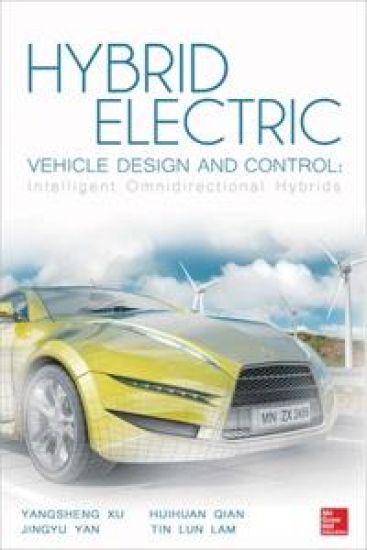
Hybrid Electric Vehicle Design and Control: Intelligent Omnidirectional Hybrids

Hybrid Electric Vehicle Design and Control: Intelligent Omnidirectional Hybrids

Yangsheng Xu; Jingyu Yan; Huihuan Qian; Tin Lun Lam

McGraw-Hill Professional
2013
sidottu
Publisher's Note: Products purchased from Third Party sellers are not guaranteed by the publisher for quality, authenticity, or access to any online entitlements included with the product. Build state-of-the-art intelligent omnidirectional HEVsEngineer high-performance, low-emission automobiles by overcoming traditional obstacles and efficiently harnessing energy from multiple sources. Hybrid ElectricVehicle Design and Control features complete coverage of all electrical, mechanical, and software components. Find out how to develop fast-charging battery systems, efficiently manage power, implement independent steering and force control, and enhance driving stability and controllability. This comprehensive guide offers detailed modeling, testing, and tuning techniques and provides an overview of emerging developments in hybrid technologies. Coverage includes:4WIS and 4WID hardware and softwareHybrid vehicle design structuresZero-radius turning and lateral parkingSteer-by-wire and extended steeringBehavior-based and zero-radius steeringTraction force distribution and stabilityBattery, energy, and power management systemsCell equalization and fast-charging controlMPC, load forecasting, and neural network classifi cationBest performance techniques
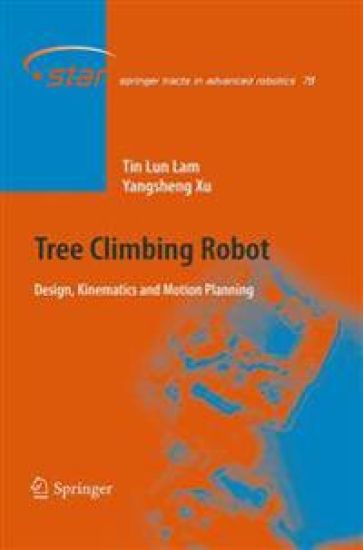
Tree Climbing Robot

Tree Climbing Robot

Tin Lun Lam; Yangsheng Xu

Springer-Verlag Berlin and Heidelberg GmbH Co. K
2016
nidottu
Climbing robot is a challenging research topic that has gained much attention from researchers. Most of the robots reported in the literature are designed to climb on manmade structures, but seldom robots are designed for climbing natural environment such as trees. Trees and manmade structures are very different in nature. It brings different aspects of technical challenges to the robot design. In this book, you can find a collection of the cutting edge technologies in the field of tree-climbing robot and the ways that animals climb. It provides a valuable reference for robot designers to select appropriate climbing methods in designing tree-climbing robots for specific purposes. Based on the study, a novel bio-inspired tree-climbing robot with several breakthrough performances has been developed and presents in this book. It is capable of performing various actions that is impossible in the state-of-the-art tree-climbing robots, such as moving between trunk and branches. This book also proposes several approaches in autonomous tree-climbing, including the sensing methodology, cognition of the environment, path planning and motion planning on both known and unknown environment.
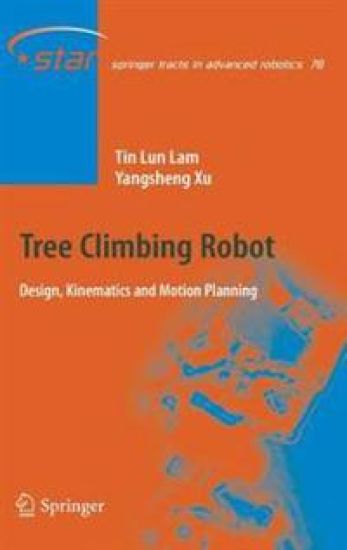
Tree Climbing Robot

Tree Climbing Robot

Tin Lun Lam; Yangsheng Xu

Springer-Verlag Berlin and Heidelberg GmbH Co. K
2012
sidottu
Climbing robot is a challenging research topic that has gained much attention from researchers. Most of the robots reported in the literature are designed to climb on manmade structures, but seldom robots are designed for climbing natural environment such as trees. Trees and manmade structures are very different in nature. It brings different aspects of technical challenges to the robot design. In this book, you can find a collection of the cutting edge technologies in the field of tree-climbing robot and the ways that animals climb. It provides a valuable reference for robot designers to select appropriate climbing methods in designing tree-climbing robots for specific purposes. Based on the study, a novel bio-inspired tree-climbing robot with several breakthrough performances has been developed and presents in this book. It is capable of performing various actions that is impossible in the state-of-the-art tree-climbing robots, such as moving between trunk and branches. This book also proposes several approaches in autonomous tree-climbing, including the sensing methodology, cognition of the environment, path planning and motion planning on both known and unknown environment.