Kirjojen hintavertailu – 12 903 725 kirjaa ja 27 kauppaa

Kirjailija

Tine Van Osselaer

Kirjat ja teokset yhdessä paikassa: 3 kirjaa, julkaisuja vuosilta 2013–2025, suosituimpiin kuuluu The Devotion and Promotion of Stigmatics in Europe, c. 1800–1950. Vertaile teosten hintoja ja tarkista saatavuus suomalaisista kirjakaupoista.

3 kirjaa

Kirjojen julkaisuvuodet: 2013–2025.

The Devotion and Promotion of Stigmatics in Europe, c. 1800–1950

The Devotion and Promotion of Stigmatics in Europe, c. 1800–1950

Tine Van Osselaer; Andrea Graus; Leonardo Rossi; Kristof Smeyers

BRILL
2020
sidottu
In the nineteenth century a new type of mystic emerged in Catholic Europe. While cases of stigmatisation had been reported since the thirteenth century, this era witnessed the development of the ‘stigmatic’: young women who attracted widespread interest thanks to the appearance of physical stigmata. To understand the popularity of these stigmatics we need to regard them as the ‘saints’ and religious ‘celebrities’ of their time. With their ‘miraculous’ bodies, they fit contemporary popular ideas (if not necessarily those of the Church) of what sanctity was. As knowledge about them spread via modern media and their fame became marketable, they developed into religious ‘celebrities’.

Apparition Fever

Apparition Fever

Tine Van Osselaer

MCGILL-QUEEN'S UNIVERSITY PRESS
2025
nidottu
In the early 1930s, a wave of Marian apparitions – cases in which visionaries reported seeing and receiving messages from the Virgin Mary – swept over Belgium. With over forty apparition sites and hundreds of visionaries, the Belgian apparitions, often attended by crowds of onlookers, were unrivalled in scope and complexity, and they confronted Catholics and others with a question: How do you decide what you believe? Apparition Fever explores the Belgian apparitions from initial reports to the eventual recognition of two episodes in the 1940s. It shows how knowledge was formed at all levels – among the bystanders attending the sites, to the medical experts who studied the visionaries, and the clerical authorities who evaluated the authenticity of the apparitions. Tine Van Osselaer examines how these different perspectives converged and influenced each other, whose authority was accepted or challenged, and how the public character of the events affected their evaluation. Apparition Fever reveals that the public setting of Marian apparitions and the religious enthusiasm they triggered are not novel challenges for the Catholic Church. On the contrary, they have heavily influenced the evaluation of apparitions since the early twentieth century.
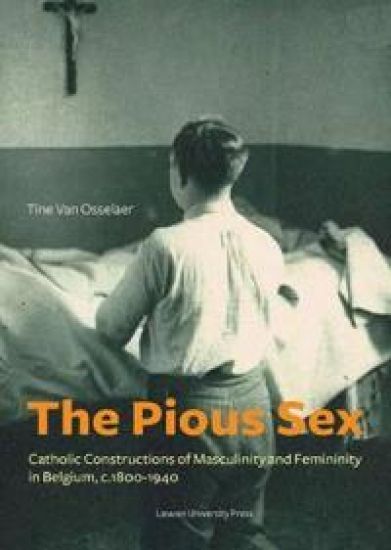
The Pious Sex

The Pious Sex

Tine Van Osselaer

Leuven University Press
2013
pokkari
The construction of gender in Belgian CatholicismAlthough women were called the ‘pious sex’ much earlier, it was during the nineteenth century, when the differences between men and women were being made more explicit, that an intense bond between women and religion was developed. Religiosity was thought to be a ‘natural’ part of femininity and turned religious masculinity into an oddity. This clear-cut gender ideology, however, remains an ideology (prescribed and contested) that needs to be put in the perspective of its context of origin, the bourgeois milieu. How were these gender identities constructed and by whom? With this volume Van Osselaer seeks to clarify how the gender differentiation was created among Belgian Catholics. She brings to light the extent to which religiosity was inscribed in these constructions and how religious teachings contributed to it. It is clear that the limitations of the ‘feminization’ thesis, a master narrative that has strongly contributed to the introduction of women in religious history, have gradually become more visible. Documenting pastoral care, the devotion to the Sacred Heart of Jesus and Catholic Action, The Pious Sex offers critical commentaries on the master narratives, suggesting that even men could belong to a ‘pious sex’. This publication is GPRC-labeled (Guaranteed Peer-Reviewed Content).