

Kirjailija
Tobie Nathan
Kirjat ja teokset yhdessä paikassa: 12 kirjaa, julkaisuja vuosilta 1998–2025, suosituimpiin kuuluu Wörter und Riten aus der Ferne. Vertaile teosten hintoja ja tarkista saatavuus suomalaisista kirjakaupoista.
12 kirjaa
Kirjojen julkaisuvuodet: 1998–2025.

A stirring memoir of exile and self-discovery by a central figure in ethno-psychiatry. In To Sit on the Earth, pioneering ethno-psychiatrist Tobie Nathan charts his intellectual and emotional journey, from his youthful infatuation with Freud and Wilhelm Reich to his mature adoption of anthropologist Georges Devereux’s ethnographic approach to psychoanalysis. Expelled from Egypt as a Jew in 1956 when he was just a boy, Nathan spent his formative years on the outskirts of Paris. Caught up in situationist and Marxist politics, he enthusiastically participated in the revolutionary Events of May 1968. He then settled into a distinguished career as a writer, professor, and founding director of a free ethno-psychiatry clinic serving migrant populations in the French capital. Along the way, Nathan’s field research and practice took him to Benin, Burundi, and Brazil, where he sought out sorcerers, shamans, and other indigenous healers. As he did so, he encountered telling echoes of his ancestors’ age-old practices in Judeo-Arab Cairo. Combining case histories and theoretical reflections with personal and familial anecdotes, while engaging with contemporary thinkers—including Sartre, Lacan, Bourdieu, and Foucault—this multi-layered, genre-defying memoir invites us to reconsider the beliefs that connect us to others and ourselves. To Sit on the Earth lays out a subtle, compelling case for the theological and cultural diversity essential to a thriving modernity.

A riveting and revealing tale of an Egypt caught between tradition and modernity, multiculturalism and nationalism, oppression and freedom. Cairo 1925, Haret al-Yahud, the old Jewish Quarter. Esther, a beautiful young woman believed to be possessed by demons, longs to give birth after seven blissful years of marriage. Her husband, blind since childhood, does not object when, in her effort to conceive, she participates in Muslim zar rituals. Zohar, the novel’s narrator, comes into the world, but because his mother’s breasts are dry, he is nursed by a Muslim peasant—also believed to be possessed—who has just given birth to a girl, Masreya. Suckled at the same breasts and united by a rabbi’s amulet, the milk-twins will be consumed by a passionate, earth-shaking love. Part fantastical fable, part realistic history, A Land Like You draws on ethno-psychiatrist Tobie Nathan’s deep knowledge of North African folk beliefs to create a glittering tapestry in which spirit possession and religious mysticism exist side by side with sober facts about the British occupation of Egypt and the rise of the Muslim Brotherhood and the Free Officers’ Movement. Historical figures such as Gamel Abdel Nasser, Anwar Sadat, and King Farouk mingle with Nathan’s fictional characters in this engaging story.

A riveting and revealing tale of an Egypt caught between tradition and modernity, multiculturalism and nationalism, oppression and freedom. Cairo 1925, Haret al-Yahud, the old Jewish Quarter. Esther, a beautiful young woman believed to be possessed by demons, longs to give birth after seven blissful years of marriage. Her husband, blind since childhood, does not object when, in her effort to conceive, she participates in Muslim zar rituals. Zohar, the novel’s narrator, comes into the world, but because his mother’s breasts are dry, he is nursed by a Muslim peasant—also believed to be possessed—who has just given birth to a girl, Masreya. Suckled at the same breasts and united by a rabbi’s amulet, the milk-twins will be consumed by a passionate, earth-shaking love. Part fantastical fable, part realistic history, A Land Like You draws on ethno-psychiatrist Tobie Nathan’s deep knowledge of North African folk beliefs to create a glittering tapestry in which spirit possession and religious mysticism exist side by side with sober facts about the British occupation of Egypt and the rise of the Muslim Brotherhood and the Free Officers’ Movement. Historical figures such as Gamel Abdel Nasser, Anwar Sadat, and King Farouk mingle with Nathan’s fictional characters in this engaging story.

In September 2014, the French government entrusted Tobie Nathan with the task of counselling radicalized young people who had been drawn to jihadism and in this book he recounts his experiences of some of the young people he met and counselled. He describes what he heard, felt and perceived in his encounters with these young people and their loved ones as he tried to understand the forces running through them and tried to grasp what their fate held in store for them. In so doing, he shows that the history of radicalizations is not the history of ‘natures’ but of metamorphoses – an unpredictable journey, with moments of immobility punctuated by sudden intoxication at the thought of other futures. It is a history of wandering souls who find themselves unable to form a narrative of origin and in thrall to harmful forces but who may find a way home one day. This deeply humane and engaging book will be of great interest to everyone concerned with the issue of radicalization and with the deep and growing challenges our societies face in accommodating difference.
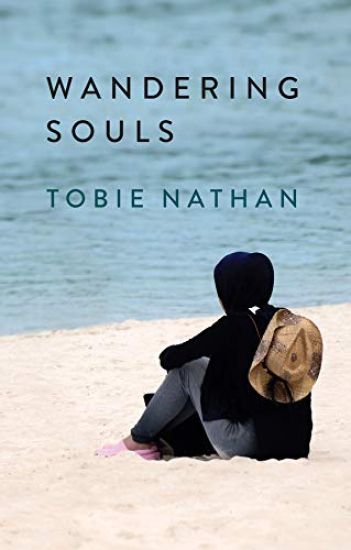
In September 2014, the French government entrusted Tobie Nathan with the task of counselling radicalized young people who had been drawn to jihadism and in this book he recounts his experiences of some of the young people he met and counselled. He describes what he heard, felt and perceived in his encounters with these young people and their loved ones as he tried to understand the forces running through them and tried to grasp what their fate held in store for them. In so doing, he shows that the history of radicalizations is not the history of ‘natures’ but of metamorphoses – an unpredictable journey, with moments of immobility punctuated by sudden intoxication at the thought of other futures. It is a history of wandering souls who find themselves unable to form a narrative of origin and in thrall to harmful forces but who may find a way home one day. This deeply humane and engaging book will be of great interest to everyone concerned with the issue of radicalization and with the deep and growing challenges our societies face in accommodating difference.


We think we know what healers do: they build on patients’ irrational beliefs and treat them in a ‘symbolic’ way. If they get results, it’s thanks to their capacity to listen, rather than any influence on a clinical level. At the same time, we also think we know what modern medicine is: a highly technical and rational process, but one that scarcely listens to patients at all. In this book, ethnopsychiatrist Tobie Nathan and philosopher Isabelle Stengers argue that this commonly posed opposition between traditional and modern medicine is misleading. They show instead that healers are interesting precisely because they don’t listen to patients, using techniques of ‘divination’ rather than ‘diagnosis’. Healers construct genuine therapeutic strategies by identifying the origins of symptoms in external forces, outside of the mind of the sufferer. Modern medicine, for its part, is characterized by empiricism rather than rationality. What appears to be the pursuit of rationality is ultimately only a means to dismiss and exclude other forms of treatment. Blurring the distinctions between traditional and modern practices and drawing on perspectives from across the globe, this ethnopsychiatric manifesto encourages us to think in radically new ways about illness, challenging accepted notions on the relationship between sufferer and symptom.

We think we know what healers do: they build on patients’ irrational beliefs and treat them in a ‘symbolic’ way. If they get results, it’s thanks to their capacity to listen, rather than any influence on a clinical level. At the same time, we also think we know what modern medicine is: a highly technical and rational process, but one that scarcely listens to patients at all. In this book, ethnopsychiatrist Tobie Nathan and philosopher Isabelle Stengers argue that this commonly posed opposition between traditional and modern medicine is misleading. They show instead that healers are interesting precisely because they don’t listen to patients, using techniques of ‘divination’ rather than ‘diagnosis’. Healers construct genuine therapeutic strategies by identifying the origins of symptoms in external forces, outside of the mind of the sufferer. Modern medicine, for its part, is characterized by empiricism rather than rationality. What appears to be the pursuit of rationality is ultimately only a means to dismiss and exclude other forms of treatment. Blurring the distinctions between traditional and modern practices and drawing on perspectives from across the globe, this ethnopsychiatric manifesto encourages us to think in radically new ways about illness, challenging accepted notions on the relationship between sufferer and symptom.


New Interpretation of Dreams / La Nouvelle Interprétation des rêves
Tobie Nathan
Odile Jacob
2011
nidottu
"A dream that has not been interpreted is like an unread letter," according to one of the treatises of the Talmud. For a long time, it was thought that psychoanalysts were dream specialists, and Freud himself regarded The Interpretation of Dreams as his seminal work. But Freud never revised the general principles that he defined in 1899, and no psychoanalyst since then has made new propositions to the Freudian postulates concerning methods of dream interpretation. Today, the majority of researchers working on dreams are neurophysiologists, who completely exclude any notion of interpretation. So the issue remains intact and is far from being resolved. While conceding that dreams constitute a physiological reality, Tobie Nathan argues that they cannot be regarded as the hallucinatory fulfI'ment of the dreamer's repressed wishes, as is generally claimed. So do dreams serve any purpose? Do dreams have any meaning? Nathan returns to these age-old questions and examines them with the audacity and originality that he is known for. In the process, he draws on recent fiedings in the neurosciences, on the teachings of psychoanalysis - as well as on the lessons of the Talmud. Tobie Nathan is the author of many highly successful, now-classic works such as L'Influence qui gu rit and Psychanalyse pa enne. An anthropologist and psychoanalyst, he is one of the major figures in ethno-psychiatry. He was formerly a professor of clinical and pathological psychology at the University of Paris-VIII and the director of the Georges Devereux Centre.

Health Care and Treatment / Soigner: Le virus et le fétiche
Tobie Nathan; Catherine Lewertowski
Odile Jacob
1998
nidottu
This book is the result of an ethnopsychiatric study that Nathan conducted on a group of AIDS-infected I'migrants at the Necker Hospital in Paris. The hospital team responsible for the I'migrants quickly learned that these sick people would refuse to take the medecine they were given on the grounds that they didn't yet feel ill. This book presents a series of case studies, discussing AIDS, ethnopsychiatric issues and Nathan's methods. Tobie Nathan is a professor of clinical psychology at l'Universit de Paris VIII and director of the Georges Devereux Center. Catherine Lewertowski is a doctor.