Kirjojen hintavertailu – 12 859 819 kirjaa ja 27 kauppaa

Kirjailija

Toby C Rider

Kirjat ja teokset yhdessä paikassa: 3 kirjaa, julkaisuja vuosilta 2016–2024, suosituimpiin kuuluu Cold War Games. Vertaile teosten hintoja ja tarkista saatavuus suomalaisista kirjakaupoista.

Nimi esiintyy myös muodoissa: Toby C. Rider

3 kirjaa

Kirjojen julkaisuvuodet: 2016–2024.

British Sporting Relations with Apartheid South Africa

British Sporting Relations with Apartheid South Africa

Matthew P. Llewellyn; Toby C. Rider

Oxford University Press
2024
sidottu
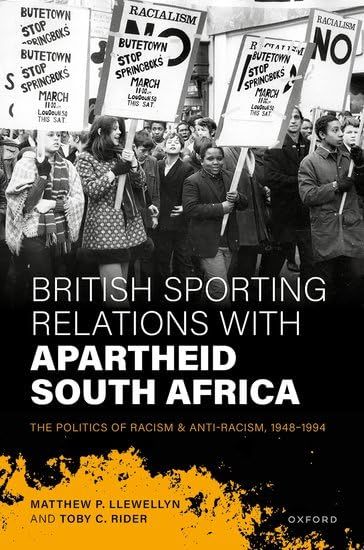
The transnational anti-apartheid sport boycott of South Africa represented the most prominent, extended, and controversial anti-racism campaign in the history of sport. Spearheaded by prominent British religious and anti-colonial figures and exiled South Africans, emboldened by communist and Global South support, and legitimised by supranational political bodies such as the United Nations, the Organisation of African Unity, and the Commonwealth, the sport boycott helped propel anti-apartheid out of relative obscurity and struck at the very heart of a cultural practice that served an explicitly ideological function in Afrikaner society. Britain held a dichotomous, even paradoxical, role as both prosecutor and defender of white South Africa. This book utilises sport as a critical lens for understanding the dynamics and dichotomies of British attitudes towards the apartheid regime. Debates over whether to continue or to cut sporting links with apartheid South Africa proved bitterly divisive. The considerable weight the subject carried and the degree to which it saturated British political and social discourse for four decades speaks to its impact and importance. British Sporting Relations with Apartheid South Africa represents the first archival-based, historical examination of Britain's sporting relations with South Africa throughout the apartheid era, 1948-1994. Situating the analysis within the shifting multiracial and multicultural landscapes of postcolonial Britain and within global political, cultural, sporting, and ideological debates, the authors trace the origins and evolution of the transnational sport boycott, and examine what inspired Britons to energise anti-apartheid sport campaigns and, in contrast, what drove many others to vehemently oppose them at every turn.
Cold War Games

Cold War Games

Toby C Rider

University of Illinois Press
2016
sidottu
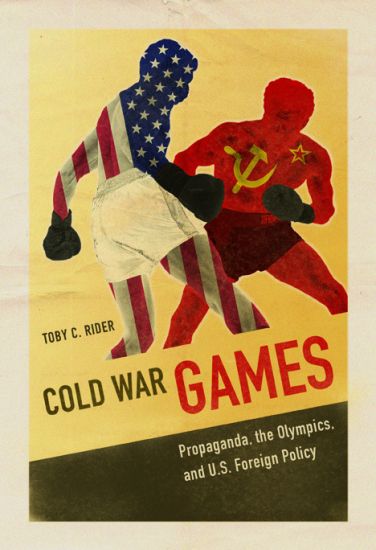
It is the early Cold War. The Soviet Union appears to be in irresistible ascendance and moves to exploit the Olympic Games as a vehicle for promoting international communism. In response, the United States conceives a subtle, far-reaching psychological warfare campaign to blunt the Soviet advance. Drawing on newly declassified materials and archives, Toby C. Rider chronicles how the U. S. government used the Olympics to promote democracy and its own policy aims during the tense early phase of the Cold War. Rider shows how the government, though constrained by traditions against interference in the Games, eluded detection by cooperating with private groups, including secretly funded émigré organizations bent on liberating their home countries from Soviet control. At the same time, the United States utilized Olympic host cities as launching pads for hyping the American economic and political system. Behind the scenes, meanwhile, the government attempted clandestine manipulation of the International Olympic Committee. Rider also details the campaigns that sent propaganda materials around the globe as the United States mobilized culture in general, and sports in particular, to fight the communist threat. Deeply researched and boldly argued, Cold War Games recovers an essential chapter in Olympic and postwar history.
Cold War Games

Cold War Games

Toby C Rider

University of Illinois Press
2016
nidottu
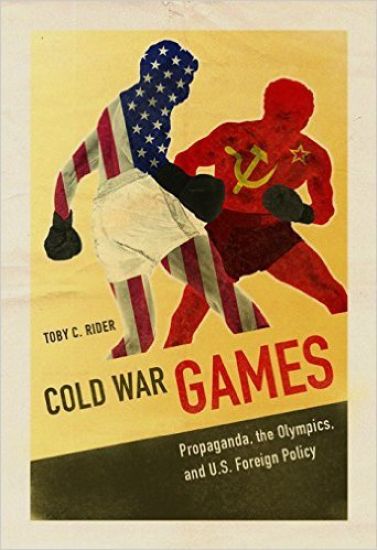
It is the early Cold War. The Soviet Union appears to be in irresistible ascendance and moves to exploit the Olympic Games as a vehicle for promoting international communism. In response, the United States conceives a subtle, far-reaching psychological warfare campaign to blunt the Soviet advance. Drawing on newly declassified materials and archives, Toby C. Rider chronicles how the U. S. government used the Olympics to promote democracy and its own policy aims during the tense early phase of the Cold War. Rider shows how the government, though constrained by traditions against interference in the Games, eluded detection by cooperating with private groups, including secretly funded émigré organizations bent on liberating their home countries from Soviet control. At the same time, the United States utilized Olympic host cities as launching pads for hyping the American economic and political system. Behind the scenes, meanwhile, the government attempted clandestine manipulation of the International Olympic Committee. Rider also details the campaigns that sent propaganda materials around the globe as the United States mobilized culture in general, and sports in particular, to fight the communist threat. Deeply researched and boldly argued, Cold War Games recovers an essential chapter in Olympic and postwar history.