Kirjojen hintavertailu – 12 859 818 kirjaa ja 27 kauppaa

Kirjailija

Toby Jurovics

Kirjat ja teokset yhdessä paikassa: 4 kirjaa, julkaisuja vuosilta 2016–2021, suosituimpiin kuuluu Faces from the Interior: The North American Portraits of Karl Bodmer. Vertaile teosten hintoja ja tarkista saatavuus suomalaisista kirjakaupoista.

4 kirjaa

Kirjojen julkaisuvuodet: 2016–2021.

Faces from the Interior: The North American Portraits of Karl Bodmer

Faces from the Interior: The North American Portraits of Karl Bodmer

Toby Jurovics; Scott Manning Stevens; Lisa Strong

Joslyn Art Museum
2021
sidottu
A fascinating visual record of nineteenth-century Indigenous communities in the American WestIn the early nineteenth century, Prince Maximilian of Wied traveled the Missouri River to uncover what he called "the natural face of North America"--its landscapes, flora and fauna, and Native inhabitants. Among his small party was artist Karl Bodmer (1809-1893), who would prove to be one of the most accomplished and prolific artists to visit the American frontier. Bodmer and Maximilian traveled more than 2,500 miles together, spending time among the Mandan, Hidatsa, Omaha, Otoe, Pawnee, Yankton, Santee Sioux, Assiniboines, Plains Cree, Blackfeet, Piegans, Bloods, and Gros Ventre. Bodmer's watercolors of the people he met remain among the most compelling visual accounts of the American West, an invaluable record of the Missouri River's Indigenous communities. The first publication to focus on Bodmer as a portraitist, Faces from the Interior includes essays examining his artistic practice, the international dissemination of his images, and the ongoing significance of his work to Indigenous communities.
Sun, Shadows, Stone

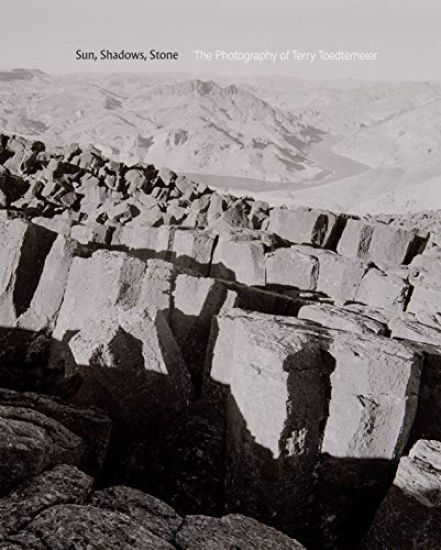
Sun, Shadows, Stone

Julia Dolan; Rock Hushka; Toby Jurovics; Jennifer Kabat; Andrew Meigs; Sandra S. Phillips; Prudence Roberts

Tacoma Art Museum
2018
sidottu
Photographer and curator Terry Toedtemeier (1947–2008) began his career in the 1970s with extensive photographic experiments to capture his close circle of friends and colleagues. Largely self-taught, he began to attract wider critical attention with his landscape images, initially snapshots from his moving car and later exquisite compositions influenced by his deep understanding of both historical and contemporary photography traditions of the American West. His haunting photographs often focused on the Oregon desert and coastline, and magnificent basalt formations of the Pacific Northwest. Sun, Shadows, Stone is the first scholarly monograph of the photography of Terry Toedtemeier. His photographs were featured in the nationally traveling exhibition Framing the West: The Survey Photographs of Timothy H. O'Sullivan and are in the collections of many museums including the Museum of Fine Arts in Houston, the Philadelphia Art Museum, and the San Francisco Museum of Modern Art.
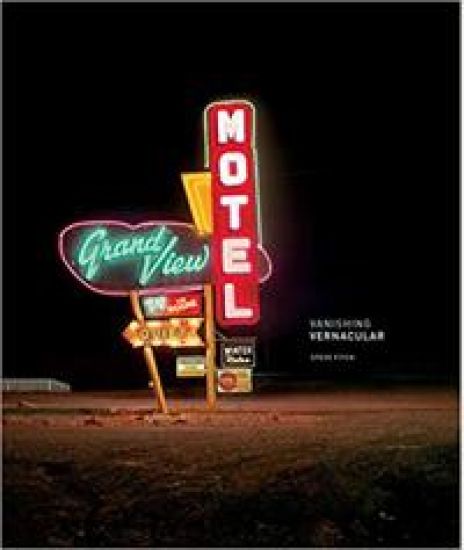
Vanishing Vernacular

Vanishing Vernacular

Steve Fitch; Toby Jurovics

George F. Thompson
2018
sidottu
Steve Fitch is among America’s most well-known chroniclers of the American West since the days of Easy Rider. He has been photographing examples of the West’s changing vernacular landscape and vanishing roadside landmarks for more than 40 years. In his new book, he presents both the ancient and the modern by way of petroglyphs, neon motel signs and hand-painted business signs, drive-in movie theater screens, and radio and cell towers. All of them are now endangered because of the advent of the Interstate Highway System and corporate franchises. In this fascinating and comprehensive account, we are able to join in Fitch’s expansive journey, truly an odyssey, as represented in the book’s 120 unforgettable photographs, all sequenced to mimic the open road—both during day and night. Fitch explains the project in his informative introduction, in which, interestingly, he suggests that the petroglyphs of the ancient Pueblo people have endured far better and longer than anything made during the last sixty years. Curator Toby Jurovics, in his insightful concluding essay, positions Fitch’s work in relation to that of the practitioners of the photographic style known as the “New Topographics” and Fitch’s own view of photography as a visual form of cultural anthropology. Vanishing Vernacular: Western Landmarks is sure to become a modern-day classic, a book that will be all the more revered as America and Americans move farther away from the highways of the past. That economy and roadside culture are vanishing like endangered species, but Fitch was along for the ride. In sharing that past, he has been witness to his own form of historic preservation.
Shifting Views and Changing Places

Shifting Views and Changing Places

Rick Dingus; Toby Jurovics

University of Oklahoma Press
2016
sidottu
Since the 1970s Rick Dingus has photographed ""landscapes"": remote wilderness and rural settings, vernacular traces, urban environments, and ancient pathways that invite viewers to look closer, to think about how to interpret what they are seeing. Perception unfolds in many ways in this volume, whose photographs document Dingus's lifelong exploration of the intersections of time, place, culture, and nature. Dingus discusses his creative process in practical and philosophical terms through brief opening passages and an in-depth interview with art curator Peter S. Briggs. An introductory essay by curator Toby Jurovics considers Dingus's oeuvre within the evolution of landscape photography from the nineteenth century to the present day - offering a view of the photographer's art as ""resilient enough to contain both empirical and metaphorical truth; the descriptive and the personal; the past and the present."" An essay by Shelley Armitage offers a more personal reflection on the experience of viewing the photographs. And art critic Lucy R. Lippard provides a chronology and sustained interpretation of Dingus's work, with its emphasis on transformation and on ""translating information across visual borders."" Landscape is always with us, deceptively simple, yet capable of providing something much more. By examining the rich variety of Dingus's work and reflecting on the evolution of ideas that lie behind it, Shifting Views and Changing Places invites readers to critically examine the pursuit of seeing.