Kirjojen hintavertailu – 12 903 724 kirjaa ja 27 kauppaa

Kirjailija

Toby Miller

Kirjat ja teokset yhdessä paikassa: 38 kirjaa, julkaisuja vuosilta 1993–2026, suosituimpiin kuuluu Globalization and Sport. Vertaile teosten hintoja ja tarkista saatavuus suomalaisista kirjakaupoista.

38 kirjaa

Kirjojen julkaisuvuodet: 1993–2026.

The Other Guy

The Other Guy

Derek A. Burrill; Toby Miller

Peter Lang Publishing Inc
2014
nidottu
Suffering from «manopause» and «Low T», underemployed and unwilling to grow up, «the other guy» has emerged as an important figure in modern media masculinity. From the films of Judd Apatow to sitcoms and popular music, this new breed of man is desperately attempting to change with the times, but is often unable (or unwilling) to understand the new landscape. Avoiding rhetorics of victimization, Derek A. Burrill charts and analyzes the other guy in order to understand how men see themselves, in media and in culture at large.
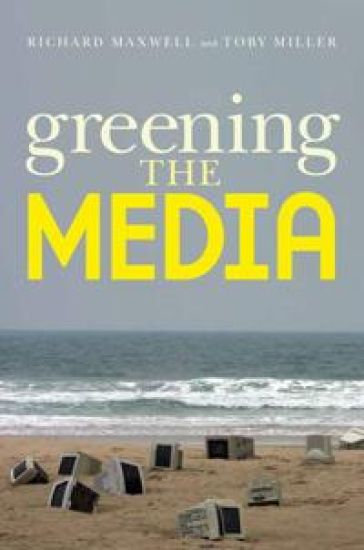
Greening the Media

Greening the Media

Richard Maxwell; Toby Miller

Oxford University Press Inc
2012
nidottu
You will never look at your cell phone, TV, or computer the same way after reading this book. Maxwell and Miller not only reveal the dirty secrets that hide inside our beloved electronics; they also take apart the myths that have pushed these gadgets to the center of our lives. With an astounding array of economic, environmental and historical facts, Greening the Media debunks the idea that information and communication technologies (ITC) are clean and ecologically benign. In this compassionate and sharply argued book, the authors show how the physical reality of making, consuming, and discarding them is rife with toxic ingredients, poisonous working conditions, and hazardous waste. But all is not lost. As the title suggests, Maxwell and Miller dwell critically on these environmental problems in order to think creatively about ways to solve them. They enlist a range of potential allies in this effort to foster greener media-from green consumers to green citizens, with stops along the way to hear from exploited workers, celebrities, and assorted bureaucrats. Maxwell and Miller rethink the status of print and screen technologies from a perspective unique in media studies, one that enables them to open new lines of historical and social analysis of ICT, consumer electronics, and media production. This original and highly readable book is for anyone who marvels at the high tech goodies surrounding us and wonders "How have they been made?," "By whom?," "Where?," and "Under what conditions?"
Greening the Media

Greening the Media

Richard Maxwell; Toby Miller

Oxford University Press Inc
2012
sidottu
You will never look at your cell phone, TV, or computer the same way after reading this book. Maxwell and Miller not only reveal the dirty secrets that hide inside our beloved electronics; they also take apart the myths that have pushed these gadgets to the center of our lives. With an astounding array of economic, environmental and historical facts, Greening the Media debunks the idea that information and communication technologies (ITC) are clean and ecologically benign. In this compassionate and sharply argued book, the authors show how the physical reality of making, consuming, and discarding them is rife with toxic ingredients, poisonous working conditions, and hazardous waste. But all is not lost. As the title suggests, Maxwell and Miller dwell critically on these environmental problems in order to think creatively about ways to solve them. They enlist a range of potential allies in this effort to foster greener media-from green consumers to green citizens, with stops along the way to hear from exploited workers, celebrities, and assorted bureaucrats. Maxwell and Miller rethink the status of print and screen technologies from a perspective unique in media studies, one that enables them to open new lines of historical and social analysis of ICT, consumer electronics, and media production. This original and highly readable book is for anyone who marvels at the high tech goodies surrounding us and wonders "How have they been made?," "By whom?," "Where?," and "Under what conditions?"
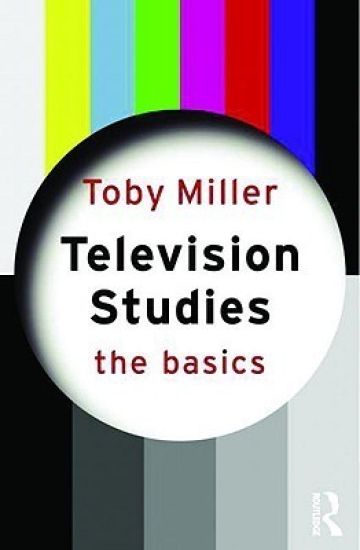
Television Studies: The Basics

Television Studies: The Basics

Toby Miller

Routledge
2009
nidottu
Television Studies: The Basics is a lively introduction to the study of a powerful medium. It examines the major theories and debates surrounding production and reception over the years and considers both the role and future of television. Topics covered include: broadcasting history and technology institutions and ownership genre and content audiences Complete with global case studies, questions for discussion, and suggestions for further reading, this is an invaluable and engaging resource for those interested in how to study television.
Television Studies: The Basics

Television Studies: The Basics

Toby Miller

Routledge
2009
sidottu
Television Studies: The Basics is a lively introduction to the study of a powerful medium. It examines the major theories and debates surrounding production and reception over the years and considers both the role and future of television. Topics covered include: broadcasting history and technology institutions and ownership genre and content audiences Complete with global case studies, questions for discussion, and suggestions for further reading, this is an invaluable and engaging resource for those interested in how to study television.
Spyscreen

Spyscreen

Toby Miller

Oxford University Press
2003
sidottu
Spyscreen is a genre study of English-language spy fiction film and television between the 1930s and 1960s. Taking as his focus many well-known films and television series, Toby Miller uses a wide range of critical approaches - from textual interpretation, audience studies, and cultural history, through auteurism, imperial history, class, and governmentality, to genre, cultural imperialism, and gender. Beginning with an overview of the social and political background to the history, production, and analysis of spy fiction, topics discussed include the first canonical espionage movie, The 39 Steps, key film noir texts such as Gilda and The Third Man, the figure of popular spies, including James Bond, and the importance of women to the genre. The result is not just an insightful new study of key texts in this popular genre; it is an important intervention in the methodology and practice of Screen Studies.
Cultural Policy

Cultural Policy

Toby Miller; George Yudice

SAGE Publications Inc
2002
nidottu
Hitherto, cultural theory and empirical work on culture have outstripped cultural policy. This book rectifies the peculiar imbalance in the field of Cultural Studies by offering the first comprehensive and international work on cultural policy. Fully alive to the challenges posed by globalization it addresses a wide range of central topics including cinema, television, museums, international organizations, art, public history, drama and performance art. The result is a landmark work in the emerging field of cultural policy. Rigorous in its field of survey and astute in its critical commentary it enables students to gain a global grounding in cultural policy. It will be essential reading for students of cultural studies and cultural sociology.
Cultural Policy

Cultural Policy

Toby Miller; George Yudice

SAGE Publications Inc
2002
sidottu
Hitherto, cultural theory and empirical work on culture have outstripped cultural policy. This book rectifies the peculiar imbalance in the field of Cultural Studies by offering the first comprehensive and international work on cultural policy. Fully alive to the challenges posed by globalization it addresses a wide range of central topics including cinema, television, museums, international organizations, art, public history, drama and performance art. The result is a landmark work in the emerging field of cultural policy. Rigorous in its field of survey and astute in its critical commentary it enables students to gain a global grounding in cultural policy. It will be essential reading for students of cultural studies and cultural sociology.
Popular Culture and Everyday Life

Popular Culture and Everyday Life

Toby Miller; Alec W McHoul

SAGE Publications Inc
1998
sidottu
This broad-ranging survey of social and cultural theory issues an audacious challenge to contemporary cultural studies' emphasis on speculation, rather than observation. Toby Miller and Alec McHoul invite the reader to question their participation in both dominant and subcultural practices by providing perspectives on the everyday through ethnography, textual reading, discourse analysis and political economy. Following a summary of key ideas on an everyday practice, such as `eating' or `talking', each chapter considers the discourses that construct these practices, and concludes with one or more empirical investigations, opening up the possibility of a significant departure in cultural studies. The book ends with an excellent glossary of cultural studies terms.
Popular Culture and Everyday Life

Popular Culture and Everyday Life

Toby Miller; Alec W McHoul

SAGE Publications Inc
1998
nidottu

Halvin toimitettuna 110,20 €

This broad-ranging survey of social and cultural theory issues an audacious challenge to contemporary cultural studies' emphasis on speculation, rather than observation. Toby Miller and Alec McHoul invite the reader to question their participation in both dominant and subcultural practices by providing perspectives on the everyday through ethnography, textual reading, discourse analysis and political economy. Following a summary of key ideas on an everyday practice, such as `eating' or `talking', each chapter considers the discourses that construct these practices, and concludes with one or more empirical investigations, opening up the possibility of a significant departure in cultural studies. The book ends with an excellent glossary of cultural studies terms.
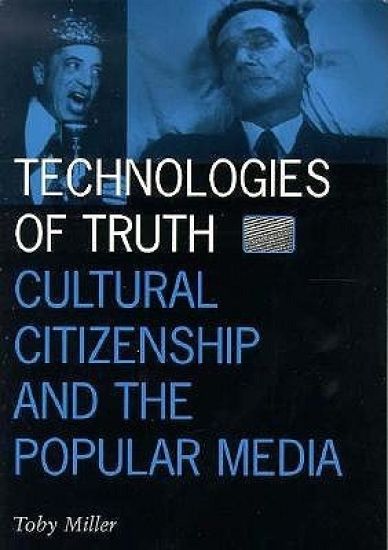
Technologies Of Truth

Technologies Of Truth

Toby Miller

University of Minnesota Press
1998
nidottu
Offers an original and refreshing discussion of the media’s effect on everyday culture. In a world ever more complex and media-saturated, what is the value of the truth? In Technologies of Truth, Toby Miller provides a pithy and clear-sighted examination of how television, magazines, film, and museums influence the way our society conceptualizes such issues as citizenship, democracy, nationhood, globalization, truth, and fiction. Along the way, he explicates surprising connections between cultural objects and discourses, producing a new meeting ground for cultural, social, and political theory. Miller examines a remarkable range of sources and topics, including naked footballers and the male sporting body, the cultural imperialism of television, Rodney King, the television series Mission: Impossible, Superman and Lois Lane, Harvey Milk, and Frederick Wiseman’s Titicut Follies. The book covers a variety of genres and technologies that alter our understanding of the real versus the invented, fact versus fiction. Central to Miller’s argument is his concept of “cultural citizenship.” Based in part on Michel Foucault’s idea of governmentality, cultural citizenship is made up of the seemingly indirect public processes-sports, radio, film, and arts policies-by which members of society are drawn into postindustrial state structures. Miller also proposes a program through which intellectuals might play a more active role in studying, criticizing, and participating in the formation of governmental cultural policy, implementing his vision of what cultural citizenship should be. In Technologies of Truth, cultural studies meets the social sciences with a unique combination of rigor and politics. In a writing style that is spicy, personal, and full of incident, Miller turns the ephemera of everyday life into an entertaining and necessary critique of our times.

The Well-Tempered Self

The Well-Tempered Self

Toby Miller

Johns Hopkins University Press
1993
pokkari
In "The Well-Tempered Self", Miller contends that the modern capitalist state musters a variety of mixed messages about the nature of citizenship and the self. Miller argues that capitalism's democratic politics requires selfless, community-minded citizens, while its economics depends on selfish, utilitarian consumers. To fulfil these conflicting needs for political order and economic prosperity, powerful cultural forces are employed to instill a sense of "ethical incompleteness". Citizens are then offered political, cultural and economic opportunities to become better, happier and more fulfilled - opportunities that, in turn, encourage loyalty to both the political and economic systems. In a series of case studies that demonstrate this process, Miller examines mass entertainment, political discourse, and methods of resistance to these powerful cultural forces.