Kirjojen hintavertailu – 12 873 528 kirjaa ja 26 kauppaa

Kirjailija

Toby Ord

Kirjat ja teokset yhdessä paikassa: 3 kirjaa, julkaisuja vuosilta 2020–2021, suosituimpiin kuuluu The Precipice. Vertaile teosten hintoja ja tarkista saatavuus suomalaisista kirjakaupoista.

3 kirjaa

Kirjojen julkaisuvuodet: 2020–2021.

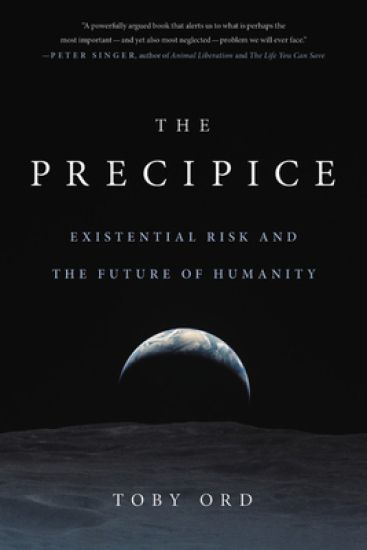
The Precipice: Existential Risk and the Future of Humanity

The Precipice: Existential Risk and the Future of Humanity

Toby Ord

Grand Central Publishing
2021
nidottu

Halvin toimitettuna 24,20 €

In this urgent and "thrillingly written" book, there is a case and solution for humanity's last shot at survival (Sunday Times). Humanity's future is at risk. We face existential catastrophes, climate change, nuclear war, and more. If we do not act fast to reach a place of safety, it will soon be too late. Drawing on over a decade of research, The Precipice explores the cutting-edge science behind the risks we face. And it points the way forward, to the actions and strategies that can safeguard humanity. An Oxford philosopher, Toby Ord has advised the US National Intelligence Council, the UK Prime Minister's Office, and the World Bank on the biggest questions facing humanity. In The Precipice, he offers a startling reassessment of human history, the future we are failing to protect, and the steps we must take to ensure that our generation is not the last. "A book that seems made for the present moment." --New Yorker
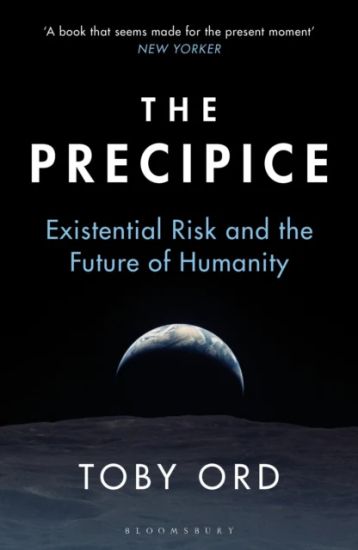
The Precipice

The Precipice

Toby Ord

Bloomsbury Publishing PLC
2021
nidottu

Halvin toimitettuna 20,30 €

What existential threats does humanity face? And how can we secure our future?‘The Precipice is a powerful book . . . Ord’s love for humanity and hope for its future is infectious’ Spectator‘Ord’s analysis of the science is exemplary . . . Thrillingly written’ Sunday TimesWe live during the most important era of human history. In the twentieth century, we developed the means to destroy ourselves – without developing the moral framework to ensure we won't. This is the Precipice, and how we respond to it will be the most crucial decision of our time. Oxford moral philosopher Toby Ord explores the risks to humanity's future, from the familiar man-made threats of climate change and nuclear war, to the potentially greater, more unfamiliar threats from engineered pandemics and advanced artificial intelligence. With clear and rigorous thinking, Ord calculates the various risk levels, and shows how our own time fits within the larger story of human history. We can say with certainty that the novel coronavirus does not pose such a risk. But could the next pandemic? And what can we do, in our present moment, to face the risks head on? A major work that brings together the disciplines of physics, biology, earth and computer science, history, anthropology, statistics, international relations, political science and moral philosophy, The Precipice is a call for a new understanding of our age: a major reorientation in the way we see the world, our history, and the role we play in it.
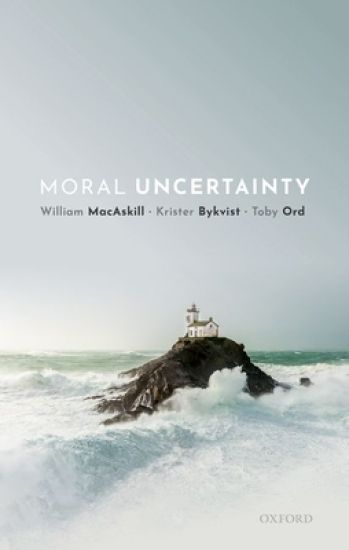
Moral Uncertainty

Moral Uncertainty

William MacAskill; Krister Bykvist; Toby Ord

Oxford University Press
2020
sidottu
This is an open access title available under the terms of a CC BY-NC-ND 4.0 International licence. It is free to read at Oxford Scholarship Online and offered as a free PDF download from OUP and selected open access locations. Very often we're uncertain about what we ought, morally, to do. We don't know how to weigh the interests of animals against humans, how strong our duties are to improve the lives of distant strangers, or how to think about the ethics of bringing new people into existence. But we still need to act. So how should we make decisions in the face of such uncertainty? Though economists and philosophers have extensively studied the issue of decision-making in the face of uncertainty about matters of fact, the question of decision-making given fundamental moral uncertainty has been neglected. Philosophers William MacAskill, Krister Bykvist, and Toby Ord try to fill this gap. Moral Uncertainty argues that there are distinctive norms that govern how one ought to make decisions. It defends an information-sensitive account of how to make such decisions by developing an analogy between moral uncertainty and social choice, arguing that the correct way to act in the face of moral uncertainty depends on whether the moral theories in which one has credence are merely ordinal, cardinal, or both cardinal and intertheoretically comparable. It tackles the problem of how to make intertheoretical comparisons, discussing potential solutions and the implications of their view for metaethics and practical ethics.