Kirjojen hintavertailu – 12 859 818 kirjaa ja 27 kauppaa

Kirjailija

Todor Hristov

Kirjat ja teokset yhdessä paikassa: 7 kirjaa, julkaisuja vuosilta 2019–2025, suosituimpiin kuuluu Stranger Things: The Voyage (graphic Novel). Vertaile teosten hintoja ja tarkista saatavuus suomalaisista kirjakaupoista.

7 kirjaa

Kirjojen julkaisuvuodet: 2019–2025.

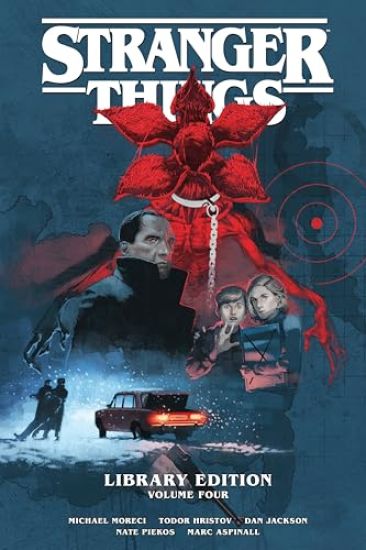
Stranger Things Library Edition Volume 4 (Graphic Novel)

Stranger Things Library Edition Volume 4 (Graphic Novel)

Michael Moreci; Todor Hristov

DARK HORSE COMICS,U.S.
2025
sidottu

Halvin toimitettuna 39,20 €

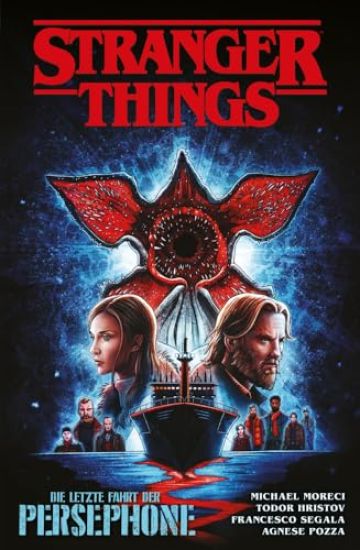
Horror and espionage collide in Russia when the USSR tries to weaponize the Demogorgon after it's perilous and violent trek aboard an old freighter Witness the Demogorgon wreak havoc in these tales from the world of Stranger Things In Kamchatka, a leading Soviet scientist comes face to face with the unknown after being abducted for a secret government project - the Kremlin's new ultimate weapon--a Demogorgon However, the Soviets didn't count on the doctor's children embarking on a harrowing journey with a retired KGB agent to come and rescue him They'll need to battle impossible odds to find their kidnapped father... if they manage to survive. In The Voyage, the Soviets are desperate to get their quarry from Hawkins, Indiana aboard an ocean freighter. A desperate Captain accepts a shady deal from the Russians to get them to Kamchatka from Alaska, however things get turned upside down when a crew member is butchered by a monster hiding aboard the ship. This terrifying collection, written by acclaimed horror author Michael Moreci (The Plot, Barbaric) and featuring gritty art from Todor Hristov (Stranger Things: Halloween Special), combines the science-fiction creatures of The Upside Down with spine-tingling Cold War intrigue and espionage as a new thread in the tapestry of Stranger Things. Collects Stranger Things: Kamchatka and Stranger Things: The Voyage.
Critical Theory and Marital Quarrels

Critical Theory and Marital Quarrels

Todor Hristov

BLOOMSBURY PUBLISHING PLC
2024
sidottu
Critical Theory and Marital Quarrels: Dynamics of Passionate Speech analyzes the pneumatics of conflict through a discursive archeology of police reports, court proceedings, psychiatric cases, therapy sessions, eighteenth-century relationship advice literature, and the nineteenth-century fiction. Todor Hristov argues that in order to extract knowledge from the noise of the marital fights, preachers, moralists, physicians, alienists, sociologists discarded the words as a slag, and in consequence, they were unable to explain either the recurrence or the power of discord. This study is intended as an analysis of the discursive mechanism of contentious speech based on concepts derived from critical theory, discourse analysis, speech act theory and semiotics. The discursive mechanism of quarreling is summed up in the concept of passionate speech relevant beyond family scenes, to scenes of political or public contention. This book applies the concept to examine critically the language of contemporary couples therapy and to describe the unintended effects of the passions shared by the clients and the therapists.

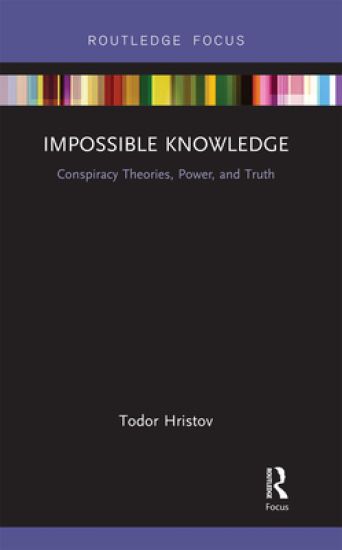
Impossible Knowledge

Impossible Knowledge

Todor Hristov

Routledge
2020
nidottu
Conspiracy theorists claim impossible knowledge, such as knowledge of the doings of a secret world government. Yet they accept this impossible knowledge as truth. In effect, conspiracy theories detach truth from knowledge. Knowledge without power is powerless. And the impossible knowledge claimed by conspiracy theorists is rigorously excluded from the regimes of truth and power – that is not even wrong. Yet conspiratorial knowledge is potent enough to be studied by researchers and recognized as a risk by experts and authorities. Therefore, in order to understand conspiracy theories, we need to think of truth beyond knowledge and power. That is impossible for any scientific discipline because it takes for granted that truth comes from knowledge and that truth is powerful enough to destroy the legitimacy of any authority that would dare to conceal or manipulate it. Since science is unable to make sense of conspiracy theories, it treats conspiracy theorists as individuals who fail to make sense, and it explains their persistent nonsense by some cognitive, behavioral, or social dysfunction. Fortunately, critical theory has developed tools able to conceive of truth beyond knowledge and power, and hence to make sense of conspiracy theories. This book organizes them into a toolbox which will enable students and researchers to analyze conspiracy theories as practices of the self geared at self-empowerment, a sort of political self-help.
Impossible Knowledge

Impossible Knowledge

Todor Hristov

Routledge
2019
sidottu
Conspiracy theorists claim impossible knowledge, such as knowledge of the doings of a secret world government. Yet they accept this impossible knowledge as truth. In effect, conspiracy theories detach truth from knowledge. Knowledge without power is powerless. And the impossible knowledge claimed by conspiracy theorists is rigorously excluded from the regimes of truth and power – that is not even wrong. Yet conspiratorial knowledge is potent enough to be studied by researchers and recognized as a risk by experts and authorities. Therefore, in order to understand conspiracy theories, we need to think of truth beyond knowledge and power. That is impossible for any scientific discipline because it takes for granted that truth comes from knowledge and that truth is powerful enough to destroy the legitimacy of any authority that would dare to conceal or manipulate it. Since science is unable to make sense of conspiracy theories, it treats conspiracy theorists as individuals who fail to make sense, and it explains their persistent nonsense by some cognitive, behavioral, or social dysfunction. Fortunately, critical theory has developed tools able to conceive of truth beyond knowledge and power, and hence to make sense of conspiracy theories. This book organizes them into a toolbox which will enable students and researchers to analyze conspiracy theories as practices of the self geared at self-empowerment, a sort of political self-help.