Kirjojen hintavertailu – 12 903 725 kirjaa ja 27 kauppaa

Kirjailija

Tom Angier

Kirjat ja teokset yhdessä paikassa: 8 kirjaa, julkaisuja vuosilta 2011–2026, suosituimpiin kuuluu Human Nature, Human Goods. Vertaile teosten hintoja ja tarkista saatavuus suomalaisista kirjakaupoista.

8 kirjaa

Kirjojen julkaisuvuodet: 2011–2026.

Human Nature, Human Goods

Human Nature, Human Goods

Tom Angier

Cambridge University Press
2026
sidottu
Is there a human nature? Can knowledge of it help us live better lives? This book synthesises ancient and modern philosophical ideas and draws on scientific research to answer yes to both these questions. It develops an innovative normative theory on the basis of commonsensical, naturalistic, premisses; and it defends an Aristotelian normative theory -- whereby we should understand human goods as realisations or perfections of human nature -- against both traditional and emerging challenges to perfectionist ethics, including evolutionary biology and transhumanism. The result is a ground-breaking theory of 'natural perfectionism', which both returns perfectionistic ethics to its Aristotelian roots and shows how this is compatible with evolutionary biology and cognitive science. At a time when the very idea of human nature is viewed as something that can be readily transcended, this work recalls us to a realistic, sober and better-founded vision of it.
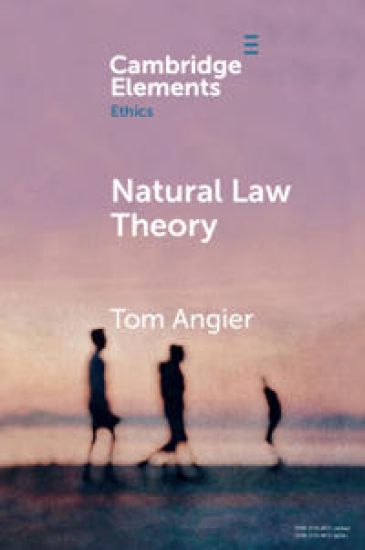
Natural Law Theory

Natural Law Theory

Tom Angier

Cambridge University Press
2021
pokkari
In Section 1, I outline the history of natural law theory, covering Plato, Aristotle, the Stoics and Aquinas. In Section 2, I explore two alternative traditions of natural law, and explain why these constitute rivals to the Aristotelian tradition. In Section 3, I go on to elaborate a via negativa along which natural law norms can be discovered. On this basis, I unpack what I call three 'experiments in being', each of which illustrates the cogency of this method. In Section 4, I investigate and rebut two seminal challenges to natural law methodology, namely, the fact/value distinction in metaethics and Darwinian evolutionary biology. In Section 5, I then outline and criticise the 'new' natural law theory, which is an attempt to revise natural law thought in light of the two challenges above. I conclude, in Section 6, with a summary and some reflections on the prospects for natural law theory.
The History of Evil in Antiquity

The History of Evil in Antiquity

Tom Angier; Chad Meister; Charles Taliaferro

Taylor Francis Ltd
2021
nidottu
This first volume of The History of Evil covers Graeco-Roman, Indian, Near Eastern, and Eastern philosophy and religion from 2000 BCE to 450 CE. This book charts the foundations of the history of evil among the major philosophical traditions and world religions, beginning with the oldest recorded traditions: the Vedas and Upani?ads, Confucianism and Daoism, and Buddhism, and continuing through Graeco-Roman and Judaeo-Christian schools of thought. This cutting-edge treatment of the history of evil at its crucial and determinative inception will appeal to those with particular interests in the ancient period and early theories and ideas of evil and good, as well as those seeking an understanding of how later philosophical and religious developments were conditioned and shaped.
The History of Evil in Antiquity

The History of Evil in Antiquity

Tom Angier; Chad Meister; Charles Taliaferro

Routledge
2018
sidottu
This first volume of The History of Evil covers Graeco-Roman, Indian, Near Eastern, and Eastern philosophy and religion from 2000 BCE to 450 CE. This book charts the foundations of the history of evil among the major philosophical traditions and world religions, beginning with the oldest recorded traditions: the Vedas and Upani?ads, Confucianism and Daoism, and Buddhism, and continuing through Graeco-Roman and Judaeo-Christian schools of thought. This cutting-edge treatment of the history of evil at its crucial and determinative inception will appeal to those with particular interests in the ancient period and early theories and ideas of evil and good, as well as those seeking an understanding of how later philosophical and religious developments were conditioned and shaped.
Ethics: The Key Thinkers

Ethics: The Key Thinkers

Tom Angier

Bloomsbury Academic USA
2012
nidottu
Ethics: The Key Thinkers surveys the history of Western moral philosophy, guiding students through the work and ideas of the field's most important figures, from Plato to MacIntyre. With entries written by leading contemporary scholars, the book covers the following thinkers: PlatoAristotleThe StoicsThomas AquinasDavid HumeImmanuel KantG. W. F. HegelKarl MarxJ. S. Mill Friedrich NietzscheAlasdair MacIntyre The book explores the contribution of each thinker in turn, narrating how they have changed the shape of ethical theory as a whole. The book also includes guides to the latest reading on each thinker.
Ethics: The Key Thinkers

Ethics: The Key Thinkers

Tom Angier

Bloomsbury Academic USA
2012
sidottu
Ethics: The Key Thinkers surveys the history of Western moral philosophy, guiding students through the work and ideas of the field's most important figures, from Plato to MacIntyre. With entries written by leading contemporary scholars, the book covers the following thinkers:PlatoAristotleThe StoicsThomas AquinasDavid HumeImmanuel KantG. W. F. HegelKarl MarxJ. S. Mill Friedrich NietzscheAlasdair MacIntyre The book explores the contribution of each thinker in turn, narrating how they have changed the shape of ethical theory as a whole. The book also includes guides to the latest reading on each thinker.
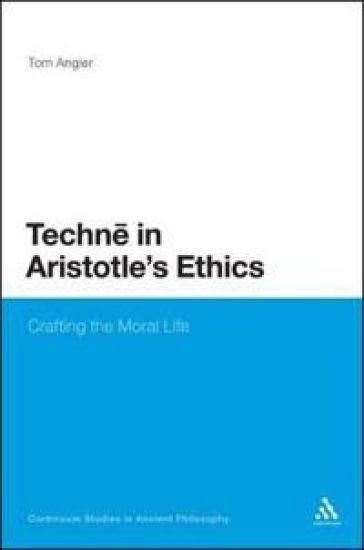
Techne in Aristotle's Ethics

Techne in Aristotle's Ethics

Tom Angier

CONTINUUM PUBLISHING CORPORATION
2011
sidottu
A new account of Aristotle's Ethics, this book argues for the central importance of the concept of techne or craft in Aristotle's moral theory. Exploring the importance of techne in the Platonic and pre-Platonic intellectual context in which Aristotle was writing, Tom Angier here shows that this concept has an important role in Aristotle's Ethics that has rarely been studied in Anglo-American scholarship. Through close-analysis of the primary texts, this book uses the focus on techne to systematically critique and renew Aristotelian moral philosophy. Techne in Aristotle's Ethics provides a novel and challenging approach to one of the Ancient World's most enduring intellectual legacies.