Kirjojen hintavertailu – 12 859 819 kirjaa ja 27 kauppaa

Kirjailija

Tom Barnaby

Kirjat ja teokset yhdessä paikassa: 5 kirjaa, julkaisuja vuosilta 2002–2016, suosituimpiin kuuluu Applied .NET Attributes. Vertaile teosten hintoja ja tarkista saatavuus suomalaisista kirjakaupoista.

5 kirjaa

Kirjojen julkaisuvuodet: 2002–2016.

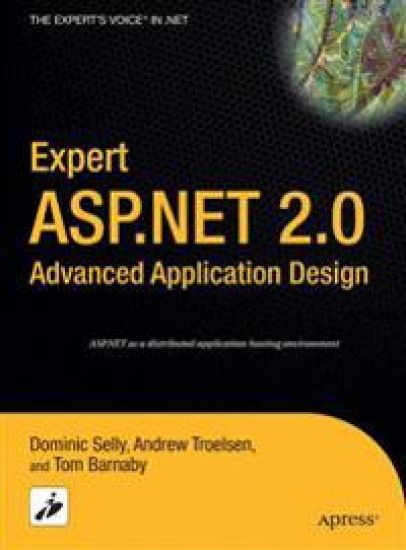
Expert ASP.NET 2.0 Advanced Application Design

Expert ASP.NET 2.0 Advanced Application Design

Tom Barnaby; Dominic Selly; Andrew Troelsen

APress
2016
nidottu
Expert ASP. NET 2.0 Advanced Application Design will help you derive maximum performance and reliability from the distributed applications you create with ASP. NET 2.0. The book first looks at some of the non-functional requirements that impact the design of a distributed application. It then relates them to the servers and services available in the . NET 2.0 Framework. ASP. NET 2.0 is the central process for use in distributed . NET applications, and the book closely examines the ASP. NET 2.0 Framework and its hosting environment, Internet Information Server (IIS). The book looks at how ASP. NET 2.0 is used by different packages within . NET (like Web Services), and explores how it can be extended to meet your own custom requirements. The second part of the book drills down and examines some of the common architectural challenges encountered when developing application designs. The book walks through the tiers of the . NET Framework, starting at the client level and exploring the internals of the page type, enhancements to ViewState, client script generation, and new out-of-band callbacks. At the middle tier, the book examines Web Services, Remoting, COM+, MSMQ, and mix and match communication options to suit your own requirements. This section wraps up by previewing Windows Communication Foundation, which aims to unify these technologies. The third part of the book examines the data layer of your distributed applications. This includes enhancements to the Managed Providers in 2.0, the new transactional model, and a preview of usage guidelines for SQL Server 2005. By the books conclusion, you will be able to select with confidence the most appropriate design elements for your purposes, elegantly connecting them, and ensuring you get the very best from the ASP. NET 2.0 Framework.
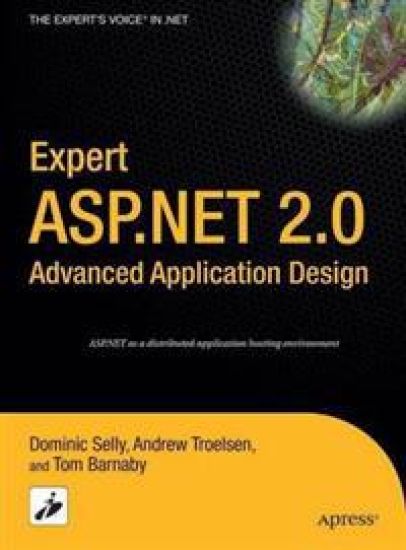
Expert ASP.NET 2.0 Advanced Application Design

Expert ASP.NET 2.0 Advanced Application Design

Tom Barnaby; Dominic Selly; Andrew Troelsen

APress
2005
sidottu
Expert ASP. NET 2.0 Advanced Application Design will help you derive maximum performance and reliability from the distributed applications you create with ASP. NET 2.0. The book first looks at some of the non-functional requirements that impact the design of a distributed application. It then relates them to the servers and services available in the . NET 2.0 Framework. ASP. NET 2.0 is the central process for use in distributed . NET applications, and the book closely examines the ASP. NET 2.0 Framework and its hosting environment, Internet Information Server (IIS). The book looks at how ASP. NET 2.0 is used by different packages within . NET (like Web Services), and explores how it can be extended to meet your own custom requirements. The second part of the book drills down and examines some of the common architectural challenges encountered when developing application designs. The book walks through the tiers of the . NET Framework, starting at the client level and exploring the internals of the page type, enhancements to ViewState, client script generation, and new out-of-band callbacks. At the middle tier, the book examines Web Services, Remoting, COM+, MSMQ, and mix and match communication options to suit your own requirements. This section wraps up by previewing Windows Communication Foundation, which aims to unify these technologies. The third part of the book examines the data layer of your distributed applications. This includes enhancements to the Managed Providers in 2.0, the new transactional model, and a preview of usage guidelines for SQL Server 2005. By the books conclusion, you will be able to select with confidence the most appropriate design elements for your purposes, elegantly connecting them, and ensuring you get the very best from the ASP. NET 2.0 Framework.
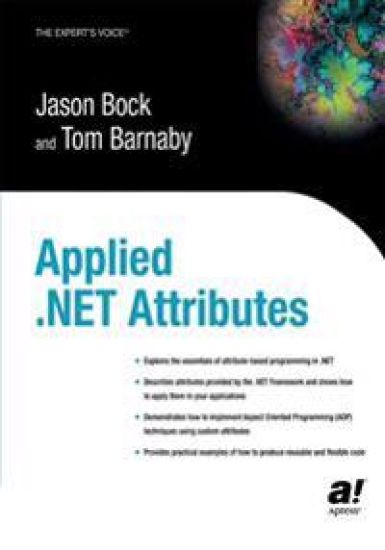
Applied .NET Attributes

Applied .NET Attributes

Jason Bock; Tom Barnaby

APress
2003
nidottu
This book focuses on a part of . NET called "attributes". Attributed programming is a feature of . NET that is still relatively unexplored and unknown, yet is extremely important and will become more important over time. Attributes are used to modify the runtime behavior of code in the . NET framework. The book covers the fundamentals of attributes, common . NET attributes, use of custom attributes, and advanced techniques.
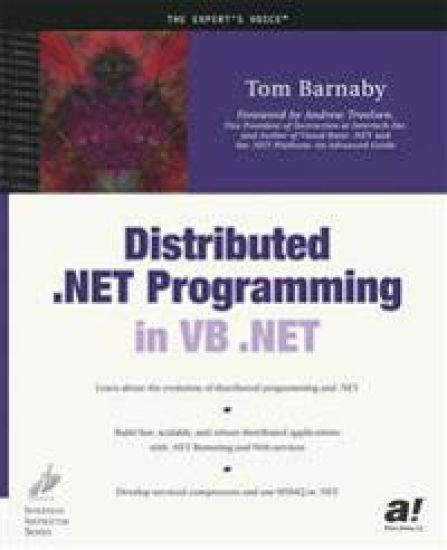
Distributed .NET Programming in VB .NET
Microsoft has changed the distributed programming landscape with . NET: from data access to remote object calls to the deployment of software components. And, of course, . NET introduces a new technology in XML Web services that may revolutionize Web development. Distributed . NET Programming in VB. NET describes how to use these new . NET technologies to build fast, scalable, and robust distributed applications. Along the way, it answers common questions, such as: How do I use the . NET Remoting Framework? What role does COM+ play in the . NET universe? How can I interoperate with COM components? What's the difference between . NET remoting and Web services? How will these changes affect the architecture and design of a distributed application? Tom Barnaby assumes the reader is already familiar with the fundamentals of . NET. However, a . NET overview chapter is provided to concisely explain several of the fundamental . NET technologies that play a large role in distributed programming, including building, versioning, and deploying assemblies; garbage collection; serialization; and attribute-based programming.
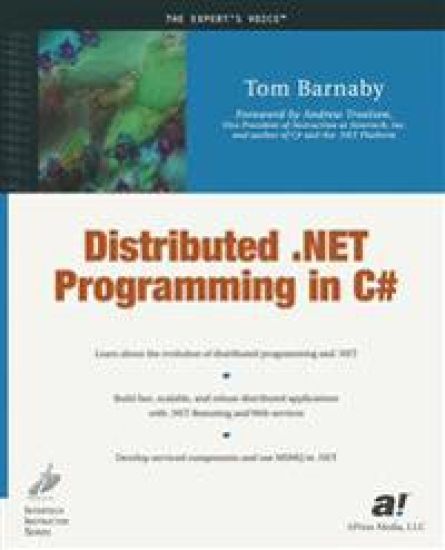
Distributed .NET Programming in C#
With the release of . NET, Microsoft has once again changed the distributed programming landscape. Almost everything has changed, from data access to remote object calls to the deployment of software components. And, of course, . NET introduces a new technology in XML Web services that may revolutionize Web development. Distributed . NET Programming describes how to use these new . NET technologies to build fast, scalable, and robust distributed applications. Along the way, it answers common questions, such as: How do I use the . NET Remoting Framework? What role does COM+ play in the . NET universe? How can I interoperate with COM components? What's the difference between . NET remoting and Web services? How will these changes affect the architecture and design of a distributed application? Tom Barnaby assumes the reader is already familiar with the fundamentals of . NET. However, a . NET overview chapter is provided to concisely explain several of the fundamental . NET technologies that play a large role in distributed programming, including building, versioning, and deploying assemblies; garbage collection; serialization; and attribute-based programming.