Kirjojen hintavertailu – 12 903 725 kirjaa ja 27 kauppaa

Kirjailija

Tom Buchanan

Kirjat ja teokset yhdessä paikassa: 13 kirjaa, julkaisuja vuosilta 1997–2026, suosituimpiin kuuluu Developing a Self-Advocacy Imagination in University Students. Vertaile teosten hintoja ja tarkista saatavuus suomalaisista kirjakaupoista.

13 kirjaa

Kirjojen julkaisuvuodet: 1997–2026.

Developing a Self-Advocacy Imagination in University Students

Developing a Self-Advocacy Imagination in University Students

Meg Leahy; Tom Buchanan

TAYLOR FRANCIS LTD
2026
nidottu
This book provides a research-based, practical guide to developing self-advocacy skills in university students. Through their research and clinical work, the authors demonstrate that students planning to or attending university or college can benefit from education about self-advocacy, guidance on how to effectively develop it, and an understanding of its value during university and beyond. Beginning with an explanation of self-advocacy, the book educates readers on how one develops self-advocacy skills and will provide a timeline for success, before, during, and after university. It also examines who is responsible for helping students develop self-advocacy skills and informs both parents and professionals through practical strategies and case studies. The experience and insight of the authors provide perspective from the front line: a professor and experienced department chair (both in Canada and the US), and an academic coach, therapist, and ADHD expert. Through case studies and scripts, readers will find tangible takeaways they can utilize to begin developing and improving their self-advocacy skills. A guidebook for helping students with and without disabilities, this book is a blueprint for the universities, educators, and professionals who support them.
Developing a Self-Advocacy Imagination in University Students

Developing a Self-Advocacy Imagination in University Students

Meg Leahy; Tom Buchanan

TAYLOR FRANCIS LTD
2026
sidottu
This book provides a research-based, practical guide to developing self-advocacy skills in university students. Through their research and clinical work, the authors demonstrate that students planning to or attending university or college can benefit from education about self-advocacy, guidance on how to effectively develop it, and an understanding of its value during university and beyond. Beginning with an explanation of self-advocacy, the book educates readers on how one develops self-advocacy skills and will provide a timeline for success, before, during, and after university. It also examines who is responsible for helping students develop self-advocacy skills and informs both parents and professionals through practical strategies and case studies. The experience and insight of the authors provide perspective from the front line: a professor and experienced department chair (both in Canada and the US), and an academic coach, therapist, and ADHD expert. Through case studies and scripts, readers will find tangible takeaways they can utilize to begin developing and improving their self-advocacy skills. A guidebook for helping students with and without disabilities, this book is a blueprint for the universities, educators, and professionals who support them.
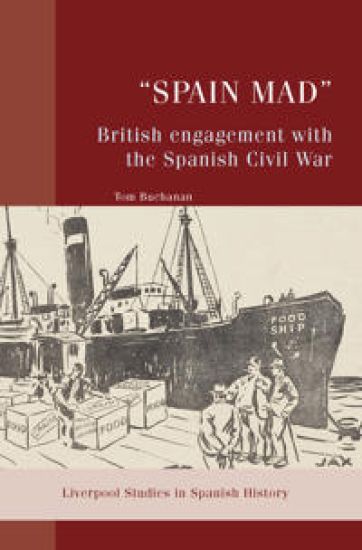
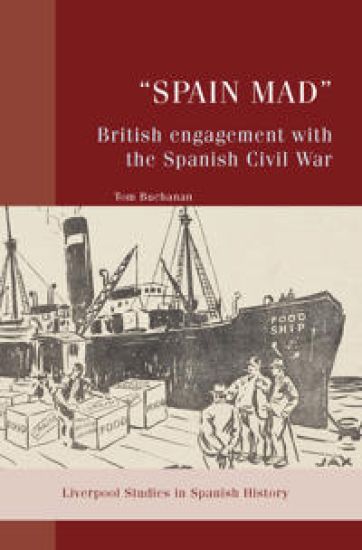
“Spain Mad”: British Engagement with the Spanish Civil War
Taking inspiration from a police informer’s comment that his workmates had gone “Spain mad” in response to the Spanish Civil War, this book uses biographical studies to explore the nature of British engagement with the conflict. The opening chapter presents a general analysis of the subject and assesses the available evidence. Some 2400 Britons volunteered to fight in the conflict and some 500 died there. Accordingly, the International Brigades are well represented in the book, with chapters on two of the commanders of the British Battalion (Wilfred Macartney and Fred Copeman) and the Anglo-Canadian volunteer Frank Whitfield. Two of the other subjects (George Orwell and Felicia Browne) fought in other units. However, the book shows that engagement in the Civil War could take many forms: hence, the chapters on the journalist Philip Jordan, clergyman E. O. Iredell, and the humanitarian activist and politician G. T. Garratt. The remaining chapters look at three historians and writers who have shaped the understanding of the Civil War in Britain: Orwell, Hugh Thomas and Jim Fyrth. The book is based on extensive new research, and many of these subjects have never previously been studied in any depth.
“Spain Mad”: British Engagement with the Spanish Civil War
Taking inspiration from a police informer’s comment that his workmates had gone “Spain mad” in response to the Spanish Civil War, this book uses biographical studies to explore the nature of British engagement with the conflict. The opening chapter presents a general analysis of the subject and assesses the available evidence. Some 2400 Britons volunteered to fight in the conflict and some 500 died there. Accordingly, the International Brigades are well represented in the book, with chapters on two of the commanders of the British Battalion (Wilfred Macartney and Fred Copeman) and the Anglo-Canadian volunteer Frank Whitfield. Two of the other subjects (George Orwell and Felicia Browne) fought in other units. However, the book shows that engagement in the Civil War could take many forms: hence, the chapters on the journalist Philip Jordan, clergyman E. O. Iredell, and the humanitarian activist and politician G. T. Garratt. The remaining chapters look at three historians and writers who have shaped the understanding of the Civil War in Britain: Orwell, Hugh Thomas and Jim Fyrth. The book is based on extensive new research, and many of these subjects have never previously been studied in any depth.
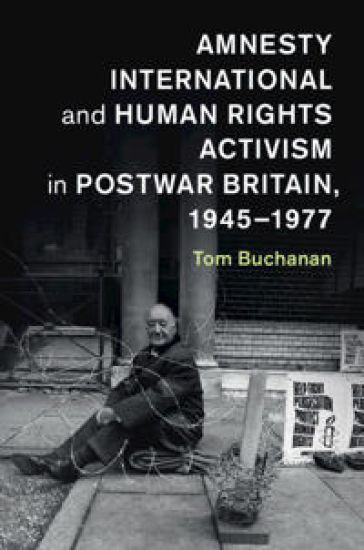
Amnesty International and Human Rights Activism in Postwar Britain, 1945–1977

Amnesty International and Human Rights Activism in Postwar Britain, 1945–1977

Tom Buchanan

Cambridge University Press
2020
pokkari

Halvin toimitettuna 40,00 €

In this definitive new account of the emergence of human rights activism in post-war Britain, Tom Buchanan shows how disparate individuals, organisations and causes gradually came to acquire a common identity as 'human rights activists'. This was a slow process whereby a coalition of activists, working on causes ranging from anti-fascism, anti-apartheid and decolonisation to civil liberties and the peace movement, began to come together under the banner of human rights. The launch of Amnesty International in 1961, and its landmark winning of the Nobel Peace Prize in 1977 provided a model and inspiration to many new activist movements in 'the field of human rights', and helped to affect major changes towards public and political attitudes towards human rights issues across the globe.
Amnesty International and Human Rights Activism in Postwar Britain, 1945–1977
In this definitive new account of the emergence of human rights activism in post-war Britain, Tom Buchanan shows how disparate individuals, organisations and causes gradually came to acquire a common identity as 'human rights activists'. This was a slow process whereby a coalition of activists, working on causes ranging from anti-fascism, anti-apartheid and decolonisation to civil liberties and the peace movement, began to come together under the banner of human rights. The launch of Amnesty International in 1961, and its landmark winning of the Nobel Peace Prize in 1977 provided a model and inspiration to many new activist movements in 'the field of human rights', and helped to affect major changes towards public and political attitudes towards human rights issues across the globe.
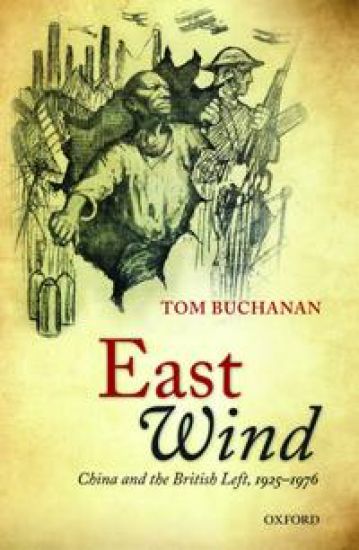
East Wind

East Wind

Tom Buchanan

Oxford University Press
2012
sidottu
East Wind offers the first complete, archive-based account of the relationship between China and the British Left, from the rise of modern Chinese nationalism to the death of Mao Tse tung. Beginning with the "Hands Off China" movement of the mid-1920s, Tom Buchanan charts the mobilisation of British opinion in defence of China against Japanese aggression, 1931-1945, and the role of the British left in relations with the People's Republic of China after 1949. He shows how this relationship was placed under stress by the growing unpredictability of Communist China, above all by the Sino-Soviet dispute and the Cultural Revolution, which meant that by the 1960s China was actively supported only by a dwindling group of enthusiasts. The impact of the suppression of the student protests in Tiananmen Square (June 1989) is addressed as an epilogue. East Wind argues that the significance of the left's relationship with China has been unjustly overlooked. There were many occasions, such as the mid-1920s, the late 1930s and the early 1950s, when China demanded the full attention of the British left. It also argues that there is nothing new in the current fascination with China's emergence as an economic power. Throughout these decades the British left was aware of the immense, unrealised potential of the Chinese economy, and of how China's economic growth could transform the world. In addition to analysing the role of the political parties and pressure groups of the left, Buchanan sheds new light on the activities of many well-known figures in support of China, including intellectuals such as Bertrand Russell, R H Tawney and Joseph Needham. Many other interesting stories emerge, concerning less well-known figures, which show the complexity of personal links between Britain and China during the twentieth century.
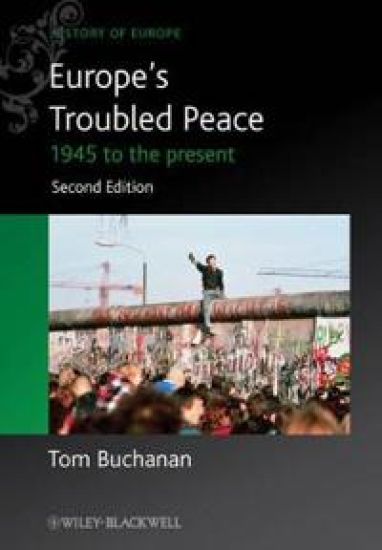
Europe's Troubled Peace

Europe's Troubled Peace

Tom Buchanan

John Wiley Sons Inc
2012
nidottu
This revised second edition now extends to the end of the first decade of the twenty-first century, covering the financial crisis and the related crisis in European integration, the impact of the “War on Terror” on Europe, and the redefinition of Europe following EU enlargement. Thoroughly revised and expanded, this integrated history of Europe now covers the end of the Second World War up to the end of the first decade of the twenty-first centuryIncludes new sections on immigration and ethnicity in Europe after the Cold War, and the role of historical memory in contemporary EuropeA final new chapter assesses the role of Europe within the wider world of the twenty-first century, the financial crisis and the related crisis in European integration, the impact of the “War on Terror” on Europe, and the redefinition of Europe following EU enlargementCovers the history of central and eastern Europe in depth, as well as that of Western EuropeDiscusses in detail the impact of the Cold War across the continent
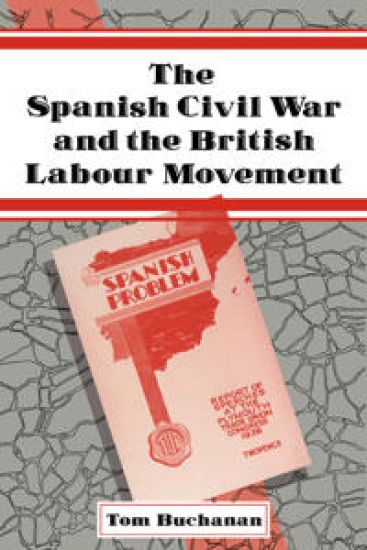
The Spanish Civil War and the British Labour Movement

The Spanish Civil War and the British Labour Movement

Tom Buchanan

Cambridge University Press
2008
pokkari
This book draws on a mass of documentary material to provide a major reinterpretation of British labour's response to the Spanish Civil War. It challenges the view that the labour leadership ' betrayed' the Spanish Republic, and that this polarised the movement along `left' versus 'right' lines. Instead, it argues that the overriding concern of the major leaders was to defend labour's institutional interests against the political destabilisation caused by the conflict, rather than to defend Spanish democracy. Although the main advocates of this position were trade union leaders associated with the labour right such as Walter Citrine and Ernest Bevin, the book argues that their dominance reflected the centrality of the trade unions to labour movement decision-making rather than the abuse of union power to achieve political goals.
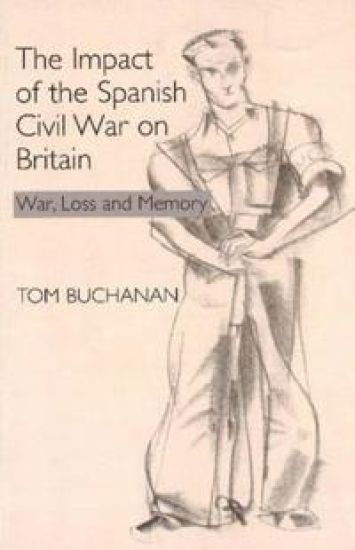
The Impact of the Spanish Civil War on Britain

The Impact of the Spanish Civil War on Britain

Tom Buchanan

Sussex Academic Press
2006
nidottu
The Spanish Civil War has had a profound and lasting impact on Britain. At least 2400 Britons volunteered to fight for the Spanish Republic (of whom more than 500 died), while others provided medical assistance, visited Spain in delegations, or covered the Civil War as journalists. In this collection of three of his published articles and seven new essays, all based on primary research, Tom Buchanan sheds light on many facets of this complex relationship. The book's central themes are the impact of loss on families and communities, and the importance of Spain itself -- its history and culture -- in the way that the Civil War was understood in Britain. Some of the chapters deal with individuals involved in the Civil War, such as the writer John Langdon-Davies, the artist Felicia Browne and the journalist GL Steer. Others pursue somewhat neglected themes, such as the response of British artists to the war or the role played by British medical personnel. The final two chapters focus on the long-term impact of the conflict on British politics and on Britain's relations with Spain since 1939.
Britain and the Spanish Civil War

Britain and the Spanish Civil War

Tom Buchanan

Cambridge University Press
1997
sidottu
No foreign conflict has had a greater impact on modern British politics than the Spanish Civil War (1936–9). More than other conflicts of the 1930s in Abyssinia and China, or more recent wars in Vietnam and Bosnia, the Spanish Civil War served to galvanise political activity in Britain, in support both of the Republican government and of Franco's Nationalist rebels. Familiar aspects, such as the role of the British government, the intellectuals, and the International Brigades are reinterpreted alongside the first detailed accounts of previously neglected subjects such as right-wing and religious opinion. In addition, Buchanan shows how the Civil War acted not only as a symbol of anti-fascism for the Left, but also as a positive example of a 'New Spain' arising from the ashes of the old. Many archival sources are used to offer a stimulating interpretation of a subject of great significance to twentieth-century Britain.
Britain and the Spanish Civil War

Britain and the Spanish Civil War

Tom Buchanan

Cambridge University Press
1997
pokkari
No foreign conflict has had a greater impact on modern British politics than the Spanish Civil War (1936–39). More than other conflicts of the 1930s in Abyssinia and China, or more recent wars in Vietnam and Bosnia, the Spanish Civil War served to galvanise political activity in Britain, in support both of the Republican government and of Franco’s Nationalist rebels. Familiar aspects, such as the role of the British government, the intellectuals, and the International Brigades are reinterpreted alongside the first detailed accounts of previously neglected subjects such as right-wing and religious opinion. In addition, Buchanan shows how the Civil War acted not only as a symbol of anti-fascism for the Left, but also as a positive example of a ‘New Spain’ arising from the ashes of the old. Many new archival sources are used to offer a stimulating interpretation of a subject of great significance to twentieth-century Britain.