Kirjailija
Tom Cooper
Kirjat ja teokset yhdessä paikassa: 74 kirjaa, julkaisuja vuosilta 2003–2026, suosituimpiin kuuluu Lebanese Civil War. Vertaile teosten hintoja ja tarkista saatavuus suomalaisista kirjakaupoista.
74 kirjaa
Kirjojen julkaisuvuodet: 2003–2026.
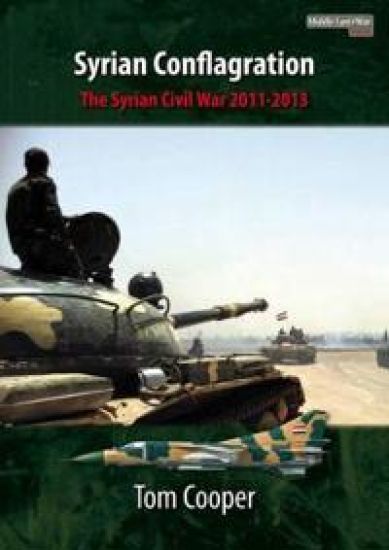
The Syrian Civil War, (the colloquial name of the ongoing conflict in Syria), has experienced an entirely unexpected transformation during its first two years. It started as unrest within the Syrian population and a series of mass demonstrations within the context of wider protest movements in the Middle East and North Africa in 2011, known as the Arab Spring. Contrary to events in Egypt, Libya, Tunisia and Yemen, where oppressive governments were toppled by the end of that year, the government of Syria deployed the full force of its military, its intelligence apparatus, and para-military groups, launching an unprecedented crackdown that resulted in the arrest, detention and killing of many thousands. Despite its brutality, this effort back-fired: it provoked mass desertions of the Syrian military and then an armed uprising. The emerging insurgency was generally successful through 2012, although failing to capture Damascus, it did secure more than half of Aleppo and Homs, the provincial capital of Raqqa, and nearly all of north-eastern and north-western Syria under its control. Although propped-up by economic and military support from the Islamic Republic of Iran and the Russian Federation, the government of Syria was nearing the brink of collapse during the first half of 2013 when, prompted by Tehran, the Hezbollah– a Shi’a Islamic militant group (and political party) from Lebanon – entered the conflict on its side. Soon after, the Hezbollah was reinforced by significant contingents of Iranian-sponsored Shi’a from Iraq, Lebanon and elsewhere, and then by volunteers from Iran, including crack units of the Islamic Revolutionary Guards Corps. Meanwhile, already split along the lines of Syria’s complex demography, much of the insurgency transformed from a secular and non-sectarian movement into proxies of various foreign powers, foremost Saudi Arabia and Qatar, but also Turkey and Kuwait. Furthermore, foreign Jihadists motivated by al-Qaida joined the fray, aiming to establish an Islamist state and clandestinely cooperating with the government, they fell into the back of insurgency. Thus, an extremely complex conflict – which meanwhile not only spilled over the border into Lebanon, but is having a major impact upon Iranian-Saudi relations, and relations between the West, Iran and a number of Arab countries – came into being, the outcome of which is presently anything but predictable. Syrian Conflagration is the first instalment in the Middle East@War series. Drawing on extensive research, including first hand accounts it provides a compelling overview of the first three years of the ongoing conflict in Syria. The book features around 120 photos, 12-15 artworks and 3-4 maps. Middle East@War - following on from our highly-successful Africa@War series, Middle East@War replicates the same format - concise, incisive text, rare images and high quality colour artwork providing fresh accounts of both well-known and more esoteric aspects of conflict in this part of the world since 1945.
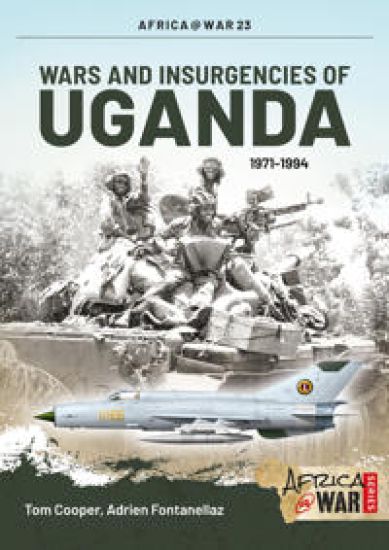
Wars and Insurgencies of Uganda 1971-1994
Tom Cooper; Adrien Fontanellaz
Helion Company
2015
nidottu
Halvin toimitettuna 33,90 €
In 1971, Idi Amin Dada, a former officer of the King’s African Rifles and commander of the Ugandan Army, seized power in a military coup in Uganda. Characterised by human rights abuses, political repression, ethnic persecution, extrajudicial killings, nepotism, corruption and gross economic mismanagement, Amin’s rule drove thousands into exile. Amin shifted the country’s orientation in international relations from alliances with the West and Israel, to cooperation with the Soviet Union. With Tanzanian leader Julius Nyerere offering sanctuary to Uganda’s ousted president, Milton Obote, Ugandan relations with Tanzania soon became strained too. Already in 1972, a group of Tanzania-based exiles attempted, unsuccessfully, to invade Uganda and remove Amin. By late 1978, following another attempted coup against him, Amin deployed his troops against the mutineers, some of whom fled across the Tanzanian border. The rebellion against him thus spilled over into Tanzania, against whom Uganda then declared a state of war. Opening with an overview of the ascent of crucial military and political figures, and the build-up of the Tanzanian and Ugandan militaries during the 1960s and 1970s, this volume provides an in-depth study of the related political and military events, but foremost of military operations during the Kagera War– also known as ‘A Just War’ – fought between Tanzania and Uganda in 1978–1979. It further traces the almost continuous armed conflict in Uganda of 1981–1994, which became renowned for emergence of several insurgent movements notorious for incredible violence against civilian population, some of which remain active in central Africa to this day. This book is illustrated with an extensive selection of photographs, colour profiles, and maps, describing the equipment, markings, and tactics of the involved military forces.
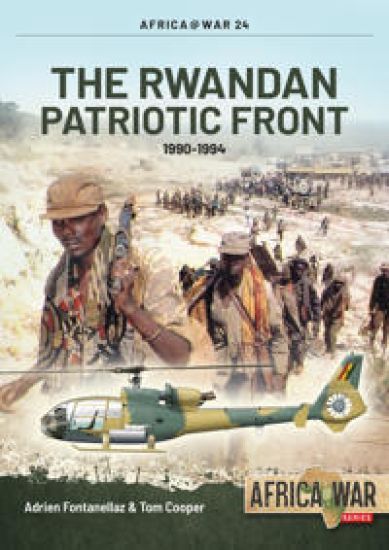
The Rwandan Patriotic Front 1990-1994
Tom Cooper; Adrien Fontanellaz
Helion Company
2015
nidottu
Halvin toimitettuna 28,40 €
On 1 October 1990, hundreds of Banyarawanda militants that served with the Ugandan Army deserted their posts to form the Rwandan Patriotic Front (RPF) and invade Rwanda. Thus began the Rwandan Civil War, which was to culminate in the famous genocide of nearly one million of Tutsi and moderate Hutus, in 1994. Starting with in-depth descriptions of the history of Rwandan political, military and security development, this volume traces the history of the RPA from its emergence as a small-scale insurgent group formed from the ranks of Rwandan refugee diaspora in Uganda; its military operations and related experiences during nearly four years of war against the Rwandan government; and its establishment of control over Kigali, in July 1994. As such, the narrative presented here provides a fascinating and unique insight into the military story behind the emergence of modern-day Rwanda and its military; considered by many to be the‘Israel of Africa’. Providing minute details about RPF’s tactics and doctrine – that strongly influenced developments in a number of other modern-day African wars – this volume is foremost an offering that provides highly interesting backgrounds for and a prequel to, nearly all of the subsequent wars in the neighbouring Democratic Republic of the Congo. Illustrated with over 150 photographs, colour profiles, and maps describing the equipment, colours, and markings, and tactics of the RPF and its opponents, this is a unique study about the emergence of one of the most important US allies on the African continent.
The Marauders
Tom Cooper
Broadway Books (A Division of Bantam Doubleday Dell Publishing Group Inc)
2015
pokkari
"A little Elmore Leonard, a little Charles Portis, and very much its own uniquely American self. . . Tom Cooper has written one hell of a novel." -Stephen King When the BP oil spill devastates the Louisiana Gulf Coast, the citizens of the bayou town of Jeanette scramble to replace their lost livelihoods. Among them is one-armed, pill-popping shrimper Gus Lindquist, who has nothing left but the dying glimmer of a boyhood dream: finding the lost treasure of pirate Jean Lafitte. With his metal detector and Pez dispenser full of Oxycontin, Lindquist steers his rickety shrimp boat into the savage Louisiana swamps. Along his journey, Gus meets a motley crew of characters: Wes Trench, a young Cajun man estranged from his father since his mother died in Katrina; Reginald and Victor Toup, sociopathic twin brothers and drug lords; Cosgrove and Hanson, petty criminals searching for a secret that could make them rich, or kill them; and Brady Grimes, a BP middleman out to make his career by swindling the townsfolk of Jeanette, among them his own mother. Funny, dark, and compelling, The Marauders throws these characters on a rollicking collision course that all of them might not survive.
Webster Groves
Tom Cooper; Emma Delooze-Klein; Deborah Ladd
Arcadia Publishing Library Editions
2015
sidottu
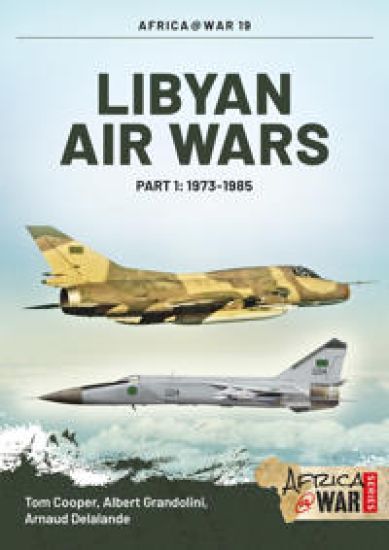
Between 1973 and 1989, various Western powers and Libya were entangled in a seemingly never-ending exchange of blows. Supposedly launched in retaliation for one action or the other, this confrontation resulted in a number of high-profile, even through low-scale, clashes between the Libyan Arab Air Force (LAAF), the US Navy and even the French. Meanwhile, almost as a sideshow, the LAAF - quantitatively one of the most potent air forces in North Africa and the Middle East - also saw intensive deployment in Chad. Initially, with sporadic fighting between different parties for the control of N'Djamena, the Chadian capital, this conflict eventually turned into a major war when Libya invaded the country outright. The LAAF deployed not only French-made Mirage but also Soviet-made fighter-bombers of MiG and Sukhoi design, Mil-designed helicopters and even bombers of Tupolev design, to establish her dominance over the extensive battlefield of the Sahara Desert. Because of the Cold War but also due to confrontation with Libya over a number of other issues, France - a one-time major arms supplier to Libya - and the USA gradually got dragged into the war. Deployments of their troops and intelligence services in Chad, Egypt and the Sudan never resulted in a full-scale war against Libya, but time and again culminated in small-scale aerial operations that proved crucial to developments on the ground, several of which are still a matter of extensive debate. Detailing not only the aerial operations but the ground war and the geo-political background of these conflicts, and illustrated with over 100 contemporary photographs, maps and all-new colour profiles, this volume provides a unique insight into an otherwise completely forgotten conflict that raged from the skies over the southern Mediterranean to southern Chad and northern Sudan, yet one that not only represented a formative period of the LAAF, but which also prompted a number of crucial modifications and developments in France and the USA.
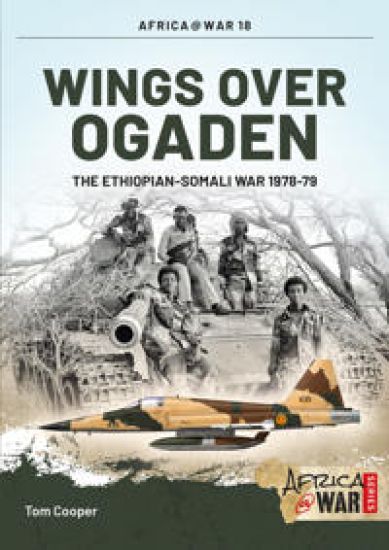
With Ethiopia in disarray following a period of severe internal unrest and the spread of insurgencies in Eritrea and Tigray, Ethiopia and its armed forces should have offered little opposition to well-equipped Somali armed forces which were unleashed to capture Ogaden, in July 1977. However, excellently trained pilots of the Ethiopian Air Force took full advantage of their US-made equipment, primarily their few brand-new Northrop F-5E Tiger II fighter-bombers, to take the fight to their opponents, win air superiority over the battlefield, and thus have their hands free to interdict the Somali supply links to stop the invasion cold. This air victory practically sealed the fate of the Somali juggernaut in Ogaden, especially so once Ethiopia convinced Cuba and the Soviet Bloc to support her instead of Somalia. In a fit of pique, Somalia forced all Soviet advisers to leave the country. Already bitter over similar experiences in Egypt in 1972, Moscow's revenge was designed as a clear message: nobody was to treat her in such fashion again. The USSR subsequently launched an air bridge to Ethiopia, unique and unprecedented in its extension and importance, delivering huge quantities of armament and equipment necessary for the Ethiopians to reconquer Ogaden, and beyond. In turn Somalia asked the USA for help and thus occurred an unprecedented switch of Cold War alliances. This volume details the history and training of both Ethiopian and Somali air forces, their equipment and training, tactics used and kills claimed, against the backdrop of the flow of the Ogaden war. It explains in detail, supported by over 100 contemporary and exclusive photographs, maps and colour profiles, how the Ethiopian Air Force won the decisive victory in the air by expertly deploying the F-5Es - unequalled in manoeuvrability, small size and powerful armament - to practically destroy the Somali Air Force and its MiG-17s and MiG-21s.
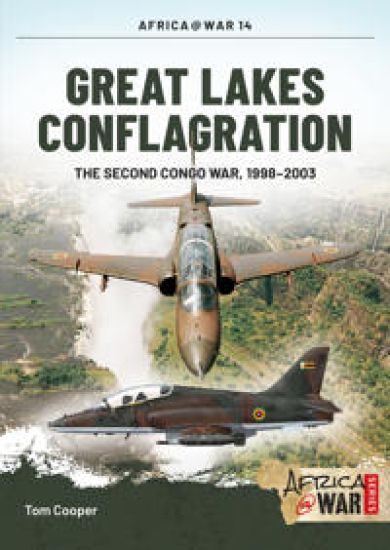
Great Lakes Conflagration is the second in two volumes covering military operations in the Democratic Republic of Congo (DRC) at the turn from the 21st century. This volume explores developments in the DRC that led to the outbreak of violence in August 1998, and systematically details the continued build-up and status of the Congolese, Rwandan and Ugandan armies, as well as the forces of other African countries. Recounted is the Rwandan attempt to topple the government of Laurent Kabila through an operation that saw a redeployment of some of best Rwandan units from Kigali and Goma to the western DRC, resulting in a series of fierce air-land clashes with Zimbabwean and Angolan forces and culminating in the Battle of Kinshasa. Also described is the fighting along what became the 'Eastern Front' in the DRC, as Zimbabwean and allied troops attempted to stop Rwandan, Ugandan and rebel advances out of Kivu Province in the direction of the Congo River through 1998 and 1999. These early phases of the war, or 'The First African War' as it has come to be known, were characterised by surprising outflanking and infiltration manoeuvres; foreign mercenaries; Zimbabwean Hawk and Lynx light strikers flying intensive combat operations from N'Djili airport, half of which was occupied by Rwandans, Ugandans and Congolese rebels; interdiction strikes guided by special forces deployed deep behind enemy lines; operations of helicopter gunships and transport aircraft under intense ground attack in support of troops cut off by advancing opponents; use of transport aircraft as makeshift bombers in bad weather and by night and clashes of armoured forces and many other elements of 'high-technology' warfare. All the protagonists deployed their best military units, their best equipment and some of their best military commanders, yet despite their best efforts, and hampered by infighting, the conflict ultimately resulted in a stalemate which dragged on for a further three years while negotiations bogged down. This book is illustrated with an extensive selection of exclusive photography, colour profiles and markings, making it of special interest to enthusiasts and professionals alike.
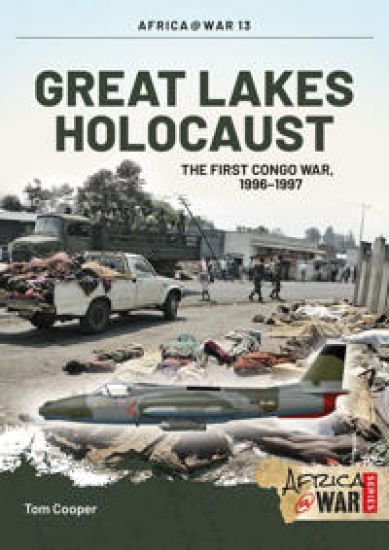
Great Lakes Holocaust is the first in two volumes covering military operations in Zaire - as the Congo was named from 1971 until 1997 - and the Democratic Republic of Congo at the turn of the 21st century. This volume explores the events of the 1980s and 1990s in Rwanda and Uganda, which eventually spilled over the borders into Zaire, resulting in one of the worst tragedies ever to befall an African region. The narrative traces the ascent of crucial Rwandan, Congolese and Ugandan military and political figures, and their connections within influential business and political circles in and outside Africa. It examines the build-up of the Zairian military under the government of dictator Mobutu Sese Seko in the 1960s and 1970s, and provides an in-depth study into reasons for its near-collapse in the early 1990s. The military build-up of Rwanda and Uganda is discussed in detail as is their planning for operations inside Zaire, and the global logistic tail that provided the Rwandan military, particularly, but also most of its opponents, with a capability of not only waging war beyond their borders, but - in the case of Rwanda - of invading and practically conquering a country the size of Western Europe or the USA east of the Mississippi. The book further traces the covert Rwandan military actions inside Zaire, initially run under the guise of an insurgency by one of Zaire's ethnic minorities; how ever-deepening Rwandan operations inside Zaire were practically dictated by concentrations of Hutu refugees; and how the insurgency - led by Laurent-DésiréKabila who was installed by key Rwandan and Ugandan military and political figures - developed into an organisation that sought autonomy from the military and political dictates of Rwanda, in turn delivering a direct reason for the Second Congo War which was fought from 1998-2003.
A Guide to Abbotsbury, County of Dorset ... Illustrated, Etc.
Tom Cooper
British Library, Historical Print Editions
2011
pokkari
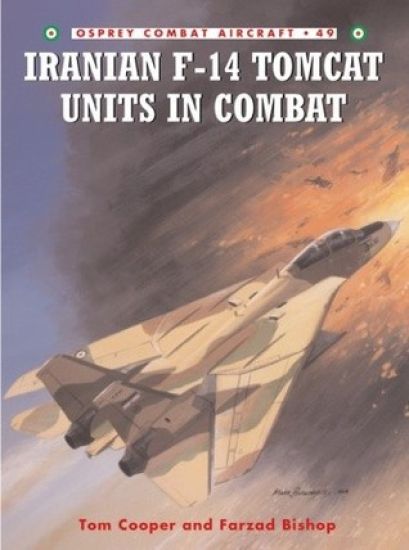
So formidable an opponent did the Iraqi airforce consider the F-14 that during the Iran-Iraq war, they ordered their pilots not to engage F-14s and the presence of one in an area was usually enough to empty it of Iraqi aircraft. Officially losses where tiny; only one F-14 was lost in aerial combat (to a MiG-21), one to a control problem and one downed by a ground-to-air missile. This book looks at the F-14's Iranian combat history and includes first hand accounts from the pilots themselves. It will consider key engagements and the central figures involved, illustrating the realities, successes and failures of the Iranian air campaign.
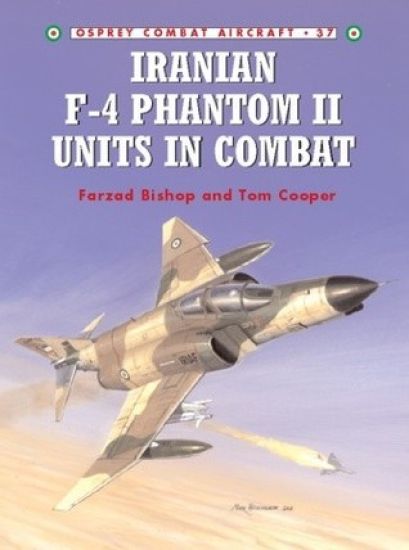
Different versions of the jet have provided the backbone of the frontline strength of the Iranian air force since the 1970s, and whole generations of Iranian pilots and ground personnel have been trained to fly and maintain them. Indeed, the type bore the brunt of active combat operations during the long war with Iraq. Iranian F-4 Phantom IIs were also some of best equipped examples ever exported by the USA. Some Iranian Phantom II pilots gathered immense experience on the type, flying it in combat for more than ten years. This book removes the veil of secrecy surrounding Iranian Phantom II operations since the war with Iraq.